[pageLogInLogOut]

#Associations

The Shortlist for “2021 Taiwan Fashion Design Award” has been officially determined after the preliminary selection

The 35th “Taiwan Fashion Design Award” received more than 450 submissions from not only designers of Taiwan but also those from other 17 overseas countries and regions including the United States, Germany, Australia, Ukraine, Japan, China, Hong Kong, Macau, Singapore, Malaysia, India, Vietnam, Myanmar, Indonesia, Sri Lanka, Paraguay, and Peru.

In nearly three months from now, the 12 new but promising designers shortlisted for the final are going to have the final competition at Taipei Fashion Week SS22 on October 6. The winner of the first prize will be awarded US$10,000, and US$5,000, 3,000, and 1,000 will be awarded to the 2nd, 3rd prize winners, and the other finalists, respectively.

The Shortlist for “2021 Taiwan Fashion Design Award” has been Officially Determined after the Preliminary Selection: among New Designers from 18 Countries and Regions

The entries of this Year are mostly inspired by the personal emotions and the daily life experience of the designers themselves, such as the nostalgic memories from childhood, the will of self-breakthrough, the self-identity of outsiders, the yearning for hometowns and parents, or particular social and environmental perceptions such as feminism, lifestyle under the age of information explosion, religious beliefs, life reflections on the impact of the epidemic, as well as sustainable issues such as marine pollution, resource scarcity, and environmental regeneration. In addition, the all-encompassing inspiration elements include flowers and trees, movies, video games, music, cultures from various countries, and the integration of philosophical thoughts, in which time and space span across the realm of retro senses and modernity that bring abundant innovation and fun.

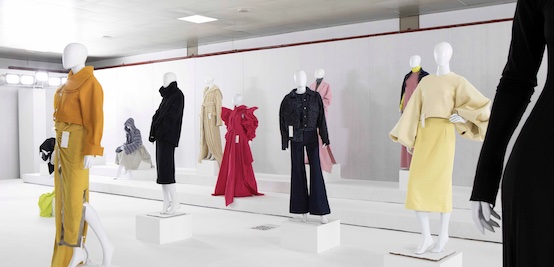
The fashion design emphasizes the diversified collocation from a single item, the versatility of various outfits, and the environmentally friendly concept of waste recycling, the breakthrough of limitations of fabrics, and the application of innovative ideas which refresh the fashion trends. Many items considered to be waste, such as fishing nets or plastics salvaged from the ocean, remnants from factories, and the seat belts and parts recovered from scrapped vehicles, etc., would be creatively used for clothing production, which would remodel and grant a new essence of “sustainability” to such waste. Subject to not at the expense of aesthetic essence, a good fashion design could ensure “versatility” and the pattern design incorporating material characteristics, such as adopting space cotton to display the graceful posture of women, reflective piping to improve wearing safety, and the ability to adjust the retraction and release of zipper according to different occasions. The clever use of “functional” fabrics such as the temperature-sensitive textiles indicating the change of human body temperature by changing the fabric colors, environmentally friendly elastic materials that resist dirt and crease, and collagen materials with cooling and beautification effects have all enhanced the freshness or comfort of wearing outfits.


The jury of preliminary selection is composed of fashion-related and cross-domain industry professionals, including Taiwanese senior fashion designers, fashion director of department store, the director of textiles and fashion design department of TTF and the editor in chief of ELLE Taiwan. The judges expressed that they were happy to see the adoption of concepts of recycling or reuse of materials for designing, the redesign process during the manufacturing, and even the emphasis on prolonging the life of clothing to provide more diversified outfit styles, which transformed the function of the fabrics into the clothing function friendly to the environment. Whereas the overseas designers boldly used diverse fabrics with multiple colors to achieve pleasant design, Taiwanese designers, who were essentially well-trained, appeared to be relatively self-constrained. The judges expected that each of the designers participating in the competition could freely and happily design their works. Overall, we had witnessed many breakthroughs in structures and prints, and the entries for the final would definitely be worth looking forward to.


The Taiwan Fashion Design Award (TFDA) is organized by Industrial Development Bureau, Ministry of Economic Affairs , and held by the Taiwan Textile Federation. In 2021, TFDA is sponsored and supported by Lealea Enterprise Co., Ltd., Li Peng Enterprise Co., Ltd., Coddy Global LTD., and Fortune Industrial and Commercial Development Foundation. The 12 pieces of entries from the finalists will be evaluated in the manner of fashion shows on October 6, and displayed at Taipei Fashion Week afterward. For more information, please visit:

TFDA Official Website?http://www.tfdaward.com/

Facebook?https://www.facebook.com/TaiwanFashionDesignAward/


2021 TFDA Finalists

Registration No. Name

R049 Tung, Li-Rung

R061 Yeh, Yu-Hsien

R132 Lai, Ming Hao

R143 Baéz Gamarra, Andrés David (Paraguay)

R171 Lee, Claire

R234 Chang, Chia wei

R301 Chen, Ching-Lin

R313 Chen, Chia Qing

R336 Lu, Yu Chih

R345 Hwang, Tzu En

R361 Gajadeera, Ruwanthi Pavithra (Sri Lanka)

R416 Chu, Yun-Cheng


(Coordinated with national bilingual policy.)

More News from TEXDATA International

#ITM 2026

ITM 2026: The new geography of textile production

New production hubs are emerging across North Africa and Central Asia, while Türkiye is accelerating its transformation toward higher-value, technology-driven and more sustainable textile manufacturing.

#Research & Development

“Production is a product”

From technical textiles and AI-driven robotics to the limitations of textile circularity: Professor Dr Thomas Gries looks back on more than two decades of development at ITA Aachen. In the interview, he explains why production technology remains a decisive success factor, discusses international collaborations and innovation ecosystems, and shares his views on the transformation of production landscapes and the challenges facing an increasingly regulated industry.

#Knitting & Hosiery

“We need to move away from the price trap and return to a value-driven mindset.”

With its new Textile Innovation Center, KARL MAYER is sending a strong signal for innovation, collaboration, and the future of textile applications. In this interview, Karl Josef Mayer discusses new opportunities in warp knitting, the processing of staple fibres, recycling, the changing role of machinery manufacturers, and why the textile industry must once again focus more strongly on the value of textiles. by Oliver Schmidt

#Associations

“Innovation, resilience and international experience remain the great strengths of the Swiss textile machinery industry”

Geopolitical uncertainty, growing competitive pressure from China, new free trade agreements and the shift towards a circular economy are currently reshaping the global textile industry. In this interview, Cornelia Buchwalder discusses the current mood within the Swiss textile machinery sector, the industry’s distinctive innovative strength, new market opportunities in India and Asia, and the technological trends that could shape the upcoming trade fair cycle leading up to ITMA 2027.

More News on Associations

#Raw Materials

Cotton Brazil Dialogues 2026 concludes with 50 international participants immersed in Brazilian cotton production

The Cotton Brazil Dialogues concludes its 2026 edition after a series of technical visits to farms, cotton gins and reference centers, as well as workshops focused on Brazilian cotton production. A total of 50 participants from 14 countries took part in the field trips. The initiative is led by the Brazilian Association of Cotton Growers (Abrapa) and the National Association of Cotton Exporters (Anea), with support from the Brazilian Trade and Investment Promotion Agency (ApexBrasil).

#Europe

European textile industry calls for €10 handling fee on ultra-fast-fashion imports

The introduction of the €3 customs duty on low-value imports marks an important milestone in Europe’s efforts to address the challenges created by the rapid growth of ultra-fast-fashion imports. Together with the abolition of the €150 customs duty exemption, it demonstrates that policymakers are willing to act when market distortions become impossible to ignore. However, the European textile and clothing industry considers this a first step rather than the final destination.

#Associations

Business situation weakens slightly, but the industry stays cautiously optimistic

The International Textile Manufacturers Federation (ITMF) has published the results of its 39th Global Textile Industry Survey (GTIS), conducted from 14 to 22 July 2026 among companies along the entire global textile value chain. Worldwide, 10% of participants rated their business situation as good, 53% as satisfactory and 37% as bad — a balance of -26pp, down from -17pp in May but still well above the 2023 lows. All regions are now in negative territory, from South Asia at -3pp to North & Central America at -58pp.

#Associations

IVGT membership: expertise that pays off

For energy-intensive textile companies, government compensation mechanisms are an important economic factor. The IVGT successfully supports its member companies in applying for state aid and thereby regularly contributes to significant financial relief.

Latest News

#Nonwovens

25 years in the room: EDANA’s OUTLOOK™ returns to Cascais to shape a changing industry

The market does not wait, and it does not grant easy answers. Across the absorbent hygiene, personal care, and wipes sectors, business is undergoing a period of intense, necessary adjustment. New European rules on packaging, single-use items, product safety, and end-of-life are forcing companies to drop old assumptions about materials and performance. At the same time, producers must keep their goods safe, reliable, and affordable for the babies and aging adults, who rely on them every day.

#Recycling / Circular Economy

Recover™ names Enes Adak and Fehmi Yüksel as Co-CEOs to accelerate its next growth phase

Recover™, a leading materials science company and global producer of consistent high-quality, recycled cotton fibers and circular material solutions at scale, today announced the appointment of Enes Adak and Fehmi Yüksel as Co-Chief Executive Officers. This leadership transition marks an important step in Recover’s evolution as the company enters its next stage of development.

#Research & Development

ADD-ITC 2026 highlights strong industry participation

The Aachen-Dresden-Denkendorf International Textile Conference (ADD-ITC) 2026 will place a strong focus on the exchange between textile research and industry when it takes place on November 26–27, 2026, at the International Congress Center Dresden. According to the preliminary conference program, more than two-thirds of all presentations will be contributed by companies or jointly presented by industry and research institutions.

#Recycling / Circular Economy

Arc'teryx introduces System 0™, a new framework for the future of product design and circularity

Arc'teryx Equipment, the global design company specializing in technical high-performance apparel and equipment, today introduced System 0™, a new framework that reimagines how products can be designed, manufactured, used, repaired, and ultimately regenerated. System 0 represents the next evolution for sustainability in the outdoor industry, as it embeds circular thinking across an entire product lifecycle while maintaining the uncompromising performance standards that define the Arc’teryx brand.

TOP