[pageLogInLogOut]

#Associations

State aid expertise with tangible results

IVGT membership: expertise that pays off
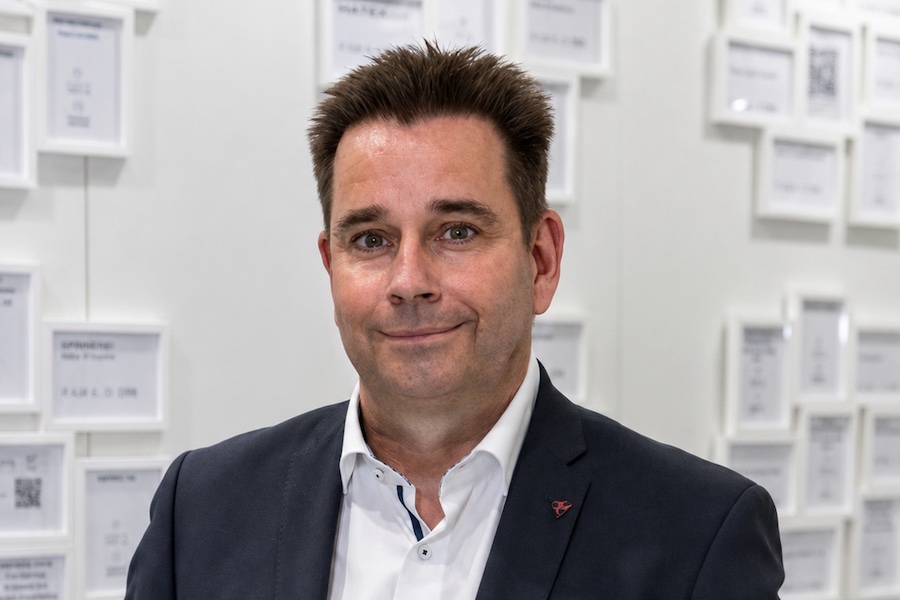
"Through the BECV applications supported by IVGT alone, our member companies have so far been able to recover around EUR 500,000 in CO₂ costs each year."
Michael Pöhlig, Managing Director, IVGT e.V., Frankfurt am Main
© 2026 IVGT
For energy-intensive textile companies, government compensation mechanisms are an important economic factor. The IVGT successfully supports its member companies in applying for state aid and thereby regularly contributes to significant financial relief.

The legal basis is provided by the German Fuel Emissions Trading Act Carbon Leakage Ordinance (BEHG Carbon Leakage Ordinance, BECV), which has relieved companies in particularly trade-exposed sectors from the costs of Germany’s national fuel emissions trading system since 2021. One of the requirements is the implementation of an energy management system in accordance with ISO 50001, EMAS or ISO 50005. Applications must be submitted annually to the German Emissions Trading Authority (DEHSt).

To receive carbon leakage compensation under the BECV, companies must provide evidence of an energy management system that meets the requirements of the BECV from the respective accounting year onwards and implement specified climate protection measures.

Together with experienced service partners, the IVGT guides its member companies through the demanding application process. With success: approved BECV applications have so far enabled member companies to recover around EUR 500,000 in CO₂ costs each year.

Read more in the German version.

Mitgliedschaft im IVGT: Kompetenz, die sich auszahlt.


More News from Industrieverband Veredlung - Garne - Gewebe - Technische Textilien e.V.

#Recycling / Circular Economy

Eco-design as the foundation of circular textiles

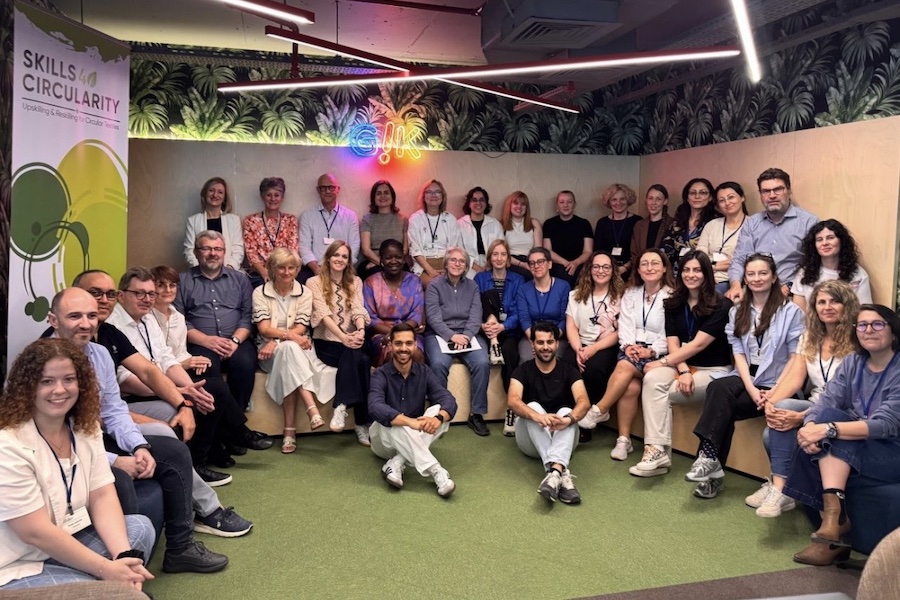
Based on the results of an extensive European analysis, the Erasmus+ project Skills4Circularity is currently developing three practice-based training modules covering recycling technologies, eco-design for the circular economy and sustainable manufacturing. This was preceded by a comprehensive company survey and a joint analysis conducted by the project partners under the leadership of IVGT. The results show that the greatest challenges lie not so much in a lack of technology as in skills gaps.

#Recycling / Circular Economy

New skills for a circular textile economy

Based on the results of a comprehensive analysis, the Erasmus+ project Skills4Circularity is developing three practical training modules covering recycling technologies, eco-design for the circular economy and sustainable manufacturing. The content of the first module, Recycling Technologies, has now been developed and validated together with industry representatives. The module provides participants with knowledge of regulatory requirements, material sorting and the preparation of textile waste for recycling.

#Recycling / Circular Economy

The textile industry in transition

Recycling, traceability, eco-design and digitalisation are among the key future challenges facing the European textile industry. The Erasmus+ project Skills4Circularity, involving 21 partners from twelve countries, is investigating the skills required to address these challenges. As the German industry partner, the Industry Association for Finishing – Yarns – Fabrics – Technical Textiles (IVGT) is bringing the industry’s perspective to the project.

#Techtextil 2026

IVGT joint stand brings innovation and networking to Techtextil 2026

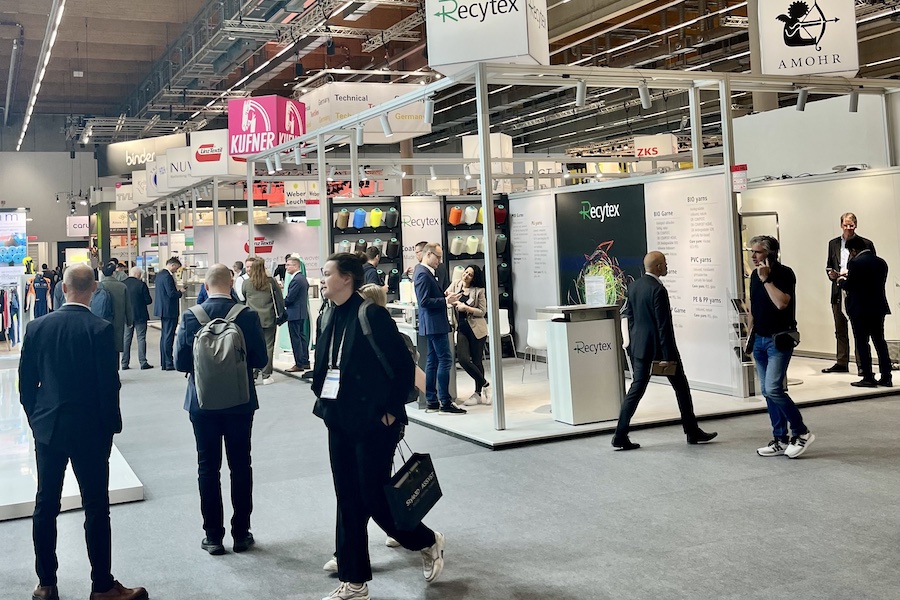
At Techtextil 2026 and the parallel Texprocess 2026, key transformation topics such as artificial intelligence, digitalisation, sustainability, recycling and the circular economy will be reflected across the show. Against this backdrop, the IVGT, together with 16 member companies, will present its joint stand in Hall 12.1 (Stand D62) as a platform for exchange and networking.

More News on Associations

#Associations

Business situation weakens slightly, but the industry stays cautiously optimistic

The International Textile Manufacturers Federation (ITMF) has published the results of its 39th Global Textile Industry Survey (GTIS), conducted from 14 to 22 July 2026 among companies along the entire global textile value chain. Worldwide, 10% of participants rated their business situation as good, 53% as satisfactory and 37% as bad — a balance of -26pp, down from -17pp in May but still well above the 2023 lows. All regions are now in negative territory, from South Asia at -3pp to North & Central America at -58pp.

#Associations

Italian textile machinery orders show quarterly recovery in Q2 2026

In the period between April and June 2026, order intake for Italian textile machinery manufacturers showed mixed but encouraging signals for the second half of the year. The order index at constant prices stood at 46.6 points (taking 2021=100 as the base year), showing a slight decrease of 3% compared to the same quarter of 2025. This trend was largely due to the contraction recorded in the domestic market, which fell by 25% compared to the corresponding period of the previous year.

#Associations

Consolidation amidst difficult market conditions

The International Textile Manufacturer Federation has published its International Textile Industry Statistics (ITIS) on productive capacity and raw materials consumption in the short-staple organized (spinning mill-) sector in virtually all textile-producing countries in the world.

#Recycling / Circular Economy

ReSpin joins TMAS to advance textile recycling technology

Swedish textile recycling company ReSpin has joined the Textile Machinery Association of Sweden (TMAS) as a new member. The company develops a patented mechanical recycling technology designed to transform textile waste into new fibres suitable for yarn production.

Latest News

#Functional Fabrics

PERFORMANCE DAYS announces new focus topic & forums for October 2026

With its upcoming October 13–14, 2026 edition, PERFORMANCE DAYS is placing the spotlight on one of the textile industry’s most important transformations: “Bio-Based Materials – From Fiber to Fabric”, a two-part Focus Topic exploring the future of bio-based innovation across the textile value chain. Part 1, presented in October 2026, will focus on fibers and next-generation material developments, while Part 2 at the March 2027 edition will shift the perspective toward dyeing, finishing, additives, and processing technologies.

#Nonwoven machines

MENANG rapidly resumes production with new ANDRITZ airlay line after major fire

MENANG, a Malaysian manufacturer of nonwoven automotive components, has resumed production after a major fire severely damaged its airlay line in mid-March 2026. A new airlay line supplied by ANDRITZ enabled production to restart within only four months.

#Exhibitions & Events

Febratex 2026 to be the largest edition of the leading textile trade fair in the Americas with 10 exhibition halls

Febratex 2026 will be the largest edition in the history of the leading textile trade fair in the Americas. Dedicated to the textile and apparel manufacturing industries, the event will take place from August 18–21, 2026, in Blumenau, Santa Catarina, Brazil, with a strong focus on technology, sustainability, and business generation.

#Raw Materials

Cotton Brazil Dialogues field trip brings international stakeholders closer to Brazil’s cotton production chain

How do you build trust across the global textile value chain? By opening the farm gates. This is the principle behind the Cotton Brazil Dialogues. At the end of July, the programme welcomed its first group of international participants for a five-day immersion into Brazilian cotton production, combining field visits with technical workshops to showcase the quality, sustainability, innovation and traceability behind one of the world’s leading cotton origins.

TOP