[pageLogInLogOut]

#Associations

“The new EU Industrial Strategy: how do we get from principles to practice?”
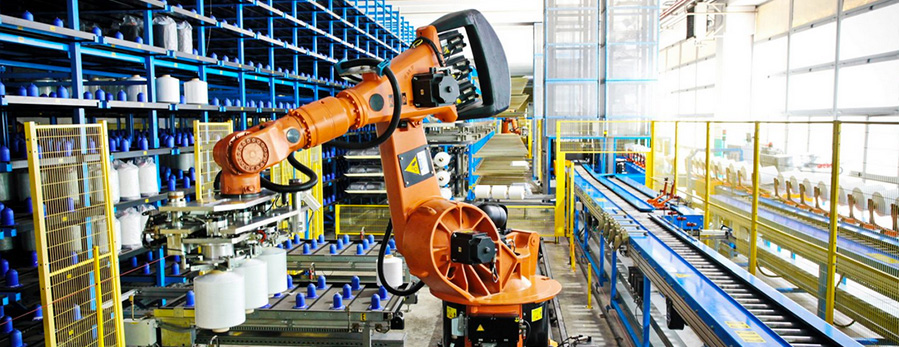
(c) 2020 EURATEX
EURATEX welcomes the proposed new EU industrial strategy but wonders how the proposed principles will be put into practice; reality checks and close monitoring of the implementation of the strategy will be essential to make a positive and sustainable impact.

The European textiles and apparel industry, worth nearly €180 bln and including 171,000 companies, is an essential pillar of the European industry. It is a very globalised industry with extensive value chains across different continents. Over the last 10 years, real changes have been made to innovate and increase sustainability of its products, starting from traditional clothing to smart and medical textiles, industrial applications in the automotive and aerospace industry, to protective wear and high-end fashion.

Against this background, EURATEX welcomes the launch of a new comprehensive EU industrial strategy. It is high time for Europe to embrace its industry again, as a source of welfare, innovation and employment. The proposed strategy is rightfully putting emphasis on economic sovereignty, without falling into the trap of protectionism.

The strategy should include some important elements, essential for its success:

  • Any proposed measure must be assessed in a global context, i.e. European companies cannot be subject to new rules, standards or regulations unless all players do play with the same rules. Measures to ensure a level playing field must be realistic and effective.
  • Innovation into a more sustainable industry has an important cost, and the end consumer is not always willing to pick up that cost. This may jeopardize the financial sustainability of our industry, especially for smaller companies. Accompanying measures should be taken to alleviate the burden of green investments, especially for SMEs.


  • Labour force shortage is an important barrier to the development of our industry. In 2018, 34% of the Textile and Clothing workforce was over the age of 50 (a steep increase from the 22% just 10 years ago). It is therefore urgent to make a common effort to both upskill and reskill the current workforce and to attract young talent.

While the principles mentioned in the strategy are sound, effective implementation of such principles into practical measures will be critical. Too often in the past, the EU has presented ambitious plans, but failed to deliver on their implementation, either by lack of resources or political will from member states. EURATEX therefore calls for a strict “governance” of this new strategy, introducing measurable targets, which can be monitored by relevant stakeholders. “We should be vigilant that proposed measures are realistic and effective, and actually support industrial competitiveness, rather than adding a regulatory or financial burden”, commented Director General Dirk Vantyghem on the proposed strategy.

EURATEX stands ready to contribute to a positive and effective implementation of the strategy, making sure the European economy can regain its competitiveness, create jobs and welfare.

More News from European Apparel and Textile Confederation (EURATEX)

#Europe

Level playing field at stake: Europe’s textile industry demands decisive action

Yesterday, the European Parliament took a welcomed and necessary step by voting a resolution calling for stronger market surveillance, reinforced customs controls and faster enforcement of the Digital Services Act in case of infringements. For Europe’s textile and clothing manufacturers, this is the first political acknowledgement that the system is broken — and that enforcement must finally match the scale of the problem.

#Recycling / Circular Economy

EURATEX calls for a competitive and harmonised Circular Economy Act For Textiles

EURATEX, representing Europe’s textile and clothing industry with over 200,000 companies and 1.3 million workers, has submitted its official position paper to the European Commission’s consultation on the upcoming Circular Economy Act (CEA). The association welcomes the Commission’s initiative to shape a framework that strengthens Europe’s circular economy while maintaining industrial competitiveness.

#Associations

European textile and clothing federations mobilize against ultra-fast fashion

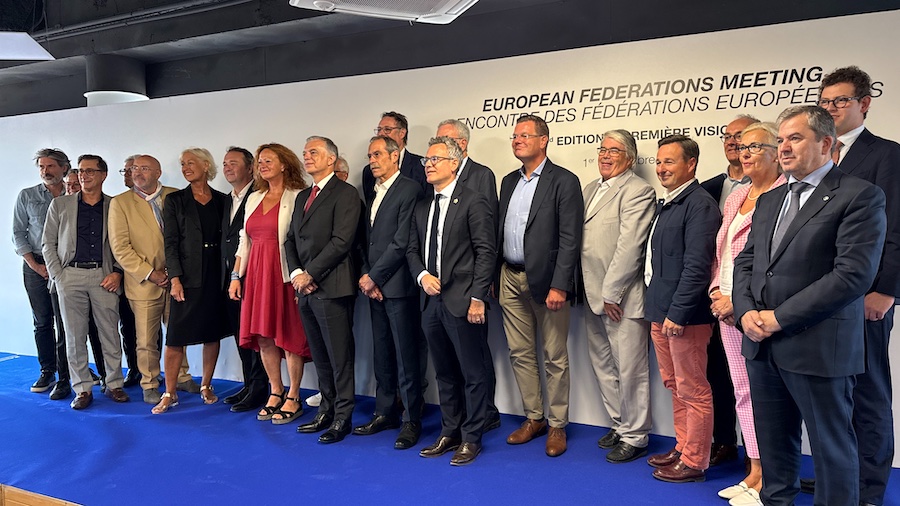
On the occasion of the Première Vision trade fair in Villepinte, the leading European textile and clothing federations issued a solemn call for urgent action against the rapid rise of ultra fast fashion. This model, driven by major non-European e-commerce platforms, already accounted for 4.5 billion imported parcels in the European Union in 2024—representing 5% of clothing sales (20% online)—and continues to grow at a staggering pace.

#Associations

Joint statement by EURATEX and Danish Fashion and Textiles

EURATEX and its Danish member Dansk Mode & Textil are calling upon the Danish Presidency of the EU to bring back stability and transparency to the European agenda. These last few months we have seen major upheavals and turbulence in global markets, as well as uncertainty surrounding a number of regulatory initiatives. All this creates a climate of uncertainty for European industry and anxiety with the consumers. As a result, demand for textile and garments is low, and entrepreneurs are hesitant to make any further investment decisions.

More News on Associations

#Associations

Waste2Fashion: FTTH Committed to advancing Circular Fashion in the Mediterranean

As an official partner of the Waste2Fashion project, the Tunisian Federation of Textile and Apparel (FTTH) participated in the Kick-off Meeting held on 10–11 December in Spain. The event brought together project partners from across the Mediterranean, including Spain, Italy, Egypt, Lebanon, and Tunisia, to align on a shared vision and initiate the first implementation steps.

#Associations

AATCC announces 2025 Herman & Myrtle Goldstein Graduate Student Paper Competition winners

The American Association of Textile Chemists and Colorists (AATCC) recognized the winners of the 2025 Herman & Myrtle Goldstein Graduate Student Paper Competition. Founded in 1982 to give student members the chance to conduct and present original research, the competition was renamed in 1994 in honor of Herman and Myrtle Goldstein, following their US$60,000 endowment. Their gift is a lasting remembrance of their dedication to young people in the textile industry.

#Associations

SIMTA joins ITMF as Corporate Member

In the past two decades SIMTA has established itself as producer of specialized machinery for the textile industry. In short period of time, SIMTA became an important supplier of precise rollers for top OEMs. Afterwards SIMTA started manufacturing overhead cleaners, bobbin transport systems, and other textile ancillaries. In the meantime, SIMTA is a leader in this space in collaboration with the German automation technology partner Jacobi.

#Associations

Driving innovation in technical textiles, digitalisation and testing

Members of the British Textile Machinery Association (BTMA) can look back on 2025 as a year marked by notable technological advances and continued progress in global trade, despite an uncertain and volatile market.

Latest News

#Research & Development

Innovation center for textile circular economy inaugurated

Just over eight months after the foundation stone was laid, the new Innovation Center for Textile Circular Economy was officially inaugurated today at TITK Rudolstadt. Thuringia's Minister President Mario Voigt, TITK Director Benjamin Redlingshöfer, and other guests of honor cut the ribbon to the modern building complex and viewed the premises, which are now ready for occupancy. The “DICE – Demonstration and Innovation Center for Textile Circular Economy” is TITK's largest single investment to date. The Free State of Thuringia supported the total cost of €11.5 million with €8 million in GRW and FTI funding.

#Research & Development

Sustainable design of Geosynthetics and roof underlayments made from recyclates

Is it possible to recover plastic recyclates from previously unused waste streams in order to produce high-quality fibers and films? How can bio-based polymer fibers be manufactured so as to allow adjustable biodegradability? These are the questions being addressed by researchers from the Fraunhofer Cluster of Excellence Circular Plastics Economy CCPE in the Zirk-Tex project.

#Nonwoven machines

Yanpai expands nonwovens capacity with two new ANDRITZ needlepunch lines

Zhejiang Yanpai Filter Technology Co., Ltd. (hereinafter referred to as “Yanpai”) has placed an order with international technology group ANDRITZ for two high-performance needlepunch lines. The equipment will be installed at Yanpai’s headquarters facility in Tiantai County, China. Commissioning is scheduled for the third quarter of 2026.

#Natural Fibers

Dr. Jane Dever inducted into the 2025 Cotton Research and Promotion Hall of Fame

Dr. Jane K. Dever, a recognized leader in cotton breeding and fiber quality research, was inducted into the 2025 Cotton Research and Promotion Hall of Fame during the joint Cotton Incorporated/Cotton Board Annual Meeting held on December 9 in New Orleans, LA.

TOP