[pageLogInLogOut]

#Associations

EURATEX General Assembly

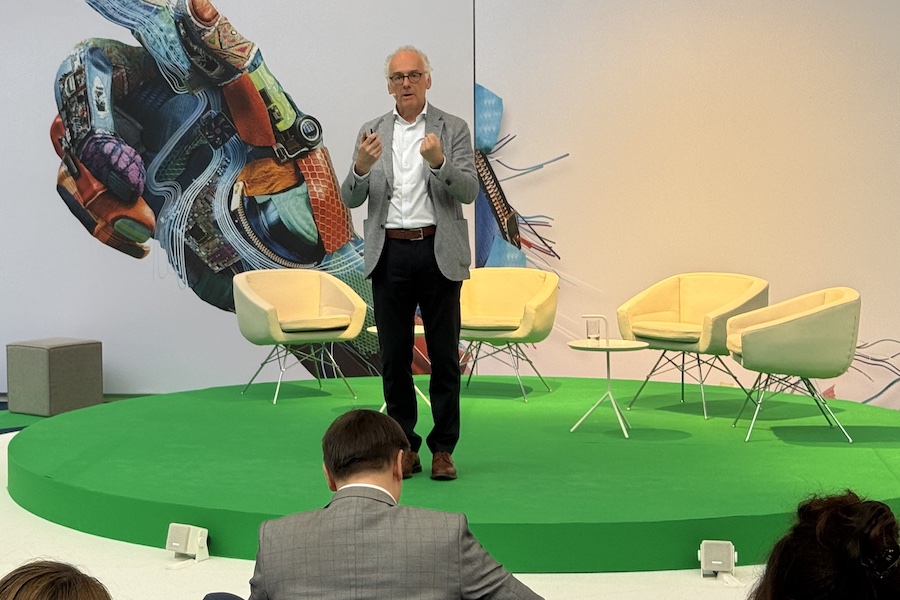
Over 120 participants attended the annual EURATEX General Assembly in Brussels on 13 June. The event was a unique opportunity to hear testimonials from different countries and contexts, with speakers offering insights in dealing with the problem of attracting talent and encouraging skills development.

At the EURATEX General Assembly, international experts present the challenges and possible solutions to tackle the issue of attracting young and skilled workforce in the textile and clothing sector.

Although the industry is witnessing a period of positive evolution – since 2012 turnover has grown by 10% to € 178 billion, extra-EU exports are up by 23% and have reached 50 billion Euros for the first time, and labour productivity has grown an impressive 22% - it still faces significant challenges, the biggest one being the difficulty of recruiting  and retaining skilled workforce.

In the opening session of the event, newly-elected EURATEX President Alberto Paccanelli stressed that “companies hiring today not only look for young people with the same skill sets as the retiring workforce, but also new talent with creative, highly technical and digital skills for high added value jobs in design, product development, technical textile production, digitalization, sustainability and circular economy.”

The Director for Skills of the European Commission’s Directorate-General for Employment, Social Affairs and Inclusion, Manuela Geleng, gave an overview of the policies and programmes being developed by the EU to support upskilling and training of workforce. She reminded the audience that EU countries on average spend 4.6% of GDP on initial education, but only 0.1% on continuous life-long learning, which is very ill adapted to today’s fast changing work environments and skill needs.
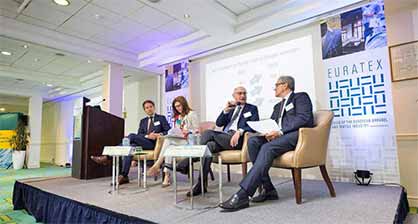
(c) 2019 Euratex
(c) 2019 Euratex


International speakers from the industry, national and regional initiatives and vocational education and training institutions presented their success stories, offering a look at the situation in different countries.

Common issues emerged, as well as clear solutions: a need for a new approach and changes in company culture are necessary to attract the new generation. Close collaboration between industry and training institutions is the key to the development of skilled professionals and the growth of the sector.

EURATEX appealed to policy makers at EU, national and regional level to accompany and support the sectoral stakeholders in their efforts to provide world-class textile and clothing education and training across Europe.
More News from European Apparel and Textile Confederation (EURATEX)

#Associations

European Business Coalition welcomes provisional application of EU–Mercosur Agreement and calls for Swift and full implementation

With the European Commission’s decision to provisionally apply the EU–Mercosur Interim Trade Agreement, a process spanning more than 25 years now moves decisively into its implementation phase.

#Europe

Antwerp Declaration community urges EU leaders to deliver emergency measures as Europe’s competitiveness crisis deepens

EURATEX, representing the European textile and fashion industry, joins the Antwerp Declaration Community’s call on EU Heads of State and Government to adopt emergency measures that restore industrial competitiveness and deliver tangible results for Europe’s manufacturing base in 2026.

#Europe

FITA, ABIT and EURATEX underline strategic importance of Mercosur – EU Partnership Agreement for the textile and apparel industry

The Argentine Textile Industry Federation (FITA), the Brazilian Textile and Apparel Industry Association (ABIT), and the European Apparel and Textile Confederation (EURATEX) continue to monitor the process of internalizing the Mercosur-European Union Partnership Agreement. This agreement is essential for the competitiveness of our industries, on both sides of the Atlantic.

#Associations

Industry associations warn against state-run EPR models in the EU

European industry associations, led by Euratex, have raised concerns over a growing trend in several EU Member States to introduce state-run Producer Responsibility Organisations (PROs) within Extended Producer Responsibility (EPR) schemes.

More News on Associations

#Associations

EDANA joins industry coalition urging a strong internal market legal basis for the New Circular Economy Act

EDANA has joined 67 European industry associations in a joint industry statement calling on the European Commission and co-legislators to anchor the forthcoming New Circular Economy Act (CEA) in the Internal Market legal basis (Article 114 TFEU).

#Associations

EDANA warns of consequences of misclassification of PET spunbond imports

EDANA would like to remind its members and industry stakeholders of the legal requirement to comply with the EU rules on customs classification when importing nonwovens from third countries outside the EU. In this regard, it was recently discovered that there appears to be a high level of customs misclassification occurring in our industry. This could have dangerous and costly consequences for importers.

#Associations

Engineering depth and diversity for composites

Airbond is the latest member of the British Textile Machinery Association (BTMA) to receive recognition for contributions to the composites industry. The engineering firm based in Pontypool, South Wales, has just received the Make UK Energy and Sustainability Award for its Lattice 3D Printing project.

#Composites

Alliance for European Flax-Linen & Hemp expands bio-materials presence at JEC World 2026

The Alliance for European Flax-Linen & Hemp is pleased to announce its participation at JEC World 2026, featuring a significantly expanded presence and an enhanced offering for the global composites industry.

Latest News

#Raw Materials

Lenzing Group positions bio‑based materials as a strategic asset for Europe’s economic security

The Lenzing Group, a leading supplier of regenerated cellulose fibers for the textile and nonwovens industries, hosted a high‑level roundtable in Brussels to discuss how bio‑based materials can strengthen Europe’s economic security and support the shift toward a fossil‑free future. Organized in cooperation with Euractiv, the event brought together representatives of the European Commission, the UK Mission to the EU, academia, civil society, and industry.

#Natural Fibers

Beyond Cotton: Natural Fibres in the Spotlight at the Bremen Cotton Conference - Branded by DNFI

Climate targets, fragile supply chains, and rising regulatory requirements are fundamentally changing the perspective of the textile industry - the focus is increasingly shifting toward the base material. Not only cotton, but natural fibres are gaining significant importance: they stand out not only because of their outstanding functional properties, but also because they make a valuable contribution to the bioeconomy and responsible product development.

#Textiles & Apparel / Garment

Coats to showcase innovative reinforcement and filler materials for leather goods and accessories at APLF 2026

Coats, a world-class Tier 2 manufacturer and trusted partner for the apparel and footwear industries, will be promoting four advanced materials from its ‘Lifestyle Solutions’ portfolio at APLF 2026 in Hong Kong in March. Each innovation has been specifically engineered to help luxury and premium brands elevate the craft, durability, sustainability and creative expression required in the manufacturing of handbags, purses, and other high-end designer accessories.

#Textiles & Apparel / Garment

Design, innovation and sustainability propel VIATT 2026’s expanding role in ASEAN textile sourcing

At its third edition, the Vietnam International Trade Fair for Apparel, Textiles, and Textile Technologies (VIATT) further reinforced its role as a key sourcing and business platform for ASEAN’s textile industry. The three-day fair welcomed over 17,000 visits from 54 countries and regions, and featured over 460 exhibitors from 21 countries and regions across 18,000 sqm. The 2026 edition was marked by the introduction of new international pavilions and zones, broadening the fair’s sourcing scope across new geographies and product categories. The fringe programme, headlined by the debut Trend Forum, further distinguished VIATT as the region’s most integrated textile trade platform – uniquely spanning the entire value chain.

TOP