[pageLogInLogOut]

#Yarn & Fiber

Cellulose Fibre Innovation of the Year 2025: Six innovations are nominated
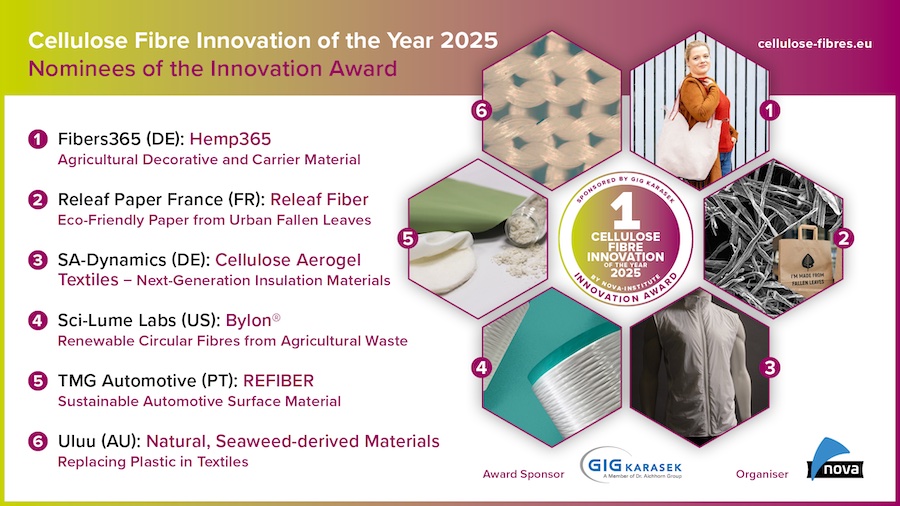
It is getting exciting again in Cologne on 12 and 13 March for the cellulose fibres industry. Six new products have been nominated for the popular innovation award. The jury has selected six outstanding nominees that want to shape the future more sustainable with their pioneering products.
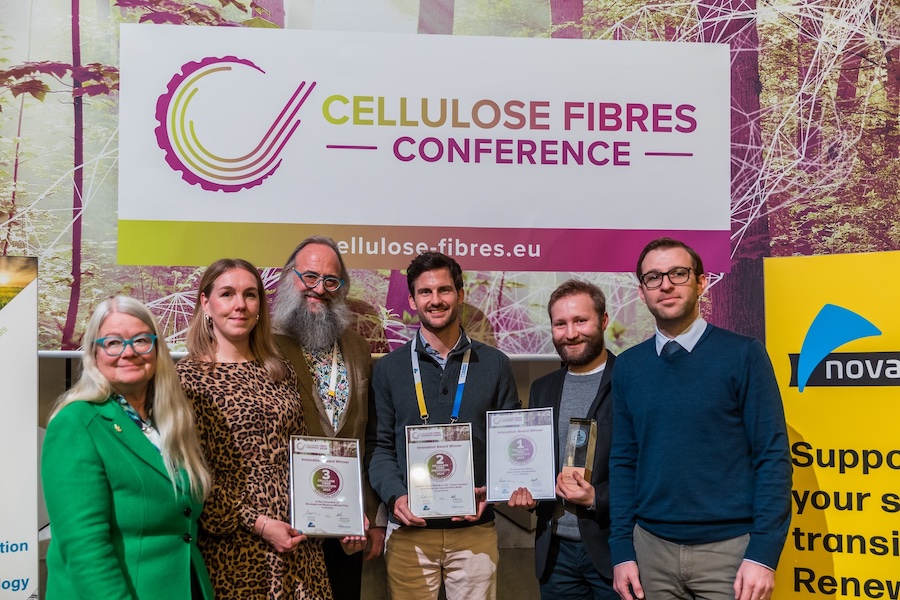
Cellulose Fibres Conference 2024 Award Winner, (f.l.t.r Asta Partanen (nova-Institute), Maria Gunnarsson (TreeToTextile), Michael Carus (nova-Institute), Pol Merino (Honext Material), Marc Philip Vocht (DITF & VRETENA), Wolfgang Aichhorn (GIG Karasek)) © 2025 Nova Institut


Every year, the conference organisator nova-Institute together with award sponsor GIG Karasek honours companies that impress with their creativity, technological progress and ecological impact. The aim of the award is not only to recognise the winners' innovative products, but also to set an example for the courage to innovate. The use of leaves for cellulose pulp and packaging, seaweed as a feedstock for biosynthetic fibres, plant-based surface material for car interiors and much more – The award nominees are as diverse as the thematic spectrum of the Cellulose Fibres Conference 2025 in Cologne.

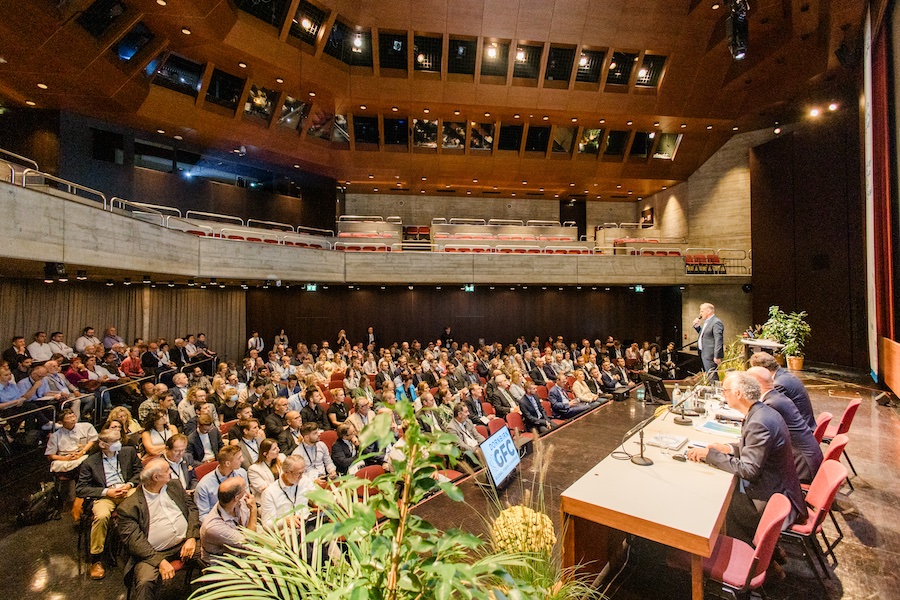
The nominees’ presentations, the voting and the winner ceremony will take place on 12 March at the Cellulose Fibres Conference 2025. Participants of the conference can vote live for the three winners. More than 220 people are expected to attend.

The Nominees

Fibers365 (DE): Hemp365 – Agricultural Decorative and Carrier Material

The solution "hemp365" is characterised by the development of a cost-effective, plant-based decorative and carrier material through the chemical-free processing of a regional agricultural fibre and the use of resulting short fibres in a wet-laid process, allowing for a massive reduction in the amount of fossil based binders required for strength and functionality. The non fibre content is less than 7 % and is also made from biogenic and biodegradable material. Hemp365 is 100 % natural and vegan. It has been designed for consumer (fashion) and industrial applications in cooperation with an automotive OEM. fibers365.com

Releaf Paper France (FR): Releaf Fiber – Eco-Friendly Paper from Urban Fallen Leaves

Releaf Paper France transforms urban fallen leaves into sustainable cellulose fibres, offering an eco-friendly alternative to traditional hardwood pulp. Using proprietary low-temperature extraction, high-quality fibres with excellent paper-forming properties are isolated. With a cellulose content of 32-48 % and properties similar to hardwood, RELEAF fibres are ideal for packaging materials like corrugated paper, boxes, and bags. This innovative process, which requires minimal water and non-aggressive solvents, aligns with circular economy principles, repurposing millions of tons of urban leaf waste annually and supporting global brands in achieving sustainable packaging solutions. releaf-paper.com

SA-Dynamics (DE): Cellulose Aerogel Textiles – Next-Generation Insulation Materials

Cellulose Aerogel Textiles are revolutionary insulation materials made from 100 % biodegradable cellulose aerogel fibres. These combine the flexibility and ease of processing of traditional fabrics with the superior thermal insulation properties of aerogels by utilising a novel aerogel fibre process. Lightweight, highly efficient, and compatible with conventional textile machinery, they provide a sustainable alternative to fossil-based and animal-derived insulation materials. Fully recyclable and free from microplastic emissions, Cellulose Aerogel Textiles set a new benchmark for circular economy solutions in the textile and construction industries. Initial functional demonstrators were developed through two projects, funded by Biotexfuture and RWTH Innovation, respectively. sa-dynamics.com

Sci-Lume Labs (US): Bylon® – Renewable Circular Fibres from Agricultural Waste

Sci-Lume Labs makes Bylon®, a scalable, circular, biosynthetic fibre. Using highly efficient chemistries to valorise agricultural waste, Bylon® seamlessly integrates into every step of the global value chain – from raw material production through textile manufacturing. Bylon® is distinct from incumbent and next-gen materials because it is simultaneously bio-based; waste-derived; degradable; recyclable; downstream-compatible; and melt-spinnable. Bylon® also offers a unique performance profile by combining the mechanical properties and tunability of traditional synthetics with the moisture properties and circularity of natural fibres. By not requiring changes to the supply chain, Bylon® empowers the industry to reduce its environmental impact – without compromising on quality, performance, or cost. sci-lumelabs.com

TMG Automotive (PT): REFIBER – Sustainable Automotive Surface Material

Textile-based composite solutions are a growing trend in the automotive sector, especially for decorative and functional interior applications. Innovative plant-based leather demonstrates this trend, combining sustainability with advanced performance. Developed from a biopolymer matrix combined with cellulose waste, this material transforms waste into a premium, eco-friendly solution. Its textile backing and non-woven laminate backing are also made entirely from cellulose fibres, creating a fully integrated bio-based composite. Designed for car interiors and more, this lightweight, durable and aesthetically versatile material sets a new standard for sustainable design, while satisfying the industry's growing demand for circular and renewable alternatives. tmgautomotive.pt

Uluu (AU): Replacing plastic in textiles with natural, seaweed-derived materials

Uluu is an Australian start-up set to replace plastics with natural polymers called PHAs. Uluu materials are made from a regenerative feedstock: farmed seaweed, thus ending reliance on fossil fuels and land crops. Uluu, in partnership with Deakin University, is developing textiles that perform like synthetic polyester but are truly biodegradable and biocompatible, thus eliminating persistent microplastic pollution in fashion. Importantly, Uluu materials are reusable, recyclable, and most importantly, compostable. They are naturally produced through a unique fermentation process that uses seaweed, saltwater microbes and seawater. Uluu pellets can be directly substituted for plastic (e.g., polyester, nylon) in existing melt spinning equipment, creating yarns that can be knitted or woven into textiles. In addition to fibre-grade pellets, Uluu is also producing other grades of pellets to replace plastics used in e.g., buttons, sunglasses, hair clips and packaging. uluu.com.au
© 2025 Nova Institut


Call for Posters

The poster exhibition is a highly anticipated scientific event at the conference, especially for early career scientists. Poster submission is open until 31 January 2025. cellulose-fibres.eu/call-for-posters/

Program

The program and all information on registration, sponsoring and exhibition is available on

http://www.cellulose-fibres.eu


More News from nova-Institut für politische und ökologische Innovation GmbH

#Man-Made Fibers

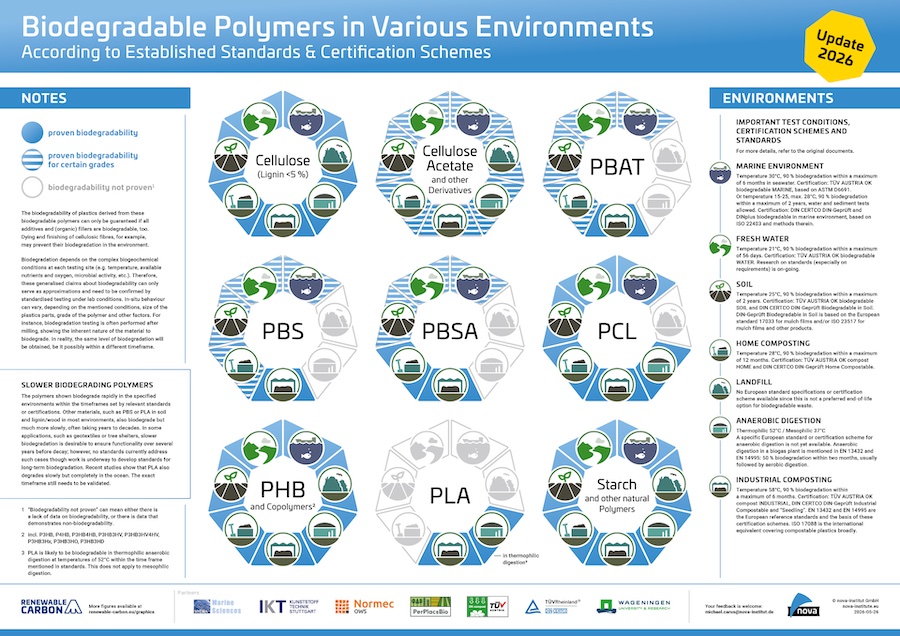
The updated poster on biodegradable Polymers in various environments has been released

As part of the PerPlacsBio project, nova-Institute has updated its popular poster on the biodegradability of polymers in different environments. The updated version reflects current standards, certifications and the latest scientific findings. The poster can be used to assess biodegradable alternatives for use in agriculture and forestry, and it is now available in German for the first time.

#Recycling / Circular Economy

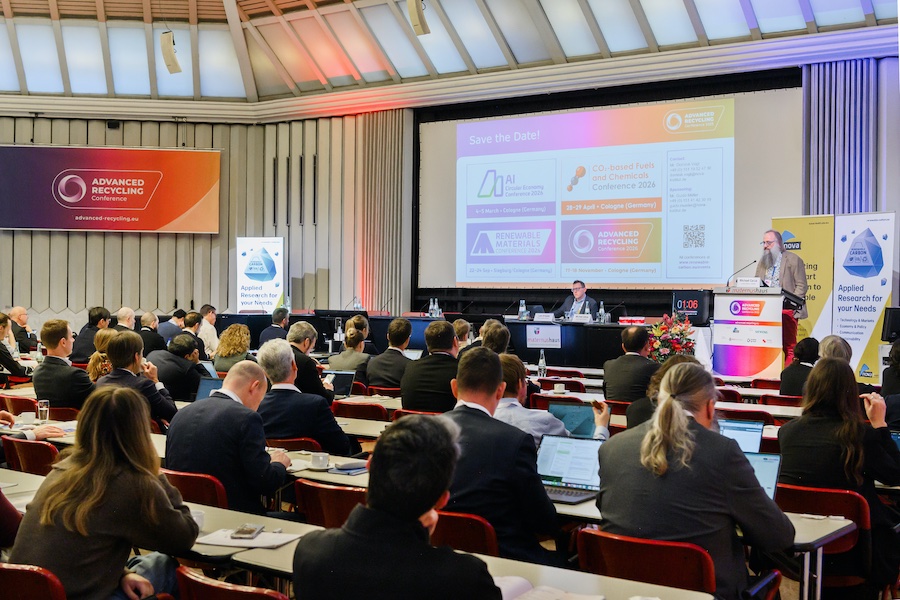
Advanced Recycling Conference 2026 to showcase innovations – Call for abstracts

The call for abstracts is now open for the Advanced Recycling Conference (ARC) 2026, taking place on 17–18 November 2026 in Cologne, Germany, and online. Europe’s leading platform for advanced recycling brings together hands-on solutions and cutting-edge research on recycling technologies for various waste streams like plastics, polymers, textiles or automotive, highlighting progress towards a circular renewable carbon economy.

#Recycling / Circular Economy

AI Circular Economy Conference 2026 fuels innovation at the intersection of AI and Circular Economy

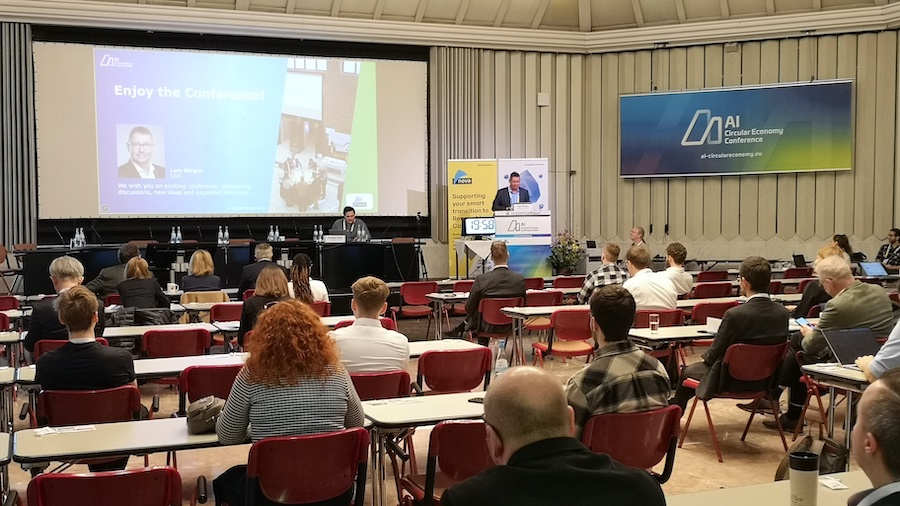
The AI Circular Economy Conference 2026, organised by nova-Institute, brought together 116 participants from 15 countries in Cologne and online to explore the transformation of the chemical and materials industry supported and accelerated by artificial intelligence. During the two-day event, leading experts from industry, research, start-ups and the investment community discussed how AI can maximise the potential of renewable carbon creating efficient circular value chains. The conference featured 24 presentations and multiple panel discussions, highlighting the growing convergence of digital technologies and circular material systems. It demonstrated how artificial intelligence is progressing from the experimental stage to real industrial implementation within the circular economy.

#Research & Development

Pioneer of the first hour: Michael Carus steps down after more than 30 years from nova-Institute’s Management

After more than three decades at the helm, founder and CEO Michael Carus is set to step down as head of the Renewable Carbon division on 1 March 2026. Lars Börger as the new CEO, will take over this key position of the nova-Institute together with COO Linda Engel, while Carus will remain with the research and consulting company as a senior advisor and shareholder. This change takes place after a one-year transition phase, as planned.

More News on Yarn & Fiber

#Yarns

Yarn Expo Shenzhen 2026 closes doors, advancing sustainable and innovative sourcing in South China

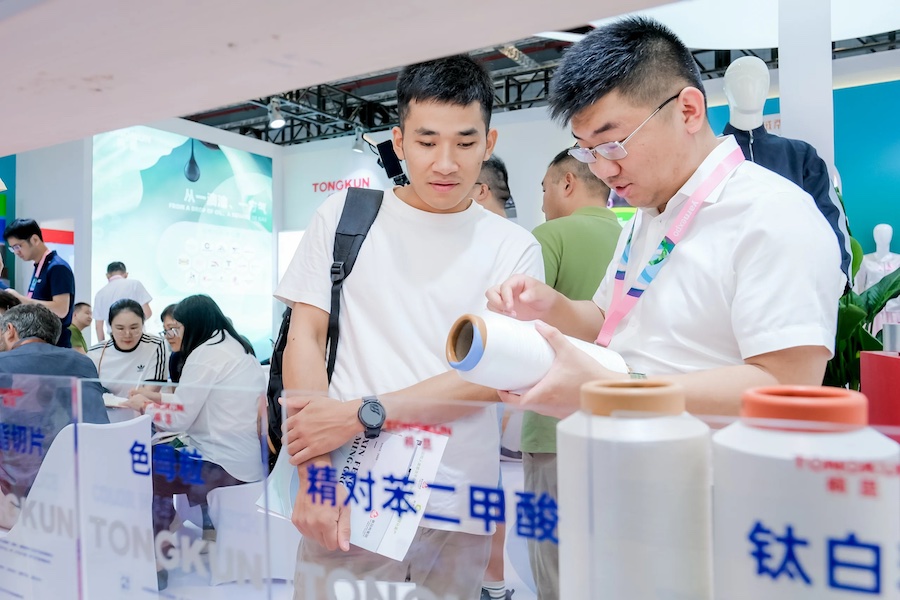
Yarn Expo Shenzhen 2026 served as a strategically positioned mid-year sourcing platform for the Greater Bay Area, highlighting Shenzhen’s role in connecting regional demand, supply and innovation exchange across the textile value chain. During the three-day fair, over 20,000 visits were drawn from 74 countries and regions[1], as exhibitors and buyers engaged with new developments in greener, performance-led, and value-added yarn and fibre solutions. Held in conjunction with Intertextile Shenzhen Apparel Fabrics and PH Value, the fair underscored the benefits of closer synergy and new materials across yarn, fabric and apparel platforms for the South China market.

#Yarns

Yarns and technologies in symbiosis: Biella Yarn presents Fall/Winter 2027/2028 collection “New Romance_”

Biella Yarn, the flat knitting brand of Suedwolle Group, launches new Fall/Winter 2027/2028 collection, inspired by the symbiosis of yarns and technologies – elements that blend, adapt and evolve together, forming something new without losing their origin. The name “Neu Romance_” reflects the emotional and neurological dimension of the yarns: a connection that engages the senses, experienced through material, touch and interaction. The collection is further brought to life through design collaborations, featuring selected yarns used in different design approaches.

#Recycling / Circular Economy

The textile industry in transition

Recycling, traceability, eco-design and digitalisation are among the key future challenges facing the European textile industry. The Erasmus+ project Skills4Circularity, involving 21 partners from twelve countries, is investigating the skills required to address these challenges. As the German industry partner, the Industry Association for Finishing – Yarns – Fabrics – Technical Textiles (IVGT) is bringing the industry’s perspective to the project.

#Research & Development

GenuTrace client advisory: Is your cotton supply chain UFLPA ready?

U.S. Customs and Border Protection has released updated operational guidance (CBP Publication No. 5560-0526) expanding its forced labor enforcement framework. The guidance supersedes the original 2022 UFLPA Operational Guidance and now covers all forced labor enforcement authorities — UFLPA, CAATSA, and WROs/Findings — in a single unified document. For cotton importers, the enforcement posture has not softened. It has become more structured, more documented, and more demanding. Learn more about UFLPA.

Latest News

#Dyeing, Drying, Finishing

Ferraro S.p.A. acquires the “Finishing” business unit of Cibitex S.r.l.

Ferraro S.p.A. and Cibitex S.r.l. are pleased to announce the completion of the agreement pursuant to which Ferraro S.p.A. has acquired the “Finishing” business unit of Cibitex S.r.l., specialized in the development and manufacturing of technological solutions for textile finishing.

#Recycling / Circular Economy

Reju opens its first R&D Center in the U.S. in Conshohocken, Pennsylvania

Reju, the company specializing in textile regeneration, today announced the opening of a Research and Development (R&D) Center in Conshohocken, Pennsylvania, the company's first proprietary research center in North America. Located within Technip Energies' existing Advanced Materials and Catalysts research center, the lab will allow Reju to accelerate the rollout of its recycling technologies and develop its next-generation circular solutions.

#Weaving

Itema reaffirms its commitment to the Syrian textile industry at NasTex 2026

From July 18th to 21st, Itema will exhibit at NasTex at the Damascus Fairground (Hall 11 – Stand C02), marking its return to one of the Middle East’s historically significant textile markets. Itema will showcase advanced weaving technology designed to support the competitiveness and technological evolution of Syrian manufacturers and announces a new partnership with Growfast Agency as the sole agent of Itema in Syria.

#Knitting & Hosiery

KARL MAYER's HKS 2-SE Expands Possibilities for Premium Stretch WARP KNITS

Warp knitted fabrics with a woven look are more in demand than ever in the fashion and apparel industries. Stretch WARP KNITS, in particular, impress with their freedom of movement, breathability, and virtually wrinkle-free wear – thereby opening up new style worlds such as smart casual or business casual. When it comes to the highly efficient production of premium-quality stretch WARP KNITS, the HKS 2-SE has long been the machine of choice. KARL MAYER’s best-selling tricot machine produces standard elastic fabrics characterized by high gauges, smooth, delicate surfaces, and a soft hand feel.

TOP