[pageLogInLogOut]

#Yarn & Fiber

The sustainability our mountains deserve: RadiciGroup and DKB introduce the first “circular” ski suit

A garment made of yarn obtained from recycled materials and designed with end-of-life recyclability in mind, without compromising style, design and technical performance. RadiciGroup Ski Club athletes will be the first ambassadors of this sustainability project

The first truly sustainable ski suit, featuring Italian style and design and azero-kilometre supply chain, is finally here. Two Bergamo companies of excellence played the leading roles in the conception and realization of this highly innovative fashion-sport garment: RadiciGroup, a world leading producer of chemical intermediates, polyamide polymers, high-performance engineering polymers and advanced textile solutions, and DKB, a company specializing in technical sportswear with the same brand name.
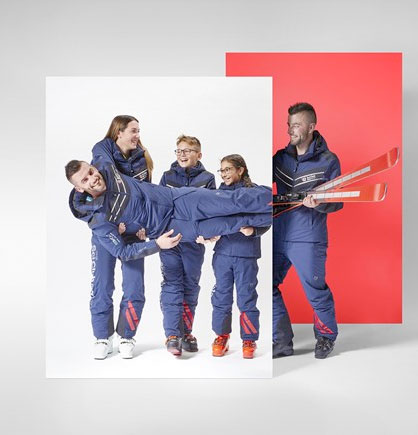
© 2021 RadiciGroup
© 2021 RadiciGroup


The ski suit, consisting of jacket and trousers, is fashioned with a fabric made of RENYCLE, a RadiciGroup yarn obtained from mechanically recycled polyamide (nylon), which affords notable savings in energy and water consumption, as well as lower CO2 emissions. In addition, the suit’s padding and numerous accessories, such as zippers, Velcro, buttons and thread, are also made of polyamide.

This achievement was made possible by the great teamwork of RadiciGroup and DKB on the research and development of chemically compatible materials that can be used in special applications requiring high technical performance. The end result is an almost mono-material garment that significantly facilitates end-of-life recycling. It can be more easily converted into polymers for use in the manufacture of ski boot components and bindings, in addition to applications in the automotive and furnishing industries, or in any other sector requiring the characteristics of high performance polyamides.

The ski suit by RadiciGroup is thus an all-round application of ecodesign and circular economy principles to fashion and garment making, which justifies the claim “Una sostenibilità all’altezza delle nostre montagne” [Sustainability worthy of our mountains] written in a logo patch on the inside of the jacket.

“I am particularly proud of this achievement, a synthesis of my passion and effort,” said Angelo Radici, president of RadiciGroup. “I’ve always loved mountaineering and skiing, and, together with my collaborators, I work hard at our company day in and day out to find innovative solutions that improve the sustainability of our industry. This ski suit is concrete proof of the fact that textiles and apparel can be made sustainable without compromising on comfort, design, looks or performance. I will never get tired of repeating that collaboration among the firms along the production chain is crucial to manufacturing goods with an ecodesign approach, considering their end-of-life recyclability and, thus, potentially giving them unlimited durability. Upstream producers, like us, gladly share our know-how in materials chemistry and experience in recycling with our downstream partners, so that, together, we can find sustainable and viable solutions in the various sectors where we operate.”


Thanks the very nature of nylon, the fabric made of RENYCLE makes the new ski suit significantly much lighter and extremely less bulky, compared to the conventional kind of suit. Moreover, the suit provides impact and wear resistance far superior to that of equivalent garments available today on the market.

In the design phase, special attention was given to style and design details, so as to combine comfort with competitive requirements, all the while keeping the main sustainability elements in mind, that is, mono-material composition and ease of recycling. Even though the yarn used was obtained from recycled scraps and rejects, the resulting fabric has a nice blue matte colour, a soft touch, and a very clean and elegant line. Other details worthy of note are the hexagonal inserts made of black polyamide fabric on both the jacket and trousers, specially designed to reinforce the external fabric layer and increase abrasion, tear and low temperature resistance.

“I had the privilege of trying on the ski suit,” concluded Angelo Radici, who has a background in competitive alpine skiing and is the winner of a world championship title in masters competitions. “As a snow lover, I can guarantee that the suit perfectly meets the requirements of comfort and performance needed by skiers on the slopes. With DKB, a company of excellence in the sportswear market, we carried out a continuous and synergistic collaboration, also facilitated by the proximity of our companies and the opportunity to have in-person meetings. I believe that valorizing local and traceable supply chains is an additional plus of the ski suit project.” 
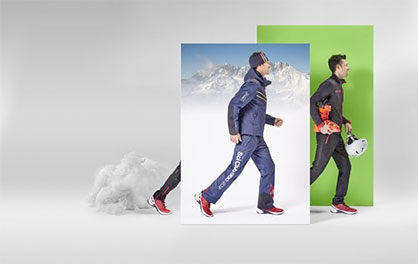
© 2021 RadiciGroup
© 2021 RadiciGroup


RadiciGroup Ski Club athletes and coaches will be the first to wear this ski uniform during the winter season 2021-2022, thereby becoming the ambassadors of the sustainability initiative. Founded in 1975, the RadiciGroup Ski Club today has more than 100 athletes, aged 6 to 18, competing in the various youth categories.

The RadiciGroup ski suit will be included in a new collection that DKB is offering to the best sports shops starting with the 2022 winter season, refashioned to fit the company’s style choices for athletes and ski enthusiasts who follow fashion and design trends, but also care about performance and the environment.



More News from Radici Partecipazioni SpA

#Recycled Fibers

Recycling mixed-fibre garments becomes a reality: RadiciGroup, The LYCRA Company and Triumph take circular fashion a step forward

The process, which is both economically and environmentally sustainable, has enabled the production of an underwear set made from 100% recycled nylon and LYCRA® fibre in a closed-loop system.

#Sustainability

RadiciGroup: 21st Sustainability Report published

RadiciGroup has published its 21st Sustainability Report, covering the year 2024, confirming more than two decades of transparency and measurement in the economic, environmental, and social dimensions. From its first Social Report in 2004 to the current reporting aligned with the GRI Universal Standards, the Group is now preparing for its next challenge: the adoption of the criteria that will be set out by the Corporate Sustainability Reporting Directive (CSRD).

#Recycling / Circular Economy

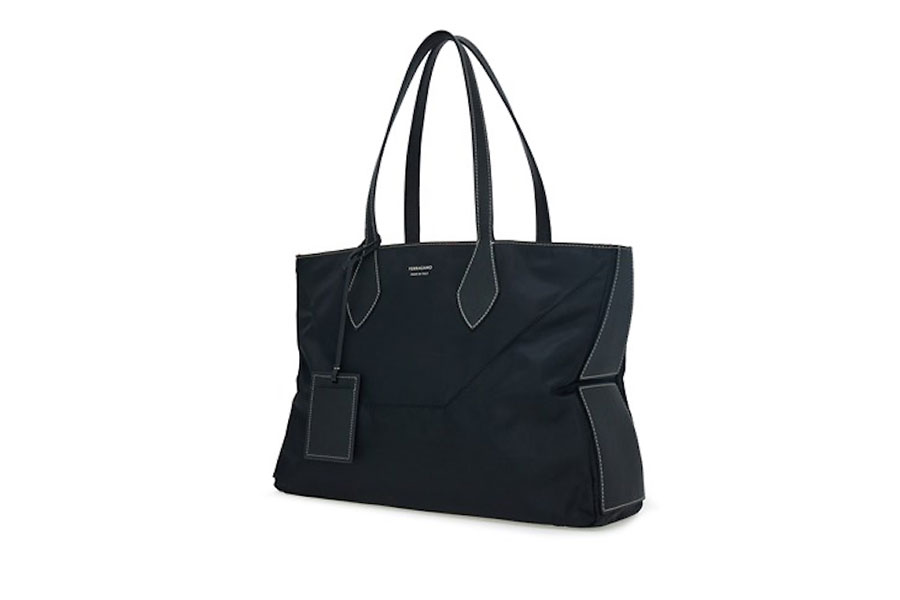
RadiciGroup and Ferragamo team up for an eco-design project under the Monitor for Circular Fashion initiative

RadiciGroup, a leading player in sustainable textile solutions, has partnered with Ferragamo to develop “Nova – The evolution of a Star”, an eco-design project that reimagines one of the Maison’s iconic handbags through the lens of circularity.

#Yarn & Fiber

Twenty years of Sustainability Report for RadiciGroup

The RadiciGroup Sustainability Report reaches an important milestone this year: twenty years have in fact passed since the Group published its first Social Report in 2004, qualifying it as one of the pioneering companies in the realisation of voluntary non-financial reporting. The document measures the Group’s achievements and the actions it has taken to reduce its environmental impact, respect social values, and implement good business management practices.

More News on Yarn & Fiber

#Recycling / Circular Economy

The textile industry in transition

Recycling, traceability, eco-design and digitalisation are among the key future challenges facing the European textile industry. The Erasmus+ project Skills4Circularity, involving 21 partners from twelve countries, is investigating the skills required to address these challenges. As the German industry partner, the Industry Association for Finishing – Yarns – Fabrics – Technical Textiles (IVGT) is bringing the industry’s perspective to the project.

#Research & Development

GenuTrace client advisory: Is your cotton supply chain UFLPA ready?

U.S. Customs and Border Protection has released updated operational guidance (CBP Publication No. 5560-0526) expanding its forced labor enforcement framework. The guidance supersedes the original 2022 UFLPA Operational Guidance and now covers all forced labor enforcement authorities — UFLPA, CAATSA, and WROs/Findings — in a single unified document. For cotton importers, the enforcement posture has not softened. It has become more structured, more documented, and more demanding. Learn more about UFLPA.

#Spinning

"We will become a recycling powerhouse"

The textile industry is now in its fourth consecutive year of crisis, while automation, artificial intelligence and recycling are reshaping the rules of the game. In this interview, Rieter CEO Thomas Oetterli discusses the first signs of a market recovery, reflects on his first three years at the helm of the company, explains the integration of Barmag, outlines Rieter’s vision of the fully automated spinning mill and highlights the strategic importance of recycling. In doing so, he explains why the new Rieter Group aims to play a leading role in transforming the textile value chain into a circular economy.

#Man-Made Fibers

ROICA™ launches new global brand identity and digital experience

ROICA™, the premium stretch fiber developed by Asahi Kasei, today announced the launch of its new global brand identity, including a new key visual and a fully redesigned website. This milestone initiative marks the beginning of a new phase in ROICA™’s evolution as a global brand.

Latest News

#Natural Fibers

Bremen Cotton Exchange: Fritz A. Grobien re-elected as President

The members of the Bremen Cotton Exchange have re-elected Fritz A. Grobien as President during the association’s 152nd General Assembly on June 18, 2026. The election confirms the organization’s commitment to maintaining its role as a leading international platform for the cotton and fiber industry amid a period of geopolitical and economic uncertainty.

#Natural Fibers

Organic cotton at the crossroads: Ideology, evidence, and the road ahead

Organic cotton occupies one of the most contentious spaces in global agriculture. While praised by brands and consumers for its environmental ideals, it also faces persistent questions about yield stability, certification integrity, and scalability. The current edition of The ICAC Recorder cuts through the ideology to deliver a rigorous, evidence-based assessment of both sides of the debate.

#Spinning

New spinning package with two-step filtration for recycled yarns and more

At the ITM in Istanbul, BB Engineering unveiled its new, patented ValuePack spinning package for the first time, which features a two-stage filtration system. This is particularly beneficial for re-cycling processes. Until now, spinning packs have used either metal powder (“sand”) or filter candles as filter media. Both options are suitable for differ-ent applications, and each has its own specific advantages and dis-advantages.

#ITMA 2027

ITMA 2027 gains strong momentum

In line with the theme "Co-creating the future of textiles", ITMA continues to strengthen its support for start-ups, recognising their role in driving innovation and shaping the future of textile and garment manufacturing. Through the Start-Up Valley, emerging companies gain access to a global marketplace where they can connect with industry leaders, potential partners, investors and customers.

TOP


