[pageLogInLogOut]

#Yarn & Fiber

Flocus, the trademark for kapok fibers

Flocus™, the trademark for kapok fibers, is the first company in the world which produces and enhances the potentialities of kapok fibers.

Flocus™ offers a range of kapok textile materials such as fibers, yarns, textiles and nonwovens, which provide the textile industry with a naturally sustainable and regenerative alternative which has not been available before.

Flocus™ pioneers sustainable and regenerative textile solutions based on kapok fiber, and it is creating a responsible supply chain for kapok.

With the most advanced technology in the market, FLOCUS™ can spin the highest kapok percentage, offer yarns in the thinnest counts with the possibility of low minimum order quantity per blend.

Flocus™ Kapok offers products which can reduce the presence of animal and synthetic products in the market, utilizing a completely natural alternative without abandoning functionality.

FLOCUS™ is a 100% sustainable ‘open’ source textile concept in which buyers can tailor blend their needs for their sustainable collection

The Flocus™ team works in partnership with companies who want to investigate the use of the eco-responsible fibers and is testing the wide range of applications of Flocus™ kapok stuffing, yarns, fabrics, nonwovens for thermo and sound insulation, waddings, foam replacement, medical, automotive and technical uses and others.

Flocus™ history and know-how

Flocus™ was established in 2016 by Jeroen Muijsers (CEO and technical director) and Sara Cicognani (marketing and commercial director). After about three years of research, they were joined in mid 2018 by Andre Van Wolde, now CFO of the company.

The business idea came in 2014, when Jeroen Muijsers, a textile engineer interested in developing new application for low-impact materials, came across Kapok fiber and started studying it. His intuition on the huge potential of kapok fibers brought him to travel all over China and Indonesia to find out more about it.

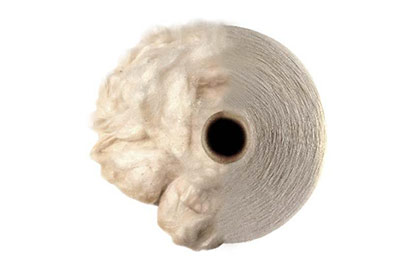
Kapok is a natural fiber, traditionally used by local population for fillings but with no large scale applications until Flocus ™ founding. Beside kapok several interesting properties, there were some limits that had been inhibiting the possibility to use it at a larger scale and build a supply chain on textile products based on it: kapok fibers are short stapled ones (2-4 cm length), very light and empty inside: for this reason they incorporate air and made the spinning attempts unsuccessful.

© 2021 FLOCUS™
© 2021 FLOCUS™


© 2021 FLOCUS™
© 2021 FLOCUS™


FLOCUS™ developed its own technology that finally made kapok fibers easier to spin and suitable for many different uses.

Flocus ™ kapok applications:

- Yarn and textile

- Fiber and non-woven stuffing

- Composites and pressed materials

- Medical

- Packaging

- Oil absorption

- Construction

- Hygiene

- Automotive

FLOCUS™ mission

Today, with the most advanced technology in the market, FLOCUS™ can spin the highest kapok % and offers yarns in the thinnest counts with the possibility of low minimum order quantity per blend.

Since 2016, FLOCUS™ has been promoting the use and the knowledge of kapok fibers:

- Planting kapok trees in Indonesia to cover the increasing demand, in areas where the desertification risk is high, helping the poor and delicate ecosystem to find a new balance

- Testing the wide range of applications of kapok

- Building partnership with companies to help them using kapok for a wide range of products (stuffing, yarns, fabrics, fillings, industrial uses)

- Established 4 operative offices in Italy, Netherland, Indonesia, China (Shanghai)

- Investing in the CSR facility in Indonesia with about 15-25 people employed, that is due to be completed by the end of 2021

The kapok fibers and the increasing demand for eco-responsible materials

Kapok is the most sustainable fiber in the market leaving no human footprint behind. Nature has given Kapok numerous properties like its silky soft and dry touch of the fiber itself, antimoth and antimite properties as well as insulation properties comparable to down, and many others. FLOCUS™ Kapok combines these natural qualities with performance, functionality and a wide range of applications.

Kapok is a natural fiber coming from a non-food fruit crop (Ceiba pentandra) that grows in many subtropical areas. They can be picked, like an apple, leaving the tree to grow and prosper. We use kapok coming from South East Asia. The Kapok trees need no irrigation, no pesticides, and no fertilisers, they thrive only with natural resources. They can grow on hills, in a biodiverse environment, and on land which is not suitable for agricultural purposes - resulting in 100% positive impact on the environment.

Why FLOCUS™ Kapok is the most eco-responsible fiber

Kapok is a pure and natural, non-food, vegan product. Developing the production of this material, in the countries where kapok trees grow, helps to regenerate communities and develop economic prosperity - as well as having a positive impact.

Flocus™ encourages and enables the industry to choose its ingredients carefully. Kapok is given by nature, organic by default - helping the people, helping the planet.

Kapok trees generate an efficient eco-system which avoids erosion, avoids deforestation, sequesters carbon and increases O2 in the atmosphere, preserves water, supports poly-cropping, organically fertilises the land, saves agricultural land, and is completely sustainable and regenerative.




More News from TEXDATA International

#ITM 2026

ITM 2026: The new geography of textile production

New production hubs are emerging across North Africa and Central Asia, while Türkiye is accelerating its transformation toward higher-value, technology-driven and more sustainable textile manufacturing.

#Research & Development

“Production is a product”

From technical textiles and AI-driven robotics to the limitations of textile circularity: Professor Dr Thomas Gries looks back on more than two decades of development at ITA Aachen. In the interview, he explains why production technology remains a decisive success factor, discusses international collaborations and innovation ecosystems, and shares his views on the transformation of production landscapes and the challenges facing an increasingly regulated industry.

#Knitting & Hosiery

“We need to move away from the price trap and return to a value-driven mindset.”

With its new Textile Innovation Center, KARL MAYER is sending a strong signal for innovation, collaboration, and the future of textile applications. In this interview, Karl Josef Mayer discusses new opportunities in warp knitting, the processing of staple fibres, recycling, the changing role of machinery manufacturers, and why the textile industry must once again focus more strongly on the value of textiles. by Oliver Schmidt

#Associations

“Innovation, resilience and international experience remain the great strengths of the Swiss textile machinery industry”

Geopolitical uncertainty, growing competitive pressure from China, new free trade agreements and the shift towards a circular economy are currently reshaping the global textile industry. In this interview, Cornelia Buchwalder discusses the current mood within the Swiss textile machinery sector, the industry’s distinctive innovative strength, new market opportunities in India and Asia, and the technological trends that could shape the upcoming trade fair cycle leading up to ITMA 2027.

More News on Yarn & Fiber

#Yarn & Fiber

Lenzing AG appoints Georg Kasperkovitz as Chief Executive Officer

The Supervisory Board of Lenzing AG has appointed Georg Kasperkovitz, Member of the Management Board and Chief Operations Officer, as Chief Executive Officer (CEO) of Lenzing AG with effect from June 1, 2026.

#Yarn & Fiber

Next week’s focus: Intertextile Shenzhen & Yarn Expo Shenzhen fuse textile tradition with sustainable, digital trends

Fashion will not be left behind in one of the world’s undisputed tech and manufacturing capitals. Which is why next week, at Intertextile Shenzhen Apparel Fabrics and Yarn Expo Shenzhen 2026, the organisers have made special efforts to integrate textile topics such as materials innovation, holistic sustainability, digitalisation and AI. Yet, from 9 – 11 June at the Shenzhen Convention and Exhibition Center, the platform also includes timeless tradition and heritage-inspired evolution in equal measure. Across both shows, over 600 exhibitors from 11 countries and regions are set to showcase everything from Peruvian alpaca wool fabrics to tea-derived fibres, while their fringe programmes will explore diverse solutions along the entire value chain.

#Yarns

From advanced fibres to eco‑focused yarns: Yarn Expo Autumn 2026 set to welcome global industry to Shanghai

From 25 – 27 August, Yarn Expo Autumn 2026 will return to the National Exhibition and Convention Center (Shanghai) to reinforce its role as a key meeting point for the global yarn and fibre industry. With over 22,000 visitors, the previous edition gathered nearly 580 leading exhibitors from 16 countries and regions, showcasing advanced developments and creative applications that support innovative, sustainable textile design. The upcoming edition will not only present an extensive range of fibre and yarn products, but will also feature a comprehensive fringe programme, including industry forums and trend display areas, providing innovative upstream enterprises with a stage to introduce next‑generation materials and sustainable concepts.

#Man-Made Fibers

Indorama Ventures supports Southeast Asia’s textile customers with reliable regional supply and global innovative portfolio

Indorama Ventures, one of the leading global polyester fiber and filament yarn suppliers globally, will participate in Indo Intertex 2026 in Jakarta this April, making its diverse global portfolio available to apparel, home textile, and hygiene customers across Southeast Asia.

Latest News

#ITM 2026

The future of textiles, the power of trade, and the summit of technology come together at ITM 2026

ITM 2026 International Textile Machinery Exhibition, one of the most prestigious organizations in the textile technologies sector, opens its doors to visitors between June 9-13. Expected to break records in terms of both exhibitor and visitor numbers, as well as the technological vision it presents, ITM 2026 will transform into a global trade hub with machine sales, and new business collaborations.

#Nonwoven machines

ATCO Hygienics, Uzbekistan, orders baby diaper production line from ANDRITZ

International technology group ANDRITZ has received an order from ATCO Hygienics to supply a new baby diaper production line for its plant in Tashkent, Uzbekistan. The order is included in ANDRITZ’s order intake for the first quarter of 2026. Commissioning of the production line is scheduled for the end of 2026.

#Weaving

Itema manufactures the first Projectile Weaving Machines “Made in Italy” at its Colzate Headquarters.

Itema proudly announces an important industrial milestone: in early May, the first Itema projectile weaving machines manufactured in Italy were successfully produced at the Group’s headquarters in Colzate.

#Spinning

Nico Pedretti appointed as Managing Director Graf Group

As of June 1, 2026, Nico Pedretti has assumed the role of Managing Director Graf Group. With more than 20 years of international industrial experience and extensive expertise in Operations, Supply Chain Management, Finance and Controlling, he brings a broad range of leadership and business experience to support Graf’s continued success.

TOP



