[pageLogInLogOut]

#Yarn & Fiber

Südwolle Group expands its sustainability commitment through the collaboration with RENU fibres by ITOCHU Corporation

Südwolle Group, well-known spinner of pure wool and wool blend worsted yarns, expands its offering through the strategic cooperation with RENU project by ITOCHU Corporation Ltd. The partnership comprises a strategic co-development and marketing of yarns and fabrics constructed with Itochu’s RENU recycled polyester fibre blended with wool targeted for the worsted yarn industry.

For Südwolle Group, the cooperation underlines the company’s approach to develop and foster eco-friendly solutions for today’s challenges, especially in textile business: “Investing in circular economy is no longer an alternative for the fashion industry, it is a must.”, explains Stéphane Thouvay, Managing Director Product Management & Innovation at Südwolle Group. “Our industry has to develop technical solutions, new services and partnerships to address the challenges of textile waste and recycling. Südwolle Group already integrates various recycled raw materials within its GRS certified yarns. We are also developing solutions and supply chains to recycle old clothing, such as worsted wool sweaters, into new yarns in order to process them into new garments. With RENU fibres and filaments, we are now very excited to offer the market unique wool blends with recycled polyester originating exclusively from textile waste!

Blending wool with RENU polyester is a ‘perfect match’: RENU delivers the performance of synthetics, such as durability and abrasion-resistance, whereas wool contributes to comfort with its thermo-regulating and moisture-managing attributes as well as a soft hand touch.“


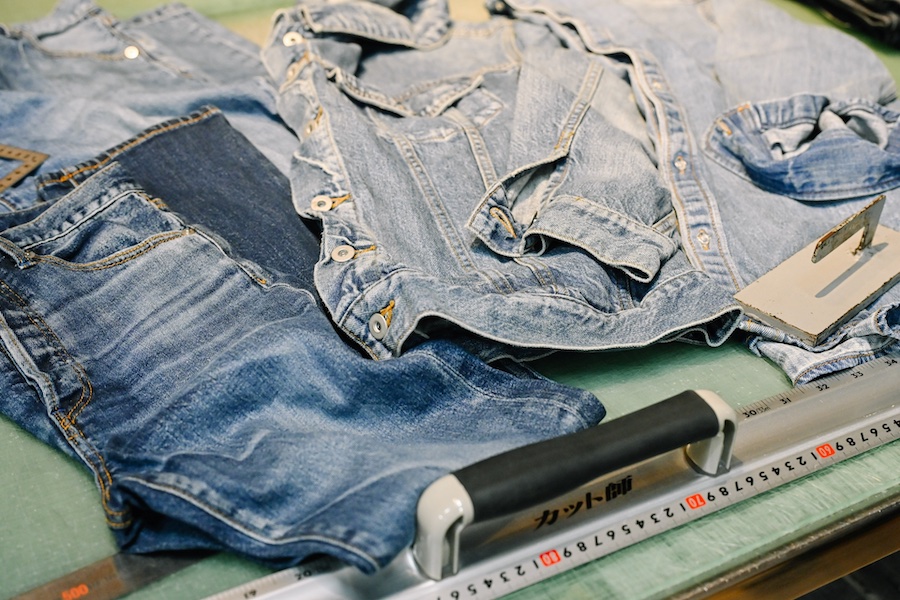
Itochu’s RENU project addresses the excessive waste in clothing industry and aims a circular economy in fashion by utilizing textiles that used to be thrown away. RENU fibre is GRS certified sustainable polyester recycled from textile waste and old clothing. Collected garments and textiles are cut and processed into new polyester fibres through a unique depolymerization and refining process. Removing colours from the previous textile is easily possible due to a special technology that allows the recycled material to have a dye-ability comparable to virgin polyester. In addition, quality and performance of the recycled polyester does not depend on the quality of the waste: RENU can utilize nearly any type of pre- and post-consumer waste as long as it contains polyester. 

More News from TEXDATA International

#ITM 2026

ITM 2026: The new geography of textile production

New production hubs are emerging across North Africa and Central Asia, while Türkiye is accelerating its transformation toward higher-value, technology-driven and more sustainable textile manufacturing.

#Research & Development

“Production is a product”

From technical textiles and AI-driven robotics to the limitations of textile circularity: Professor Dr Thomas Gries looks back on more than two decades of development at ITA Aachen. In the interview, he explains why production technology remains a decisive success factor, discusses international collaborations and innovation ecosystems, and shares his views on the transformation of production landscapes and the challenges facing an increasingly regulated industry.

#Knitting & Hosiery

“We need to move away from the price trap and return to a value-driven mindset.”

With its new Textile Innovation Center, KARL MAYER is sending a strong signal for innovation, collaboration, and the future of textile applications. In this interview, Karl Josef Mayer discusses new opportunities in warp knitting, the processing of staple fibres, recycling, the changing role of machinery manufacturers, and why the textile industry must once again focus more strongly on the value of textiles. by Oliver Schmidt

#Associations

“Innovation, resilience and international experience remain the great strengths of the Swiss textile machinery industry”

Geopolitical uncertainty, growing competitive pressure from China, new free trade agreements and the shift towards a circular economy are currently reshaping the global textile industry. In this interview, Cornelia Buchwalder discusses the current mood within the Swiss textile machinery sector, the industry’s distinctive innovative strength, new market opportunities in India and Asia, and the technological trends that could shape the upcoming trade fair cycle leading up to ITMA 2027.

More News on Yarn & Fiber

#Yarn & Fiber

R-Evenge chooses Q-NOVA® yarn by Fulgar for its line of technical socks dedicated to wellness

Q-NOVA®, Fulgar’s sustainable polyamide 6.6 yarn, has been selected by R-Evenge for the development of its collection of technical socks dedicated to wellness, fitness, and water-based activities.

#Yarns

Yarn Expo Shenzhen 2026 closes doors, advancing sustainable and innovative sourcing in South China

Yarn Expo Shenzhen 2026 served as a strategically positioned mid-year sourcing platform for the Greater Bay Area, highlighting Shenzhen’s role in connecting regional demand, supply and innovation exchange across the textile value chain. During the three-day fair, over 20,000 visits were drawn from 74 countries and regions[1], as exhibitors and buyers engaged with new developments in greener, performance-led, and value-added yarn and fibre solutions. Held in conjunction with Intertextile Shenzhen Apparel Fabrics and PH Value, the fair underscored the benefits of closer synergy and new materials across yarn, fabric and apparel platforms for the South China market.

#Yarns

Yarns and technologies in symbiosis: Biella Yarn presents Fall/Winter 2027/2028 collection “New Romance_”

Biella Yarn, the flat knitting brand of Suedwolle Group, launches new Fall/Winter 2027/2028 collection, inspired by the symbiosis of yarns and technologies – elements that blend, adapt and evolve together, forming something new without losing their origin. The name “Neu Romance_” reflects the emotional and neurological dimension of the yarns: a connection that engages the senses, experienced through material, touch and interaction. The collection is further brought to life through design collaborations, featuring selected yarns used in different design approaches.

#Recycling / Circular Economy

The textile industry in transition

Recycling, traceability, eco-design and digitalisation are among the key future challenges facing the European textile industry. The Erasmus+ project Skills4Circularity, involving 21 partners from twelve countries, is investigating the skills required to address these challenges. As the German industry partner, the Industry Association for Finishing – Yarns – Fabrics – Technical Textiles (IVGT) is bringing the industry’s perspective to the project.

Latest News

#Textile processing

YKK develops concept EXCELLA® zipper tape using nonwoven fabric partially derived from used clothing

YKK Corporation has developed a concept version of its premium EXCELLA® zipper series made from nonwoven fabric sheets created by fiberizing used clothing and other textile materials. Based on a proposal by fashion designer Yuima Nakazato, this item was created as a result of collaboration between Nakazato, Seiko Epson Corporation and YKK. The concept zipper was incorporated as a material component for pieces in the newest YUIMA NAKAZATO Couture Collection, “INFERNO,” which was unveiled in Paris, France on July 8, 2026.

#Textiles & Apparel / Garment

Texworld Apparel Sourcing Paris highlights evolving global sourcing landscape

From 31 August to 2 September 2026, Texworld Apparel Sourcing Paris will bring together more than 1,000 international exhibitors at Paris-Le Bourget Exhibition Centre. This edition reflects the new global balance of textile and apparel sourcing, highlighting a strong diversity of sourcing countries — some unexpected.

#Textile processing

Dedicated car seat model of SHIMA SEIKI’s P-CAM® R Cutting Machine unveiled

Leading Japanese textile solutions provider SHIMA SEIKI MFG., LTD. of Wakayama, Japan, showed a special version of its P-CAM® R multi-ply computerized cutting machine dedicated to the production of car seats for the first time, at a private exhibition held over two days on Thursday, July 2nd and Friday, July 3rd at the Kariya City Industrial Promotion Center in Aichi Prefecture.

#Research & Development

ALADIN paves the way for circular and demand-driven textile production in Europe

Textile production can be organized sustainably by utilizing short supply chains and preventing overproduction. This can already be achieved today by intelligently connecting and efficiently utilizing existing infrastructure. At the same time, production becomes circular when innovative technologies and materials are used that enable high-quality recycling. The ALADIN research project, launched in May 2026 and co-funded with five million euros under the EU Horizon Europe program, is creating the conditions for this.

TOP