#Weaving
"Dynamic markets do not only create uncertainty – they also create opportunities."
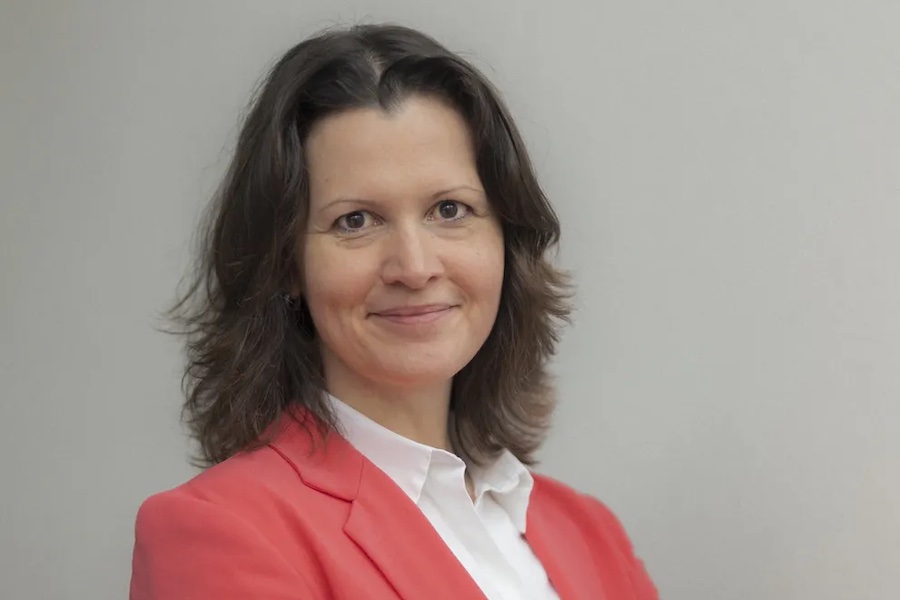
Interview
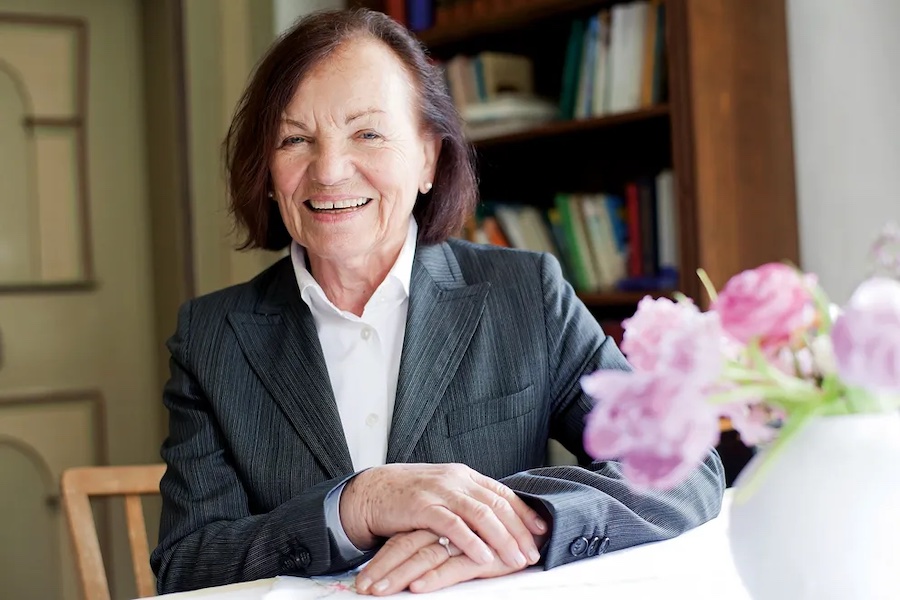
Yvonne Schuberth, Head of DORNIER’s Weaving Machines Product Line
by Oliver Schmidt, Editor in Chief, TexData International
Wenn Sie das Interview in Deutsch lesen möchten, klicken Sie bitte hier
1. Ms Schuberth, you took over as Head of DORNIER’s Weaving Machines Product Line on 1 January 2026 after previously being responsible, among other things, for Internal Sales. You therefore know your products, your customers, and the markets exceptionally well. How has your perspective changed since taking over the overall responsibility for the business, and what priorities would you like to set in your new role?
Taking on overall responsibility has naturally broadened my perspective even further. During my first months in this role, I therefore made a conscious effort to listen – to our development, sales and service teams, and above all to our customers around the world. My main objective was to understand where our customers are currently under the greatest pressure and how we can support them even better with our weaving technology.
Before joining DORNIER, I worked as a textile engineer in the field of technical flame-resistant fabrics for protective clothing. I then spent many years leading the Internal Sales department for DORNIER’s Weaving Machines Product Line. This has given me an in-depth understanding of the wide variety of fabrics produced on our weaving machines, as well as of the questions and challenges our customers face when making investment decisions.
Together with my team, I want to combine my experience in textile engineering and sales to develop tailor-made weaving solutions while always keeping our customers’ economic framework and investment considerations in mind. Close customer relationships and open dialogue are particularly important to me because my years in sales have shown me how much you can learn by truly listening.
From a technological perspective, we will continue to strengthen our position in technical textiles, which remains one of the most innovative and dynamic sectors of the textile industry.
2. You assumed leadership of the weaving machines product line at a particularly challenging time for the industry. DORNIER speaks of increasingly volatile market requirements, and you recently said that weaving technology must be both reliable and flexible. Could you make that a little more tangible for our readers? How would you describe the current situation in the global weaving machinery market? What are your customers asking for today, and where do you see the market heading in the coming years?
As a company that generates more than 90% of its business in international markets, we experience our customers’ challenges around the world first-hand. They have to remain competitive and profitable in markets characterised by fluctuating demand, high costs, geopolitical uncertainties, and a shortage of skilled labour.
Whether they produce apparel fabrics, home textiles, technical textiles or reinforcement fabrics for composites on our weaving machines, they expect one thing above all else: the high level of process stability and reliability they have come to associate with the DORNIER weaving machine family.
At the same time, they also need flexibility. Order volumes fluctuate, style changes are becoming more frequent, and different materials must be processed efficiently on the same machine. Our air-jet and rapier weaving machines are designed to deliver exactly this combination of reliability and flexibility. They enable our customers to adapt production quickly without compromising quality or productivity.
However, dynamic markets do not only create uncertainty – they also create opportunities. Technical textiles, in particular, continue to open up new applications in fields such as mobility, aerospace, filtration, environmental technology, construction, infrastructure, medical technology, protective equipment, and energy. Companies that can flexibly expand their product portfolio are better positioned to enter new markets and reduce their dependence on individual market segments.
We also see that our high level of in-house manufacturing and our long-standing commitment to Germany as a production location – in other words, Made in Germany – continue to be important pillars of trust for many of our international customers and partners.
That is why we will continue to consistently develop our weaving technologies with a clear focus on combining maximum process reliability with the flexibility our customers need to succeed in increasingly dynamic markets.
3. Your predecessor, Wolfgang Schöffl, shaped DORNIER’s weaving machines business for many years and consistently focused the company on technologically demanding applications. As a result, DORNIER has established a leading position in numerous highly specialised technical textile niches while largely withdrawing from the commodity business. How do you intend to continue this strategic course, and where do you see opportunities to set new directions?
DORNIER’s focus on technologically demanding applications has a long tradition. Take, for example, the early use of fibre-reinforced composites in the European aerospace industry during the 1970s. Even then, glass and carbon fibres were woven on DORNIER rapier weaving machines to produce textile preforms for applications such as aircraft tail assemblies, rocket components and jet airbrakes.
We will continue to consistently follow this path by concentrating on applications where process stability, precision, flexibility, and in-depth process expertise are essential. The production of technical textiles places exceptionally high demands on weaving technology, and in many cases, flawless production is simply not an option – it is a necessity.
Where standard solutions are no longer sufficient and success depends on the perfect combination of machine technology, material expertise and process know-how, DORNIER will continue to build on its strengths.
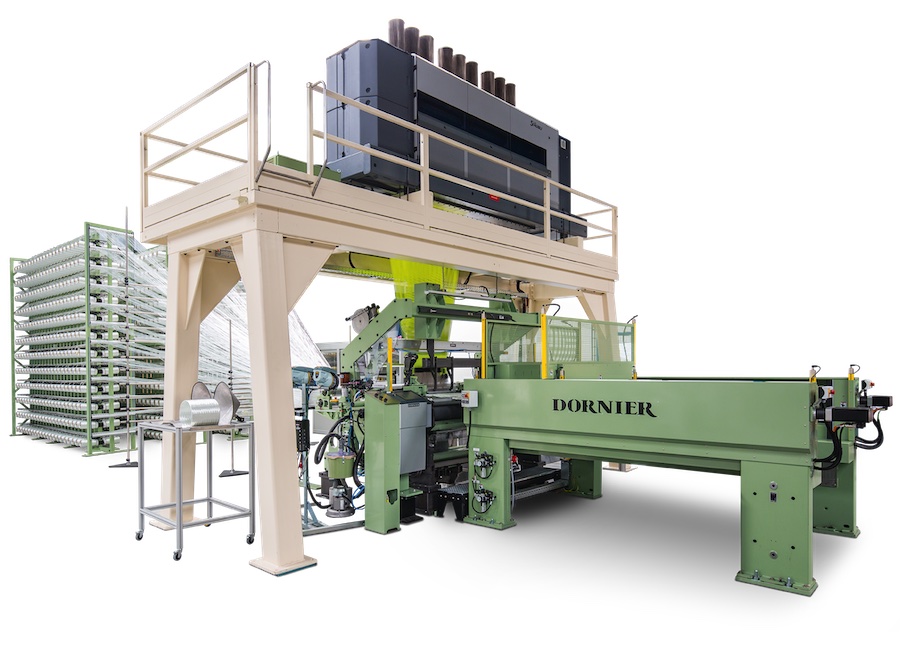
A good example is our TRITOS® FLEX production system, the latest evolution of the DORNIER TRITOS® 3D weaving machine. It has been developed to make the scalable production of complex 3D woven structures more accessible and to provide companies with a straightforward and cost-effective entry into this growing field.
4. In traditional textile markets such as apparel and home textiles, DORNIER is particularly successful wherever customers demand exceptional quality and technological excellence. At the same time, your weaving machines are used for applications ranging from the finest fabrics and metal wire fabrics to filter media, carbon and other high-performance materials. What is the common denominator across this remarkable diversity of applications? Is it ultimately the technological challenge behind each application, and what makes DORNIER stand out in this respect?
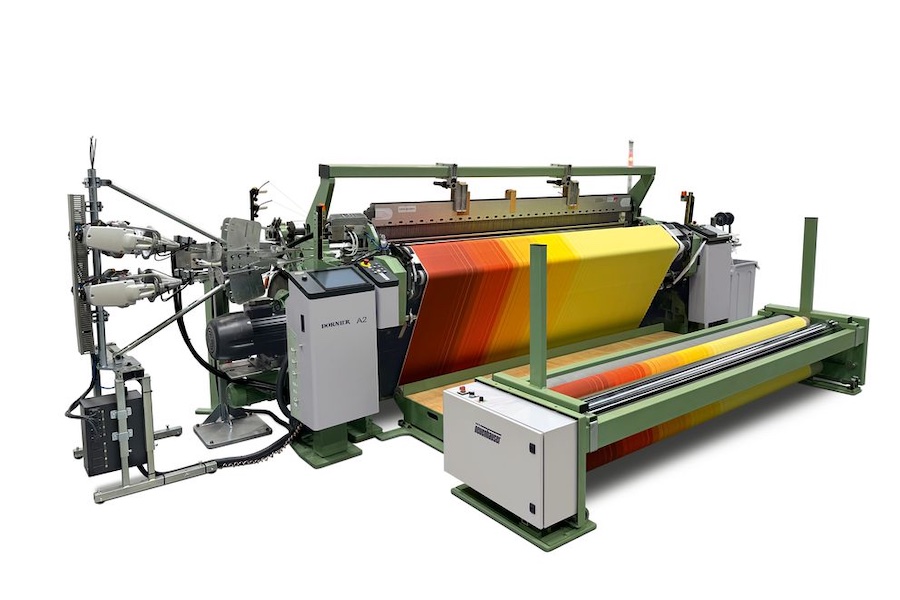
That is absolutely true. Our weaving machines process an extraordinarily wide range of materials safely and efficiently – from natural and man-made fibres to highly delicate silk yarns for fabrics with up to 250 threads per centimetre, ultra-fine metal wires, and high-performance fibres such as carbon, glass and aramid.
As we often say at DORNIER: Everything that can be wound onto a yarn package can be woven on a DORNIER weaving machine. What all these applications have in common are the demanding process requirements and the high technological expectations of our customers. Whether they produce suit fabrics, carpets, airbags, tyre cord, filter media, reinforcement fabrics for composites or fabrics for hydrogen electrolysis, they all expect one thing: a production process that is stable, precise and fully reproducible.
To meet these requirements across such a broad spectrum of materials and weaving applications while maintaining maximum flexibility, we consistently rely on our modular system concept. It combines the well-known mechanical robustness of DORNIER weaving machines with the flexibility to configure each machine precisely to the customer's individual requirements. This gives our customers the technical capabilities and creative freedom they need for their specific applications – without compromising quality or process stability.
5. DORNIER regularly exhibits at highly specialised trade fairs such as FILTECH, where the focus is on applications including filtration, water treatment and industrial processes – markets that extend far beyond the traditional textile industry. What role do these specialised applications play for DORNIER today? And how important is it for you to be present where the end-use applications of woven fabrics are actually developed and discussed?
Specialised applications are of great importance to DORNIER. As a machinery and systems manufacturer, trade fairs serving our customers’ industries are an invaluable source of inspiration. They provide the opportunity to engage directly with manufacturers and end users, allowing us to gain first-hand insight into emerging technological requirements, the machine functions customers are looking for, and the materials that are becoming increasingly important. This close dialogue has always been part of DORNIER’s philosophy. After all, you first need to understand what a customer wants to produce before you can determine which weaving machine and which technical configuration will provide the best solution.
In filtration, for example, we see growing global demand for high-performance filter fabrics of the kind produced on DORNIER weaving machines. Requirements for cleaner air and water, as well as reliable emission control, continue to increase around the world.
That is why all three versions of our P2 rapier weaving machine are successfully used in filtration applications. With shed forces of 2.3, 3.7 and 5.0 tonnes, they cover the entire spectrum of filter production, from heavy-duty industrial filters to highly sophisticated precision filter fabrics.
6. Many of these specialised applications are niche markets in their own right. Do you see DORNIER’s future growth coming primarily from continuously opening up new application areas, or are there applications that may still be relatively small today but have the potential to become major industrial markets for weaving technology in the future?
Both will play an important role.
On the one hand, growth comes from continuously opening up new fields of application. That is why DORNIER has traditionally worked in close partnership with leading manufacturers of technical textiles and reinforcement fabrics made from carbon, glass and aramid fibres, often supporting them from their very first development trials through to industrial-scale production.
On the other hand, we closely monitor technologies that are still in the research phase or at an early stage of industrialisation but have the potential to shape important markets in the future.
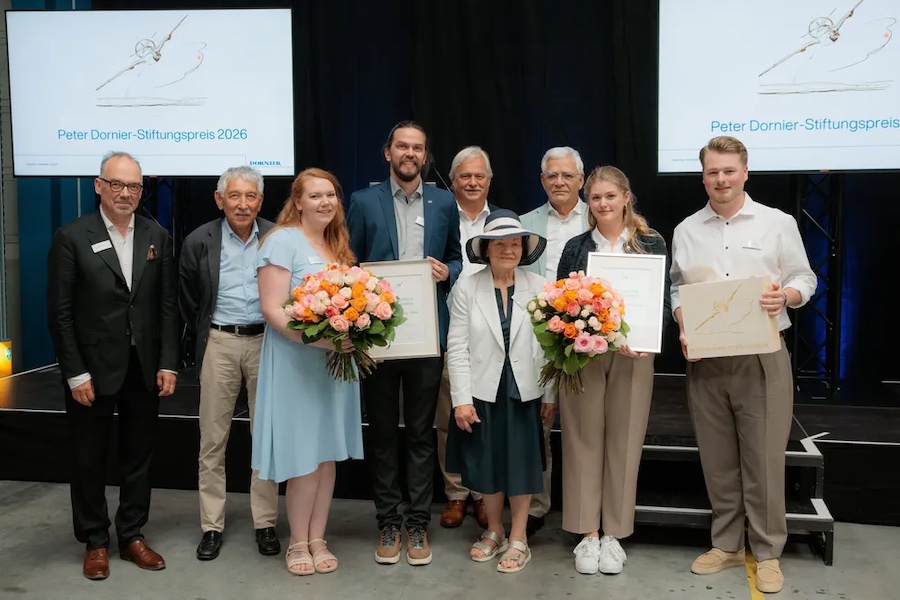
The Peter Dornier Foundation Award, an initiative established by our founder Peter Dornier, demonstrates this year after year. It highlights the remarkable range of applications that modern weaving technology can already enable today. Many of the award-winning research projects – including woven heart valves, foldable aircraft wings and, most recently, fibre-reinforced composite components with significantly reduced porosity and improved impact resistance – are still at the research stage. Yet they have the potential to become future industrial standards and open up entirely new markets.
Our role as a machinery and systems manufacturer is to provide the technologies required at an early stage and to actively support the transfer of innovative woven structures from laboratory research into economically viable industrial production.
7. At Techtextil, DORNIER presented the PIRO system for the P2 rapier weaving machine to a European audience for the first time. The solution promises to reduce weft waste, shorten style changeovers and improve reproducibility. What practical challenges does PIRO address, and how did visitors respond to this innovation?
With PIRO – our Pic-à-Pic Rapier Opener – we have developed a solution to address a very specific challenge in weaving.
Traditionally, the rapier opening mechanism was fixed. PIRO now allows the rapier release on the right-hand side of the machine to be individually adjusted for each weft channel according to the weaving pattern. This is particularly beneficial when processing weft yarns with different yarn counts or varying elasticity. At the same time, PIRO reduces weft waste, which represents a significant cost advantage, especially when weaving expensive materials such as carbon fibres. It also shortens style changeovers because all settings can be stored digitally for each individual article, ensuring excellent reproducibility while preventing incorrect machine settings. PIRO can be operated either via the DORNIER ErgoWeave® control panel or manually using the handwheel.
The response at Techtextil was extremely positive. Many visitors immediately recognised the practical benefits for their own weaving operations. One aspect that attracted particular interest was the fact that PIRO can also be retrofitted to existing DORNIER rapier weaving machines.
8. DORNIER also offers solutions such as PIRO and the Electronic Cloth Winder as retrofit packages for existing machines. In light of the current economic uncertainty, are you seeing changes in your customers’ investment behaviour? And do you expect upgrading existing machines to become increasingly important compared with investing in entirely new equipment?
In the current market environment, investment decisions are naturally being assessed even more carefully than in more stable times. As a result, solutions that enable existing machines to be technologically upgraded and adapted to new requirements without the need for a completely new investment are becoming increasingly attractive.
A good example is the Electronic Cloth Winder (ECW) for the DORNIER P2 rapier weaving machine. As an integrated electronic cloth take-up system, it enables fabrics to be wound with a high degree of precision and reproducibility. Thanks to its servo motor and gearbox, the system operates without wear and requires virtually no maintenance.
Within a very short period of time, the ECW has become one of our most successful retrofit solutions. However, our commitment to retrofits such as ECW and PIRO goes beyond responding to current market conditions. Our objective is to ensure that even DORNIER weaving machines that have been in operation for decades remain economically viable and technologically competitive. The exceptional longevity of our weaving machines has always been a key element of the DORNIER value proposition. As a family-owned company, we also see this as an important contribution to sustainability by extending the service life of our customers’ equipment and making the best possible use of existing resources.
9. Digitalisation is becoming increasingly important in weaving. With DoXWeave and DoXNet, DORNIER enables the networking of weaving machine fleets while placing a strong emphasis on customer data sovereignty by offering solutions that run on the customer’s own IT infrastructure. At the same time, cloud technologies and artificial intelligence are gaining momentum across manufacturing industries. What, in your view, will the digitally connected weaving mill of the future look like, and what role will automation and AI play in it?
Digitalisation has long been a strategic priority at DORNIER. What began in the 1990s as the vision of the “connected weaving mill” has become an everyday reality in many weaving mills through Industry 4.0 and networked machine fleets. At the same time, article and pattern data, machine settings and process expertise represent valuable know-how that must be protected. That is why data security and data sovereignty are just as important to us as ease of use and greater efficiency.
This is precisely what DoXWeave and DoXNet have been designed to deliver. DoXWeave enables weaving mills to centrally manage and compare machine data, while DoXNet allows pattern and article data to be exchanged across the weaving mill and provides remote access to networked weaving machines. Because DoXNet runs entirely on the customer's own IT infrastructure and does not require an internet connection, customers retain full control over their production data at all times.
One of the key drivers behind digitalisation is the shortage of skilled labour. That is why we equip our weaving machines with digital assistance systems that help operators in their daily work. These systems make it easier to produce fabrics reliably, even when experienced personnel are in short supply. However, the expertise of skilled textile professionals will remain indispensable. Digital assistance systems, automation, and artificial intelligence can support people, but they cannot replace their experience and judgement. As digital technologies continue to evolve, data sovereignty and cybersecurity will remain essential. Only when customers have complete confidence in the security of their production data will they be able to fully benefit from the opportunities offered by automation and AI.
10. Looking ahead five or ten years, how do you expect weaving to evolve? Do you anticipate the most significant changes to come from advances in weaving technology itself, or from the way these technologies are applied and integrated into manufacturing? And on a personal level, what would you like to have achieved with DORNIER’s weaving machines product line by then?
I expect significant developments both in weaving technology itself and in the way it will be applied in the future. The weaving machine will become an even more integral part of a connected and intelligent production environment, where data is used securely and digital assistance systems support operators in producing high-quality fabrics with maximum reliability.
We are also seeing sustainability become an increasingly important driver of innovation. This includes the reliable processing of recycled and bio-based yarns, which will continue to gain importance in the years ahead.
The weaving mill of the future will need to be highly adaptable – capable of processing a wide variety of materials efficiently, responding quickly to changing market requirements, and using energy and resources as responsibly as possible.
My personal ambition is to further strengthen DORNIER’s Weaving Machines Product Line as the trusted technology partner for weaving mills in the fields of apparel, home textiles, technical textiles, and composites. I want our customers to know that they can rely on DORNIER weaving solutions whenever they face demanding production challenges.
Looking ahead, I would like even more companies to see DORNIER as a long-term innovation partner – one that supports them from the first product idea through to successful industrial-scale production.
11. Finally, a more personal question. You are an engineer and today lead one of the world’s most renowned weaving machinery businesses. What is it about weaving that continues to fascinate you personally? Is there a particular application or technological development that still makes you stop and think, “I’m amazed by what modern weaving technology can achieve”?
What fascinates me most about weaving – one of humanity’s oldest manufacturing technologies – is the incredible diversity of its applications.
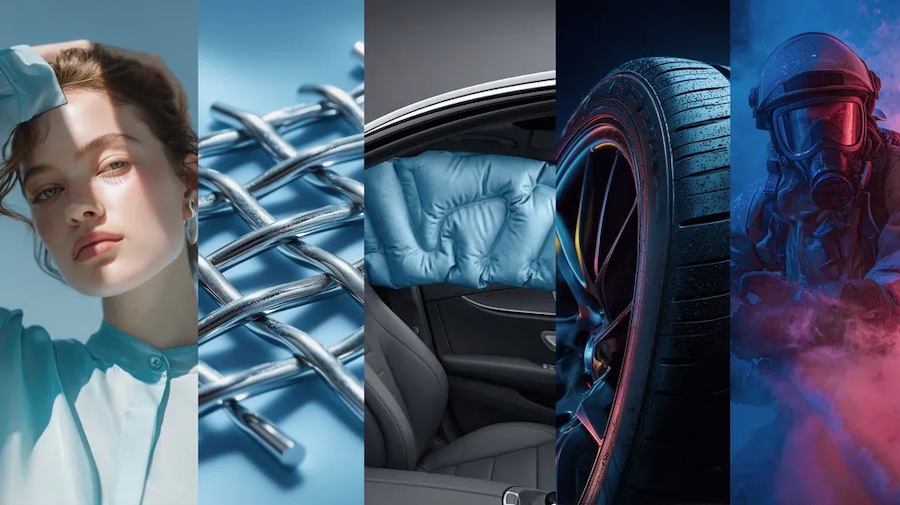
Today, our weaving machines produce not only the finest suiting fabrics, elegant damasks and high-quality upholstery and furnishing textiles, but also airbags, tyre cord, filter fabrics, parachutes, flame-resistant protective clothing for firefighters, reinforcement fabrics for aircraft engine turbine blades, medical prostheses and high-performance sporting goods.
Every single day, our customers around the world demonstrate that weaving is anything but an outdated craft. It is a key enabling technology for countless industries. The fascinating paradox is that many of these woven products remain completely invisible in everyday life, even though they perform extraordinary tasks. They help save lives, protect the environment, and enable technical functions that most people would never associate with woven fabrics.
That is what continues to inspire me. I look forward to working together with our customers to develop new applications that may still sound like visions of the future today but could become part of everyday life tomorrow.