[pageLogInLogOut]

#Weaving

Getzner Textil considers closure of Swiss weaving mill Russikon
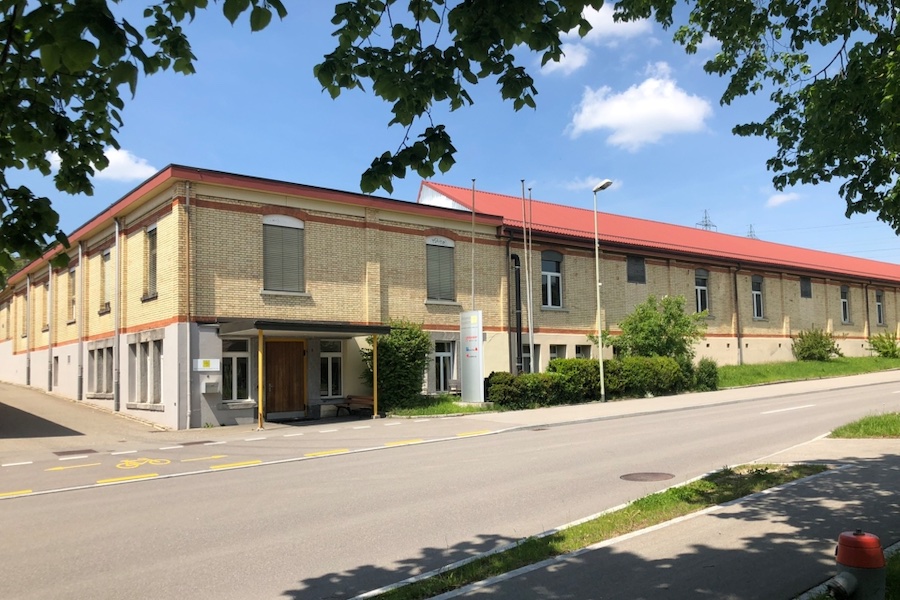
WR Weberei Russikon AG, which belongs to Getzner Textil AG, produces high-quality jacquard fabrics in Switzerland. This raw material is intended exclusively for the African market. In view of the global economic situation and the associated reduced demand in this area, Getzner Textil AG is reviewing its production planning and is considering the closure of the Swiss site in this context.
Due to the reduced volume requirements and the cost structure in Switzerland, Getzner is considering the closure of its Swiss site © 2025 Getzner Textil


Quality is perfect

The 55 employees of the Russikon weaving mill produce high-quality fabrics. However, compared to its international competitors, the Swiss weaving mill has a much higher cost structure, and the strong Swiss Franc poses an additional disadvantage. In consequence, the Swiss textile company is no longer able to compete in the international market, despite its production efficiency and the good quality of its products, and the future of the Swiss production site is therefore being questioned.

Employees involved

Today, the employees were informed in person about the intended closure. At the same time, the consultation process, a legal requirement that permits the employees to become actively involved before the final decision, has been initiated. As the owner, Getzner Textil AG has already reassured them that it will voluntarily come up with a redundancy scheme in the event of the closure of the company.

More News from Getzner Textil AG

More News on Weaving

#Weaving

Lindauer Dornier announces leadership transition in weaving machine business

After more than ten successful years at Lindauer DORNIER GmbH, Mr Wolfgang Schöffl will leave the family-owned company at the end of the year to enter well-deserved retirement.

#Research & Development

More safety and comfort for protective clothing thanks to auxetic fabrics

When everyday materials are pulled, they stretch or elongate in the direction of the pull and become narrower in cross-section. We can also observe this property in two-dimensional textiles. Auxetic structures behave differently here. They have the striking property of not changing under tensile stress or even increasing their width or thickness. These properties are advantageous, for example, in protective textiles or textile filter media. The DITF are researching auxetic fabrics for various applications.

#Weaving

Itema announces strategic partnership with Ivy Decarb to accelerate decarbonization in weaving process

Itema is pleased to announce the strategic partnership with Ivy Decarb, the digital platform helping textile companies measure and reduce their carbon footprint.

#Exhibitions & Events

Groz-Beckert showcases textile innovation at ShanghaiTex 2025

From December 16 to 19, 2025, the global textile industry will gather at ShanghaiTex at the Shanghai New International Expo Center (SNIEC), where Groz-Beckert will present its latest highlights and innovations across its five product areas – Knitting, Weaving, Nonwovens, Sewing, and Spinning – at Hall N3, Booth A05.

Latest News

#Research & Development

Innovation center for textile circular economy inaugurated

Just over eight months after the foundation stone was laid, the new Innovation Center for Textile Circular Economy was officially inaugurated today at TITK Rudolstadt. Thuringia's Minister President Mario Voigt, TITK Director Benjamin Redlingshöfer, and other guests of honor cut the ribbon to the modern building complex and viewed the premises, which are now ready for occupancy. The “DICE – Demonstration and Innovation Center for Textile Circular Economy” is TITK's largest single investment to date. The Free State of Thuringia supported the total cost of €11.5 million with €8 million in GRW and FTI funding.

#Research & Development

Sustainable design of Geosynthetics and roof underlayments made from recyclates

Is it possible to recover plastic recyclates from previously unused waste streams in order to produce high-quality fibers and films? How can bio-based polymer fibers be manufactured so as to allow adjustable biodegradability? These are the questions being addressed by researchers from the Fraunhofer Cluster of Excellence Circular Plastics Economy CCPE in the Zirk-Tex project.

#Associations

Waste2Fashion: FTTH Committed to advancing Circular Fashion in the Mediterranean

As an official partner of the Waste2Fashion project, the Tunisian Federation of Textile and Apparel (FTTH) participated in the Kick-off Meeting held on 10–11 December in Spain. The event brought together project partners from across the Mediterranean, including Spain, Italy, Egypt, Lebanon, and Tunisia, to align on a shared vision and initiate the first implementation steps.

#Associations

AATCC announces 2025 Herman & Myrtle Goldstein Graduate Student Paper Competition winners

The American Association of Textile Chemists and Colorists (AATCC) recognized the winners of the 2025 Herman & Myrtle Goldstein Graduate Student Paper Competition. Founded in 1982 to give student members the chance to conduct and present original research, the competition was renamed in 1994 in honor of Herman and Myrtle Goldstein, following their US$60,000 endowment. Their gift is a lasting remembrance of their dedication to young people in the textile industry.

TOP