100 Years Peter Dornier – “From human flight to flying threads”
He founded the “Lindauer DORNIER GmbH” (LiDO) in 1950 and led the company successfully for several decades. He was not only at home in the world of textile machines but also in the world of aircraft construction – as exceptional design engineer and entrepreneur who was far ahead of his times: Peter Dornier. The second eldest son of aeronautical pioneer Claude Dornier would have been 100 on 31 January.
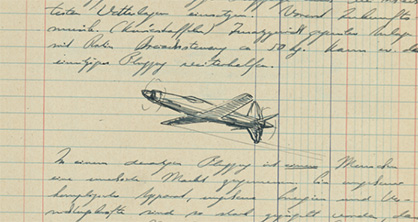
Ideas, designs, trials – Peter Dornier was born into this world of aircraft construction in Friedrichshafen, Germany on 31 January 1917. Already as a young person, he started creating design drawings which he then kept together with his notes in his sketch- books. He completed his studies at the Munich Technical University, Germany, in 1944 as graduate engineer. Already during his training his father assigned him tasks at the Dornier Factory in Friedrichshafen-Manzell. It quickly became apparent that his unconventional ideas gave important impulses to aircraft construction. One example as a young engineer was when his father involved him in a project for high-performance aircraft for speed records. Together with chief engineer Eugen Jäger, he developed the concept for the Do 335 which was the fastest propeller aircraft in the world at its time. For this achievement he was 1944 awarded a prize from the Lilienthal Society. Later in the Sixties he also gave decisive impulses for the development and con- struction of the Do 31, today still the only transport aircraft with jet propulsion as well as vertical take-off and landing capability. The Dornier company was left with nothing at the end of the Second World War: Destroyed or confiscated machinery and factories as well being forbidden to be involved in aircraft construction prevented any industrial activities. Claude Dornier was placed under house arrest by the French troops. Despite the difficult times, Peter Dornier proved his skills as entrepreneur: He founded an engineering firm in 1946 and started research on wind power plants. To ease the severe housing shortageand to bring as many “Dornianer” from his father’s company back to work and livelihoods, he planned building transportable prefabricated cabins made of aluminum, so-called “Wohnzeuge” (livingcrafts) instead of aircrafts. Due to a shortage of capital, the production was too expensive. Unfortunately his plan failed. Peter Dornier had to discard his idea. In 1949 Peter Dornier took over the previously occupied factory in Rickenbach, Germany, after it was released. He founded the “Lindauer DORNIER GmbH” in July of the following year; 14 people started work there. A decisive change in the produc- tion program resulted from a meeting with the director of the textile company Erba in Wangen, Germany, who asked him to construct shuttle looms for his factory: The start signal for the production of weaving machines that has remained an important mainstay until this day. Already at that time, Peter Dornier designed a completely enclosed weaving loom as can be seen in notes in his sketchbooks. His idea: Air-condition each single weaving loom to save energy as well as to collect and dispose of the dust created that soiled the fabric. The machine housing was designed to reduce the then unbearable noise in the shuttle loom weaving mills. This concept was revolutionary at that time but unfortunately too expensive. Such developments first went into series production several decades later. Pic: Hand-drawn sketch of the Do 335 from Peter Dornier’s notebook Already at the start of the Sixties, a time when weaving loom production was running at full load, Peter Dornier recognised that a new era was evolving with the introduction of shutteless weaving machines. In a detailed study, also included in the sketch- books mentioned, he considered his ideas for a new machine concept. He designed a multiple widths weaving machine with the drive positioned in the center between the four cloth widths. Peter Dornier considered using air, water, a rapier or a pro- jectile as possible aid for transporting the filling yarn on such shuttleless weaving machine. However he decided not to realise this complex concept but to build a rapier weaving machine instead which took off successfully at the end of the Sixties. Peter Dornier had created an extremely exible weaving machine where the solid construction allowed producing, above all, technical fabrics and therefore opened up the imperative structural transformation of the textile industry towards technical textiles.
Peter Dornier’s ability to listen to people, to gather ideas and develop opportunities for new markets led also to the founding of a second business division of the Lindauer DORNIER GmbH, the specialty machinery construction.In 1950 Peter Dornier got to know Hans Haubold. The latter had produced textile finishing machines in Chemnitz, Germany, before the war. They soon agreed that DORNIER should construct these machines under license. The high quality and economic efficiency of the DORNIER textile dryer was soon well-known. Other manufacturers outside of textile finishing also gained interest in the drying plants. The transfer from cellophane to oil-based packaging films that occurred five years later led to large chemical companies searching for a suitable technology. Peter Dornier, together with his employees from the textile dryers, was successful in developing those into film stretching lines, which are now the second, important mainstay of the Lindauer DORNIER GmbH. At about the same time, the Dornier GmbH was founded again in Friedrichshafen, Germany, and the Lindauer DORNIER GmbH integrated in the corporate group. Aircraft engineering restarted and Peter Dornier was significantly involved in various developments.As requested by his father in the beginning of the year 1961, he dedicated his full attention to the Lindauer DORNIER GmbH. The intensity of developments in weaving and specialty machinery engineering increased and the company continuously grew. In 1985, it was planned that the Dornier-Group, to which also Lindauer DORNIER GmbH belonged, should be sold to the Mercedes-Benz AG. Peter Dornier agreed to the sale but only on the premise that all shares in the LiDO will be transferred to him.
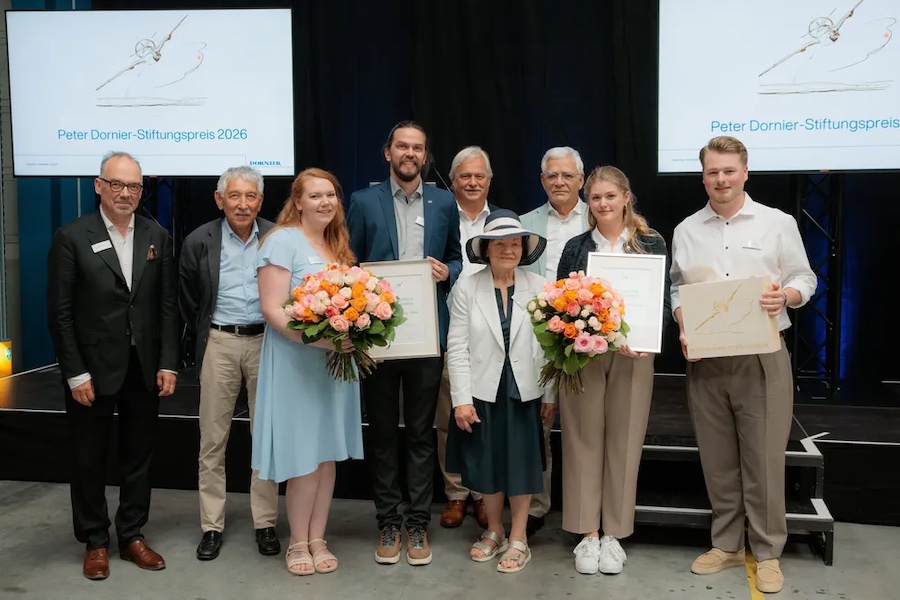
A stroke of luck for the company! Peter Dornier invested large amounts in renewing the machinery and production facilities. At the same time, he intensified the development and created one of the most modern textile machine factories. All this se- cured the positive development of the Lindauer DORNIER GmbH and was the basis for the growth to the present size. Presently the family-owned company produces with approximately 1,000 employees weaving and specialty machines exclu- sively at two production sites in Germany. In honouring his services, Peter Dornier received many awards and honors. He set his own finest memorial when he created the Peter Dornier Foundation in 1985 which receives every year 10 percent of the operative profit of the Lindauer DORNIER GmbH.“By means of this foundation he wanted to give back to the community some of the material values he accrued together with his employees” said Maja Dornier who became Chairwoman of the foundation after her husband’s death on 28 January 2002 and has continued to guide it since then according to his principles.From the very beginning of his entrepreneurial career, Peter Dornier trusted the abilities of his employees and promoted their talents – irrespective of their cultural background. As a prime example, two decisive weaving machine developments, the concept of the DORNIER rapier and air-jet weaving machines, were based on the ideas of a Greek, Nikolaus Kokkinis, and a Syrian, Dr. Adnan Wahhoud.Peter Dornier would have been 100 years old on 31 January 2017.
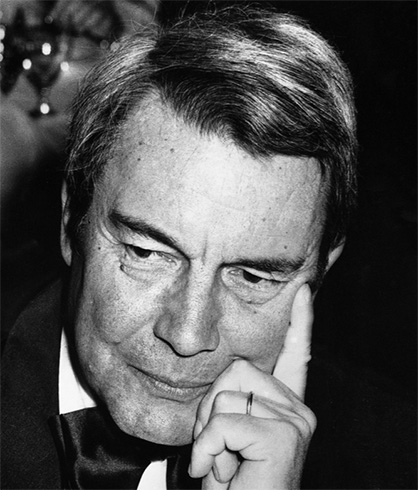
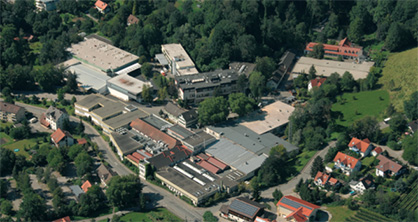
Pic: Dipl.-Ing. Peter Dornier 31 January 1917 - 28 January 2002 Professor Claude Dornier (1884 - 1969) 1910 started to work for Count Zeppelin and was the first to develop all-metal airplanes and seaplanes 1922 maiden flight of the legendary „Dornier Wal“ (Dornier whale), the most successful seaplane of the nineteen-twenties and thirties 1931 sensational and spectacular expedition to Africa, North and South America with the 12-engined Do X, the biggest airliner of the world at that time Peter Dornier (1917 - 2002) 1940 Peter Dornier starts his studies for aeronautical engineering at the Technical University Munich the same time his father assigns the first tasks to him at the Dornier works in Frie- drichshafen-Manzell 1944 final degree as Chartered Engineer, the second eldest son of Professor Claude Dornier starts to work as an aeroplane engineer at his father’s company. He is significantly involved in the build-up of the German aircraft industry after World War II. 1944 he receives the price of the „Lilienthal-Gesellschaft“ for the invention and development of the propeller-driven airplane Do 335 1950 foundation of Lindauer DORNIER GmbH 1960 Do 31, vertically take off and landing (VTOL) jet aircraft 1985 through the majority shareholding by the Daimler-Benz AG at Dornier GmbH Friedrichshafen all shares at Lindauer DORNIER GmbH are taken over Peter D. Dornier (1961) 1989 entry to his father’s company 1991 spokesman of the board and responsible for the sales, marketing and developmentdivision “weaving machine” 2001 head of the management in third generation Dornier/Dornier-Gruppe 1985 headquartered in Friedrichshafen exists till the sale to Daimler-Benz AG Pic: Aerial photograph of Lindauer DORNIER GmbHLindauer DORNIER GmbH (LiDO) 1950 foundation of Lindauer DORNIER GmbH within the Dornier group 1962 international trade mark application „DORNIER“ by Lindauer DORNIER GmbH Registration number: 766937/27.06.1962 1985 taking over of all LiDO shares by Peter Dornier’s family(with transition of all trademark rights to the Daimler-Benz AG it’s no longer allowed to sign with the firm name Dornier/Dornier group)From this moment on only the following spelling in capital letters for the Lindauer DORNIER GmbH is valid worldwide: „DORNIER“/“Lindauer DORNIER GmbH“, like: Lindauer DORNIER GmbH Rickenbacher Str. 119 88131 Lindau DORNIER Company name in combination with the product e.g. DORNIER weaving machine In combination with the Dornier family „Dornier“ is always written in small letters.