[pageLogInLogOut]

#Textiles & Apparel / Garment

Ecovative launches Fashion for Good cooperative with BESTSELLER and PVH Corp.

© 2021 Fashion for Good
Ecovative, the mycelium technology company, today announced the launch of an international sustainable fashion cooperative, with global brands BESTSELLER and PVH Corp. [NYSE: PVH] as founding members. Through the cooperative, these brands will have priority access to Ecovative’s mycelium innovations through its Forager™ Hides platform and will work directly with the Ecovative team to co-develop custom mycelium materials for a range of end products and consumer applications.

The global innovation platform Fashion for Good was integral in bringing these parties together to advance a petroleum-free vegan leather.

Brining Next Generation Mycelium Materials to Market

Ecovative, the mycelium technology company, today announced the launch of an international sustainable fashion cooperative, with global brands BESTSELLER and PVH Corp. [NYSE: PVH] as founding members. Through the cooperative, these brands will have priority access to Ecovative’s mycelium innovations through its Forager™ Hides platform and will work directly with the Ecovative team to co-develop custom mycelium materials for a range of end products and consumer applications. The global innovation platform Fashion for Good was integral in bringing these parties together to advance a petroleum-free vegan leather. 

BESTSELLER and PVH Corp. share Ecovative’s commitment to sustainable fashion. Their designers will work in tandem with Ecovative’s team of engineers and mycologists to create mycelium solutions for their products. Members in the Fashion for Good Cooperative will bring their fashion industry expertise to work with Ecovative in a design, build and test research and development strategy. Together, the cooperative will develop mycelium materials for the consumer market.

“At PVH we are excited to explore innovations that reduce the environmental impact of our products. Mycelium provides us with an opportunity to respond to growing consumer interest in lower impact products while supporting quality and design that meet the needs and expectations of our consumers – in this case, made with 100% bio-based resources. We look forward to testing and learning alongside our partners to create scalable, sustainable solutions.” — Rebecca England, VP Innovation of PVH Europe.

“Mycelium shows great potential in the fashion innovation sphere – it even extends far beyond our own industry. We are keen on diving into the product development phase and really understanding the aesthetics and actual performance of Ecovative’s innovative materials in the lab. This pilot enables us to gain more insight into mycelium as a leather alternative, which ultimately is both biodegradable and fully bio-based.” — Anders Schorling Overgård, Sustainable Materials Engineer of BESTSELLER


Ecovative has more than a decade of experience producing mycelium materials for partners throughout North America, Europe, and Asia. The company launched Forager™ Hides, its alternative leather material, in March 2021. Forager™ Hides are based on Ecovative’s second-generation mycelium material, building on more than five years of research and development in Ecovative’s Mycelium Foundry. The 100 percent bio-based mycelium material is grown in sheets up to 24 meters in length and 1.8 meters wide, and can be grown to partners’ specific needs in terms of tensile strength, density, and fiber orientation. The entire growth process takes only 9 days and yields a ready-to-finish material free of plastic scrims and petroleum based coatings.

“By marrying innovation with legacy, we can focus on what we do better than anyone else in the world — growing the best mycelium at commercial scale. Working directly with fashion brands and tanneries, we make beautiful, high-performing and sustainable materials without harming animals or the planet.” — Gavin McIntyre, Co-Founder and Chief Business Officer of Ecovative

From soft and supple leather accessories and garments to durable and thick belts and shoes, Ecovative scientists are able to fine-tune their product to meet a wide array of end product needs.

“Biomaterials have been in development for years, but they have yet to reach even a small portion of customers. Ecovative has been focused on scaling its technologies to deliver mycelium at the scale necessary for industry leaders like BESTSELLER and PVH Corp. This is an exciting development in the drive to scale up these solutions and increase accessibility.” — Katrin Ley, Managing Director of Fashion for Good 


More News from TEXDATA International

#ITM 2026

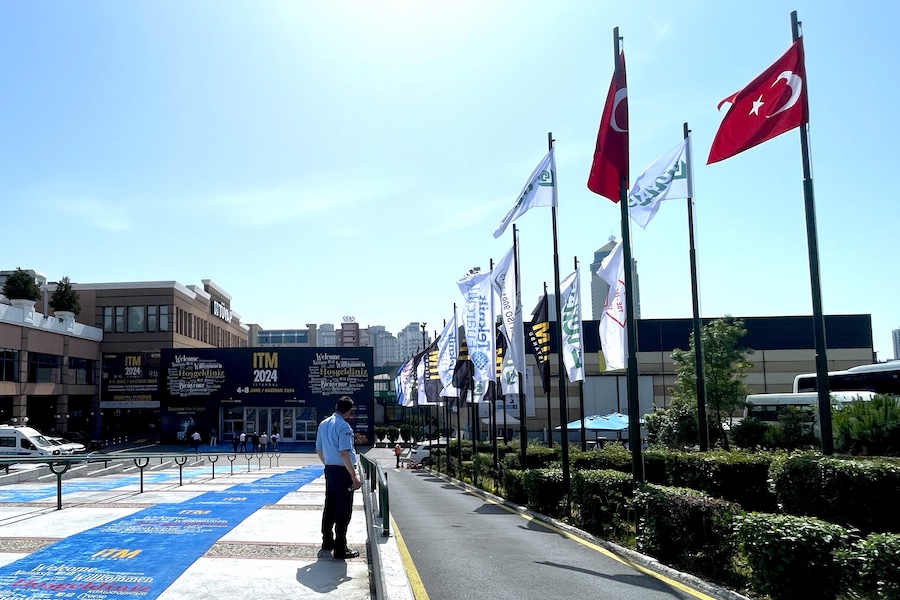
ITM 2026: The new geography of textile production

New production hubs are emerging across North Africa and Central Asia, while Türkiye is accelerating its transformation toward higher-value, technology-driven and more sustainable textile manufacturing.

#Research & Development

“Production is a product”

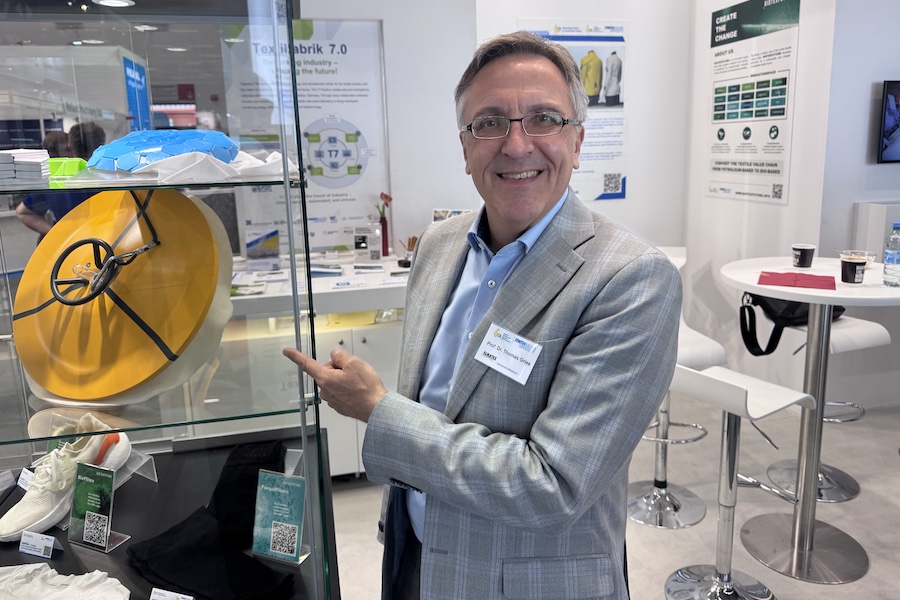
From technical textiles and AI-driven robotics to the limitations of textile circularity: Professor Dr Thomas Gries looks back on more than two decades of development at ITA Aachen. In the interview, he explains why production technology remains a decisive success factor, discusses international collaborations and innovation ecosystems, and shares his views on the transformation of production landscapes and the challenges facing an increasingly regulated industry.

#Knitting & Hosiery

“We need to move away from the price trap and return to a value-driven mindset.”

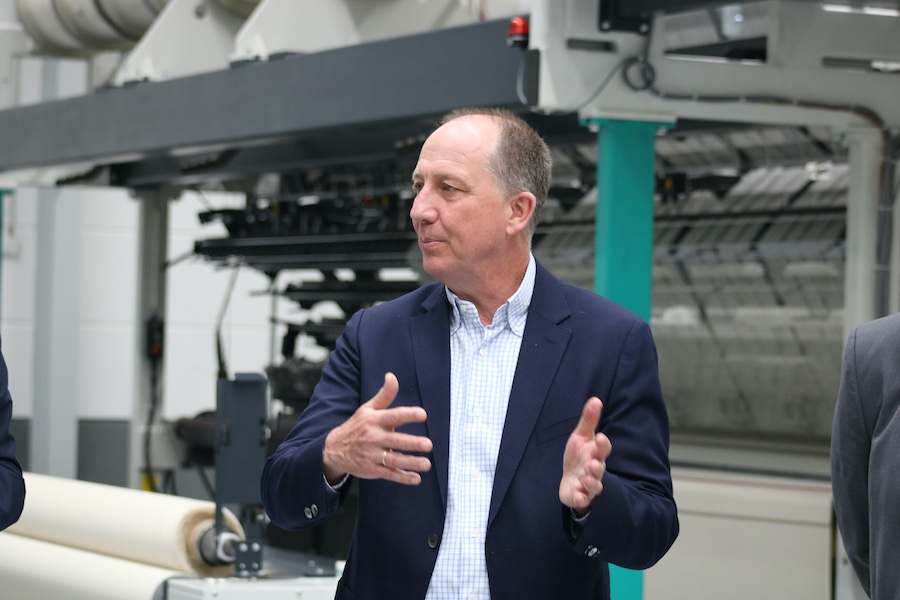
With its new Textile Innovation Center, KARL MAYER is sending a strong signal for innovation, collaboration, and the future of textile applications. In this interview, Karl Josef Mayer discusses new opportunities in warp knitting, the processing of staple fibres, recycling, the changing role of machinery manufacturers, and why the textile industry must once again focus more strongly on the value of textiles. by Oliver Schmidt

#Associations

“Innovation, resilience and international experience remain the great strengths of the Swiss textile machinery industry”

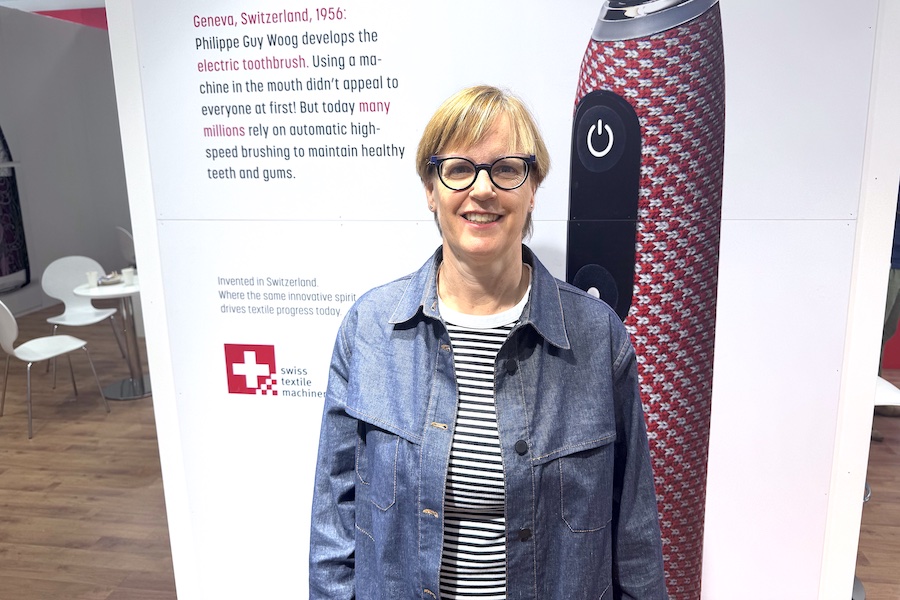
Geopolitical uncertainty, growing competitive pressure from China, new free trade agreements and the shift towards a circular economy are currently reshaping the global textile industry. In this interview, Cornelia Buchwalder discusses the current mood within the Swiss textile machinery sector, the industry’s distinctive innovative strength, new market opportunities in India and Asia, and the technological trends that could shape the upcoming trade fair cycle leading up to ITMA 2027.

More News on Textiles & Apparel / Garment

#Recycling / Circular Economy

Arc'teryx introduces System 0™, a new framework for the future of product design and circularity

Arc'teryx Equipment, the global design company specializing in technical high-performance apparel and equipment, today introduced System 0™, a new framework that reimagines how products can be designed, manufactured, used, repaired, and ultimately regenerated. System 0 represents the next evolution for sustainability in the outdoor industry, as it embeds circular thinking across an entire product lifecycle while maintaining the uncompromising performance standards that define the Arc’teryx brand.

#Textiles & Apparel / Garment

Texworld Apparel Sourcing Paris reflects shift towards more diversified sourcing

The latest edition of Texworld Apparel Sourcing Paris confirms the global reshaping of sourcing strategies. The offer is evolving to satisfy more selective buyers, looking for responsiveness, innovation and diversification in their sourcing options.

#Textiles & Apparel / Garment

YDC 2026 names winners in Hong Kong

The Hong Kong Young Fashion Designers’ Contest 2026 (YDC) has named its winners at the conclusion of CENTRESTAGE in Hong Kong. Ten emerging local designers presented collections inspired by personal experiences and emotions, translating their ideas through distinctive tailoring, materials and craftsmanship.

#Fabrics

Texhibition Istanbul to bring together more than 500 exhibitors for 10th edition

The 10th edition of Texhibition Istanbul Fabric and Textile Accessories Fair will take place from 9 to 11 September 2026 at Istanbul Expo Center. More than 500 exhibiting companies across five halls and 42,850 square metres will present new-season collections, materials and technologies, bringing together Türkiye’s textile production strength with an increasingly international sourcing community.

Latest News

#Industry 4.0 / Digitalization

Coats Digital launches AI-powered GSD RealMotion for motion analysis

Coats Digital has launched GSD RealMotion, an AI-powered solution designed to provide apparel manufacturers with greater visibility into factory-floor operations. By analysing shop-floor video and applying Coats Digital’s GSD methodology, the solution turns video recordings into structured, motion-by-motion method studies.

#Textile chemistry

Archroma and Lameirinho partner in pioneering deployment of InOneGO single-step dyeing

Archroma, a global leader in specialty chemicals, and Lameirinho, a leading home textiles manufacturer based in Portugal, are collaborating to bring InOneGO by Archroma, a new single-step dyeing process, into commercial production. Lameirinho’s first InOneGo bedlinens collection is now available worldwide.

#Knitting & Hosiery

KARL MAYER launches extra-wide HKS 3-M EL for increased productivity

KARL MAYER has launched a new extra-wide version of its HKS 3-M EL tricot machine, designed to increase productivity particularly in the manufacture of textiles for sports, activewear and athleisure applications.

#Research & Development

Reducing development times for technical textiles by accelerated thermo-oxidative aging in a high-pressure autoclave

Synthetic polymers used in technical textiles can be effectively protected against degradation caused by heat, oxygen, and water through the use of stabilizer systems. This enables service lives of several decades, extending to more than 50 years. As the use of durable technical textiles continues to grow, so does the demand for reliable methods to predict their service life within economically feasible testing periods. For the first time the German Institutes of Textile and Fiber Research Denkendorf (DITF) developed methods for robust service life prediction for textiles in an IGF research project.

TOP