[pageLogInLogOut]

#Textile chemistry

A flagship for chemical production: BASF inaugurates world-scale Verbund site in China
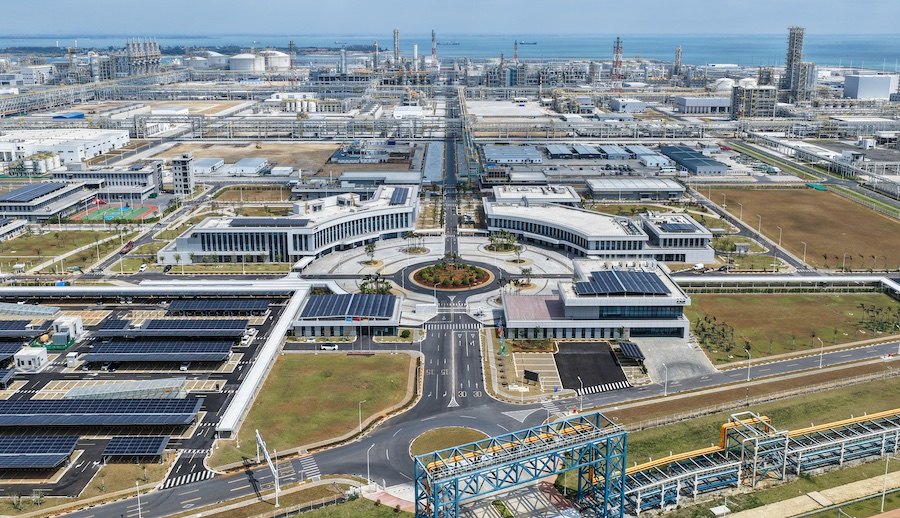
Aerial view of the BASF production site in Zhanjiang © 2026 Photo: BASF
BASF today (March 26, 2026) celebrated the official inauguration of its newly built, world-scale Verbund site in Zhanjiang, Guangdong Province in southern China. Covering an area of around four square kilometers, it is more than a major BASF project in the chemical growth market of China. “Zhanjiang shows what the future of chemistry looks like: efficient, digital and sustainable by design. The site showcases a smart integrated Verbund structure on an industrial scale,” said Dr. Markus Kamieth, CEO of BASF, at the ceremony attended by representatives from government, customers, business partners and employees.

At the Zhanjiang site, BASF employs over 2,000 people and will produce a diversified portfolio that includes basic chemicals, intermediates and specialty chemicals for the transportation, consumer goods, electronics, home care and personal care industries.

“Bringing this site to life took real ownership, speed and an exceptional level of commitment from our BASF team. Completing a project of this magnitude and complexity on time and under budget is remarkable. I want to thank everyone involved both at the site and worldwide who made this possible,” Kamieth said. “This investment shows confidence in the world’s largest chemical market in the long run and will be an important element of our ‘Winning Ways’ strategy,” he added. The majority of the products manufactured in Zhanjiang will directly serve customers in China, fully aligning with BASF’s global “local‑for‑local” approach. The project was completed on schedule and well below the original budget, with an investment of around €8.7 billion.

“I am proud of BASF’s innovative strength as the basis for the start-up of the most sustainable integrated chemical site in China, and the successful ramp-up of the steam-cracker in record time,” emphasized Dr. Stephan Kothrade, member of the Board and Chief Technology Officer of BASF SE, who is responsible for the Asia Pacific region. “It sets new benchmarks for sustainable chemical production in China and worldwide,” Kothrade added.

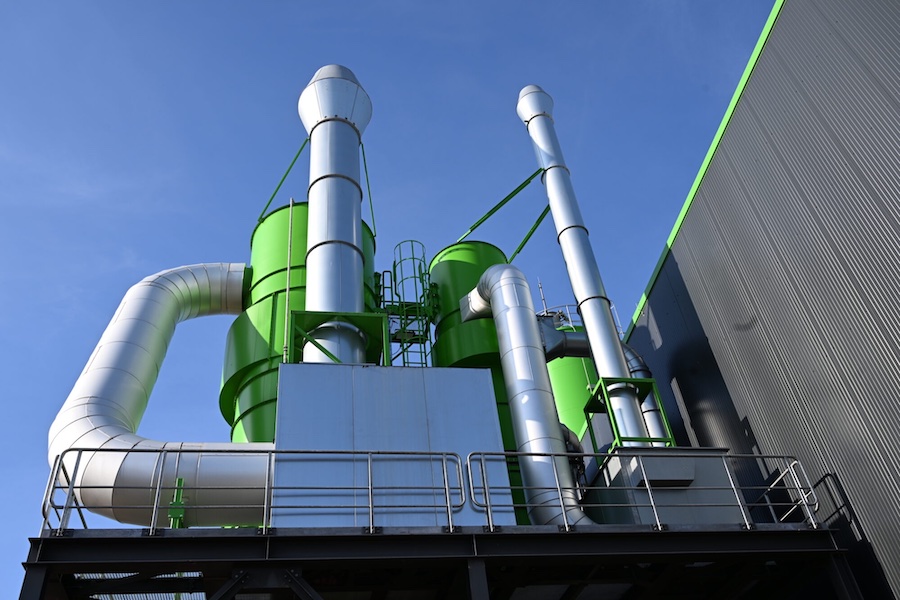
By using Verbund integration, process innovations and renewable energy, CO₂ emissions at the site can be reduced by up to 50 percent compared with a conventional petrochemical site. Long-term green power purchase agreements and investments in an offshore wind farm enable the site’s electricity supply to be 100 percent renewable. “Innovative technologies are also being used for the steam cracker – the starting point of various value chains at the Verbund site,” Kothrade said. It has a capacity of 1 million tons of ethylene per year and is the world’s first cracker equipped with main compressors (e-drives) powered by 100 percent renewable energy, supporting the production of high-quality, low-CO2 products. The world-scale flex-feed steam cracker is designed to process multiple types of feedstocks, such as naphtha and butane.

BASF has successfully started up 18 plants, 32 production lines, and is producing more than 70 products. With the proven Verbund concept with long value chains, BASF offers a broad, highly diversified product portfolio from the segments Chemicals, Materials and Nutrition & Care. This integration and scale enable competitive cost positions, significantly lower CO₂ emissions and reliable supply to serve multiple end‑markets. “This makes us an attractive partner for our customers in China,” said Haryono Lim, President, Mega Projects Asia, BASF. “Together with customers and partners, we will drive innovation and transformation forward in one of China’s most economically dynamic regions,” he added. Thus, the site provides an important platform for BASF’s future growth in China.

BASF announced the Zhanjiang project in 2018 and laid the foundation stone the following year. The first production plant to begin operation at the Zhanjiang site was for engineering plastics in 2022; it was followed by a thermoplastic polyurethane plant in 2024. At the turn of 2025/2026, BASF began production in the first value chains in the Verbund and successfully ramped up the steam cracker in record time.

The Zhanjiang integrated site is BASF’s seventh Verbund site worldwide and the third largest after Ludwigshafen, Germany, and Antwerp, Belgium. It will be operated solely under BASF’s responsibility.

BASF has been active in Greater China for over 140 years. Today, BASF serves almost all key industries in the region. In China, BASF has a strong production, sales and innovation footprint with large sites in Shanghai, Nanjing, Chongqing and Zhanjiang as well as numerous smaller sites across the country. In 2025, BASF achieved sales of around €8.2 billion with customers in Greater China and employed almost 13,000 people.
More News from BASF Aktiengesellschaft
Performance Chemicals for Textiles Europe

#Nonwovens

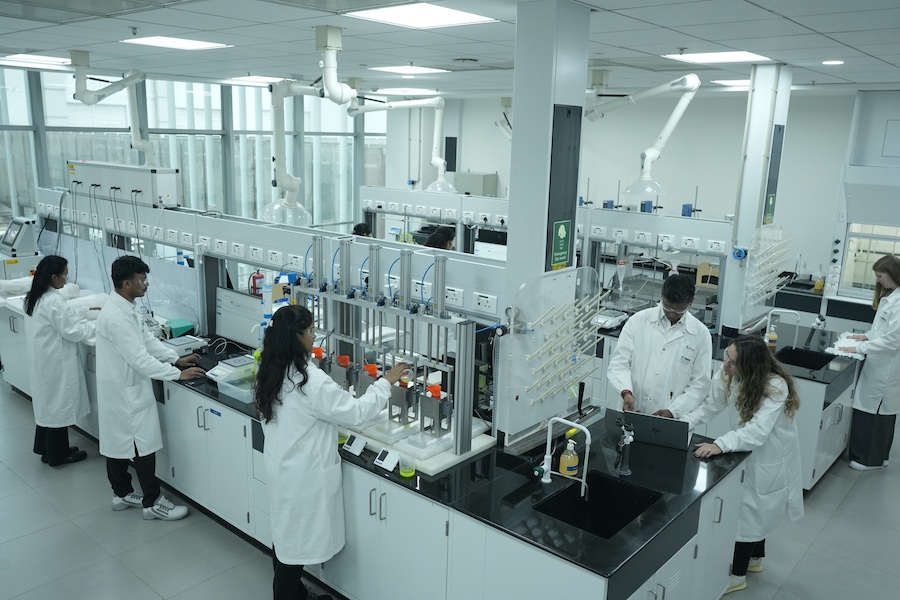
BASF opens global diaper and superabsorbents performance lab in Mumbai

BASF has officially inaugurated its new Performance Lab for diapers and superabsorbents (SAP) in Mumbai on August 18, 2026, which will provide technical and application services to superabsorbent customers globally. The new lab of BASF’s Hygiene Solutions business has been established in less than a year and is part of BASF’s Innovation Campus Asia Pacific in Mumbai, BASF’s second largest R&D site in Asia Pacific established in 2017 under BASF Chemicals India Private Limited.

#Recycling / Circular Economy

Pirelli, Pyrum, Synthos and BASF partner to transform end‑of‑life and scrap tyres into recycled materials for new products

Pirelli, Pyrum, Synthos and BASF are jointly advancing a tyre-to-tyre circular economy initiative in Europe, driving the development of an industrial ecosystem designed to increase the use of recycled materials derived from end-of-life and scrap tyres.

#Recycled Fibers

Lindex and BASF partner to bring textile-­to­-textile recycled polyamide to lingerie sector

Lindex has partnered with BASF’s loopamid® to accelerate textile-­to-­textile recycling and advance the shift towards more circular material solutions in the fashion industry. Together they introduce loopamid to the lingerie sector.

#Textile processing

trinamiX mobile NIR spectroscopy: New applications for the footwear and textile industry

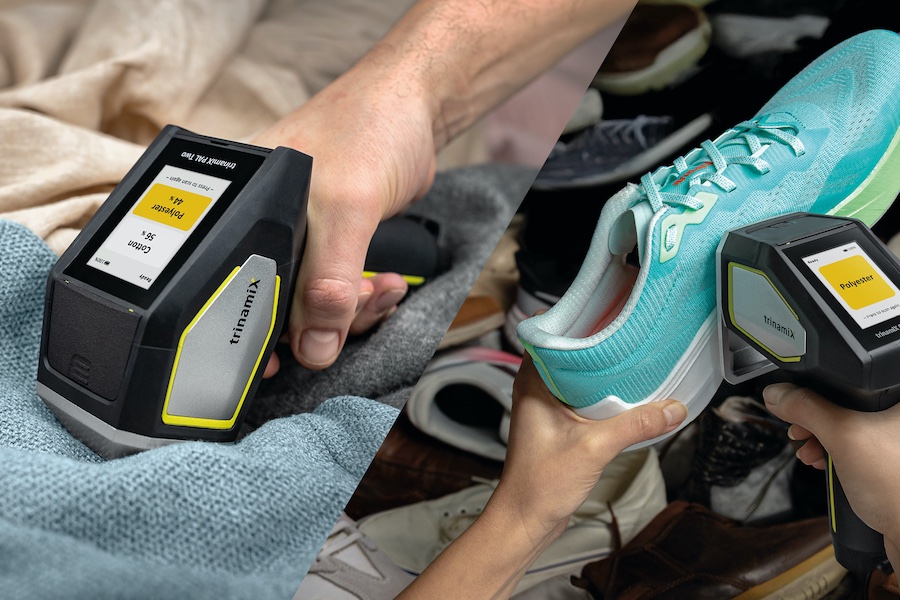
trinamiX GmbH expands its solution portfolio for the circular economy, now enabling the identification of materials used in the footwear and textile industries. With its mobile near-infrared (NIR) spectroscopy solutions, trinamiX supports manufacturers, sorters, recyclers, and brand owners in reliably identifying materials and improving transparency across increasingly complex value chains.

More News on Textile chemistry

#Textile chemistry

bluesign updates chemical reference lists with stronger PFAS restrictions

bluesign has published the 2026 editions of its three core chemical reference lists, introducing updated substance limits and testing requirements in line with the latest scientific findings and regulatory developments.

#Textile chemistry

Fashion for Good launches DW(O)R-X to navigate the emerging landscape of PFAS-free finishes

Fashion for Good announced the launch of Project DW(O)R-X, a collaborative initiative designed to benchmark PFAS alternative durable water- and oil-repellent (DW(O)R) chemistries. Responding to growing market demand for alternatives to PFAS‑based finishes, the project aims to generate reliable, comparable data that can support informed sourcing decisions and the assessment of emerging chemistries.

#Sustainability

Indovinya advances sustainable solutions with agreement for the supply of renewable Oxygen from Air Liquide

Indovinya, the specialty chemicals and surfactants division of Indorama Ventures, has entered into an agreement with Air Liquide — a world leader in gases, technologies, and services for industry and healthcare — for the supply of renewable oxygen. The agreement represents a strategic advancement in Indovinya’s commitment to sustainability, as it increases the share of renewable raw materials in the production of ethylene oxide, one of its key products.

#Textile chemistry

DyStar releases FY2025 sustainability report, marking a new milestone towards its 2030 targets

DyStar, a leading specialty chemicals company with more than a century of expertise in product development and innovation, today announced the release of its FY2025 Sustainability Report, marking a significant milestone in its sustainability journey and reinforcing its commitment to long-term value creation.

Latest News

#Textiles & Apparel / Garment

Asia's fashion extravaganza CENTRESTAGE returns in September

Asia’s premier annual fashion event CENTRESTAGE--organised by the Hong Kong Trade Development Council (HKTDC) and sponsored by the Cultural and Creative Industries Development Agency (CCIDA) of the Government of the Hong Kong Special Administrative Region (HKSAR) will return to the Hong Kong Convention and Exhibition Centre (HKCEC) from 2 to 5 September. One of the flagship programmes of the third "Hong Kong Fashion Fest", CENTRESTAGE will bring together some 270 brands from 24 countries and regions and will feature more than 40 spectacular events, including over 30 fashion shows.

#Textiles & Apparel / Garment

SAITEX reports efficiency gains and greater transparency in 2025 Impact Report

Vietnam-based denim manufacturer SAITEX has published its 2025 Impact Report, documenting progress in resource efficiency, chemical management, digital traceability and knowledge sharing across its manufacturing operations in Vietnam and the United States. Rather than focusing on sustainability ambitions, the report presents operational data, manufacturing developments and lessons learned from the past year.

#Raw Materials

Aid by Trade Foundation presents annual report for 2025: Market position and impact of sustainably verified natural fibres strengthened

Despite global supply chain challenges, the Aid by Trade Foundation (AbTF) was able to further expand its international role in promoting sustainably verified natural fibres in 2025. In doing so, the foundation remains true to its fundamental approach of leveraging market forces. Last year, it generated total revenues of EUR 7.8 million; this included EUR 6.7 million collected through the successful marketing of four standards: Cotton made in Africa (CmiA), CmiA Organic, The Good Cashmere Standard (GCS), and the Regenerative Cotton Standard (RCS). AbTF invested the resulting income in projects aiming to protect biodiversity, support women, increase transparency in the textile supply chain, and implement its verification system.

#Spinning

Barmag presents metering pump solutions at ASE China

From September 15 to 17, 2026, Barmag’s Pumps Division will present its solutions for the precise delivery and metering of adhesives, sealants, and other high-viscosity media at ASE China at the Shanghai New International Expo Centre. The focus of the exhibition will be on high-precision gear metering pumps that help plant managers sustainably optimize material usage, process stability, and product quality. (Booth E4235).

TOP