[pageLogInLogOut]

#Textile chemistry

Sirial TIS NATUR for very soft leathers
© 2022 Pulcra Chemicals
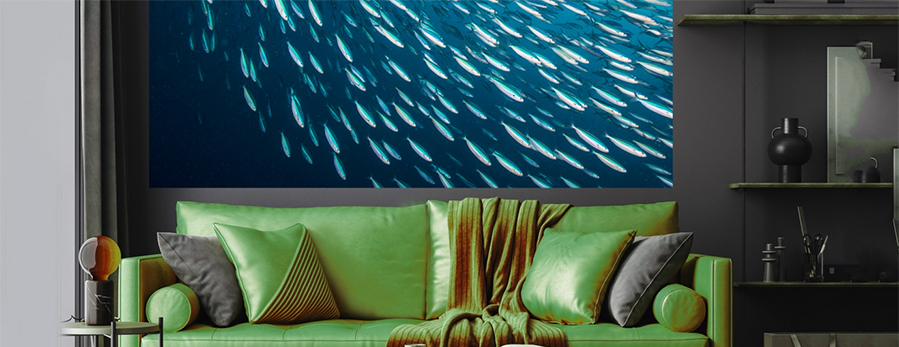
As part of the pioneering Pulcra Naturalis® initiative, the Pulcra development team has introduced Sirial® TIS NATUR. The product has been designed as the main fatliquor for very soft leathers with good fullness, sponginess and a waxy feel. Applications range from shoe uppers to garment and sofa leathers.

Fatliquoring with improved eco balance

Sirial® TIS NATUR is based on high-quality fish oil obtained from purified technical varieties that have not been released for human consumption and therefore do not compete with raw material flows for nutrition. Moreover, the fish oil is extracted without endangering wild fish stocks. The high degree of purification guarantees good heat and light fastness. In addition to the fish oil, Sirial® TIS NATUR contains natural humectant components that improve the elasticity of the grain without weighing it down. The proportion of bio-based carbon in Sirial® TIS NATUR is >80%, well above the current industry benchmark. When used with products from the Pulcra Naturalis® portfolio, the bio-C content of the leather is significantly improved. We believe that the best advertisement for the highly sustainable material natural leather is to further reduce its environmental impact.


Pulcra Naturalis®– The Bio-Revolution for Leather Processing is an initiative launched by Pulcra focused on promoting a product portfolio with a high content of bio-based carbon. All products included in this new portfolio contain at least 80?% renewable carbon1.

The use of renewable feedstocks is an important means of reducing greenhouse gas emissions from the manufacture of chemicals and an important step towards carbon neutrality. Much of the carbon contained in industrial or consumer products, including leather or leather chemicals, eventually enters the atmosphere as CO2. When working with fossil raw materials, the carbon used was sequestered in the earth, so its release means a strongly negative carbon balance. Renewable raw materials, which are based on plant or animal raw materials, have a much better carbon balance: plants bind CO2 from the atmosphere, and animals are fed with natural feed. Switching to renewable raw materials therefore stops the influx of CO2.



More News from TEXDATA International

#Texprocess 2026

Texprocess 2026: Automation, digitalisation and AI redefine textile processing

Making investment decisions in textile processing has become significantly more demanding. Increasing energy costs, a shortage of skilled labour and ongoing geopolitical uncertainties are compelling companies to focus on technologies that deliver clear gains in efficiency and process reliability. This applies equally to apparel manufacturing and to the processing of technical textiles and high-performance materials. As a result, modernisation initiatives are assessed more carefully – even as the need to upgrade production systems continues to intensify.

#Techtextil 2026

Techtextil 2026: Between innovation pressure & market reality

From 21 to 24 April 2026, Techtextil in Frankfurt am Main will once again become the central meeting point for the international technical textiles and nonwovens industry. Running in parallel, Texprocess will focus on the industrial implementation of textile processing technologies as the leading platform in this field. Together, the two trade fairs form a closely integrated presentation and working platform along the entire textile value chain – from material development to finished applications.

#Techtextil 2026

Between geopolitical pressure and industrial resilience

In this interview, Dr. Janpeter Horn (VDMA) discusses the current challenges facing textile machinery manufacturers, shaped by geopolitical tensions, regulatory developments and subdued investment. He also outlines why innovation strength, integrated solutions and strategic positioning remain key to global competitiveness.

#Texprocess 2026

Between investment restraint and modernization pressure

Texprocess 2026 takes place in a complex market environment shaped by uncertainty and innovation pressure. In this interview, Elgar Straub (VDMA) explains why the trade fair is particularly relevant this year and which technologies are driving efficiency and competitiveness.

More News on Textile chemistry

#Techtextil 2026

RUDOLF is pioneering the future of technical textiles by developing innovative, functional solutions

At Techtextil 2026, RUDOLF presents its latest innovations for textile auxiliaries, textile care and construction chemicals. Based in Geretsried, Bavaria, the company draws on more than 100 years of experience and continues to position itself as a global technology partner focused on quality, innovation and sustainability.

#Techtextil 2026

Archroma showcases innovations delivering performance without compromise at Techtextil 2026

Archroma, a global leader in specialty chemicals, is bringing a full suite of advanced solutions to Techtextil 2026 to help technical textile manufacturers achieve cutting-edge functionality with optimized productivity and enhanced sustainability.

#Techtextil 2026

BASF at Techtextil 2026: Helping to shape the future of the textile industry with tangible solutions

At the leading international trade fair for technical textiles and nonwovens from April 21 to 24, 2026 at the Messe Frankfurt, BASF will present numerous solutions and new projects in the textile sector to customers and partners at booth B 68 in hall 11.0. The focus is on product innovations and future-oriented technologies.

#Techtextil 2026

CHT Group to showcase intelligent specialty chemical solutions at Techtextil 2026

At this year's Techtextil 2026 in Frankfurt am Main, the CHT Group will be presenting its comprehensive portfolio of tailor-made specialty chemicals and process solutions for technical textiles. As a reliable partner to the global textile industry, the company offers innovative products and in-depth technical expertise across all areas of the textile value chain – from pretreatment, dyeing, and printing to finishing, coating, and fiber auxiliaries.

Latest News

#Heimtextil 2027

Heimtextil celebrates Milan Design Week honoring partnerships with Patricia Urquiola and Alcova Milano

Heimtextil is represented at Milan Design Week with its strong design partners Patricia Urquiola and Alcova. At Villa Pestarini, the leading trade fair spotlighted its dynamic collaborations with acclaimed designer Patricia Urquiola and Alcova Milano.

#Texprocess 2026

Kornit Digital expands digital production into footwear and technical textiles with Presto MAX PLUS

Kornit Digital (NASDAQ: KRNT) (“Kornit” or the “Company”), a global pioneer in sustainable, on-demand digital fashion and textile production, today unveiled the Kornit Presto MAX PLUS, a new roll-to-roll system expanding digital manufacturing into footwear, automotive interiors, military camouflage, high-performance sportswear, and high-end furnishings. Debuting at Texprocess 2026 in Frankfurt, Presto MAX PLUS enables entirely new applications for on-demand textile production.

#Textile processing

NATULON® zipper series surpasses 50% of YKK’s global zipper sales

YKK Corporation (Headquarters: Chiyoda-ku, Tokyo; President: Koichi Matsushima; hereafter, YKK) announces that the global sales share of its NATULON® zipper series—zippers that incorporate recycled materials—has exceeded 50%.

#Smart Textiles

Covestro, FILK Freiberg, and OUT e.V. develop flexible, conductive polymer smart textile system

As the smart textiles market continues to grow across healthcare, personal protection, sportswear, and automotive applications, developers are seeking new ways to integrate electronic functionality directly into textiles, without the rigidity and complexity of conventional wiring. To address this challenge, FILK Freiberg Institute, an independent research institution with expertise in polymer coatings for textile applications, collaborated with Optotransmitter-Umweltschutz-Technologie (OUT) e.V. The joint project, funded under the German Industrielle Gemeinschaftsforschung (IGF) program of the Bundesministerium für Wirtschaft und Energie (BMWE), focused on developing flexible, conductive polymer surfaces for next-generation smart textiles.

TOP