[pageLogInLogOut]

#Sustainability

DyStar releases 2018 Sustainability Report
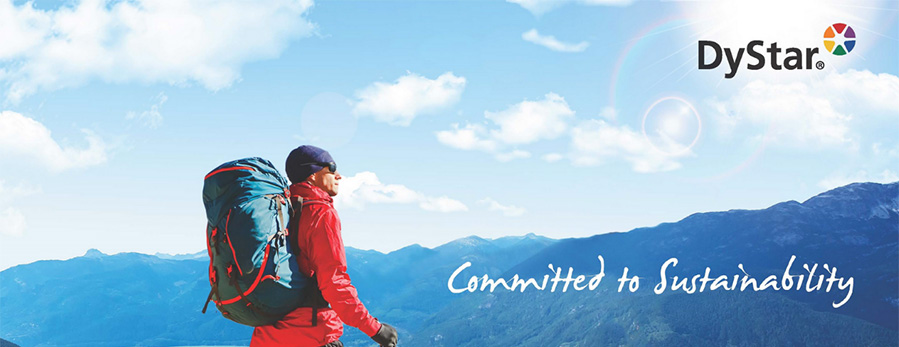
(c) 2019 Dystar
DyStar, a leading specialty chemical company with a heritage of more than a century in product development and innovation is pleased to announce the release its Sustainability Performance Report for 2018 – 2019, based on its defined Four Key Performance Indicators – Creating responsible products and services, Sustainable business growth, Conserving planetary resources and Caring for people.

Mr. Eric Hopmann, CEO of DyStar Group said, “Our commitment to sustainability at DyStar is illustrated across the way we performed our businesses. By making positive impacts toward the entire supply chain, we are being a responsible corporate citizen, and at the same time helping our customers to do likewise.”

Into its ninth year of reporting, DyStar has shown significant improvements through the year of 2018. Among other achievements, DyStar’s relentless efforts have paid off in terms of organization’s financial performance, achieving double-digit growth in revenue of 11%, and has helped to operationally reduce overall production footprint by 20% for every ton of production.

Highlights of Report:

Creating Responsible Products and Services

  • More than 2,200 textile mills audited for chemical risk and textile processing
  • More than 1,300 of DyStar’s products approved by bluesign®

Sustainable Business Growth

  • Increase in global employee wages and benefits

Conserving Planetary Resources

  • Reported 22% reduction of emissions intensity compared to 2011
  • 29% of the customer packaging were reconditioned and reused in 2018


Caring for People

  • More than 23,000 hours invested in staff training
  • Reported 308,000m3 of water provided to communities at no-cost since 2011

Globally, DyStar provides a diverse range of innovative solutions to multiple industries including Textile & Leather, Personal Care, Pharma & Household, Food & Beverages, Paints, Coatings, Industrial & Construction, Printing, Paper & Packaging as well as Water Treatment & Agriculture.

As we progress, DyStar will continue building a sustainable growth environment in order to achieve long-term value in a balanced and responsible manner across the value chain.

DyStar’s Sustainability Report is available here:

https://www.dystar.com/sustainability-reports/


More News from DyStar Singapore Pte Ltd

More News on Sustainability

#Sustainability

Ying McGuire becomes new CEO of Cascale

Cascale today announced the appointment of Ying McGuire as Chief Executive Officer, effective June 1, 2026.

#Sustainability

VAUDE eliminates PFAS from all products

PFAS (per- and polyfluoroalkyl substances) are now detectable worldwide – in drinking water, soil and the human body. These so-called “forever chemicals” are considered hazardous to health and potentially carcinogenic, as they do not break down and remain in the environment permanently. Despite these risks, PFAS are still used in a wide range of products. More than 15 years ago, VAUDE made a strategic decision to gradually eliminate PFAS from all product categories.

#Sustainability

OEKO-TEX® chooses TextileGenesis to advance digital traceability for organic cotton

OEKO-TEX® today announced a full collaboration with TextileGenesis, a Lectra company, to digitally trace and authenticate organic cotton, strengthening fraud prevention across the supply chain. This announcement follows a successful pilot and brings together OEKO-TEX®’s certification expertise and closed testing system with TextileGenesis’ digital traceability platform to deliver a secure, end-to-end solution for managing certified organic cotton flows.

#Europe

ICAC to support European Commission on pending PEF legislation

The International Cotton Advisory Committee (ICAC) is proud to announce that it has been included as a member of the European Commission’s Technical Advisory Board (TAB) on the Product Environmental Footprint methodology. The Commission developed the Product Environmental Footprint (PEF) to assess and communicate the life cycle environmental performance of products and organizations.

Latest News

#Textiles & Apparel / Garment

VIATT 2026 to debut German Pavilion, strengthening European participation alongside key Asian textile hubs

Vietnam’s textile and garment sector continues to be a major contributor to the country’s economic growth, with export revenues expected to reach USD 46 billion in 2025, a 5.6% increase from 2024 . From 26 – 28 February, the Vietnam International Trade Fair for Apparel, Textiles and Textile Technologies (VIATT) is set to contribute to economic growth opportunities by accelerating digital transformation and green transition across the entire textile value chain. The upcoming edition will respond to the rising demand for advanced technologies and sustainable materials with the introduction of the German Pavilion, alongside strong exhibitor participation from key Asian sectors, as well as several high-profile fringe events.

#Technical Textiles

Sustainable, lightweight, and sound absorbing: Polyester-based front trunk solution for BEVs

As car manufacturers look to further reduce their carbon footprint, Autoneum has developed an innovative front trunk solution for battery electric vehicles (BEVs), made entirely from polyester-based textile. The Ultra-Silent Frunk offers significant weight reduction, improved acoustic and thermal insulation, and uses up to 70 percent recycled material, supporting sustainable and efficient vehicle design. Autoneum, global technology leader in acoustic and thermal management for vehicles, has already received orders for the new frunk from three major OEMs in Asia and Europe to be built in three BEV models. Series production for two BEVs has been underway in China and Germany since last year.

#Raw Materials

Modern testing methods for raw cotton

The 38th International Cotton Conference Bremen will take place from 25 to 27 March 2026 at the Bremen Parliament. This conference has traditionally stood for in-depth expertise and international exchange. The program will focus on technical innovations, market trends, and regulatory frameworks across the entire value chain – from agriculture to the circular economy. With high-profile speakers, the conference is regarded as the key meeting point for the global cotton industry. Today’s focus: Cotton quality and testing methods.

#Spinning

Rieter responds to higher raw material prices

Global political and economic developments have been leading to rising raw material and energy costs for some time. The textile machinery industry is also affected by this trend. Rieter machines and components consist to a large extent of steel, copper, aluminum and electronics. These materials in particular have seen higher demand and higher prices in recent months.

TOP