[pageLogInLogOut]

#Techtextil 2026

BASF at Techtextil 2026: Helping to shape the future of the textile industry with tangible solutions

Shoes, jacket, roller shutters, nonwovens and composites – products to touch and experience
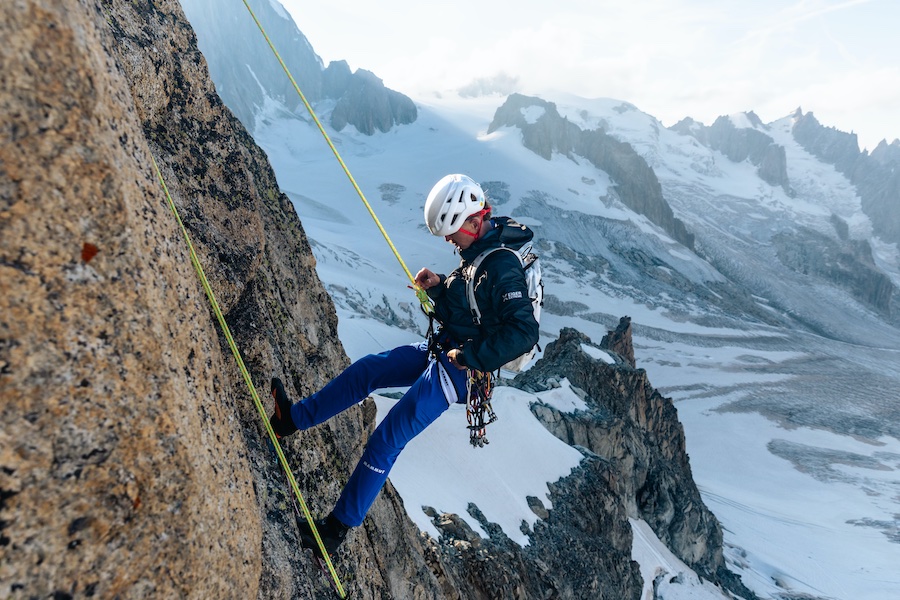
The climbing rope “9.8 crag recycled” by Mammut, produced with Ultramid® Ccycled® © 2026 Photo: Mammut
At the leading international trade fair for technical textiles and nonwovens from April 21 to 24, 2026 at the Messe Frankfurt, BASF will present numerous solutions and new projects in the textile sector to customers and partners at booth B 68 in hall 11.0. The focus is on product innovations and future-oriented technologies.

Shoes, climbing ropes and clothing – made with Ultramid® Ccycled®

Whether outdoor pants, sports shoes or climbing ropes –all showcased items are made with Ultramid® Ccycled®. BASF offers an innovative mass-balanced product that supports the use of alternative raw materials derived from the chemical recycling of hard-to-recycle plastic waste, such as scrap tires. The recycled raw material is fed into the grid at the beginning of BASF’s production network and assigned to the Ultramid Ccycled products via a mass balance approach. The product quality remains unchanged.

No CO2 in your luggage: Innovative polyamide from BASF in VAUDE’s bike backpack

The TRAILCONTROL ZERO 20+ bike backpack from VAUDE, a leading manufacturer of sustainable outdoor clothing and equipment, sets new standards in collaboration with BASF. For the production of the backpack, VAUDE uses BASF’s innovative Ultramid® ZeroPCF, a polyamide 6 (PA6) with a CO2 footprint (PCF) of zero according to a certified cradle-to-gate calculation.
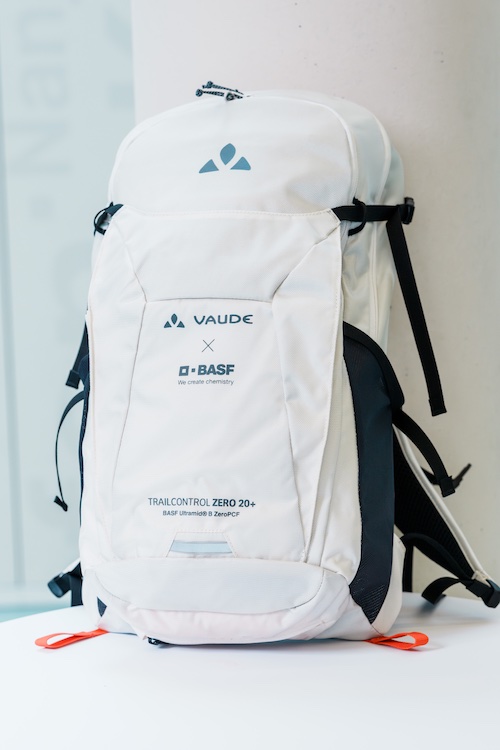
The TRAILCONTROL ZERO 20+ bike backpack by VAUDE made with Ultramid® ZeroPCF by BASF © 2026 Photo: BASF


A jumpsuit made from biocircular raw materials

With Ultramid®BMB, BASF has developed a sustainable drop-in concept that enables the use of biocircular starting materials in product manufacturing – the result is a jumpsuit from Zara. REDcert²-certified feedstocks replace fossil resources at the very beginning of the production process and are then allocated to Ultramid BMB products via a mass balance approach. Without compromising on quality and performance, the CO₂ footprint (cradle-to-gate) can be reduced by more than 50 % compared to standard Ultramid®.

Advanced binder technologies driving durable and more sustainable nonwoven and composite solutions

BASF will also present selected material solutions based on advanced binder technologies for nonwovens and fiber‑reinforced composite materials. Exhibits featuring Acronal® and Styrofan® binders highlight applications for the construction and automotive industries, including nonwovens made from glass and synthetic fibers. Selected Acronal® grades are part of BASF’s bio‑based portfolio and help reduce reliance on fossil resources.

With acForm® BASF will present a dispersion-based binder technology for furniture and interior design applications. acForm® enables the production of wood fiber mats used as core structures for complex, three-dimensional components with veneer surfaces, offering greater design flexibility than conventional plywood and veneer approaches.

In addition, Acrodur®, a low‑emission acrylic resin, is showcased in lightweight composite solutions, including glass filter media for paint booth exhaust air treatment and glass mesh for reinforcement of plaster and insulation systems.

Elastic microporous membranes for waterproof breathable applications

BASF and dimpora have jointly advanced the performance of microporous waterproof, breathable membranes. Conventional microporous membranes rely on mechanical stretching to create pores – a process that limits elasticity. BASF’s thermoplastic polyurethane (TPU) Elastollan® is combined with dimpora’s technology, to enable a new stretch-capable membrane concept. The result is a truly microporous membrane that provides elastic recovery under functional strain, while maintaining high waterproofness and reliable breathability. It remains PFAS free and solvent free. Because the membrane itself can stretch, it unlocks greater design freedom in textiles, by improving stress distribution, reducing resistance during movement, and supporting complex garment designs.

loopamid® – jacket, shirt and tracksuit you can touch

loopamid is BASF’s innovative solution for recycling polyamide 6 (PA 6) textile waste and thus promoting circularity in the fashion industry. The first PA6 made exclusively from textile waste is featured in the Zara jacket launched in 2024, in an adidas tracksuit resulting from the T-Rex project, and in a T-shirt produced together with Fulgar and Pompea.
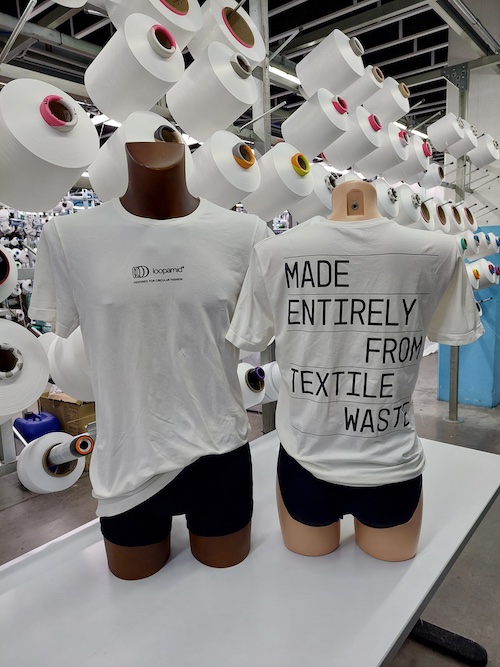
The loopamid shirt has been created with BASF’s partners Fulgar and Pompea.<br />
© 2026 Photo: BASF
The loopamid shirt has been created with BASF’s partners Fulgar and Pompea. © 2026 Photo: BASF


More News from BASF Aktiengesellschaft
Performance Chemicals for Textiles Europe

#Textile processing

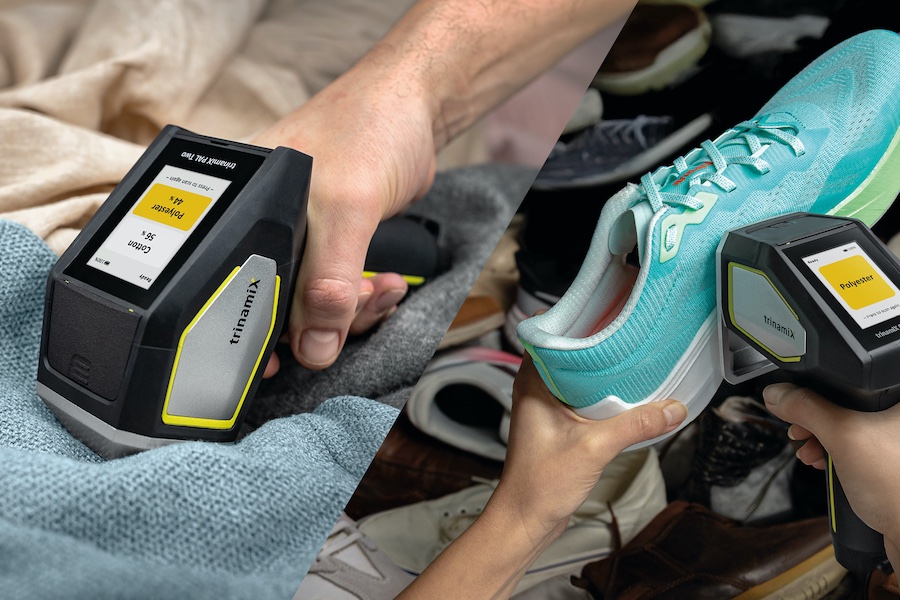
trinamiX mobile NIR spectroscopy: New applications for the footwear and textile industry

trinamiX GmbH expands its solution portfolio for the circular economy, now enabling the identification of materials used in the footwear and textile industries. With its mobile near-infrared (NIR) spectroscopy solutions, trinamiX supports manufacturers, sorters, recyclers, and brand owners in reliably identifying materials and improving transparency across increasingly complex value chains.

#Textile chemistry

A flagship for chemical production: BASF inaugurates world-scale Verbund site in China

BASF today (March 26, 2026) celebrated the official inauguration of its newly built, world-scale Verbund site in Zhanjiang, Guangdong Province in southern China. Covering an area of around four square kilometers, it is more than a major BASF project in the chemical growth market of China. “Zhanjiang shows what the future of chemistry looks like: efficient, digital and sustainable by design. The site showcases a smart integrated Verbund structure on an industrial scale,” said Dr. Markus Kamieth, CEO of BASF, at the ceremony attended by representatives from government, customers, business partners and employees.

#Recycling / Circular Economy

trinamiX with new management

BASF is examining strategic options for its subsidiary trinamiX GmbH. trinamiX specializes in biometric imaging and mobile material analysis. These activities are not part of BASF’s core business, on which the company is focusing as part of the implementation of its new strategy.

#Research & Development

How innovations drive BASF’s success

“Innovation has always been part of BASF’s DNA. Especially in these volatile times, it is crucial to leverage our innovative strength to develop competitive solutions that differentiate us as a company in our markets and give us a competitive edge,” said Dr. Stephan Kothrade, Member of the Board of Executive Directors of BASF and Chief Technology Officer, at the company’s Research Press Briefing held today. To achieve this, BASF implemented its “Winning Ways” strategy about a year ago with the clear goal of becoming the preferred chemical company to enable its customers’ green transformation.

More News on Techtextil 2026

#Techtextil 2026

Techtextil 2026: KARL MAYER impresses as an innovative sector partner

KARL MAYER looks back with satisfaction on its participation in Techtextil 2026. From April 21 to 24, the international industry leader used the trade show in Frankfurt to meet with numerous key customers at its booth and, at the same time, establish many new contacts. Most visitors came from Germany, followed by major markets such as Poland, the United Kingdom, Turkey, France, and Portugal.

#Techtextil 2026

Speed and connectivity: Techtextil and Texprocess provided market-ready solutions for industries under pressure

With more than 36,000 visitors and 1,700 exhibitors from a total of 112 countries, Techtextil and Texprocess 2026 demonstrated how innovation comes into industrial use. The convergence of research, industry and application proved to be a breeding ground for new material solutions, manufacturing and processing technologies. Natural fibres, performance apparel, connected systems and AI-driven processing technologies emerged as key growth and future markets.

#Techtextil 2026

Aditya Birla Group showcases integrated technical textile capabilities at Techtextil 2026

As global industries rethink supply chains and accelerate the adoption of advanced materials, the Aditya Birla Group, a US$67‑billion global conglomerate, headquartered in Mumbai, India, showcased the full strength of its technical textiles portfolio at Techtextil 2026 in Frankfurt today. The Group’s presence underscored India’s transformation into a hub for high-value, performance-driven textile solutions within the global ecosystem.

Latest News

#Associations

BTMA backs global growth while investing in future UK leaders

As one of a number of new initiatives launched this year, the British Textile Machinery Association (BTMA) is launching the UK-India Textile Machinery Coalition. The UK-India Free Trade Agreement, signed in July 2025, has implications that extend across sourcing, competitiveness and long-term trade dynamics, believes BTMA CEO Jason Kent.

#Raw Materials

China projected to increase cotton production, yields, and imports in 2026/27

World cotton production in the 2026/27 season is projected at 25.9 million tonnes, exceeding global consumption of 25.2 million tonnes, according to the May 2026 issue of Cotton This Month. That means both production and consumption are expected to remain close to current season levels, while global cotton trade is projected to decline by 2.7% to approximately 9.6-9.7 million tonnes.

#Raw Materials

ICAC launches Carbon Credits Initiative to deliver new income streams to cotton farmers

The International Cotton Advisory Committee (ICAC) has announced a new initiative designed to unlock additional income streams for cotton farmers through participation in carbon credit markets, linking sustainable production practices directly to financial returns.

#Sustainability

Number of GOTS-certified facilities grow 15% globally as demand for credible sustainability standards continues to strengthen

Global Organic Textile Standard (GOTS) certification continued to grow in 2025, with nearly 18,000 certified facilities worldwide, despite ongoing geopolitical uncertainty and rapidly evolving regulatory requirements across global textile supply chains.

TOP