[pageLogInLogOut]

#Sustainability

Textile Exchange sets date for launch of new Materials Matter Standard criteria

Following a successful International Working Group (IWG) vote, Textile Exchange will launch the approved criteria for its new Materials Matter Standard on December 12, 2025.

The Materials Matter Standard is a voluntary sustainability standard for the production and initial processing of raw materials. It establishes what best practice looks like for different materials in various settings, from farms to recycling facilities. This new standard marks an important step in the evolution of our current suite of standards to incentivize a system in which the materials in our clothing and textiles support the climate, respect human rights and animal welfare, and drive beneficial outcomes for soil health, water, and biodiversity.

In line with Textile Exchange’s status as an ISEAL Code Compliant member, the principles and criteria for the new Materials Matter Standard were submitted to and approved by the IWG, an independent decision-making body. This body represents a cross section of the textile manufacturing industry, including brands, raw material producers, and civil society organizations. 

The new criteria will outline the requirements that raw material producers must fulfill to achieve their certification. The accompanying Materials Matter Claims and Labeling Policy will set out how organizations, including producers, can make claims and label products as Materials Matter certified. 

The practices defined within the criteria are grounded in decades of work within Textile Exchange’s current standards and align with its sharpened focus. They reflect its new organizational mission: to transform how we produce, choose, and reuse materials to benefit the people and places at the source. 

When the standard becomes effective in 2026, organizations certified with Textile Exchange’s existing standards can request audits by approved certification bodies. The mandatory date is expected to be in 2027, and organizations must complete their next audit to the new standard to maintain their certification from that date onwards. We will openly communicate exact effective and mandatory dates on December 12 alongside the publication of the standard criteria. 

In the meantime, Textile Exchange will continue to operate its current standards until the completion of the transition period. It is taking a phased, hands-on approach to support both brands and suppliers through the transition to the Materials Matter System and targeted consultations on other supporting policies will follow ahead of the effective date.


More News from Textile Exchange

#Sustainability

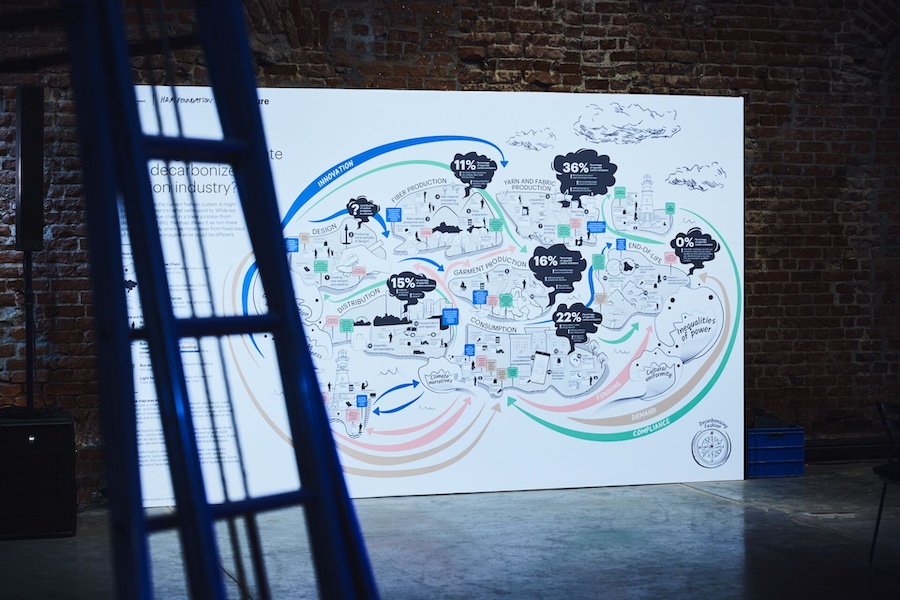
Textile Exchange evolves its membership structure to unlock the next stage of collective action for climate and nature

Textile Exchange is excited to announce that it is evolving its membership structure to a more action-oriented, impact-driven model designed to provide clearly defined pathways that help organizations respond to the climate and nature crisis.

#Sustainability

Key takeaways from the 2025 Textile Exchange conference

Brands and retailers, suppliers, innovators, recyclers, farmers, non-profit organizations, and academics convened at Textile Exchange’s Annual Conference, held in the Lisbon Conference Centre.

#Sustainability

Textile Exchange announces the winners of the 2025 Climate and Nature Impact Awards

Textile Exchange is pleased to announce the winners of the 2025 Climate and Nature Impact Awards. These awards recognize individuals and partnerships making progress toward a regenerative and equitable raw materials economy.

#Sustainability

Textile Exchange Conference 2025: Setting the course for systemic change

The 2025 Textile Exchange Conference brought together more than 1,600 participants on site in Lisbon and online, marking two days of intense dialogue on the future of sustainable and regenerative material systems. With a focus on collaboration, data-driven progress, and systemic transformation, the sessions highlighted both the challenges and the opportunities in building a truly resilient textile industry.

More News on Sustainability

#Research & Development

The region of renewable raw materials: Central German Alliance for Bioplastics

The development of sustainable plastic solutions is rapidly gaining importance in light of global environ- mental pollution, dwindling fossil resources and ambitious climate protection targets. As part of the re- gional alliance RUBIO, which brings together 18 partners from central Germany and the Berlin-Branden- burg area, the bio-based and biodegradable plastic polybutylene succinate (PBS) was comprehensively investigated, starting with the raw material, through the manufacturing process, to industrial application.

#Textile chemistry

Archroma funds development of sustainable textile laboratory at Mumbai’s Institute of Chemical Technology

Archroma, a global leader in specialty chemicals focused on sustainable solutions, has supported the Institute of Chemical Technology (ICT), Mumbai, India in the renovation and development of a sustainable laboratory facility as part of its Corporate Social Responsibility (CSR) program.

#Sustainability

Peak Sustainability Ventures & Arvind launch India’s first industrial-scale cotton-stalk torrefaction project, decarbonizing textile manufacturing in Gujarat

Arvind Limited, one of India’s leading textile-to-retail conglomerates, and Peak Sustainability Ventures, a Mumbai-based global climate investment firm, have entered into a partnership to build a large-scale cotton stalk torrefaction plant in Gujarat, with a capacity of 40,000+ tonnes per year, to accelerate Arvind’s decarbonization goals and promote torrefaction at scale in India.

#Recycling / Circular Economy

Fashion for Good releases open-source blueprint for near-net-zero textile manufacturing

Fashion for Good launches the first open-source blueprint for near-net-zero textile manufacturing, tackling one of fashion’s biggest emissions hotspots. Developed under the Future Forward Factory project, the blueprint offers Tier 2 manufacturers in India five practical, financially viable pathways to reduce carbon emissions by up to 93%.

Latest News

#Recycling / Circular Economy

Advanced Recycling Conference 2025 fuels innovation across key waste streams

The Advanced Recycling Conference (ARC) 2025 brought together nearly 220 experts from 28 countries to spotlight pioneering advancements and foster industry collaboration in recycling across diverse waste streams including plastics, textiles, automotive and other materials.

#Dyeing, Drying, Finishing

Navis TubeTex announces U.S. partnership with Icomatex

Navis TubeTex, a global leader in advanced dyeing and finishing machinery solutions, is pleased to announce a new partnership with Icomatex (www.icomatex.com), a respected European manufacturer of high-quality stenters and textile finishing equipment. Under this agreement, Navis TubeTex will exclusively represent the Icomatex stenter line in the United States.

#Recycling / Circular Economy

ADVANSA launches ADVA®tex: A new step toward textile-to-textile recycling

ADVANSA has introduced ADVA®tex, a new filling fibre made entirely from recycled pre-consumer textile waste, positioning the material as a significant step forward in textile-to-textile (T2T) recycling. The fibre is designed for use in duvets, pillows, mattresses, and furniture applications and is available in three versions.

#Knitting & Hosiery

KARL MAYER celebrates 35 years of EL pattern drive

KARL MAYER is celebrating an anniversary this year: on 30 November 1990, the first warp knitting machine with electronic guide bar control, the KS 4 EL, was delivered – another milestone for patterning. As early as 1980, the SU gearbox with the MRS42SU had initiated the transition from mechanical chains to digital data.

TOP