[pageLogInLogOut]

#Natural Fibers

Global Standard gGmbH launches second public consultation for GRTS Draft 2 for the textile industry (1–30 April 2026)

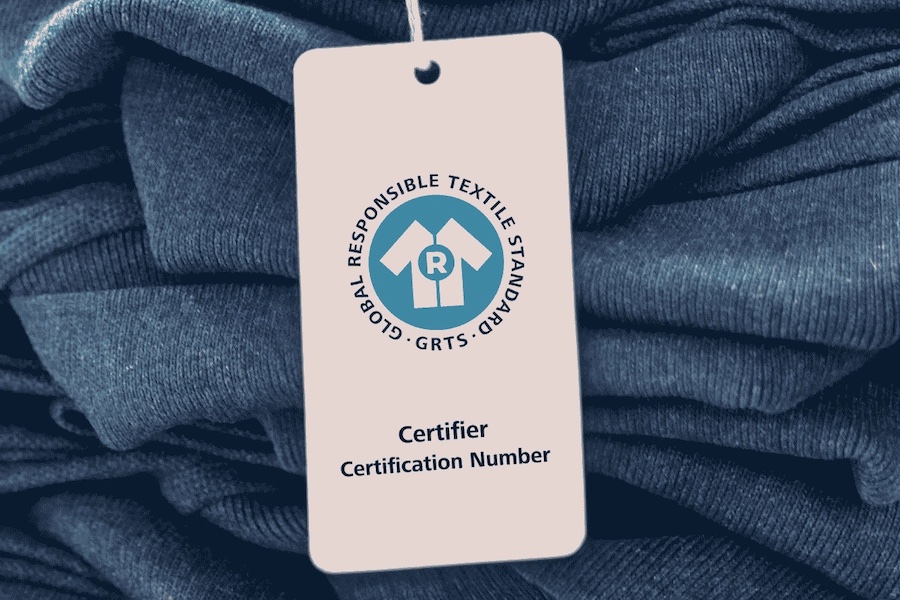
Global Standard gGmbH is pleased to announce the release of Draft 2 of the Global Responsible Textile Standard (GRTS) for its second public consultation. The consultation will be open from 1 April 2026 to 30 April 2026, inviting stakeholders across the textile and apparel value chain to provide input and contribute to the further development of this new Standard.

This second consultation builds on feedback received during the first public consultation phase and reflects revisions aimed at strengthening the Standard’s clarity, applicability and impact.

GRTS is designed to establish a robust, globally applicable framework for responsible practices in the textile sector, addressing environmental performance, social compliance, chemical management, traceability and governance. 

Call for Stakeholder Input

Global Standard welcomes all stakeholders to contribute their insights and perspectives. Your participation will help shape a credible, effective standard that extends responsible practices across more fibre types and business models, strengthening the industry’s ability to deliver on our social and environmental goals.

The draft version of GRTS is available here:

https://global-standard.org/images/GRTS_Draft_2_-_Mar_2026-Final.pdf

The draft version of the Implementation Manual for GRTS is available here:

https://global-standard.org/images/IM_GRTS_Draft_2_-_Mar_2026_-_Final.pdf

Submit your comments through this form:

https://forms.office.com/pages/responsepage.aspx?id=rmvRO_RovE6k48IdbZVgbulhgi3lQwNBtpS6ltABsc9UOFhaNzQ4NVQ5S0VVOEpKRllETUc0RTA5WS4u&route=shorturl

All feedback received during the consultation period will be systematically reviewed and considered in the finalisation of the Standard.

1st Consultation Inputs 

The 1st consultation period for GRTS was conducted in July 2025. 97 inputs were received, which were internally and externally discussed. The inputs and our responses are placed in this file.

Standards Development Process

The development of the GRTS follows the ISEAL Code of Good Practice for Sustainability Systems, ensuring a transparent, inclusive and evidence-based approach. This includes multiple rounds of stakeholder consultation, including this second public consultation, as well as documented decision-making and balanced stakeholder representation.

Background on the Standard

GRTS aims to extend the same principles of health, ecology, fairness and care to a broader range of fibres. While GOTS remains the global benchmark for organic textiles, GRTS will enable companies using other responsible fibres to credibly demonstrate both environmental and social performance under the same trusted system.

Shared core principles, same trusted process 

The Global Responsible Textile Standard is rooted in the same robust criteria and processes that define GOTS. These include:

  • Human Rights including Social Criteria: Strict prohibition of child labour, forced labour and discrimination; mandatory safe working conditions and fair treatment of workers.
  • Environmental Protection: Mandatory use of environmentally sound processes and materials with rigorous restrictions on chemical inputs.
  • Due diligence: Systematic implementation of responsible business conduct, including risk assessment and mitigation procedures
  • Traceability: Transparent tracking and volume reconciliation throughout the value chain.
  • Third-Party certification: Independent assurance by GOTS-approved certification bodies.
  • Comprehensive scope: Certification from raw material sourcing to the finished textile product.
  • No GMO-origin fibres: All fibres used under GRTS must originate from independently verified, non-GMO sources and are certified to meet stringent environmental and social standards. To uphold this standard of integrity, GRTS requires all fibre inputs to be registered in the Global Fibre Registry (GFR), a traceability tool developed by Global Standard to track and verify the origins of all fibres entering the GRTS and GOTS systems.

For further information, please contact: revision@global-standard.org


More News from Global Standard (GOTS)

#Sustainability

Number of GOTS-certified facilities grow 15% globally as demand for credible sustainability standards continues to strengthen

Global Organic Textile Standard (GOTS) certification continued to grow in 2025, with nearly 18,000 certified facilities worldwide, despite ongoing geopolitical uncertainty and rapidly evolving regulatory requirements across global textile supply chains.

#Sustainability

GOTS version 8.0 released: advanced supply chain accountability, from fibre to finished product

Global Standard is pleased to announce the release of GOTS Version 8.0, the latest update to the world's leading processing standard for organic textiles. The updated Standard strengthens requirements for air emissions and waste management, as well as criteria for product safety. It introduces new provisions on circularity, microfibre management and updates in residue testing. Version 8.0 also elevates due diligence obligations and formalises governance requirements, including ESG disclosure, anti-corruption policies and conflict-of-interest safeguards, to support credible, responsible business conduct.

#Textiles & Apparel / Garment

Global Standard strengthens presence in Southeast Asia at VIATT 2026

Global Standard will participate in the Vietnam International Trade Fair for Apparel, Textiles and Textile Technologies (VIATT) 2026, organized by Messe Frankfurt, the first textile trade show in the APAC region this year. Global Standard will host a booth and Felica Shi will lead a seminar on Global Organic Textile Standard (GOTS). The trade fair will take place from February 26 to 28, 2026, in Ho Chi Minh City, Vietnam.

#Sustainability

GOTS publishes update: Approval procedure & requirements for certification bodies – Version 4.0

The updated Version 4.0 has been aligned with the requirements of ISO 17065 and incorporates revised conformity assessment procedures and methodologies for Certification Bodies. These updates reflect best practices in evaluating management systems, thereby strengthening quality assurance, and safeguarding the integrity of certified products.

More News on Natural Fibers

#Research & Development

Regional hemp bast for lightweight construction profiles

The cultivation of fibre hemp for the production of ropes and clothing has a long tradition in Saxony. Due to its excellent fibre properties, it is also suitable as a renewable raw material for reinforcement in fibre composites. At the STFI and IWU in Chemnitz, the CannaPul project is cur- rently investigating how a regional value chain for hemp-based lightweight construction profiles can be established. To this end, the technical processing of hemp fibres into continuous fibre strands and their embedding in a suitable bio-based matrix are being investigated.

#Raw Materials

China projected to increase cotton production, yields, and imports in 2026/27

World cotton production in the 2026/27 season is projected at 25.9 million tonnes, exceeding global consumption of 25.2 million tonnes, according to the May 2026 issue of Cotton This Month. That means both production and consumption are expected to remain close to current season levels, while global cotton trade is projected to decline by 2.7% to approximately 9.6-9.7 million tonnes.

#Raw Materials

ICAC launches Carbon Credits Initiative to deliver new income streams to cotton farmers

The International Cotton Advisory Committee (ICAC) has announced a new initiative designed to unlock additional income streams for cotton farmers through participation in carbon credit markets, linking sustainable production practices directly to financial returns.

#Raw Materials

Kraig Biocraft Laboratories reports major progress converting record-setting spider silk cocoon production into reeled silk

Kraig Biocraft Laboratories, Inc. (OTCQB: KBLB) (“the Company”, “Kraig Labs”, or “Kraig’s”), a world leader in spider silk technology*, today announced significant progress in the processing of its recently produced recombinant spider silk cocoons into reeled silk.

Latest News

#ITM 2026

ITM 2026: KARL MAYER presents new perspectives

KARL MAYER will once again showcase itself as a strong partner to the Turkish textile industry at ITM in Istanbul from June 9 to 13. At Booth 303 A in Hall 3 of the Tüyap Fair Convention and Congress Center, the industry leader will exhibit solutions for warp knitting, warp preparation, and technical textiles – tailored to a challenging economic environment.

#Spinning

Specialist in fine counts: New type 2777 ceramic oiler

With the new Type 2777 ceramic oiler, Barmag has added a solution for fine titers and microfilaments to its portfolio of original parts.

#INDEX 2026

STFI highlights textile circular economy and alternative fibres at INDEX™ 2026

From 19 to 22 May 2026, INDEX will invite visitors to Lake Geneva for the world's leading nonwovens trade fair. The Centre of Excellence in Nonwovens at the Sächsisches Textilforschung- sinstitut e.V. (STFI) will be in attendance to present the latest developments in nonwovens research. In the field of the textile circular economy, the STFI will present acoustically effective nonwovens made from chemical recycling residues. The range also includes innovations aimed at replacing conventional raw materials, such as the biobased and biodegradable polymer polybutylene succinate (PBS) and Kendyr as an alternative to cotton.

#Associations

Italian textile machinery sector faces weak start to 2026 despite domestic growth

In the first quarter of 2026, order intake for Italian textile machinery manufacturers recorded a decrease of 5% compared to the same period in 2025, reflecting a still challenging start to the year. The decline affected foreign markets (-7%), while the domestic market showed growth (+21%).

TOP