[pageLogInLogOut]

#Sustainability

Naia from Eastman partners with ESDI for sustainable fashion educational project
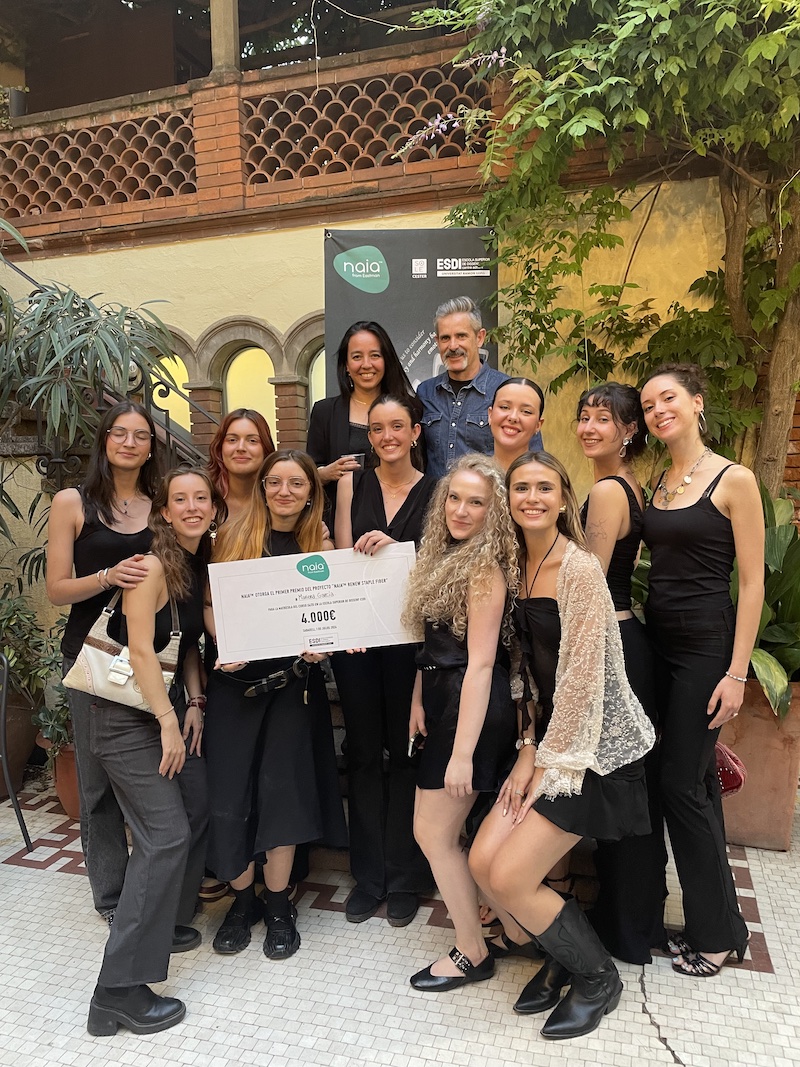
In a significant step towards promoting a culture of ecoconsciousness, Naia™ from Eastman partnered for an educational project with ESDI Escola Superior de Disseny in Sabadell (Barcelona). This collaboration underscores a commitment to integrating sustainable practices with academic excellence, providing ESDI students with the opportunity to design and produce garments using Naia™ fibers to participate in a fashion competition that celebrates the eternal tale of heaven and hell, Dante Alighieri's “The Divine Comedy.”
EKOS, was created and curated by a group of ten third-year ESDI fashion students © 2024 Eastman


The talents of the Escola Superior de Disseny ESDI in Barcelona challenged each other in a fashion competition in the name of sustainability and style

The event took place on July 1, 2024, at the Alliance Francaise in Sabadell, Barcelona, and was judged by a select jury of internationally renowned leaders within the fashion and textile industries. Including Abel Ortiz, owner of Naia™ partner mill, Textiles Ortiz; Montserrat Figueras, owner of the Sita Murt brand; the Italian-born and Barcelona-based designer Claudia Ligari, owner of the eponymous brand; and Carolina Wilches, Senior Application Development Representative at Eastman.

Naia™, in collaboration with ESDI, developed the project to create a seamless production process that prepares students for the dynamics and challenges that lie ahead in their future as industry players. The aim is to create and to enhance supply chain relationships, involving weavers, garment manufacturers and schools, as well as recognizing and rewarding the most innovative young designers during a special event. As part of this initiative, Eastman provided students with fabrics made from its Naia™ Renew fiber, in partnership with two esteemed textile manufacturers, Hallotex from Spain and Riopele from Portugal. Naia™ Renew cellulosic fibers are made from 60% sustainably sourced pulp and 40% certified recycled content*. The recycled component is obtained through Eastman’s patented carbon renewal technology to convert hard-to-recycle waste materials into molecular building blocks, which can be used, re-used and recycled time and time again. These building blocks are combined with sustainable wood pulp to produce biodegradable and compostable fibers for use in new textiles.

The fashion collection that derived from the program, named EKOS, was created and curated by a group of ten third-year ESDI fashion students: Mariona Garcia, the winner of the competition, Inés Borrego, Andra Criado, Júlia Escudero, Aurora Gallardo, Clàudia Gómez, Ingrid Sala, Sila Sánchez, Queralt Turull and Aina Vila. EKOS is a proposal that invites us to consider a new order of beauty and harmony based on emotional balance. Made with sustainable fibers that originated from the concept of inner struggle, it is a testament to human anguish, emotional and spiritual purgatory. Through their work, the designers aimed to capture the complexity of existence and the incessant search for clarity and peace.

A dress from the EKOS collection  © 2024 Eastman
A dress from the EKOS collection © 2024 Eastman


This educational collaboration is a reflection of Naia™ from Eastman's commitment to the United Nations’ Sustainable Development Goals (SDGs) and showcases its leadership in reducing environmental impact through advanced molecular recycling technologies. These are pivotal not just for their role in diminishing the carbon footprint of textiles but also for setting a new standard in mainstreaming circularity. Naia™ is at the forefront of promoting a circular economy within the fashion industry, both by converting waste into valuable, sustainable materials and by focusing on education and enabling students to work with them.

“At Eastman, we believe in the power of education to foster a more sustainable future. Partnering with ESDI allows us to support the next generation of designers by providing them with the tools and opportunities to innovate responsibly,” states Carolina Wilches. “Education is a cornerstone of our sustainability strategy, which is why we prioritize initiatives that enhance student learning and development.” "This collaboration has been very beneficial for ESDI students because they have been able to work in a very similar way to the professional one: choosing from a number of predetermined fabrics, visiting suppliers and devising the project as a team, to end up doing individual work that they will have to put together again for the fashion show presentation," says Jorge Zuazo, head of the Fashion Design Department at ESDI.
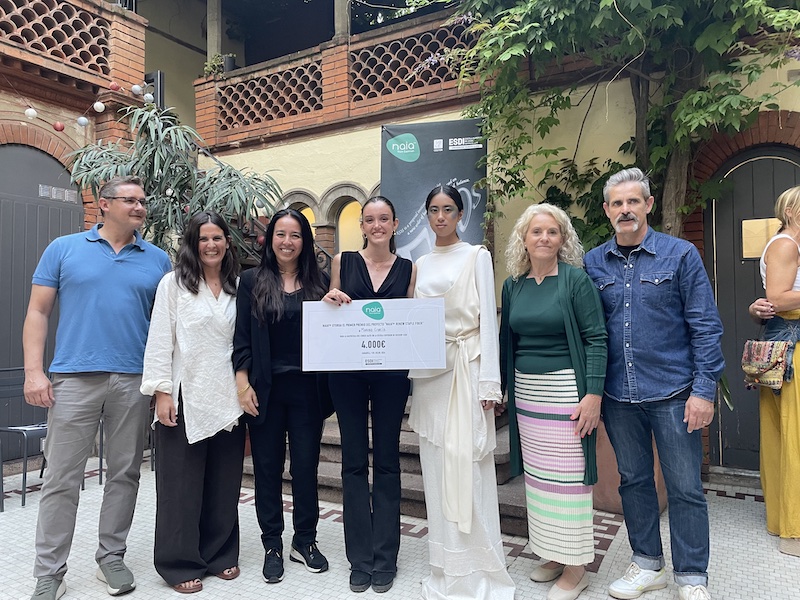
Mariona Garcia receives 'Naia™ Renew Staple Fibre' award from jury and school © 2024 Eastman


*Naia™ Renew recycled content is achieved by allocation of recycled waste material using a GRS-certified mass balance process.


More News from Eastman

#Yarns

Eastman introduces Naia™ Lyte at Première Vision Paris, marking a major breakthrough in fiber tenacity for cellulose acetate filament yarn performance

Eastman unveils Naia™ Lyte, a new cellulose acetate filament yarn that represents an important milestone in performance for lightweight and premium fabrics, at Première Vision Paris. Presented for the first time to the international fashion and textile community, Naia™ Lyte expands the capabilities of acetate yarn by introducing enhanced tenacity, unlocking new creative and technical possibilities for designers, mills and brands.

#Heimtextil 2026

Eastman Naia™ expands All-Night Comfort at Heimtextil 2026

New fill solutions and the debut of sleepwear highlight the versatility and performance of Naia™ Renew, its circular fiber, for home textile applications.

#Sustainability

Eastman Naia™ awarded top Canopy rating at Textile Exchange Conference 2025, advancing its sustainability 2025–2030 goals

At the Textile Exchange Conference in Lisbon, Eastman Naia™ was honored with its fourth consecutive “Dark Green Shirt” in Canopy’s Hot Button Report, an annual ranking of man-made cellulosic fiber producers based on forest conservation, sourcing risk, and supply chain transparency. The recognition confirms Naia™’s ongoing leadership in responsible sourcing and environmental stewardship, distinguishing it as one of the industry’s most trusted fiber platforms.

#Man-Made Fibers

Eastman Naia™ launches Sustainability Progress Report and 2025-2030 Sustainability Goals at Textile Exchange Conference, reaffirming commitment to circular innovation

At the Textile Exchange Conference 2025, Eastman Naia™ released its 2025 Sustainability Progress Report and announced its 2025–2030 Sustainability Goals, presenting a record of genuine progress and outlining a renewed roadmap for the years ahead. This announcement demonstrates Naia™’s long-standing commitment to driving an industry-wide shift toward sustainability through scalable, commercially viable material solutions.

More News on Sustainability

#Sustainability

GOTS version 8.0 released: advanced supply chain accountability, from fibre to finished product

Global Standard is pleased to announce the release of GOTS Version 8.0, the latest update to the world's leading processing standard for organic textiles. The updated Standard strengthens requirements for air emissions and waste management, as well as criteria for product safety. It introduces new provisions on circularity, microfibre management and updates in residue testing. Version 8.0 also elevates due diligence obligations and formalises governance requirements, including ESG disclosure, anti-corruption policies and conflict-of-interest safeguards, to support credible, responsible business conduct.

#Sustainability

The nova-Institute establishes new Renewable Feedstock Department to lay the groundwork for industrial defossilisation

The transition from fossil-based to renewable carbon – sourced from biomass, CO₂ utilisation and recycling – is the cornerstone of a climate-neutral chemical industry. The nova-Institute’s new department is dedicated to providing the essential data, analyses and strategic roadmaps required to secure a reliable future feedstock supply and make this transition a commercial and ecological reality.

#Sustainability

Textile Exchange unveils commitment-based pathway for members to accelerate responsible raw material production

Textile Exchange has unveiled further details about its new membership structure, designed to guide the fashion, textile, and apparel industry in a collective course of action toward preferred production systems for raw materials and fibers.

#Textile chemistry

Jeanologia urges industry to accelerate PP Spray phase-out following ZDHC Watchlist update

Potassium permanganate has officially entered the Chemical Watchlist of the ZDHC Foundation, signaling increased scrutiny and potential phase-out of one of the most hazardous chemicals still used in denim finishing. The inclusion confirms an industry shift that Jeanologia anticipated more than a decade ago.

Latest News

#Raw Materials

Lenzing Group positions bio‑based materials as a strategic asset for Europe’s economic security

The Lenzing Group, a leading supplier of regenerated cellulose fibers for the textile and nonwovens industries, hosted a high‑level roundtable in Brussels to discuss how bio‑based materials can strengthen Europe’s economic security and support the shift toward a fossil‑free future. Organized in cooperation with Euractiv, the event brought together representatives of the European Commission, the UK Mission to the EU, academia, civil society, and industry.

#Natural Fibers

Beyond Cotton: Natural Fibres in the Spotlight at the Bremen Cotton Conference - Branded by DNFI

Climate targets, fragile supply chains, and rising regulatory requirements are fundamentally changing the perspective of the textile industry - the focus is increasingly shifting toward the base material. Not only cotton, but natural fibres are gaining significant importance: they stand out not only because of their outstanding functional properties, but also because they make a valuable contribution to the bioeconomy and responsible product development.

#Textiles & Apparel / Garment

Coats to showcase innovative reinforcement and filler materials for leather goods and accessories at APLF 2026

Coats, a world-class Tier 2 manufacturer and trusted partner for the apparel and footwear industries, will be promoting four advanced materials from its ‘Lifestyle Solutions’ portfolio at APLF 2026 in Hong Kong in March. Each innovation has been specifically engineered to help luxury and premium brands elevate the craft, durability, sustainability and creative expression required in the manufacturing of handbags, purses, and other high-end designer accessories.

#Textiles & Apparel / Garment

Design, innovation and sustainability propel VIATT 2026’s expanding role in ASEAN textile sourcing

At its third edition, the Vietnam International Trade Fair for Apparel, Textiles, and Textile Technologies (VIATT) further reinforced its role as a key sourcing and business platform for ASEAN’s textile industry. The three-day fair welcomed over 17,000 visits from 54 countries and regions, and featured over 460 exhibitors from 21 countries and regions across 18,000 sqm. The 2026 edition was marked by the introduction of new international pavilions and zones, broadening the fair’s sourcing scope across new geographies and product categories. The fringe programme, headlined by the debut Trend Forum, further distinguished VIATT as the region’s most integrated textile trade platform – uniquely spanning the entire value chain.

TOP