[pageLogInLogOut]

#Sustainability

Clarification related to GOTS as a ZDHC MRSL approved standard

Effective 1st November, 2023, the transition phase from ZDHC MRSL V2.0 has concluded.

Effective 1st November, 2023, the transition phase from ZDHC MRSL V2.0 / ZDHC Conformance Guidance V1.1 to the newly implemented ZDHC MRSL V3.1 / ZDHC Conformance Guidance V2.0 has concluded. From this date forward, only products compliant with the new ZDHC MRSL V3.1 and the corresponding ZDHC Conformance Guidance V2.0 are eligible for upload onto the ZDHC Gateway.

It is important to note that GOTS (Global Organic Textile Standard) is currently not among the approved standards for demonstrating compliance with the ZDHC MRSL V3.1. Certification Bodies utilising GOTS standards are welcome to independently seek approval as a ZDHC Approved MRSL Certifier. Once approved by ZDHC, they can then make use of their GOTS standard approach to certify products according to the ZDHC MRSL V3.1 / ZDHC Conformance Guidance V2.0.


ZDHC encourages people affected by this  to contact their GOTS Certification Body about this development and invite them to connect with them at ZDHC via their Customer Support Team (support@zdhc.org) for further information and guidance on how they can apply to become a ZDHC Approved MRSL Certifier.

ZDHC also would like to remind that the status of ZDHC Approved MRSL Certifiers approval is always updated on their website at the following link:

https://downloads.roadmaptozero.com/input/MRSL-certifiers


More News from Global Standard (GOTS)

#Sustainability

GOTS version 8.0 released: advanced supply chain accountability, from fibre to finished product

Global Standard is pleased to announce the release of GOTS Version 8.0, the latest update to the world's leading processing standard for organic textiles. The updated Standard strengthens requirements for air emissions and waste management, as well as criteria for product safety. It introduces new provisions on circularity, microfibre management and updates in residue testing. Version 8.0 also elevates due diligence obligations and formalises governance requirements, including ESG disclosure, anti-corruption policies and conflict-of-interest safeguards, to support credible, responsible business conduct.

#Textiles & Apparel / Garment

Global Standard strengthens presence in Southeast Asia at VIATT 2026

Global Standard will participate in the Vietnam International Trade Fair for Apparel, Textiles and Textile Technologies (VIATT) 2026, organized by Messe Frankfurt, the first textile trade show in the APAC region this year. Global Standard will host a booth and Felica Shi will lead a seminar on Global Organic Textile Standard (GOTS). The trade fair will take place from February 26 to 28, 2026, in Ho Chi Minh City, Vietnam.

#Sustainability

GOTS publishes update: Approval procedure & requirements for certification bodies – Version 4.0

The updated Version 4.0 has been aligned with the requirements of ISO 17065 and incorporates revised conformity assessment procedures and methodologies for Certification Bodies. These updates reflect best practices in evaluating management systems, thereby strengthening quality assurance, and safeguarding the integrity of certified products.

#Sustainability

Global Standard to launch new Global Responsible Textile Standard (GRTS), calls for public consultation

Global Standard, the non-profit organisation behind the internationally recognised Global Organic Textile Standard (GOTS), today announces the launch of the public consultation period for its new voluntary sustainability standard: the Global Responsible Textile Standard (GRTS).

More News on Sustainability

#Sustainability

Experts publish APAC policy priorities

Cascale today announced the publication of its APAC Policy Priorities Paper, developed by the Asia-Pacific (APAC) Policy Member Expert Team (MET) to identify key regional sustainability challenges and provide practical, aligned recommendations for policymakers and industry stakeholders across Asia-Pacific.

#Sustainability

The nova-Institute establishes new Renewable Feedstock Department to lay the groundwork for industrial defossilisation

The transition from fossil-based to renewable carbon – sourced from biomass, CO₂ utilisation and recycling – is the cornerstone of a climate-neutral chemical industry. The nova-Institute’s new department is dedicated to providing the essential data, analyses and strategic roadmaps required to secure a reliable future feedstock supply and make this transition a commercial and ecological reality.

#Sustainability

Textile Exchange unveils commitment-based pathway for members to accelerate responsible raw material production

Textile Exchange has unveiled further details about its new membership structure, designed to guide the fashion, textile, and apparel industry in a collective course of action toward preferred production systems for raw materials and fibers.

#Textile chemistry

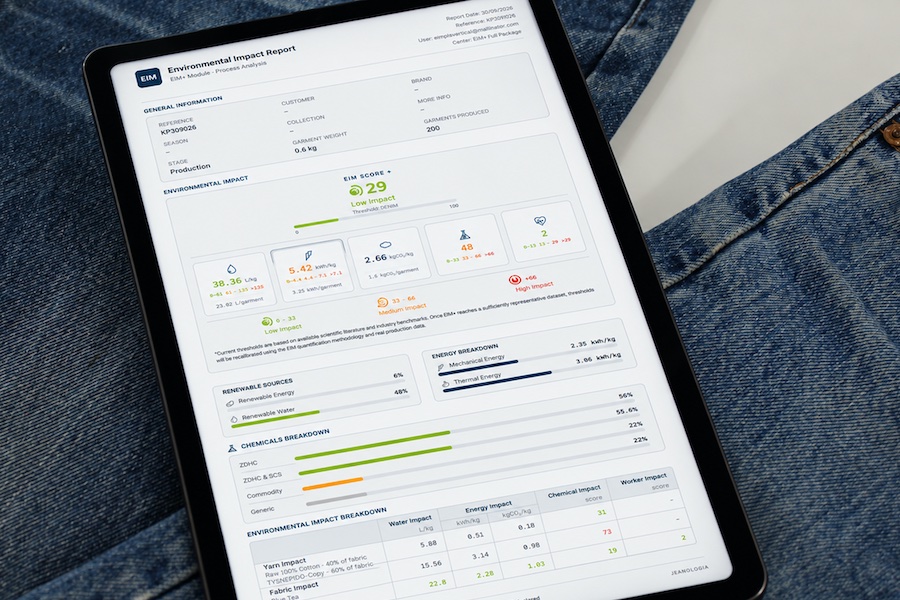
Jeanologia urges industry to accelerate PP Spray phase-out following ZDHC Watchlist update

Potassium permanganate has officially entered the Chemical Watchlist of the ZDHC Foundation, signaling increased scrutiny and potential phase-out of one of the most hazardous chemicals still used in denim finishing. The inclusion confirms an industry shift that Jeanologia anticipated more than a decade ago.

Latest News

#Textile chemistry

A flagship for chemical production: BASF inaugurates world-scale Verbund site in China

BASF today (March 26, 2026) celebrated the official inauguration of its newly built, world-scale Verbund site in Zhanjiang, Guangdong Province in southern China. Covering an area of around four square kilometers, it is more than a major BASF project in the chemical growth market of China. “Zhanjiang shows what the future of chemistry looks like: efficient, digital and sustainable by design. The site showcases a smart integrated Verbund structure on an industrial scale,” said Dr. Markus Kamieth, CEO of BASF, at the ceremony attended by representatives from government, customers, business partners and employees.

#Nonwovens

VEOCEL™ Lyocell production expands to Asia – Launching a new chapter for nonwovens in the region

VEOCEL™, Lenzing's flagship specialty nonwovens brand, expands production at its Thai plant in Prachinburi. This is the first-ever production of its nonwoven-grade lyocell fibers in Asia. Built in 2022 with a 100,000-ton annual production capacity, the facility - previously focused on fibers for textile applications - now can directly meet the demand for VEOCEL™’s biodegradable¹, wood-based lyocell fibers for nonwovens products. These fibers are an essential ingredient for high-quality nonwovens products, ranging from baby wipes to facial sheet masks and everyday personal hygiene items.

#Research & Development

Hof University develops sustainable textile coating for the fashion of tomorrow from mushrooms

Clothing is often treated as disposable: T-shirts for events, general merchandise, or short-term campaigns frequently end up in the trash after only a few uses. This is particularly problematic given that their production still largely relies on fossil-based materials. This is precisely where a new research project at Hof University of Applied Sciences comes in.

#Raw Materials

Fashion for Good mobilises industry to adopt mass balance attribution and accelerate decarbonisation

Fashion for Good launches today the Mass Balance Demonstrator project, a collaborative industry initiative to implement and scale the mass balance attribution (MBA) chain-of-custody model for biomass-attributed PET in textile applications. The project represents a concrete step toward accelerating brand-driven decarbonisation across the apparel value chain.

TOP