[pageLogInLogOut]

#Sustainability

Fashion sector gathers to find common ground on sustainability issues

© 2022 Sustainable Apparel Coalition
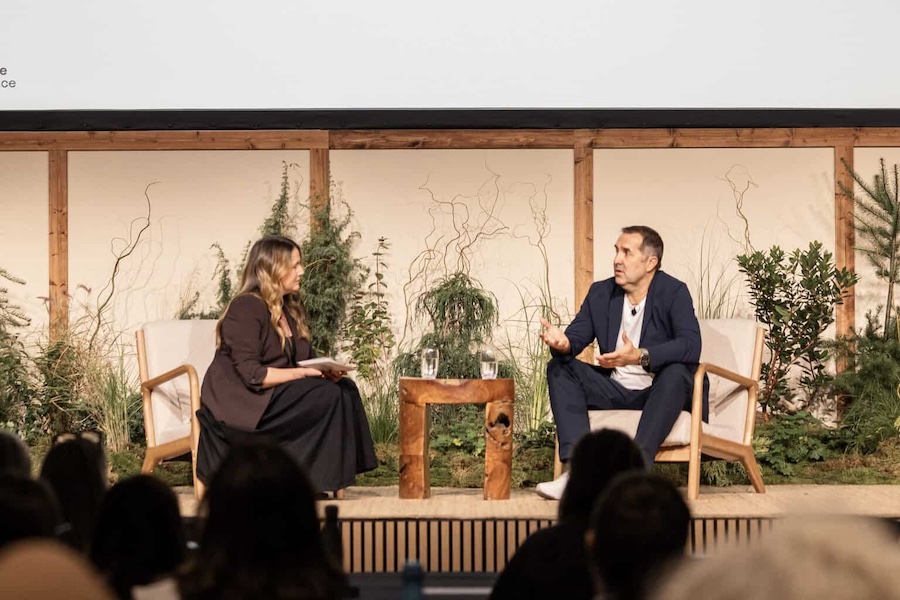
The Sustainable Apparel Coalition (SAC) held its Annual Meeting on November 1-2 in Singapore. As the climate crisis gathers momentum, the event, held in-person for the first time since 2019, offered a unique opportunity for retailers, brands, manufacturers and other stakeholders to have crucial sustainability conversations.
  • On November 1-2, around 500 representatives from the global fashion industry converged in Singapore – and virtually – for the Annual Meeting of the Sustainable Apparel Coalition (SAC).
  • Bringing together the entire apparel sector value chain – from brands and retailers to manufacturers and affiliates – at a critical moment in the escalation of the climate crisis and human rights violations, the event focused on collective commitment to drive urgent actions.
  • SAC CEO Amina Razvi urged immediate sector-wide action to address systemic sustainability and human rights issues.


The non-profit organization brought together around 500 representatives from the entire apparel and footwear value chain to address urgent systemic issues relating to human rights and the climate crisis, both in-person and virtually.

The number of attendees, from around the world, highlighted a heightened awareness of the need for fundamental and rapid change in the wake of the Covid-19 pandemic and the power of coming together to network in-person, share best practices and problem solve collectively.

With the theme Collective Action on Common Ground, the two-day event kicked off with a keynote speech from SAC’s CEO Amina Razvi, who stressed the need for a “radical transformation” of the entire sector in the context of the climate emergency and it is “key that the global south has a voice and role” in this as the industry looks toward a just transition.

She said that the enormity and urgency of the challenges ahead can only be addressed by collaboration and equal partnership – underlining that competitiveness must be temporarily put to one side while fashion’s environmental and social problems are solved.

Calling for unity and cooperation, she said: “We need to establish, listen for and emphasize the shared objective. Finding this common ground is essential because, without it, we can’t move forward. It’s industry versus activists, natural vs synthetic, growth vs degrowth, global north vs global south.


“We will not succeed in solving systemic challenges if we are stuck in the same loops, unwilling and unable to move forward from entrenched positions. Instead, we need to learn how to embrace feedback and transform it into opportunities, always moving towards our shared objectives – creating the delicate balance between advocating and listening.”

The SAC showcased the way more than 21,000 organizations globally are using its tools, the Higg Index, designed to lead the industry towards a better place. From those using the FEM (Facility Environmental Module) to work with its value chain on water use to others using the BRM (Brand & Retail Module) to report on Scope 3 emissions.

In another engaging discussion on driving an inclusive transition to decarbonization, Jeannie Renne-Malone, who leads the global sustainability function at VF Corporation, stressed the importance of working in partnership: “One million people from across the globe are responsible for making our products. We have a responsibility to protect and uplift all those across our supply chain and operations.”

“This entails having partnerships from the very beginning. For example, we don’t want to design a regenerative agriculture strategy without having farmers at the table with us. This is their livelihoods.”

Anne Patricia Sutanto from the International Apparel Federation called for action from all actors in industry:

“Supply chains can only do so much. At the end of the day we need brands and customers to engage in better buying and wearing practices, if we want to truly ensure no one is left behind.”

Other sustainability leaders sharing their expertise included Tonje Drevland, Head of Section, the Norwegian Consumer Authority, speaking on a plenary panel session entitled Challenges & Opportunities for Standardizing Eco-Labelling and speakers from H&M, the Carbon Disclosure Project, the FairWear Foundation and the IPCC.

The aim of the SAC’s Annual Meeting was to establish common ground on sustainability issues and drive progress on solutions. Singapore was the chosen location in recognition of the global south’s importance for the apparel and footwear industry, in terms of both manufacturing and design, as well as their critical voice in tackling the global climate crisis.

At the event, experts – including policy thought leaders, academics, brands, manufacturers, and retailers – came together to discuss topics like eco-labelling, decarbonization and responsible purchasing practices and shared concrete examples of how companies are using and benefiting from the Higg Index suite of tools. With the window for climate action closing fast, it was 2022’s major opportunity for the apparel and footwear sector to agree on ways forward.

For 2022, the Annual Meeting was powered by the Global Fashion Agenda, which held its own event, the Global Fashion Summit, on November 3. The next edition of the SAC’s Annual Meeting will be held in Boston, USA, in October 2023.



More News from TEXDATA International

#People

Happy Holidays!

Dear reader, the year 2025 is drawing to a close. We are entering what we hope will be a peaceful holiday season, spending time with our families and taking a moment to pause and reflect. We hope we have been able to support you once again this year with relevant news and articles, and we look forward to surprising you with many innovations in the coming year. Enjoy the festive season, stay healthy, and we wish you a happy and joyful holiday season.

#Recycling / Circular Economy

textile.4U publishes special edition “Top 100 Textile Recycling Companies 2025”

With a comprehensive 176-page special edition, textile.4U is dedicating its latest issue entirely to one of the most dynamic and influential topics in today’s textile industry: textile recycling. The new issue, published exclusively in high-quality print, presents the Top 100 textile recycling companies researched and selected by TexData – organizations that already play a key role in the transition to circular textiles or are expected to have a significant impact in the near future.

#Recycling / Circular Economy

Responsible Textile Recovery Act of 2024 signed by Governor

Senator Josh Newman (D-Fullerton) is proud to announce that Senate Bill 707 (SB 707), the Responsible Textile Recovery Act of 2024, has been signed into law by the Governor of California, Gavin Newsom. This groundbreaking legislation establishes the country’s first Extended Producer Responsibility (EPR) textile recycling program, marking a significant step forward in the state’s efforts to combat waste and promote sustainability.

#Textiles & Apparel / Garment

Modtissimo promotes sustainability with 28 coordinates in the Green Circle

Modtissimo is proving more and more to be a textile and clothing show that delivers the latest innovations in the area of sustainability, with the iTechStyle Green Circle being the main showcase for companies' creations. In this 60+4 edition, taking place on 12 and 13 September, 28 coordinates will be exhibited in a section organised by CITEVE and curated by Paulo Gomes.

More News on Sustainability

#Yarns

Textile Exchange publishes the final criteria for its new Materials Matter Standard, marking a pivotal shift in connecting certification to impact

Textile Exchange has published the final criteria for its Materials Matter Standard—a major milestone in the organization’s multi-year transition toward a unified, impact-driven standards system for raw material production and primary processing. 

#Nonwovens

EDANA wraps up its Sustainability & Policy Forum 2025: Uniting the industry and EU policymakers to navigate the future of nonwovens

Against a backdrop of rapidly evolving environmental legislation, the EDANA Sustainability & Policy Forum 2025 concluded the past week in Brussels, marking a step forward in the dialogue between the nonwovens industry and European policymakers. Held from 9-10 December at the historic Residence Palace, the two-day event successfully brought together business leaders, sustainability experts, and EU officials to address the dual challenges of circularity and industrial competitiveness.

#Sustainability

YKK recognized with Top ‘A’ rating by CDP for climate change leadership for third consecutive year

YKK Corporation announced its achievement of the highest “A List” rating in the 2025 Climate Change survey conducted by the global environmental disclosure nonprofit, CDP . This marks the third consecutive year YKK has received this prestigious recognition.

#Weaving

Itema announces strategic partnership with Ivy Decarb to accelerate decarbonization in weaving process

Itema is pleased to announce the strategic partnership with Ivy Decarb, the digital platform helping textile companies measure and reduce their carbon footprint.

Latest News

#Weaving

Lindauer Dornier announces leadership transition in weaving machine business

After more than ten successful years at Lindauer DORNIER GmbH, Mr Wolfgang Schöffl will leave the family-owned company at the end of the year to enter well-deserved retirement.

#Heimtextil 2026

Texpertise Focus AI: Messe Frankfurt puts Artificial Intelligence centre stage at its international textile and apparel trade fairs

Under the banner 'Texpertise Focus AI, Messe Frankfurt will place a strong emphasis on Artificial Intelligence (AI) across its international textile and apparel trade fairs from 2026 onwards, setting a future-shaping signal for the industry. The initiative highlights the responsible use of AI along the entire textile value chain, from fibre production to the point of sale. The programme will launch at Heimtextil in Frankfurt in January 2026.

#Technical Textiles

Autoneum and Polestar set new benchmarks for passenger experience and sustainability

As the global market leader in sustainable acoustic and thermal management, Autoneum is a key supplier of interior and exterior components for the highly anticipated Polestar 5 model. The successful collaboration between Autoneum and Polestar marks a significant milestone in sustainable automotive engineering: the electric grand tourer sports car features several innovations in lightweight, fully recyclable polyester-based components that ensure a superior driving experience. Polestar 5 was revealed at the IAA Mobility 2025 in Munich and is available in 24 markets.

#Natural Fibers

Cashmere producers stress the importance of The Good Cashmere Standard®

At the invitation of the Aid by Trade Foundation (AbTF), over 70 experts from the cashmere production and supply chain, as well as other specialists, met at the GCS Unit Meeting in Shanghai, China to discuss the progress and new objectives of The Good Cashmere Standard (GCS). The meeting focused on implementation and verification of the standard, important aspects of animal welfare and the importance of the standard in the global textile market.

TOP