[pageLogInLogOut]

#Sustainability

DyStar releases 2021 – 2022 Integrated Sustainability Report

© 2022 Dystar
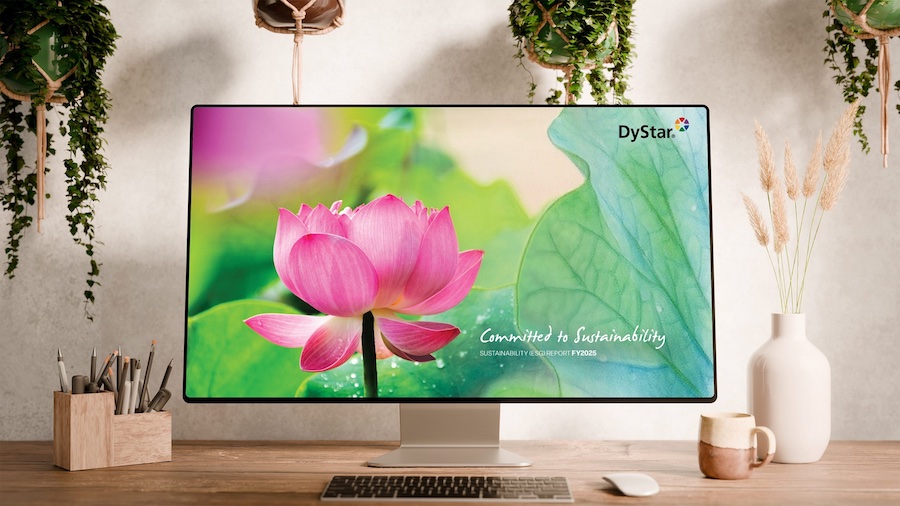
DyStar, a leading specialty chemical company with a heritage of more than a century in product development and innovation is pleased to announce the release of its twelfth annual Sustainability Performance Report. The report is prepared in accordance with the updated GRI Standards 2021: Core option. DyStar continues to adopt the Integrated Reporting framework to communicate how the group has successfully created tangible value across multiple stakeholder groups in six major capitals.

DyStar is delighted to report that we have inched ourselves closer to some of our 2025 target of reducing our environmental footprint by 30% for every ton of product, from 2011 levels. While on others, we are working diligently to make more improvements. Here are some key highlights for FY2021:

  • Recorded more than 29% increase in revenue compared to 2020
  • Zero workplace fatalities, high-consequence injuries, and work-related ill health
  • 40% reduction in Greenhouse gas (GHG) emission intensity, compared to 2011
  • 37% decrease in wastewater emission intensity, compared to 2011

Mr. Xu Yalin, Executive Board Director of DyStar Group said, “As a leading specialty chemical manufacturer and producer, DyStar will continue to invest responsibly into product innovation and diversify into renewable energy, to drive sustainable outcomes across our value chain and industries.”


Mr. Eric Hopmann, CEO of DyStar Group remarked, “We remain cautiously optimistic about the company’s financial and environmental performance. The integrated value creation model that we began in 2020 has proven to be effective and will continue to support our efforts toward DyStar’s 2025 Sustainability Master Plan.”

The Group was able to remain resilient and steer itself toward optimistic growth and recovery from the global pandemic in FY2021. In face of recent geopolitical events and macroeconomic factors such as soaring energy costs, DyStar and the wider supply chain will continue to face challenges. As a result, we believe it is crucial to stay committed to our 2025 Sustainability goals to continue generating value for all of our stakeholders in the longer term, well beyond these turbulent times.

The report communicates DyStar’s progress towards its sustainability agenda and material topics. As part of our commitment to environmental sustainability, only an e-magazine and a PDF version will be made available for download from

http://www.DyStar.com/sustainability-reports/

More News from DyStar Singapore Pte Ltd

More News on Sustainability

#Research & Development

The region of renewable raw materials: Central German Alliance for Bioplastics

The development of sustainable plastic solutions is rapidly gaining importance in light of global environ- mental pollution, dwindling fossil resources and ambitious climate protection targets. As part of the re- gional alliance RUBIO, which brings together 18 partners from central Germany and the Berlin-Branden- burg area, the bio-based and biodegradable plastic polybutylene succinate (PBS) was comprehensively investigated, starting with the raw material, through the manufacturing process, to industrial application.

#Textile chemistry

Archroma funds development of sustainable textile laboratory at Mumbai’s Institute of Chemical Technology

Archroma, a global leader in specialty chemicals focused on sustainable solutions, has supported the Institute of Chemical Technology (ICT), Mumbai, India in the renovation and development of a sustainable laboratory facility as part of its Corporate Social Responsibility (CSR) program.

#Sustainability

Peak Sustainability Ventures & Arvind launch India’s first industrial-scale cotton-stalk torrefaction project, decarbonizing textile manufacturing in Gujarat

Arvind Limited, one of India’s leading textile-to-retail conglomerates, and Peak Sustainability Ventures, a Mumbai-based global climate investment firm, have entered into a partnership to build a large-scale cotton stalk torrefaction plant in Gujarat, with a capacity of 40,000+ tonnes per year, to accelerate Arvind’s decarbonization goals and promote torrefaction at scale in India.

#Sustainability

Textile Exchange evolves its membership structure to unlock the next stage of collective action for climate and nature

Textile Exchange is excited to announce that it is evolving its membership structure to a more action-oriented, impact-driven model designed to provide clearly defined pathways that help organizations respond to the climate and nature crisis.

Latest News

#Recycling / Circular Economy

Advanced Recycling Conference 2025 fuels innovation across key waste streams

The Advanced Recycling Conference (ARC) 2025 brought together nearly 220 experts from 28 countries to spotlight pioneering advancements and foster industry collaboration in recycling across diverse waste streams including plastics, textiles, automotive and other materials.

#Dyeing, Drying, Finishing

Navis TubeTex announces U.S. partnership with Icomatex

Navis TubeTex, a global leader in advanced dyeing and finishing machinery solutions, is pleased to announce a new partnership with Icomatex (www.icomatex.com), a respected European manufacturer of high-quality stenters and textile finishing equipment. Under this agreement, Navis TubeTex will exclusively represent the Icomatex stenter line in the United States.

#Recycling / Circular Economy

ADVANSA launches ADVA®tex: A new step toward textile-to-textile recycling

ADVANSA has introduced ADVA®tex, a new filling fibre made entirely from recycled pre-consumer textile waste, positioning the material as a significant step forward in textile-to-textile (T2T) recycling. The fibre is designed for use in duvets, pillows, mattresses, and furniture applications and is available in three versions.

#Knitting & Hosiery

KARL MAYER celebrates 35 years of EL pattern drive

KARL MAYER is celebrating an anniversary this year: on 30 November 1990, the first warp knitting machine with electronic guide bar control, the KS 4 EL, was delivered – another milestone for patterning. As early as 1980, the SU gearbox with the MRS42SU had initiated the transition from mechanical chains to digital data.

TOP