[pageLogInLogOut]

#Sustainability

OEKO-TEX® new regulations 2022

At the 2021 World Climate Conference in Glasgow, representatives of the textile industry presented a more ambitious version of the UN Fashion Industry Charter for Climate Action. In the updated charter, more than 130 participating companies pledged their commitment to limiting global warming to 1.5 degrees Celsius– a goal of the Paris Climate Agreement.

Climate Change – the industry’s most urgent challenge

In turn, the textile industry has set the target of reducing carbon emissions by minimum 30 percent by 2030. The carbon- and water-intensive manufacturing processes in the textile industry hold great potential for improvement but the large-scale challenge requires action beyond voluntary initiatives.

OEKO-TEX® supports action

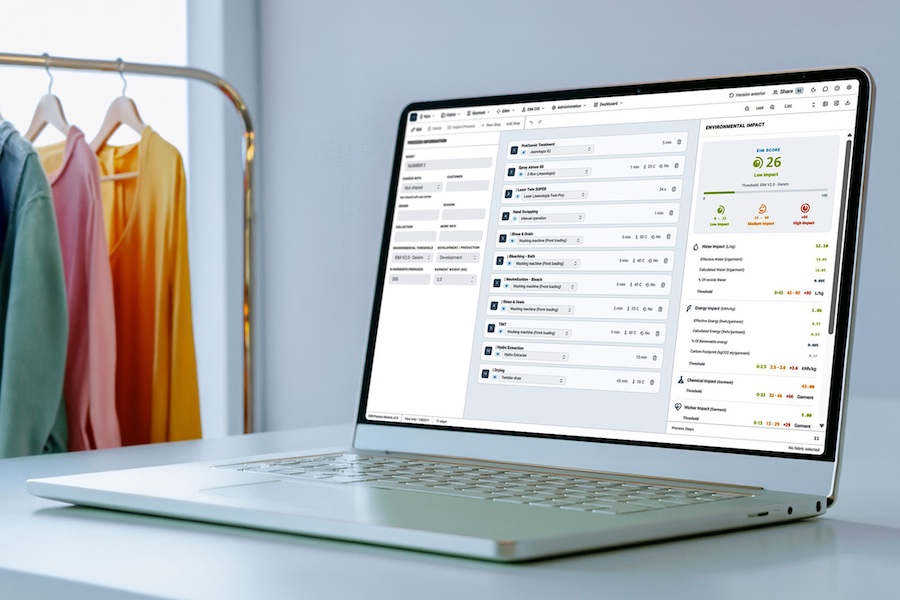
To achieve the industry’s 2030 goal, companies need reliable data. To promote progress and data exchange along the global supply chain, OEKO-TEX® has launched the Impact Calculator. The tool measures the carbon and water footprint of each process step, the overall process and one kilogram of material/product.“Transparency is the decisive factor to measure and reduce greenhouse gas emissions and water consumption in supply chains“ explains Secretary General Georg Dieners. “Providing tangible solutions for industry’s challenges is the guiding principle behind OEKO-TEX®'s 30 years of commitment to companies and consumers. OEKO-TEX® continues to develop scientific solutions and digital systems for our customers to manage processes in terms of environmental and social impact. Embedding criteria for CO2 emissions and water consumption is a logical step toward even more transparency.”

Lifecycle assessment solution

OEKO-TEX® recognized the need for action and started development of a life cycle assessment tool in 2020. Now, both carbon and water footprint calculations are integrated into the STeP by OEKO-TEX® facility certification. Thus, the certification enables individual facilities to: -Identify the largest carbon and water impacts by materials used or produced, as well as by production processes.-Take action to improve operations and meet reduction targets.-Share carbon and water footprint data with customers, investors, business partners and other stakeholders.The STeP certification is a pre-requisite for earning the MADE IN GREEN by OEKO-TEX® product label. Implementation of footprint calculation data for consumer communication is planned for a future step toward transparency.

New certific ation for brands and retaile rs: RESPONSIBLE BUSINESS by OEKO-TEX®

In mid-2022, the association will introduce RESPONSIBLE BUSINESS by OEKO-TEX®, a new certification for brands and retailers committed to international agreements for human rights and environmental protection. OEKO-TEX® aims to support companies in fulfilling due diligence obligations within their own operations and their global supply chains. RESPONSIBLE BUSINESS by OEKO-TEX® was developed in accordance with the UN Guiding Principles on Business and Human Rights and the relevant OECD Guidelines on Responsible Business Conduct.


MADE IN GREEN by OEKO-TEX®

The traceable sustainability label for textiles and leather goods again recorded the strongest growth within the OEKO-TEX® portfolio. Compared to the previous year, the number of MADE IN GREEN label holders increased by 55 percent (as of 31/12/2021). While home textiles continue to occupy the top spot as the strongest category (bedding with an increase of 80 percent compared to the previous year), there is currently movement particularly in the apparel category. With a year-on-year increase of 156 percent, workwear and protective clothing recorded the biggest growth. This makes it clear how quickly demand for sustainably manufactured products is developing in all textile product areas.

New and updated limited values

OEKO-TEX® has added bisphenol B (BPB) in the STANDARD 100, LEATHER STANDARD and ECO PASSPORT by OEKO-TEX® certifications and to the STeP by OEKO-TEX® MRSL. The same applies to two additional colourants based on Michler’s ketone/base.

New substances under observation

In 2022, OEKO-TEX® will continue to monitor various substances based on the latest scientific findings and conformity with relevant specifications. This primarily concerns some process preservative agents and the bisphenols F, S and AF. The 2022 new regulations are available in detail for all OEKO-TEX® products on the website www.oeko-tex.com/news. In addition, a webinar with detailed information on all OEKO-TEX® new regulations will be available to all interested parties on January 18, 2022 via the website http://www.oeko-tex.com/.


More News from Oeko-Tex® Association

#Sustainability

OEKO-TEX® - New regulations 2025

Fostering trust within the textile and leather industry remains the mission of OEKO-TEX®. Since trust relies on consistently high standards, the OEKO-TEX® Association has released the updated testing criteria, limit values and guidelines for its certifications, based on the latest scientific research and legal developments.

#Sustainability

OEKO-TEX® Annual Report 2023/2024 mentions 50,000+ valid certifications

The international OEKO-TEX® association has continued to demonstrate positive business growth, highlighting the critical role of close collaboration and shared commitment in accelerating sustainable change. More than 35,000 textile and leather companies depend on the certificates and product labels issued by OEKO-TEX®’s independent testing institutes. OEKO-TEX® issued more than 50,000 certificates and labels between July 1, 2023, and June 30, 2024 – an increase of 22% over the previous financial year.

#Sustainability

OEKO-TEX® New regulations 2024

Creating trust within the textile and leather industry and for its customers is the mission of OEKO-TEX®. Since trust is based on consistently high quality, the OEKO-TEX® Association is again publishing updates to the applicable test criteria, limit values and guidelines for its certifications. Based on new scientific findings and legal developments, the OEKO-TEX® Association has published the annual updates to its test criteria, limit values and guidelines.

#Sustainability

Change in the OEKO-TEX® Management Board

OEKO-TEX® announces the departure of Georg Dieners. The Association’s Secretary General is leaving the organisation after 8 years in office. OEKO-TEX® expresses appreciation to Georg Dieners for his work and wishes him all the best for his future.

More News on Sustainability

#Sustainability

YKK recognized with Top ‘A’ rating by CDP for climate change leadership for third consecutive year

YKK Corporation announced its achievement of the highest “A List” rating in the 2025 Climate Change survey conducted by the global environmental disclosure nonprofit, CDP . This marks the third consecutive year YKK has received this prestigious recognition.

#Weaving

Itema announces strategic partnership with Ivy Decarb to accelerate decarbonization in weaving process

Itema is pleased to announce the strategic partnership with Ivy Decarb, the digital platform helping textile companies measure and reduce their carbon footprint.

#Man-Made Fibers

Teijin Carbon Europe receives EcoVadis Silver status – ranked among the top 15% of evaluated companies

Teijin Carbon Europe (TCE) has been recognized for its sustainability performance and has been awarded the EcoVadis Silver Medal in the latest assessment. In its first-ever EcoVadis evaluation, the company achieved a notable 72 out of 100 points, ranking among the top 15% of all companies evaluated worldwide, within the “Manufacture of Man-Made Fibres” category.

#Research & Development

The region of renewable raw materials: Central German Alliance for Bioplastics

The development of sustainable plastic solutions is rapidly gaining importance in light of global environ- mental pollution, dwindling fossil resources and ambitious climate protection targets. As part of the re- gional alliance RUBIO, which brings together 18 partners from central Germany and the Berlin-Branden- burg area, the bio-based and biodegradable plastic polybutylene succinate (PBS) was comprehensively investigated, starting with the raw material, through the manufacturing process, to industrial application.

Latest News

#Natural Fibers

38th International Cotton Conference Bremen: Let´s Talk about Cotton!

The 38th International Cotton Conference Bremen, to be held on 25-27 March 2026 in Bremen’s parliament building on market square, once again sends a powerful signal for professional excellence and international dialogue. The focus is on the latest market trends and technical innovations throughout the entire value chain – from agriculture and quality assurance to processing and the circular economy. With its high-calibre speakers, the conference remains an indispensable forum for anyone involved in shaping the cotton industry scientifically, technically, or economically.

#Recycled_Fibers

Leading fashion brands step up to unlock the next chapter of Circulose

Since 2024, under new ownership and leadership, Circulose has set a renewed strategic direction focused on securing long-term commitments with partner brands to bring CIRCULOSE® back to market at scale. This strategy has proven successful.

#Research & Development

More safety and comfort for protective clothing thanks to auxetic fabrics

When everyday materials are pulled, they stretch or elongate in the direction of the pull and become narrower in cross-section. We can also observe this property in two-dimensional textiles. Auxetic structures behave differently here. They have the striking property of not changing under tensile stress or even increasing their width or thickness. These properties are advantageous, for example, in protective textiles or textile filter media. The DITF are researching auxetic fabrics for various applications.

#Recycled_Fibers

Recycling mixed-fibre garments becomes a reality: RadiciGroup, The LYCRA Company and Triumph take circular fashion a step forward

The process, which is both economically and environmentally sustainable, has enabled the production of an underwear set made from 100% recycled nylon and LYCRA® fibre in a closed-loop system.

TOP