[pageLogInLogOut]

#Sustainability

HUGO BOSS secures syndicated loan with sustainability component for the first time

© 2021 HUGO BOSS
HUGO BOSS has secured a revolving syndicated loan with a sustainability component for the first time. This means that the interest rate for the EUR 600 million loan is also linked to the fulfillment of clearly defined sustainability criteria. The syndicated loan was considerably oversubscribed and aims at providing the company with additional financial flexibility to ensure the successful execution of its ‘CLAIM 5’ growth strategy.

Yves Müller, Chief Financial Officer of HUGO BOSS: "This successful transaction reflects our lenders’ great confidence in our growth strategy. The loan commitment gives us additional financial flexibility to consistently and successfully execute ‘CLAIM 5’ over the coming years. I am also encouraged that the terms of the loan are for the first time tied to our performance and progress made in the important area of sustainability."

The syndicated loan is classified as sustainable finance and as such fulfills key ESG criteria. The interest rate will be adjusted annually based on the achievement of target values defined by HUGO BOSS across four ESG areas: the reduction of CO2 emissions, the share of women in management positions, fair working conditions at suppliers, as well as the use of more sustainable cotton. This is the first financial instrument at HUGO BOSS to be linked to sustainability criteria.

The loan has a term of three years and includes two options to extend the term by one more year in each case, plus an option to increase the credit amount by up to EUR 300 million. It will replace the existing syndicated loan of HUGO BOSS totaling EUR 633 million.

The loan syndicate comprises nine international banks. The transaction was coordinated by Commerzbank, BNP Paribas, and LBBW as joint bookrunners. Commerzbank acted as active bookrunner and documentation agent. BNP Paribas took on the role of sustainability coordinator. LBBW accompanies the financing as facility agent. Also involved are Bank of America, Bank of China, Deutsche Bank, DZ Bank, HSBC, and ICBC.


HUGO BOSS attaches high importance to the topic of sustainability, which is firmly embedded in its ‘CLAIM 5’ growth strategy. During the next years, the company will further intensify its sustainability efforts to deliver both clear added value as well as emotional engagement with the consumer. With its efforts already made and sustainability targets set for the future, only recently, HUGO BOSS has been included in the renowned Dow Jones Sustainability Index (DJSI) World for the fifth consecutive time. Consequently, and as the only German company, HUGO BOSS ranks among the top three companies in its industry worldwide that have qualified for the index. 

More News from TEXDATA International

#ITM 2026

ITM 2026: The new geography of textile production

New production hubs are emerging across North Africa and Central Asia, while Türkiye is accelerating its transformation toward higher-value, technology-driven and more sustainable textile manufacturing.

#Research & Development

“Production is a product”

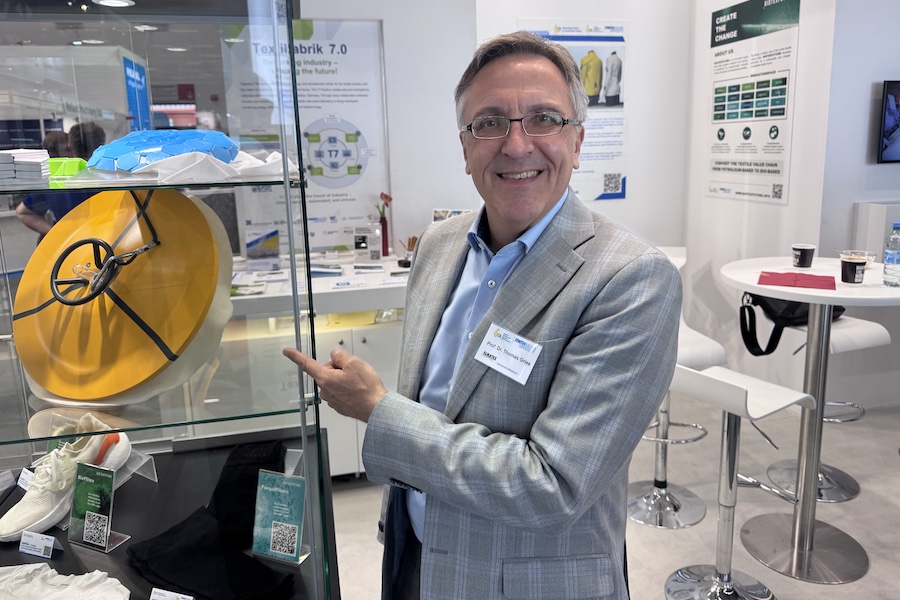
From technical textiles and AI-driven robotics to the limitations of textile circularity: Professor Dr Thomas Gries looks back on more than two decades of development at ITA Aachen. In the interview, he explains why production technology remains a decisive success factor, discusses international collaborations and innovation ecosystems, and shares his views on the transformation of production landscapes and the challenges facing an increasingly regulated industry.

#Knitting & Hosiery

“We need to move away from the price trap and return to a value-driven mindset.”

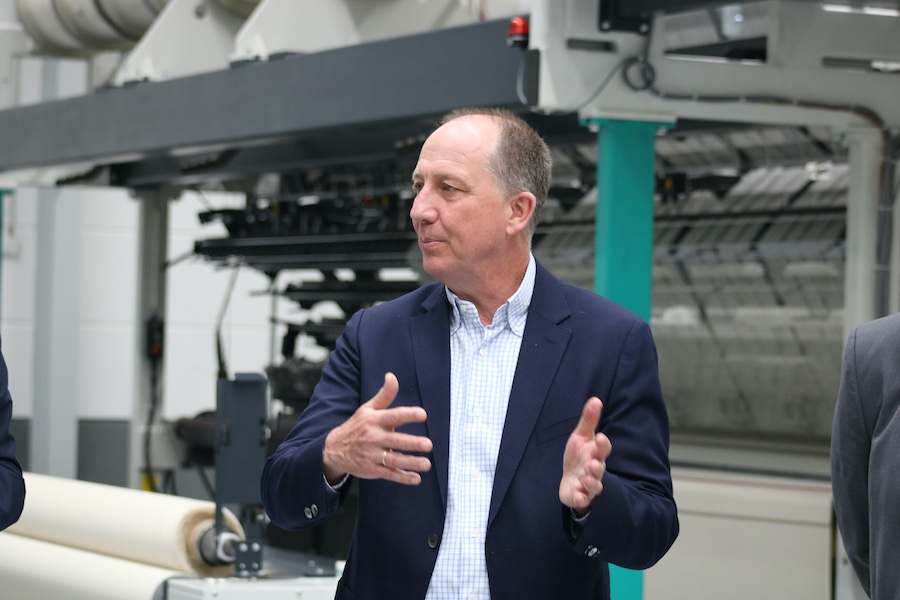
With its new Textile Innovation Center, KARL MAYER is sending a strong signal for innovation, collaboration, and the future of textile applications. In this interview, Karl Josef Mayer discusses new opportunities in warp knitting, the processing of staple fibres, recycling, the changing role of machinery manufacturers, and why the textile industry must once again focus more strongly on the value of textiles. by Oliver Schmidt

#Associations

“Innovation, resilience and international experience remain the great strengths of the Swiss textile machinery industry”

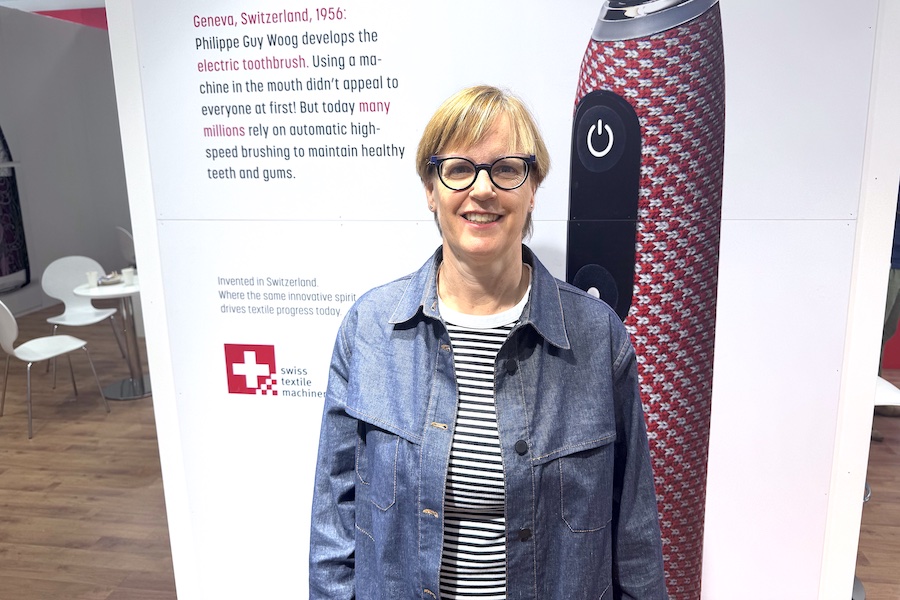
Geopolitical uncertainty, growing competitive pressure from China, new free trade agreements and the shift towards a circular economy are currently reshaping the global textile industry. In this interview, Cornelia Buchwalder discusses the current mood within the Swiss textile machinery sector, the industry’s distinctive innovative strength, new market opportunities in India and Asia, and the technological trends that could shape the upcoming trade fair cycle leading up to ITMA 2027.

More News on Sustainability

#Recycling / Circular Economy

The Or Foundation, adidas, BESTSELLER, H&M Group, and Inditex launch Apparel Recovery Coalition, responding to impacts of post-consumer textile exports

adidas, BESTSELLER, H&M Group, Inditex and The Or Foundation, with support from Circle Economy, unveiled the Apparel Recovery Coalition (ARC). The coalition will explore how producer responsibility systems can support circular pathways such as reuse, upcycling, recycling, and responsible waste management in countries that receive large volumes of exported secondhand apparel.

#Recycling / Circular Economy

NEUMÜHLE launches mono-material hoodie designed for textile recycling

With the Circular Mono Hoodie, Zurich-based label NEUMÜHLE introduces a new essential designed around a single-material principle. The textile construction is cotton throughout, right down to the sewing thread. Entirely free from elastane, the hoodie launches as a Limited Drop for CHF 139. Take-back, collection and existing recycling partnerships complement its circular design.

#Industry 4.0 / Digitalization

EIM evolves into a new Environmental Intelligence to measure the impact of textile production

¿Do we really know the environmental impact behind a garment? Answering this question remains one of the textile industry’s major challenges. Garment production involves multiple stages, from yarn and fabric to final finishing, carried out by different players across the supply chain. Accesing reliable data from each process, connecting it and establishing a common language are essential to understanding a product’s true impact.

#Associations

ITMF names three winners of the Sustainability & Innovation Award 2026

Three projects from the UK, Korea and China have been selected as winners of the ITMF Sustainability & Innovation Award 2026. The projects address textile-to-textile recycling, chemical recycling for automotive textiles and a regenerative approach combining silk production with ecological restoration.

Latest News

#Software

UNIFEQ Europe adopts Coats Digital’s GSDCost and AI-powered GSDQuest to support rapid growth

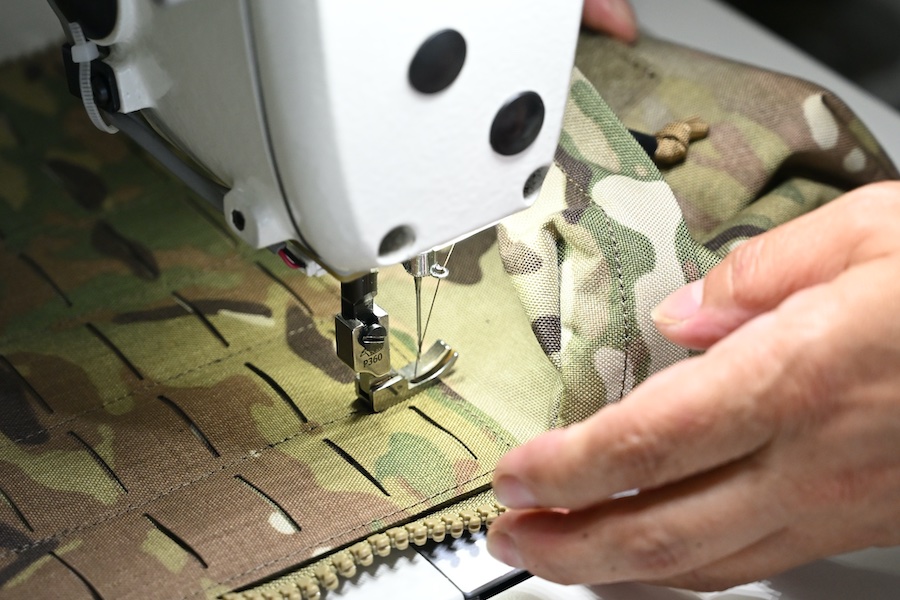
Coats Digital is pleased to announce that rapidly growing Polish defence and uniform manufacturer UNIFEQ Europe Sp. z o.o. has invested in its award-winning GSDCost solution together with its AI-powered GSDQuest platform to establish a consistent approach to garment costing, improve sewing-floor productivity and accelerate labour costing for tenders and new products.

#Associations

EURATEX urges Member States to prioritise competitiveness in the next EU budget

Ahead of crucial discussions among EU Member States on the next Multiannual Financial Framework (MFF) for 2028–2034, EURATEX, the European Apparel and Textile Confederation, calls on European leaders to safeguard ambitious funding for industrial competitiveness and ensure that these resources translate into concrete investment support in European companies.

#Associations

Brazil: The Italian textile and textile-machinery sector takes centre stage at two workshops

From 19 to 24 October 2026, Brazil will host a mission showcasing Italian excellence in the textile and textile machinery sectors, with two workshops scheduled for 20 October in the state of Santa Catarina and 22 October in São Paulo. The initiative will bring together Italian companies specialising in textile machinery, yarns, fabrics and clothing accessories, with the aim of strengthening commercial and industrial ties between the two countries and opening up new opportunities for collaboration.

#India ITME 2026

KARL MAYER highlights new technologies and growth opportunities at INDIA ITME 2026

India‘s textile industry is undergoing a profound transformation: What was previously a production hub driven primarily by cost and volume is increasingly evolving into a market focused on technology, exports, and value creation. KARL MAYER supports this change with high-performance machinery solutions and innovative textile concepts, and is therefore looking forward to INDIA ITME 2026 with great anticipation.

TOP