[pageLogInLogOut]

#Sustainability

OEKO-TEX® invests in brand protection and partners with SENTRYC

Companies and consumers around the world rely on the OEKO-TEX® brand. To maintain this trust, the organisation is constantly investing in its brand protection. Since early 2021, OEKO-TEX® has partnered with Berlin-based brand protection company SENTRYC, whose software tracks brand abuse and plagiarism on social media platforms and online marketplaces. The partnership is positioned in time to handle the increased trademark infringements that come with the peak online shopping season between Black Friday and Christmas.

Market trust of key importance

For almost three decades, OEKO-TEX® has stood for transparency along the international textile and leather supply chains as well as for consumer protection, product safety and trust. Over 21,000 manufacturers, brands and retailers in more than 100 countries officially work with OEKO-TEX®. In the past financial year, almost 32,000 labels and certificates were issued, covering countless products. "The trust that the market places in our system is of central importance to us," says OEKO-TEX® Secretary General Georg Dieners. "OEKO-TEX® continuously works to ensure the highest quality assurance - including with digital methods and external partnerships." In order to protect the quality of the OEKO- TEX® brand and thereby ensure its credibility, the organisation takes action against legal infringements. Since March 2021, thousands of potential misuse cases have been discovered and resolved using the SENTRYC brand protection software.

Transparency never takes a break

SENTRYC constantly monitors more than 120 international online marketplaces and all leading social networks. Based on machine learning, the software's search algorithm combines relevant keywords, detailed descriptions and images to find potential violations. Manipulated images, photos of counterfeits or products and logos as well as suspicious links and hashtags are automatically matched.

In addition, OEKO-TEX® can use the SENTRYC take-down button to decide which potential counterfeits or trademark infringements should be removed. In the best case, these disappear within 24 hours. Automation rules help to avoid targeting licensed partners or to permanently ban problematic platforms. 

For possible prosecutions, the software documents all relevant data including screenshots of the suspicious content. "We want to help create more transparency and give companies a tool they can use to defend themselves internationally," says Nicole Hofmann, CEO of SENTRYC. "I see our commitment to finding counterfeit products and making removal as easy as possible as a social duty."


Trademark protection concerns everyone

Trademark protection means consumer protection. It has become increasingly difficult to detect plagiarism and other trademark infringements. The production and distribution of counterfeits often takes place within organised crime structures that affect the entire supply chain - from raw materials procurement to distribution - usually under precarious conditions for people and the environment and with health consequences for consumers. This is because counterfeit textiles in particular can contain harmful substances beyond the legal limits and the even stricter OEKO-TEX® Standards. Anyone who buys counterfeit products, whether consciously or unconsciously, can endanger their own health, in addition to human rights and climate protection.

The issue is fuelled by the rapid increase in online shopping. Last year alone, worldwide customers spent around 2,900 billion US dollars online. In Europe, digital sales are expected to increase another 42% by 2025. The accelerating and extensive development of online trade means urgent protection against counterfeits and poor quality is needed. Therefore OEKO-TEX® values SENTRYC as a partner for constant and global monitoring, especially during the online shopping boom of the season. Analysis from SENTRYC confirms that the number of fake offers on online marketplaces increases by about 60% between September and November, compared to other months.



More News from Oeko-Tex® Association

#Sustainability

OEKO-TEX® chooses TextileGenesis to advance digital traceability for organic cotton

OEKO-TEX® today announced a full collaboration with TextileGenesis, a Lectra company, to digitally trace and authenticate organic cotton, strengthening fraud prevention across the supply chain. This announcement follows a successful pilot and brings together OEKO-TEX®’s certification expertise and closed testing system with TextileGenesis’ digital traceability platform to deliver a secure, end-to-end solution for managing certified organic cotton flows.

#Sustainability

OEKO-TEX® - New regulations 2025

Fostering trust within the textile and leather industry remains the mission of OEKO-TEX®. Since trust relies on consistently high standards, the OEKO-TEX® Association has released the updated testing criteria, limit values and guidelines for its certifications, based on the latest scientific research and legal developments.

#Sustainability

OEKO-TEX® Annual Report 2023/2024 mentions 50,000+ valid certifications

The international OEKO-TEX® association has continued to demonstrate positive business growth, highlighting the critical role of close collaboration and shared commitment in accelerating sustainable change. More than 35,000 textile and leather companies depend on the certificates and product labels issued by OEKO-TEX®’s independent testing institutes. OEKO-TEX® issued more than 50,000 certificates and labels between July 1, 2023, and June 30, 2024 – an increase of 22% over the previous financial year.

#Sustainability

OEKO-TEX® New regulations 2024

Creating trust within the textile and leather industry and for its customers is the mission of OEKO-TEX®. Since trust is based on consistently high quality, the OEKO-TEX® Association is again publishing updates to the applicable test criteria, limit values and guidelines for its certifications. Based on new scientific findings and legal developments, the OEKO-TEX® Association has published the annual updates to its test criteria, limit values and guidelines.

More News on Sustainability

#Sustainability

Closing the Footwear Loop reveals challenges and opportunities for circular footwear

The footwear industry faces one of the most complex circularity challenges in the fashion sector. A new Phase 1 report from the Fashion for Good initiative Closing the Footwear Loop, developed together with Circle Economy, provides new insights into the composition, condition and recycling potential of post-consumer footwear waste.

#Man-Made Fibers

The updated poster on biodegradable Polymers in various environments has been released

As part of the PerPlacsBio project, nova-Institute has updated its popular poster on the biodegradability of polymers in different environments. The updated version reflects current standards, certifications and the latest scientific findings. The poster can be used to assess biodegradable alternatives for use in agriculture and forestry, and it is now available in German for the first time.

#Sustainability

A new standard to combat plastic waste in forests

With DIN SPEC 35808 “Tree Shelter for Forestry Applications,” the testing and research service provider Hohenstein, in collaboration with Rottenburg University of Forestry, as well as forestry authorities and industry partners, has established a clear framework for bio-based and fully biodegradable tree shelters. The pre-standard defines requirements and practical testing methods designed to reduce plastic waste in forests and strengthen the long-term protection of soil and the environment.

#Denim

Denim moves towards sustainability

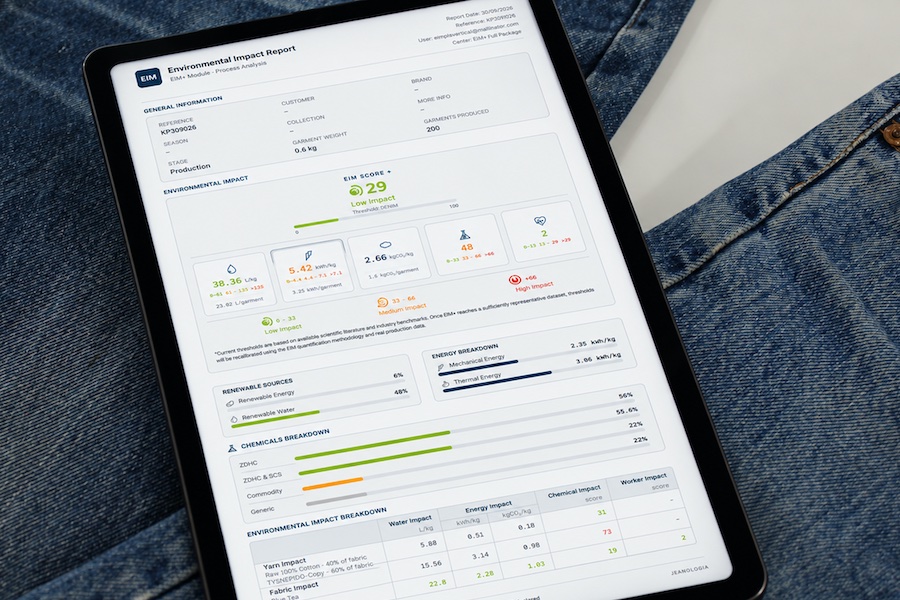
EIM (Environmental Impact Measurement), the global reference platform for measuring the environmental impact of garment finishing, presents the second edition of its annual report Denim Industry Progress & Insights 2025. The study analyses over 100,000 real denim finishing processes, providing an accurate and up-to-date view of the industry’s evolution towards more sustainable models.

Latest News

#ITM 2026

The future of textiles, the power of trade, and the summit of technology come together at ITM 2026

ITM 2026 International Textile Machinery Exhibition, one of the most prestigious organizations in the textile technologies sector, opens its doors to visitors between June 9-13. Expected to break records in terms of both exhibitor and visitor numbers, as well as the technological vision it presents, ITM 2026 will transform into a global trade hub with machine sales, and new business collaborations.

#Nonwoven machines

ATCO Hygienics, Uzbekistan, orders baby diaper production line from ANDRITZ

International technology group ANDRITZ has received an order from ATCO Hygienics to supply a new baby diaper production line for its plant in Tashkent, Uzbekistan. The order is included in ANDRITZ’s order intake for the first quarter of 2026. Commissioning of the production line is scheduled for the end of 2026.

#Weaving

Itema manufactures the first Projectile Weaving Machines “Made in Italy” at its Colzate Headquarters.

Itema proudly announces an important industrial milestone: in early May, the first Itema projectile weaving machines manufactured in Italy were successfully produced at the Group’s headquarters in Colzate.

#Spinning

Nico Pedretti appointed as Managing Director Graf Group

As of June 1, 2026, Nico Pedretti has assumed the role of Managing Director Graf Group. With more than 20 years of international industrial experience and extensive expertise in Operations, Supply Chain Management, Finance and Controlling, he brings a broad range of leadership and business experience to support Graf’s continued success.

TOP