#Sustainability
The Lenzing Group publishes its Sustainability Report 2020
The non-financial report, prepared in accordance with the reporting standards of the Global Reporting Initiative (GRI) and the Austrian Sustainability and Diversity Improvement Act (NaDiVeG) and reviewed by KPMG Austria GmbH Wirtschaftsprüfungs- und Steuerberatungsgesellschaft, illustrates how the company is responding to the global challenges of our time.
• Successful measures to fight against the COVID-19 pandemic with a focus on the safety and health of employees, customers and partners and securing sustainable business development
• Implementation of strategic investment projects and climate targets progressing on schedule – launch of first TENCEL™ branded carbon-zero fibers
• New level of transparency in the textile industry: introduction of blockchain technology
• Target setting: Lenzing raises the bar even higher and sets new sustainability goals
The 2020 financial year of the Lenzing Group was largely dominated by the COVID-19 pandemic. Lenzing took short-term measures to safeguard its business operations and mitigate the effects of fiber prices and fiber demand which came under increasing pressure. The priority was to protect employees and strengthen long-term partnerships with suppliers and customers. Following the current fight against the coronavirus and its consequences, the company continues to move ahead determinedly to achieve its sustainability targets, also against the backdrop of such a difficult market environment.
“Even in times when fighting the coronavirus pandemic is the top priority, Lenzing focuses on pressing ahead with climate neutrality and sustainability. These will remain the dominant issues for humanity in the long term. At Lenzing, we consider it to be an integral part of our strategic principles and our responsibility to future generations to effectively deal with pressing ecological challenges such as climate protection, resource efficiency and biodiversity”, says Stefan Doboczky, Chief Executive Officer of the Lenzing Group. “Strategically, we remain fully on track and the implementation of our key projects in Brazil and Thailand continues to proceed according to plan. With our corporate priorities, we are consistently pursuing a major goal, namely to make a zero-carbon future come true”, Doboczky adds.
With the implementation of its science-based targets, the Lenzing Group actively contributes to mastering the problems caused by climate change. In 2019, Lenzing made a strategic commitment to reducing its greenhouse gas emissions by 50 percent per ton of product by 2030. The overriding target is to be climate-neutral by 2050. The implementation of the two key projects in Brazil and Thailand represents an important milestone on this journey. Thanks to its excellent infrastructure, the production plant in Thailand conceived as a CO?-neutral site can be supplied with sustainable biogenic energy. The plant in Brazil will feed more than 50 percent of the electricity generated into the public grid as renewable energy and feature a positive net CO? balance.
The launch of the first carbon-zero TENCEL™ fibers certified as CarbonNeutral® products in accordance with The CarbonNeutral Protocol – the leading global framework for carbon neutrality – represents another important milestone from the reporting year. As of June 2021, Lenzing will also market the first VEOCEL™ branded lyocell fibers as certified CarbonNeutral® products. The establishment of the Renewable Carbon Initiative with the aim of speeding up the transition to renewable carbon serves as a further example of the successful path that Lenzing and its partners are taking towards a zero-carbon future.
Promoting the circular economy
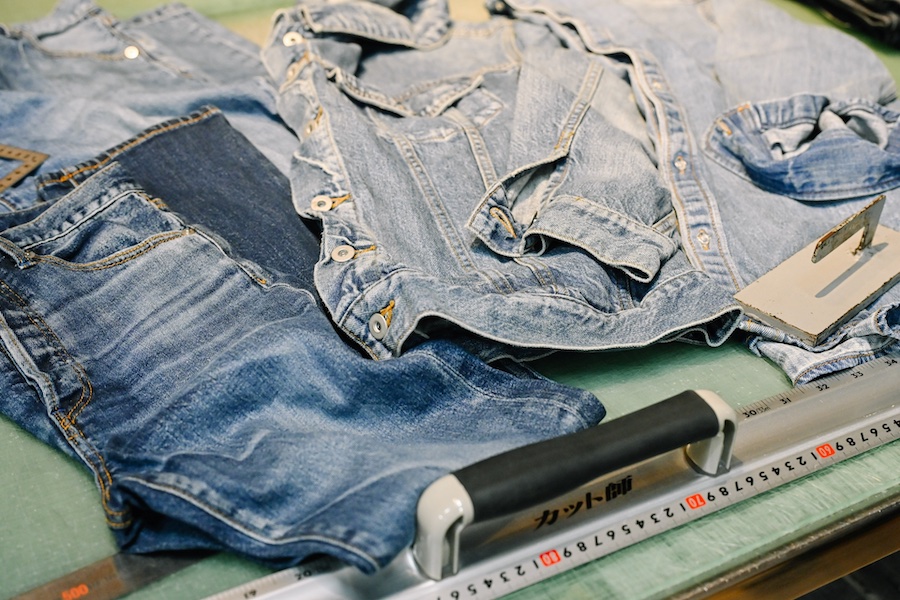
Lenzing also sets standards for the entire fiber, textile and clothing industry with respect to the circular economy which is of such crucial importance in climate and resource protection. In order to enhance resource efficiency and offer a solution for the global problem of textile waste, the company developed the REFIBRA™ recycling technology. REFIBRA™ is the only technology in the world enabling the production of new lyocell fibers on a commercial scale from cotton scraps derived from manufacturing cotton clothing as well as from used garments. In this way, an important contribution is made to promoting circularity in the textile industry.
In line with the vision, “We give waste a new life. Every day”, Lenzing strives to make textile waste recycling a commonplace and standard process, just like paper recycling. Lenzing set a new sustainability goal for itself in 2020 and implemented measures to turn this vision into reality. The company aims to manufacture staple fibers on an industrial scale containing up to 50 percent recycled material by the year 2025. “It is our declared goal to give new life to waste generated in all aspects of our core business and to develop recycling solutions as a means of closing production cycles whenever possible in collaboration with potential partners within and outside of the current supply chain”, states CEO Stefan Doboczky.
New level of transparency in the textile industry
In addition to environmental protection, the issue of transparency along the supply chain poses a major challenge to the textile industry. Working in cooperation with TextileGenesis™, Lenzing offers an innovative solution to ensure greater transparency on the basis of blockchain technology. Following several successful pilot projects with renowned fashion brands, this digital platform was ultimately launched in 2020 to enable the traceability of textiles, from the fiber to all stages of production and distribution. Thanks to the innovative Fibercoin™ technology of the TextileGenesis™ platform, Lenzing and its partners are able to issue so-called “blockchain assets” in direct proportion to the physical fiber deliveries of the brands TENCEL™ and LENZING™ ECOVERO™. These digital assets function like a “fingerprint” and thus prevent adulteration. More than 100 customs and partners along the textile supply chain were able to successfully conclude the onboarding process by the end of the 2020 financial year.
Successes and Awards
During the 2020 financial year, the Lenzing Group received numerous awards for its achievements in the field of sustainability:
• Lenzing underwent assessment by the non-profit environmental organization CDP for the first time in 2020 and was the first new entrant to secure a double ‘A’ score in the categories Climate and Forest.
• ISS ESG, one of the most highly recognized rating agencies in the field of sustainability, raised Lenzing’s sustainability rating from “C+” to “B-”, the highest rating in the category “Paper & Forest Products”. As a result, the Lenzing Group is positioned among the top 10 percent of rated companies. The “Prime Status” of the Lenzing Group was also confirmed.
• Lenzing achieved the highest category for the first time in In Canopy’s Hot Button Ranking. The Canadian environmental organization particularly highlighted our continuous leadership regarding sustainable procurement and efficient use of resources over the past years.
• In December Lenzing won the prestigious “Building Public Trust Award 2020” for the best climate reporting on the Austrian ATX. The jury emphasized Lenzing’s commitment to a holistic climate-related strategic alignment and clear targets.
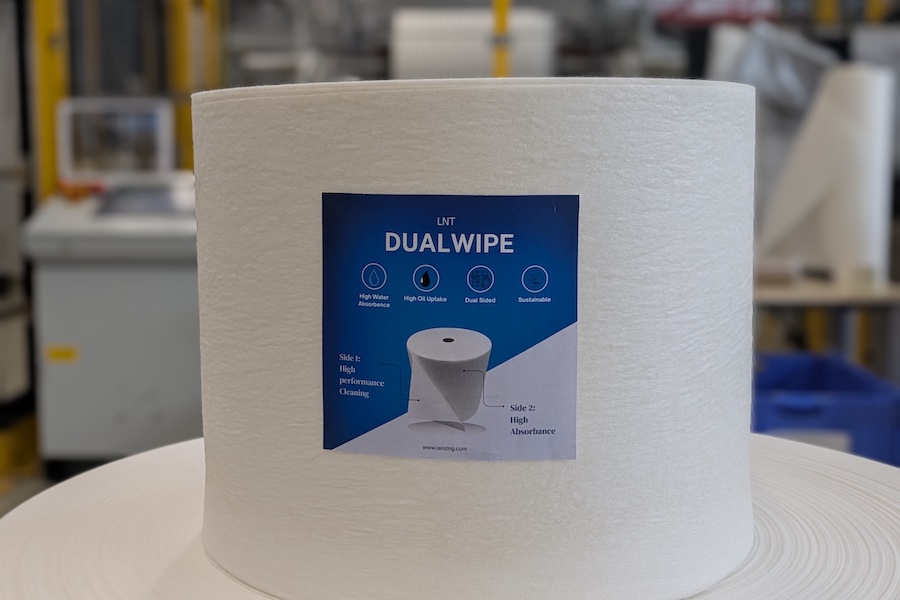
• In addition, Lenzing won the Austrian State Prize for Innovation. This award recognizes Lenzing’s achievements and its strategy to grow exclusively on the basis of sustainable innovations. Lenzing convinced the jury with its LENZING™ Web Technology. The novel process combines fiber and nonwovens production in only one step, setting new standards in terms of efficiency, circularity and ecological sustainability.
Target setting: Lenzing raises the bar even higher
The Lenzing Group operates in line with three strategic principles within the context of its “Naturally positive” sustainability strategy: partnering for change, advancing circularity and greening the value chain. In this regard, the focus is on those areas in which Lenzing can achieve the most to promote a more sustainable world. On this basis, Lenzing has defined various focus areas in order to demonstrate its commitment to further advance the Sustainable Development Goals (SDGs) of the United Nations:
• Sustainable raw material sourcing
• Decarbonization
• Responsible use of water
• Sustainable innovations
• Partnering for systemic change
• Encouraging and empowering people
• Enhancing community wellbeing
The Lenzing Group defined ambitious sustainability targets in each of these strategic core areas. Other objectives were added in the year under review to provide further impetus to Lenzing’s efforts on its path to a sustainable future. More information about the goals and implementation of the “Naturally positive” sustainability strategy as well as measures taken in the fight against the COVID-19 pandemic is available in the Sustainability Report 2020 of the Lenzing Group at https://www.lenzing.com/investors/publications.
A message to our future
At the Lenzing Group, we look above and beyond the products themselves and assume responsibility for future generations. This has been Lenzing’s brand promise for more than 80 years. The company conveys precisely this responsibility and displays its inherent drive and vision in the multi-media campaign #ALetterToAChild in which employees were asked to write a letter to the most important people in their lives, namely their children and grandchildren. You can find out more about the campaign in the Lenzing Sustainability Report 2020.