[pageLogInLogOut]

#Sustainability

Canopy ranking: Lenzing for the first time achieves highest Hot Button category

The Lenzing Group scored a total of 30.5 points (4 points more compared to last year) and received for the first time a leading dark green shirt, the highest Hot Button ranking category. Lenzing once again convinced the non-profit organization Canopy with its innovative vision with regard to circular economy and REFIBRA™ technology, its high level of transparency in wood and pulp sourcing, as well as its active contribution towards protecting forests and preserving biodiversity.

In its annual ranking of sustainable wood procurement, the Canadian environmental organization Canopy particularly highlights Lenzing’s continuous leadership over the last number of years.

In this widely recognized ranking, Canopy grades the world’s 31 largest producers of wood-based fibers with respect to their sustainable wood and pulp sourcing, their efforts with regard to using alternative non-wood feedstock and their achievements for lasting conservation in critical forests around the globe.  

“We are very proud to be leading the industry with regard to responsible wood and pulp sourcing. Innovation as well as transparency and sustainable raw material sourcing are part and parcel of our sustainability strategy which covers the whole value chain, from raw material to the final product”, says Stefan Doboczky, Chief Executive Officer.

Leading in sustainable sourcing with a decade-long clean record

Wood and pulp are the most important raw materials for Lenzing’s sustainable production of cellulosic fibers. The Lenzing Group is particularly proud of its decade-long clean record of sustainable wood sourcing, evidenced by its long-standing credible commitment to wood certification, which Lenzing pioneered already in the 1990s. Lenzing’s commercial wood sources are 100 percent either certified by FSC®[1] or PEFC™[2], or controlled in line with FSC® standards. In addition, Lenzing has successfully completed the second Canopy verification audit.

Social impact and afforestation project in Albania

At the backdrop of Lenzing’s long history of clean sourcing, the company is even more aware that the global forests are seriously threatened by illegal logging and deforestation but also by the consequences of climate change. This is why Lenzing – in addition to supporting a number of Canopy’s conservation projects – has set up a social impact and afforestation project in Albania (Southern Europe). The forest areas in this country are among the European regions with the greatest need for improvement. The project addresses the most urgent issues that society will have to tackle in the upcoming 10 years: land degradation, biodiversity loss, deforestation and climate change.


Special focus on sustainable plantations in Brazil

For its latest investment in a pulp mill in Brazil, Lenzing actively collaborates with Canopy to ensure that the wood sourcing is in line with sustainable practices. The plantation is fully compliant with Lenzing’s wood and pulp sourcing policy. The plant will be among the highest productive and energy-efficient facilities in the world and will feed the 40 percent excess bioelectricity generated on site as “green energy” into the public grid.

REFIBRA™ technology: Commercially available since 2017

As a long-standing player in the industry, Lenzing has undertaken extensive research into many different alternative non-wood cellulose sources such as annual plants, like hemp, straw, and bamboo. Until now, textile waste has turned out to be the most promising alternative feedstock for scaled commercial use.

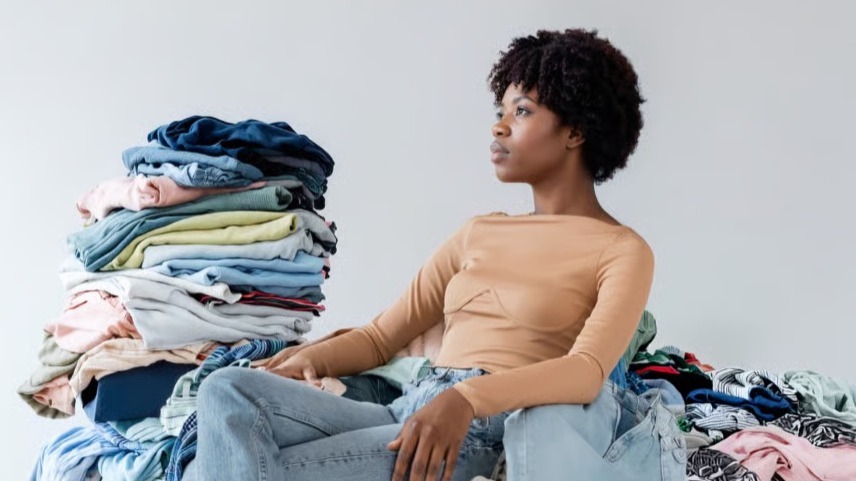
Lenzing’s lyocell fiber produced with the breakthrough REFIBRA™ technology (Eco Cycle technology for nonwoven applications) uses textile waste as part of the feedstock and is an important step towards a circular economy. The technology has been commercially available since 2017. It successfully combines the environmentally responsible lyocell technology with a closed-loop production process and the upcycling of cotton waste materials. The fiber is currently available with 30 percent recycled textiles as a raw material.

50 percent recycled content by 2024

It is Lenzing’s vision to make textile waste recycling a common standard process like paper recycling and to offer fibers produced with REFIBRA™ technology with  up to 50 percent recycled content from post-consumer waste by 2024.


More News from Lenzing

#Man-Made Fibers

Lenzing AG announces new leadership and establishment of Executive Committee

Lenzing AG announced that Rohit Aggarwal, Managing Board Member and Chief Executive Officer of Lenzing AG, has informed the Supervisory Board of his decision to resign from his position due to personal reasons, effective 31 January 2026. To support a smooth transition, Mr. Aggarwal will remain with Lenzing AG as an advisor to the company until end of September 2026. The Supervisory Board expresses its appreciation for Mr. Aggarwal’s leadership and contributions during his tenure.

#Man-Made Fibers

Lenzing invests EUR 15 mn to strengthen position in the hygiene market

The Lenzing AG is investing approximately EUR 15 mn to expand its production capacity for premium viscose fibers at its site in Lenzing, Austria. This strategic investment is part of the recently announced investment program of EUR 100 mn in total to secure the long-term competitiveness of Lenzing’s Austrian production sites. The capacity expansion reinforces the company’s commitment to providing sustainable solutions to the global hygiene market. It also strengthens the company's role as a trusted provider of high-quality fibers for feminine care applications.

#Man-Made Fibers

Lenzing AG: Stable revenue and improved EBITDA despite market headwinds

In the first nine months of 2025, Lenzing AG recorded revenue growth and higher EBITDA, but a market-driven volatile third quarter. This performance reflects the effects of ongoing market volatility, tariffs and geopolitical uncertainties. Nevertheless, the medium to long-term outlook remains positive.

#Man-Made Fibers

Lenzing confirmed as global leader in Canopy sustainability ranking

Lenzing AG has once again taken first place in this year's Hot Button Report published by the Canadian non-profit organization Canopy. With 34.5 out of 40 points and no known risk of sourcing from ancient and endangered forests, Lenzing remains one of the most sustainable companies in regenerated cellulose fiber production – setting a benchmark for responsible business practices in the textile and nonwovens industries.

More News on Sustainability

#Sustainability

YKK recognized with Top ‘A’ rating by CDP for climate change leadership for third consecutive year

YKK Corporation announced its achievement of the highest “A List” rating in the 2025 Climate Change survey conducted by the global environmental disclosure nonprofit, CDP . This marks the third consecutive year YKK has received this prestigious recognition.

#Weaving

Itema announces strategic partnership with Ivy Decarb to accelerate decarbonization in weaving process

Itema is pleased to announce the strategic partnership with Ivy Decarb, the digital platform helping textile companies measure and reduce their carbon footprint.

#Man-Made Fibers

Teijin Carbon Europe receives EcoVadis Silver status – ranked among the top 15% of evaluated companies

Teijin Carbon Europe (TCE) has been recognized for its sustainability performance and has been awarded the EcoVadis Silver Medal in the latest assessment. In its first-ever EcoVadis evaluation, the company achieved a notable 72 out of 100 points, ranking among the top 15% of all companies evaluated worldwide, within the “Manufacture of Man-Made Fibres” category.

#Research & Development

The region of renewable raw materials: Central German Alliance for Bioplastics

The development of sustainable plastic solutions is rapidly gaining importance in light of global environ- mental pollution, dwindling fossil resources and ambitious climate protection targets. As part of the re- gional alliance RUBIO, which brings together 18 partners from central Germany and the Berlin-Branden- burg area, the bio-based and biodegradable plastic polybutylene succinate (PBS) was comprehensively investigated, starting with the raw material, through the manufacturing process, to industrial application.

Latest News

#Natural Fibers

38th International Cotton Conference Bremen: Let´s Talk about Cotton!

The 38th International Cotton Conference Bremen, to be held on 25-27 March 2026 in Bremen’s parliament building on market square, once again sends a powerful signal for professional excellence and international dialogue. The focus is on the latest market trends and technical innovations throughout the entire value chain – from agriculture and quality assurance to processing and the circular economy. With its high-calibre speakers, the conference remains an indispensable forum for anyone involved in shaping the cotton industry scientifically, technically, or economically.

#Recycled_Fibers

Leading fashion brands step up to unlock the next chapter of Circulose

Since 2024, under new ownership and leadership, Circulose has set a renewed strategic direction focused on securing long-term commitments with partner brands to bring CIRCULOSE® back to market at scale. This strategy has proven successful.

#Research & Development

More safety and comfort for protective clothing thanks to auxetic fabrics

When everyday materials are pulled, they stretch or elongate in the direction of the pull and become narrower in cross-section. We can also observe this property in two-dimensional textiles. Auxetic structures behave differently here. They have the striking property of not changing under tensile stress or even increasing their width or thickness. These properties are advantageous, for example, in protective textiles or textile filter media. The DITF are researching auxetic fabrics for various applications.

#Recycled_Fibers

Recycling mixed-fibre garments becomes a reality: RadiciGroup, The LYCRA Company and Triumph take circular fashion a step forward

The process, which is both economically and environmentally sustainable, has enabled the production of an underwear set made from 100% recycled nylon and LYCRA® fibre in a closed-loop system.

TOP