[pageLogInLogOut]

#Spinning

Tatham save big money on yarn spinning costs
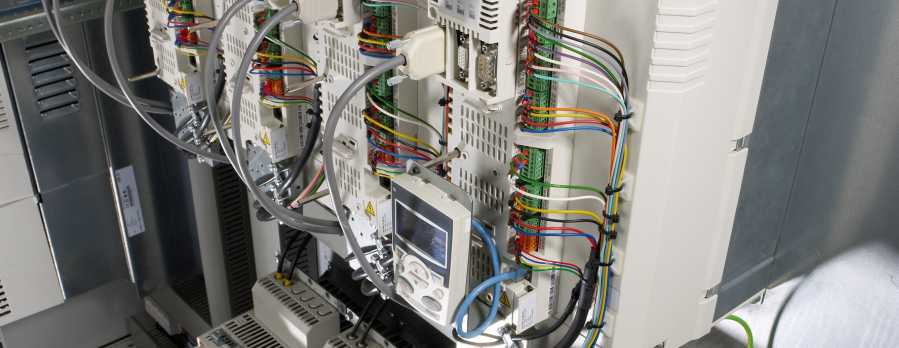
TS drive system with ABB ACSM1 drives (c) 2012 Tatham
Tatham Ltd, specialists in the field of drive and control technology are set to save a woollen yarn spinner nearly £27,000 a year in energy costs.

ABB low voltage AC drives were used by Tatham Ltd to achieve the huge savings for their customer who produces cloth used in tennis balls and billiard tables. The woollen spinners were using eddy current drives to power and control its four carding engines. These operate on the principle of a slipping clutch for speed variation. This has the disadvantage that the motors are turning continuously, even when the machine is not in production, making them extremely inefficient - although the motors were turning for over 7,000 hours, only around 1,620 hours of this time were spent in actual production.

The original set up used a 15 kW motor, a 25 kW motor and two 7.5 kW “Tandem Motors” to drive various sections of the machine. These motors where also driving the machine sections directly, shaft to shaft, meaning that the motors where continually running at full load current and sometimes overheating.

The new system uses 11 kW AC drives and motors, reducing the on time, when the motors are switched on, to just over 3,500 hours. Together with the reduced power usage, the solution achieved yearly energy savings of 540,000 kWh. This has reduced the energy bill for the machines by £27,000, while cutting CO2 emissions by 292,000 kg/year. Payback for the system was just over 10 months.

Tatham’s engineers conducted an energy survey and designed a new drive system based on four ABB machinery drives using ABB Direct Torque Control (DTC). DTC allows complete synchronisation of the machine sections, giving highly accurate control and improved product quality.

In the new control arrangement, 11 kW geared motors and associated gearboxes were fitted on the scribbler, carder and eccentrics sections, along with an additional 4 kW motor and gearbox on the doffer. The gearboxes ensure that the correct power is delivered to the rollers while allowing the use of a smaller motor. The AC drives are also run at 40 Hz, allowing further energy savings.

The low voltage AC drives display data that inform users of the “On Time”, when the motors are switched on, “Run Time”, when the motors are driving the rollers, and “Kilowatt Hours Used”, making it easy to compare the operation with the previous situation.

The new motors also run cooler than the previous set-up, resulting in reduced maintenance and improved reliability.

ABB (www.abb.com) is a leader in power and automation technologies that enable utility and industry customers to improve their performance while lowering environmental impact. The ABB Group of companies operates in around 100 countries and employs about 130,000 people.
More News from Tatham Ltd

More News on Spinning

#Techtextil 2026

RETECH showcases high-precision godets for high-performance fiber processing at Techtextil 2026

RETECH designs and manufactures godets and draw frames for heated, ambient and cooled processes, enabling precise heat treatment and consistently high yarn quality for a wide range of polymers and applications, with process temperatures of up to 400 °C for high-performance fibers. The company’s key competence lies in exact and stable temperature and speed control, individually adapted to the specific material and process requirements.

#Spinning

Barmag presents the next generation of POY production – energy-efficient and partial-automated

With POY 2.0, Barmag is introducing a completely redesigned spinning concept that takes the production of partially oriented yarn (POY) to a new level in terms of technology and economy. The solution, which was presented to a selected audience of experts for the first time at ITMA Asia + CITME 2025, was met with great enthusiasm: several yarn producers worldwide immediately expressed their interest in a pilot plant.

#Spinning

Development of bio-based polyethylene fibers for textile applications – BB Engineering partici-pates in the bioPEtex research project

In the German research project bioPEtex, BB Engineering (BBE) is working with other partners to develop textiles made from 100% bio-based polyethylene (PE). The aim is to make use of this poly-mer, which has hardly been used in the chemical fiber industry to date. BBE is contributing its spinning and texturizing expertise and developing the texturing process on an industrial scale. The first promising results are already available – opening up new opportu-nities for sustainable and economically attractive applications in the textile industry.

#Techtextil 2026

Saurer sets new standards at Techtextil 2026

When the international textile industry gathers at Techtextil in Frankfurt from April 21 to 24, Saurer is going to present a powerful solution for the growing demands in the field of technical yarns with the TechnoCorder TC2plus.

Latest News

#INDEX 2026

EDANA unveils nominees for INDEX™26 Awards: Highlighting the next generation of nonwoven excellence

EDANA is proud to unveil the highly anticipated nominees for the INDEX™26 Awards, the nonwoven industry’s highest accolade for technical and sustainable excellence. Out of a record-breaking field of entries, these finalists represent the cutting edge of material science—from bio-based hygiene fibers and PFAS-free protective textiles to revolutionary water-filtration machinery. Each nominee has been selected by a jury of industry experts for their ability to solve critical global challenges, including the transition to a circular economy and the pursuit of enhanced consumer performance.

#Raw Materials

Lenzing Group positions bio‑based materials as a strategic asset for Europe’s economic security

The Lenzing Group, a leading supplier of regenerated cellulose fibers for the textile and nonwovens industries, hosted a high‑level roundtable in Brussels to discuss how bio‑based materials can strengthen Europe’s economic security and support the shift toward a fossil‑free future. Organized in cooperation with Euractiv, the event brought together representatives of the European Commission, the UK Mission to the EU, academia, civil society, and industry.

#Natural Fibers

Beyond Cotton: Natural Fibres in the Spotlight at the Bremen Cotton Conference - Branded by DNFI

Climate targets, fragile supply chains, and rising regulatory requirements are fundamentally changing the perspective of the textile industry - the focus is increasingly shifting toward the base material. Not only cotton, but natural fibres are gaining significant importance: they stand out not only because of their outstanding functional properties, but also because they make a valuable contribution to the bioeconomy and responsible product development.

#Textiles & Apparel / Garment

Coats to showcase innovative reinforcement and filler materials for leather goods and accessories at APLF 2026

Coats, a world-class Tier 2 manufacturer and trusted partner for the apparel and footwear industries, will be promoting four advanced materials from its ‘Lifestyle Solutions’ portfolio at APLF 2026 in Hong Kong in March. Each innovation has been specifically engineered to help luxury and premium brands elevate the craft, durability, sustainability and creative expression required in the manufacturing of handbags, purses, and other high-end designer accessories.

TOP