[pageLogInLogOut]

#Spinning

Artificial intelligence supports sustainable yarn production
© 2023 Rieter
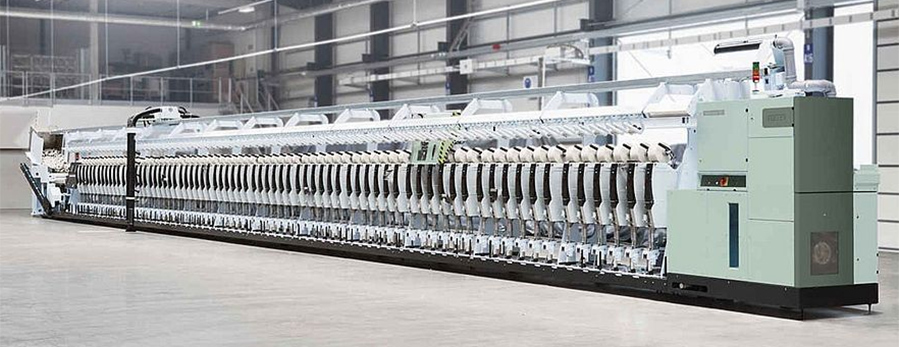
Artificial intelligence also contributes to minimizing energy and raw material consumption. ESSENTIAL, Rieter’s digital platform for spinning mill control, for example, enables the detection and elimination of deviations at an early stage in the process.

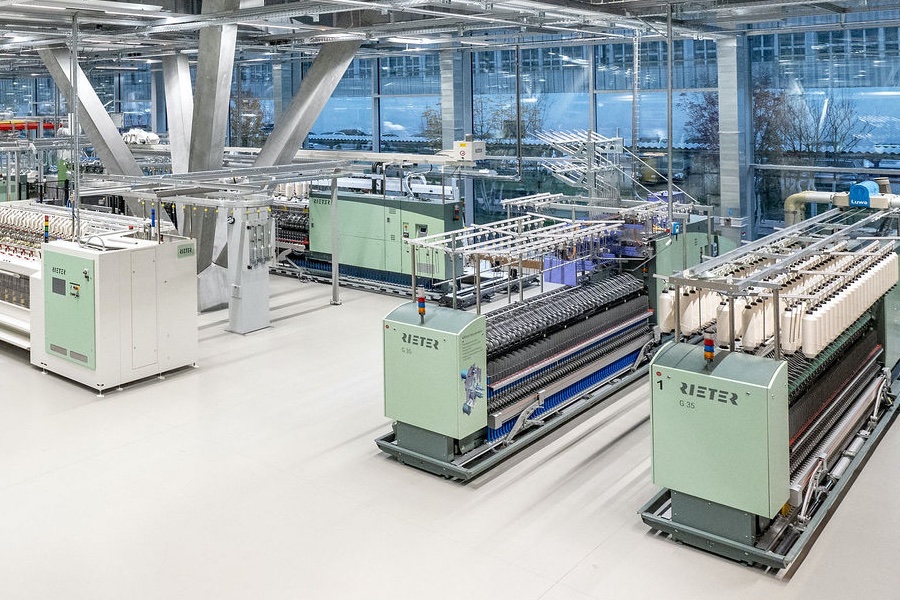
The integration of the Autoconer X6 winding machine in ESSENTIAL opens up the potential for enhanced transparency and optimization across all process steps. The winding machine is the last process step in the production of ring or compact yarn. It reliably detects foreign fibers, impurities, and unevenness in the yarn and removes these faults. Connection of the winding machine to ESSENTIAL helps make detection of quality deviations during production even more effective. On top of this, it also makes it possible to trace the causes back to upstream process steps and to rectify them.

For example: A combed cotton yarn of yarn count Ne 40 deviates from the quality standard. For a yarn with these criteria, the winding machine normally makes 75 quality cuts per 100 km of yarn. The number of cuts increases with unsatisfactory yarn quality, with an increase in this example to 90 per 100 km of yarn. More cuts translates to more waste, corresponding to an increase from 0.4% to 0.5%. This seemingly small difference correlates to a considerable amount of yarn over the course of a year. For a spinning mill that produces 5 000 tons of yarn per year, this totals five tons of additional waste.


ESSENTIAL makes expertise accessible

If the number of cuts on the winding machine exceeds a preset value, ESSENTIAL analyzes the entire process from fiber to yarn. Deviations are detected and corrective measures initiated based on rules, threshold values, and evaluation of machine events throughout the process. This is how ESSENTIAL uses the potential of artificial intelligence to reflect the expertise of the spinning mill. Evaluation of specific cases will enable the system to learn for the future, thereby allowing further development of the expertise related to optimization of the spinning process.

The use of artificial intelligence is a significant contribution to automation and process optimization and thus to improving sustainability in the textile industry. To expand this capacity in the field of industrial artificial intelligence, Rieter and the Johann Jacob Rieter Foundation are funding a professorship at ZHAW School of Engineering in Winterthur, Switzerland.


More News from Rieter Textile Systems

#Spinning

Rieter adjusts group structure in preparation for Barmag integration

The planned acquisition of the “Barmag” Division of OC Oerlikon will create the leading system provider worldwide for natural and man-made fibers. Rieter is confident it will receive all regulatory approvals to complete the acquisition in the fourth quarter of 2025. The Rieter Group is therefore adjusting its Group structure as of January 1, 2026, to take this acquisition into account and to be able to provide an even more agile response to market challenges.

#Spinning

Rieter reports stable order backlog and strategic progress – outlook for 2025 adjusted

In its Investor Update 2025, Rieter announced an order intake of CHF 203.9 million in the third quarter and CHF 559.3 million after nine months, reflecting a continued cautious investment climate in the textile machinery sector. Sales totaled CHF 121.5 million in the third quarter and CHF 457.7 million for the first nine months of the year, while the order backlog stood at around CHF 590 million as of September 30, 2025.

#Spinning

Rieter announces successful completion of rights issue

Rieter Holding Ltd. has successfully completed its rights issue: 99.06% of subscription rights were exercised by the end of the subscription period on October 1, 2025. The remaining shares will be placed on the market.

#Spinning

Rieter shareholders approve capital increase to finance Barmag acquisition

Rieter Holding Ltd. has published the final details for today’s Extraordinary General Meeting (EGM) and subsequently received shareholder approval for all proposals put forward by the Board of Directors.

More News on Spinning

#Spinning

Demand for high-performance yarns on the rise

Barmag, a subsidiary of the Swiss Oerlikon Group, will commission three HMLS yarn systems with a total of 30 stations at renowned technical yarn manufacturers in China over the next three months.

#Spinning

FET prepares for final exhibition of 2025

Fibre Extrusion Technology Ltd (FET) of Leeds, UK has completed its second major exhibition of 2025 at ITMA ASIA in Singapore, which is aimed at the textile and garment industry in South and Southeast Asia and the Middle East. Once again, this trade show proved to be a successful one for FET, with considerable interest from several countries surrounding China.

#ITMA Asia + CITME Singapore 2025

T-CAN – Revolutionizing can transport

In virtually all spinning mills, transporting sliver cans is still done manually. Rising labor costs, lack of operators and increasing quality requirements make this a growing challenge. With T-CAN, Trützschler introduces a practical solution: a fully automated can transport system that will be presented live at ITMA ASIA 2025 in Singapore.

#Recycling / Circular Economy

textile.4U publishes special edition “Top 100 Textile Recycling Companies 2025”

With a comprehensive 176-page special edition, textile.4U is dedicating its latest issue entirely to one of the most dynamic and influential topics in today’s textile industry: textile recycling. The new issue, published exclusively in high-quality print, presents the Top 100 textile recycling companies researched and selected by TexData – organizations that already play a key role in the transition to circular textiles or are expected to have a significant impact in the near future.

Latest News

#Recycling / Circular Economy

Advanced Recycling Conference 2025 fuels innovation across key waste streams

The Advanced Recycling Conference (ARC) 2025 brought together nearly 220 experts from 28 countries to spotlight pioneering advancements and foster industry collaboration in recycling across diverse waste streams including plastics, textiles, automotive and other materials.

#Dyeing, Drying, Finishing

Navis TubeTex announces U.S. partnership with Icomatex

Navis TubeTex, a global leader in advanced dyeing and finishing machinery solutions, is pleased to announce a new partnership with Icomatex (www.icomatex.com), a respected European manufacturer of high-quality stenters and textile finishing equipment. Under this agreement, Navis TubeTex will exclusively represent the Icomatex stenter line in the United States.

#Recycling / Circular Economy

ADVANSA launches ADVA®tex: A new step toward textile-to-textile recycling

ADVANSA has introduced ADVA®tex, a new filling fibre made entirely from recycled pre-consumer textile waste, positioning the material as a significant step forward in textile-to-textile (T2T) recycling. The fibre is designed for use in duvets, pillows, mattresses, and furniture applications and is available in three versions.

#Knitting & Hosiery

KARL MAYER celebrates 35 years of EL pattern drive

KARL MAYER is celebrating an anniversary this year: on 30 November 1990, the first warp knitting machine with electronic guide bar control, the KS 4 EL, was delivered – another milestone for patterning. As early as 1980, the SU gearbox with the MRS42SU had initiated the transition from mechanical chains to digital data.

TOP