[pageLogInLogOut]

#Recycling / Circular Economy

Rieter and Recover: Cooperation in the field of recycling
© 2023 Rieter
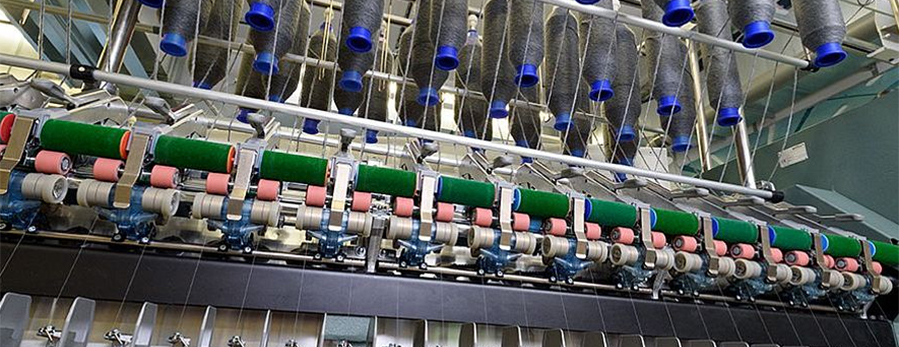
International governments and downstream consumers call for greater cooperation in the textile industry for a circular economy. It is becoming more significant to make a combined effort with other major stakeholders in different areas to respond to the increasing demand for transition.

Rieter and Recover agreed to join hands for technological advancements and research projects in the field of recycling. Both parties will work together to conduct trials and initiatives with various recycled raw materials and blends to build a solid foundation for textile circularity.

Rieter has high competence in customized spinning systems for staple fibers including recycled materials and Recover has developed its expertise in processing and applying high-quality recycled fibers. Both parties are expected to create synergies by improving the processing of pre-and post-consumer recycling materials.
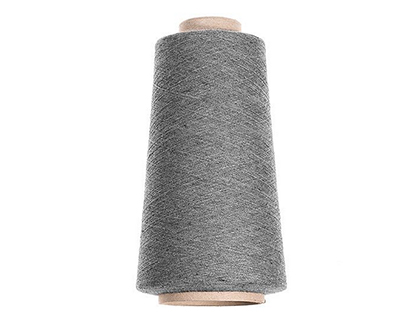
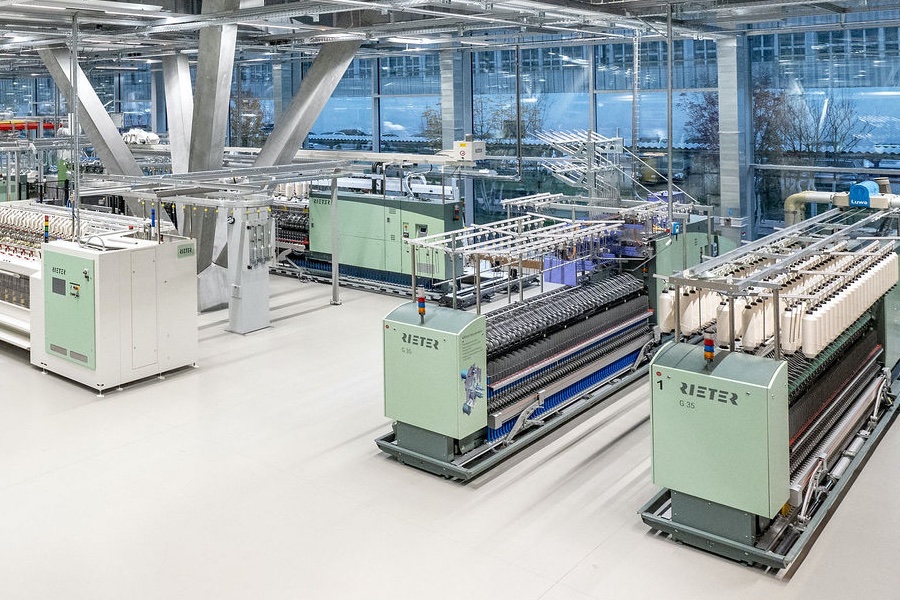
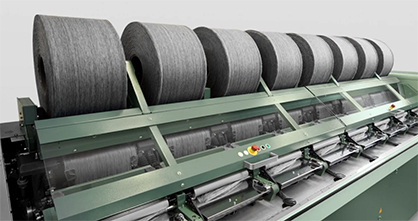
In a trial, high-quality yarn was produced with recycled material from Recover with Rieter ring spinning machines. © 2023 Rieter


Recover™ and Rieter partner to reshape sustainable textiles

This joint cooperation is betting on ambitious research that hopes to increase the availability, applicability and use of recycled textiles as raw materials.

Agents of change: investing in the future of recycled fibers

Potential new blends

Rieter and Recover™ have joined hands to develop technological advancements and research projects in the field of recycling. Both parties are working together to conduct trials and initiatives with various recycled raw materials and blends to build a solid foundation for textile circularity.

Specifically, they are working to amplify Recover's catalogue of blends, Recover announced in the press release. The challenges lie in mechanically recycling diverse fabrics without sacrificing the integrity of the resulting fiber.

New horizons for post-consumer textile waste

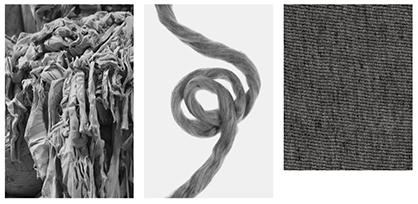
Most of the textile waste Recover currently recycles is either post-industrial or pre-consumer as both are easier to sort – by composition and by color. Post-consumer waste, on the other hand, is more challenging as pieces’ composition varies widely (from 100% cotton to cotton/polyester blends and rayon).
© 2023 Rieter
© 2023 Rieter


With Rieter, Recover hopes to change that. They’re working side by side to be able to scale the recycling of post-consumer textiles and still produce the highest-quality recycled fiber.


Rieter has high competence in customized spinning systems for staple fibers including recycled materials and Recover™ has developed its expertise in processing and applying high-quality recycled fibers. Both parties are expected to create synergies by improving the processing of pre-and post-consumer recycling materials and to extending the scope of use of recycled fibers with improved processes and machines.

Improved traceability

Rieter and Recover™ are collaborating with 3rd parties such as universities to verify how much recycled fiber is left in the yarn when applying new processes. This collaboration is expected to help the textile industry enhance the competence of verifying real recycled material usage.
© 2023 Rieter
© 2023 Rieter


Promising alliances for a promising future

"We’re excited to see where this cooperative research takes us. We’re thrilled to continue working alongside Rieter as we work towards a circular textiles future", Recover said in a statement.


More News from Rieter Textile Systems

#Spinning

Rieter advances strategic repositioning amid market volatility

Rieter successfully completed the acquisition of Barmag on February 2, 2026, and reached an important milestone in the company’s repositioning. Barmag will be integrated into the Rieter Group as the “Man-Made Fiber” Division. With this strategically transformative acquisition, Rieter is expanding its core business beyond the short-staple fiber business in a targeted way. This positions Rieter as the global market leader along the entire value chain for natural and man-made fibers. In addition, as a complete systems supplier, Rieter is further strengthening its technological leadership in the areas of automation and digitization.

#Spinning

Rieter responds to higher raw material prices

Global political and economic developments have been leading to rising raw material and energy costs for some time. The textile machinery industry is also affected by this trend. Rieter machines and components consist to a large extent of steel, copper, aluminum and electronics. These materials in particular have seen higher demand and higher prices in recent months.

#Spinning

Rieter completes acquisition of Barmag

Rieter has successfully completed the acquisition of Barmag as of February 2, 2026. This strategically important acquisition makes Rieter the world’s leading system provider for natural and synthetic fibers.

#Spinning

Rieter adjusts group structure in preparation for Barmag integration

The planned acquisition of the “Barmag” Division of OC Oerlikon will create the leading system provider worldwide for natural and man-made fibers. Rieter is confident it will receive all regulatory approvals to complete the acquisition in the fourth quarter of 2025. The Rieter Group is therefore adjusting its Group structure as of January 1, 2026, to take this acquisition into account and to be able to provide an even more agile response to market challenges.

More News on Recycling / Circular Economy

#Recycling / Circular Economy

Reju secures €135 Million in Dutch NIKI Funding for industrial-scale textile-to-textile regeneration hub at Chemelot Industrial Park, the Netherlands

Reju™, the progressive textile-to-textile regeneration company, has been awarded €135 million in funding under the Netherlands’ Nationale Investeringsregeling Klimaatprojecten Industrie (NIKI) program. The funding will support Reju’s planned industrial-scale Regeneration Hub at Chemelot Industrial Park in Sittard-Geleen, covering both the investment phase and ongoing operations, and represents a critical milestone on the path toward final investment decision.

#Recycling / Circular Economy

eeden is now a Canopy partner

eeden is committed to enable circular textiles by developing recycling technologies that turn textile waste into valuable raw materials. But the commitment goes further – eeden advocates for supply chain solutions that uphold responsible environmental and ethical standards, protecting global ecosystems including Ancient and Endangered Forests.

#Recycling / Circular Economy

Infinited Fiber Company’s environmental permit for Kemi advances to statutory appeal phase

Infinited Fiber has reached an important regulatory milestone in Finland, as the environmental permit process for a potential facility in Kemi has progressed to the statutory appeal phase.

#Recycling / Circular Economy

Carbios confirms Longlaville plant in France following financing progress

Carbios has reaffirmed its plans to build its Longlaville plant in France within a project financing framework, targeting the start of production in the first half of 2028. The company also reports a solid cash position of around €60 million at the end of 2025 and has appointed Benoît Grenot as Deputy Chief Executive Officer to support the execution of its strategic projects.

Latest News

#Raw Materials

New study shows low environmental impact by Cotton made in Africa Organic Cotton from Tanzania

Today, the Aid by Trade Foundation (AbTF) is announcing the results of a comprehensive life-cycle analysis (LCA) for cotton produced in Tanzania under the Cotton made in Africa Organic (CmiA Organic) standard. The study emphasises the small ecological footprint of CmiA Organic verified cotton. This can largely be traced back to the absence of synthetic pesticides, artificial fertilisers, and artificial irrigation. Consequently, CmiA Organic cotton can help the textile industry meet regulatory requirements as well as science-based targets. The results also show that the consequences of climate change threaten the livelihoods of these cotton farmers, even though the type of agriculture they practise barely contributes to climate change.

#Raw Materials

Better Cotton Initiative strengthens regenerative focus in standard update

The Better Cotton Initiative (BCI) has strengthened the regenerative focus of its field-level standard with the launch of a new version of its Principles & Criteria (P&C), which marks the next step in the organisation’s journey to becoming a regenerative standards system.

#Man-Made Fibers

Selenis and Kintra Fibers partner to scale 100% bio-based synthetic fiber technology

Selenis, a leading global specialty polyester manufacturer, today announced a strategic manufacturing partnership with materials science company Kintra Fibers to scale Kintra’s patented fiber-grade PBS resin - a 100% bio-based and biodegradable material designed for textile applications.

#Functional Fabrics

PERFORMANCE DAYS proves its relevance as the industry’s key meeting point

Held on March 18–19, 2026, PERFORMANCE DAYS once again confirmed its position as a leading international platform for functional textiles. A total of 3.366 trade visitors and around 560 exhibitors gathered in Munich, with the event already kicking off successfully on DAY 0, which received highly positive feedback for its interactive format. Despite challenging conditions caused by the public transport strike in Munich, the event saw strong attendance and a consistently high level of activity across both exhibition days.

TOP