[pageLogInLogOut]

#Spinning

Rieter, ARISE IIP, and Afreximbank sign framework agreement for Africa Textile Renaissance Plan
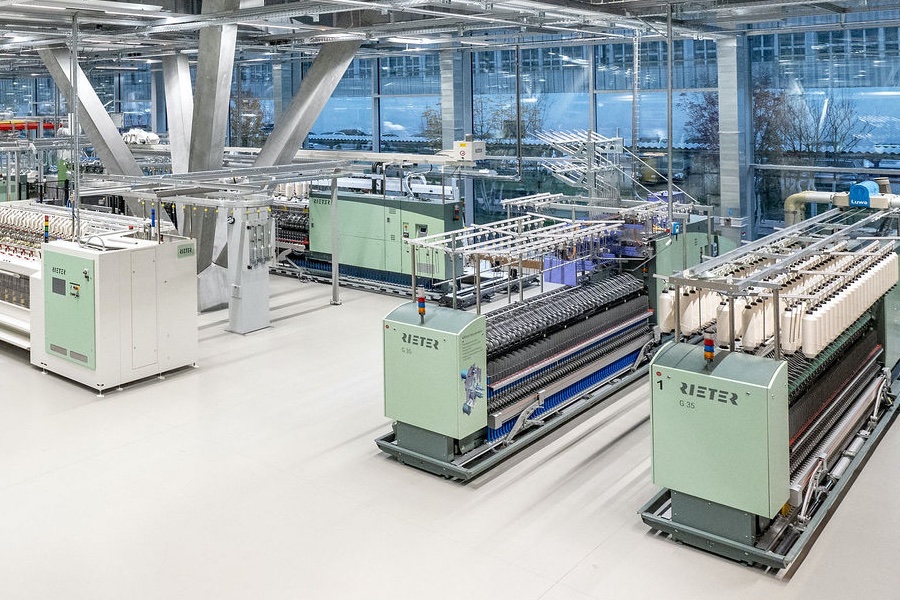
ARISE IIP, the pan-African developer and operator of world-class industrial parks, has partnered with African Export-Import Bank (Afreximbank) and Rieter, the world’s leading supplier of systems for manufacturing yarn from staple fibers in spinning mills. The unprecedented partnership will spearhead the “Africa Textile Renaissance Plan” – a transformative initiative aimed at revitalizing the continent’s textile sector. This ambitious project will leverage ARISE’s extensive network of industrial parks to support a new era of textile manufacturing in Africa.
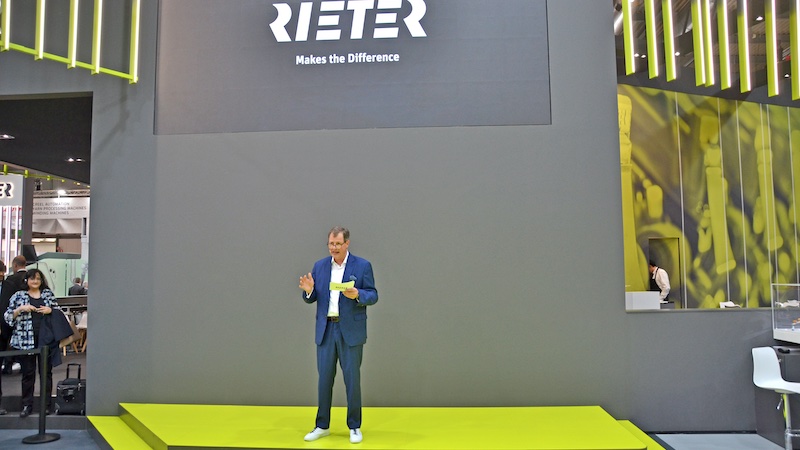
Riter CEO Thomas Oetterli at ITMA 2023 © 2024 TexData International


In order to facilitate the implementation of the Africa Textile Renaissance Plan, Afreximbank, Arise IIP and Rieter AG signed a framework agreement on October 14, 2024. The framework agreement outlines the collaboration to establish 500 000 metric tons of African cotton transformation capacity over the next three to five years, supported by USD 5 billion in financing. The Africa Textile Renaissance Plan aims to achieve the following key objectives:

+ establish 500 000 metric tons of African cotton transformation capacity over the next three to five years, with potential expansion of an additional 500 000 metric tons,

+ localize machine repair expertise in Africa,

+ create up to 500 000 jobs,

+ reduce Africa’s annual textile imports,

+ boost exports to the US under the African Growth and Opportunity Act (AGOA), focusing on full value addition within the continent and to export to the rest of the world and

+ develop a strong financing structure to support capacity building.

Countries benefiting from the program will be selected based on criteria such as power and gas availability, and textile parks with standard infrastructure or equity contribution. Training centers will be established in selected countries to develop and improve skill levels.

The partnership aims to secure financing of textile projects, streamlining the process through:

+ standardized loan documentation and security packages,

+ expedited two-month application process and

+ standardized business plan templates.

To foster long-term growth, Rieter has committed to gradually establishing a manufacturing presence in Africa subject to commercial viability, including the:

+ setup of a repair and maintenance facility in ARISE’s industrial park in Benin,

+ establishment of spare parts warehousing and

+ phased introduction of machine assembly operations.

Gagan Gupta, CEO and Founder of ARISE IIP expressed his enthusiasm for the project: “The Africa Textile Renaissance Plan represents a significant milestone in the continent’s industrial development. I’m convinced that this initiative will not only boost local manufacturing and create thousands of jobs but also position Africa as a global leader in sustainable textile production.”

Prof. Benedict Oramah, President and Chairman of the Board of Directors of Afreximbank, stated that the Africa Textile Renaissance Plan is a “game-changer” for African trade. He remarked: “By transforming Africa’s cotton into high-value textile products, we are not only driving industrialization but also reducing dependence on imports while building a competitive export base. This partnership complements our ongoing efforts, such as the transformative change we are spearheading in Africa’s Cotton-4 plus (C4+) countries, alongside other partners. It underscores Afreximbank’s unwavering commitment to industrialization and export development.”

Thomas Oetterli, CEO Rieter Group, said: “We are thrilled to support this important initiative with our commitment, expertise and consulting knowledge. We are convinced that the Africa Textile Renaissance Plan marks an important starting point for the future development of the textile industry in Africa.”

More News from Rieter Textile Systems

#Spinning

Rieter prepares leadership transition in Components & Technology

Roger Albrecht, Head of the “Components & Technology” Division, has decided to pursue a new opportunity outside the Rieter Group. Roger has worked for the Group for 11 years and has been instrumental in maintaining Rieter’s position as a technology leader in the short-staple business.

#Recycling / Circular Economy

Rieter and partners launch Recycling Powerhouse for industrial-scale textile recycling

Recycling Powerhouse Ltd. was established in July 2026 to industrialize, standardize and scale textile recycling. Based in Switzerland, the venture will operate a franchise-driven business model that enables the production of high-quality, certified recycled yarns. The project is supported by the following partners: Rieter Group, the world’s leading system supplier for natural and man-made fibers, Säntis Textiles, a Swiss textile engineering company, and Valvan, a Belgian sorting technology company. The first blueprint franchise operation is scheduled to launch early 2027 in partnership with Suhail Industrial Holding Group in Qatar.

#Spinning

Rieter sees Barmag integration on track as orders and sales rise

The first half of 2026 was shaped by the successful completion of the largest acquisition in Rieter’s history. The Man-Made Fiber Division enables entry into the growth segment of man-made fibers and sustainably strengthens Rieter’s market position in the Asia region. The expanded Group is now the world’s leading system supplier for the processing of natural and man-made fibers. In the first half of the year, initial cost savings in material costs and operating expenses have already been realized. The targeted synergies are expected to amount to at least CHF 20 million by the end of the 2028 financial year. Due to the completion of the acquisition on February 2, 2026, the first half of the year for the Man-Made Fiber Division only amounts to five months.

#Spinning

"We will become a recycling powerhouse"

The textile industry is now in its fourth consecutive year of crisis, while automation, artificial intelligence and recycling are reshaping the rules of the game. In this interview, Rieter CEO Thomas Oetterli discusses the first signs of a market recovery, reflects on his first three years at the helm of the company, explains the integration of Barmag, outlines Rieter’s vision of the fully automated spinning mill and highlights the strategic importance of recycling. In doing so, he explains why the new Rieter Group aims to play a leading role in transforming the textile value chain into a circular economy.

More News on Spinning

#ITMA Asia + CITME 2026

ITMA Asia 2026: How Barmag is reshaping the future of man-made fiber production

The textile industry is entering a groundbreaking era. Manufacturers face rising energy prices, growing sustainability demands, increasing labor shortages, and an unprecedented need for flexibility. For a globally active textile industry, where competitiveness is closely linked to production efficiency and cost leadership, this means that technology is no longer merely a means of improving operational processes – it is increasingly becoming a strategic differentiator.

#Spinning

Eltex takes the tension out of heat-setting

The ACT-MULTI system developed by Eltex – a member of TMAS, the Swedish textile machinery association – is bringing individual yarn tension monitoring and automatic control to the heat-setting process, helping manufacturers maintain consistent processing conditions across every yarn position.

#Spinning

Heberlein reinforces its commitment to the Chinese market

Heberlein, globally recognised as a leading provider of air interlacing and air texturing jets for synthetic filament yarns, is consolidating its success in the Chinese market with its APh- and APe-series for DTY applications. Particularly in the field of Air Covering, Heberlein technologies combine excellent quality with significant savings in compressed-air consumption. A new service hub in Shengze City underlines the company’s long-term commitment in the Chinese market.

#Recycled Fibers

Driving circularity with Uster Recycled Fiber Matrix

The textile industry’s commitment to circularity continues to accelerate, and mechanical recycling is viewed as a targeted approach to cutting textile waste and its environmental impact. At the forefront of this drive, Uster has developed the Recycled Fiber Matrix, a two-dimensional assessment of mechanically recycled fibers to guide optimum processing and end-uses.

Latest News

#Associations

Automation, digitalization and new business models are shaping the future of footwear and leather technology

The European footwear and leather machinery industry is facing profound transformations. Global competitive dynamics, technological innovation, automation and digitalization are fundamentally reshaping markets, production processes and business models. This is one of the key findings of the new study “Threads of the Future – Footwear and Leather Technology Edition”, which was presented today by VDMA Textile Care, Fabric and Leather Technologies (VDMA TFL) during a press conference at SIMAC Tanning Tech in Milan.

#Knitting & Hosiery

SHIMA SEIKI to showcase flat knitting and digital design solutions at Egypt Stitch & Tex

Leading Japanese computerized flat knitting technologist SHIMA SEIKI MFG., LTD. of Wakayama, Japan, together with its sales representative in Egypt, TTS (EL MASRIA FOR TRADE & TECHNICAL SERVICES), will participate in the upcoming 24th International Exhibition for Textile & Carpet Machineries, Printing Technologies and Accessories (Egypt Stitch & Tex) to be held in Cairo, Egypt this month.

#Associations

EURATEX calls for urgent action on industrial competitiveness

EURATEX, the European Apparel and Textile Confederation, welcomes today’s State of the Union Address by European Commission President, Ursula von der Leyen, and in particular her recognition of Europe’s need to rebalance unfair trade, cut red tape, and strengthen its industrial and strategic autonomy.

#Raw Materials

Cotton made in Africa puts farmer dialogue at the heart of agricultural training

A new manual created by the Aid by Trade Foundation and African People & Wildlife shows how Cotton made in Africa aims to transform cotton cultivation through dialogue rather than directives.

TOP