[pageLogInLogOut]

#Spinning

Uster Tester – The foundation of global textile quality
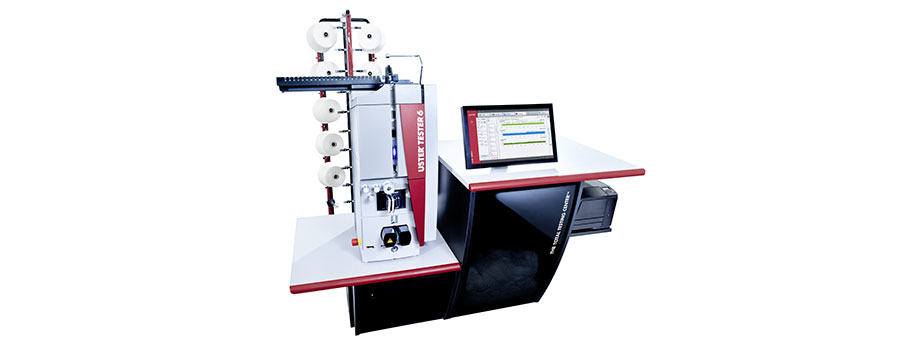
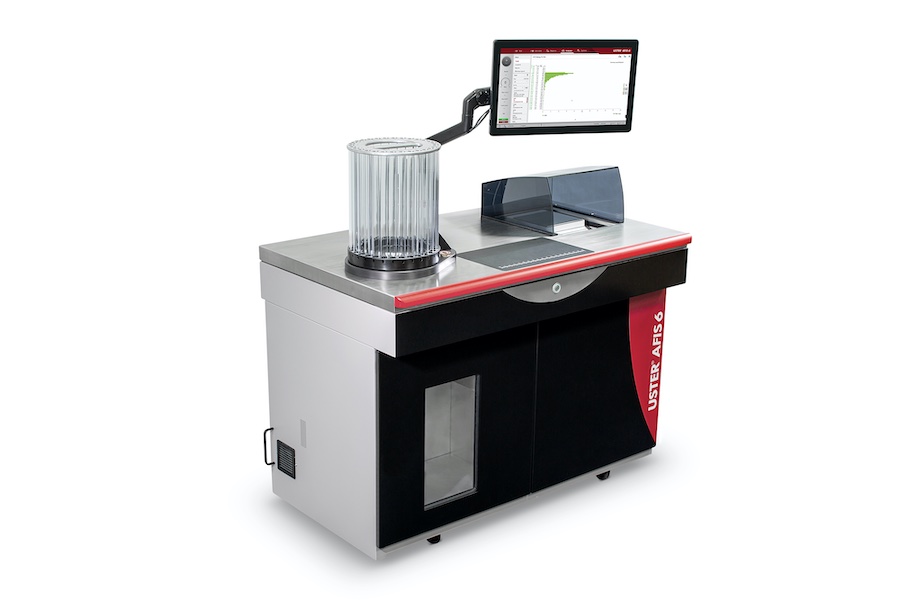
Uster Tester 6 © 2023 Uster
Assessing textile quality was once a matter of opinion. Today it’s a matter of fact – objective, repeatable and universally understood. Quality now has numerical values, as the basis for trading, pricing and ultimately consumer satisfaction. And this year marks the 75th anniversary of the pioneering innovation which fostered that change – and created the global quality environment of textile production in the 21st century.

Celebrating 75 years of the world’s most famous instrument

It all started in the early 1940s, with a request from a group of spinners in Switzerland. They wanted a reliable way of measuring textile slivers, rovings and yarns for ‘evenness’. This property was – and still is – seen as critical to the uniformity, consistency and processability of materials, and the ultimate determinant of value and quality. The first instrumental method for evenness testing was developed for these spinners by Zellweger Uster, at that time a company active in the emerging field of electronics.

That company is known today at Uster Technologies, and it’s fair to say that every textile producer in the world knows the name of its most famous product, the Uster Tester. In fact, the word ‘Uster’ alone is used by textile mills to signify both the process of evenness testing, and the instrument itself. In the past 75 years, the Uster Tester has been developed and extended apace with fast-moving technological innovations. Measurement capabilities have extended with specially-developed sensors, and ingenious software. Connectivity with other Uster systems at every stage of processing has created a unique Quality Management Platform for the entire mill.

Setting global standards

The original tester is displayed in a museum on the top floor of Uster headquarters. It is, or course, manually operated, and outputs test results as a line on graph paper. This first venture into testing was based on a capacitive sensor and simple electronics. It was the precursor for gradual development stages over the next two decades, leading to the emergence in the 1970s of the name ‘Uster Tester’ and its rapid popularity across the textile world.

A key aspect for those early Swiss spinners was to learn more about their yarn quality, to improve it for their customers but also to benchmark their own standards against other producers. Giving quality a numerical value was a massive breakthrough, reflected today in the ‘language of quality’ used for marketing, trading and competitive progress today.

The concept of global benchmarking took a giant leap forward in 1957 with a short article in the German textile magazine Melliand, giving basic data on yarn quality from a number of spinners. The data was, of course, based on the Uster Tester, and the idea of a comprehensive service of quality information grew into the now-legendary Uster Statistics publications.

This detailed collation of accurate data from all around the textile world has become essential to the entire industry. It is the framework for meaningful fiber purchasing, yarn development and trading, now of course, available as an app for mobile devices. In an environment where speed and user-friendliness are vital, the latest Uster Tester interacts with Uster Statistics to provide a one-click check of yarn quality and specifications.


Managing the whole mill

It’s clear that the evenness tester will also continue to be the must-have laboratory testing instrument in its own right, whatever the benefits of its connectivity. Test conditions in the lab are more consistent than in the production halls, so results can be compared over time to establish a basis for best settings and procedures in mill equipment.

So, the Uster Tester has its place in every serious textile laboratory. But its modern role is much wider, thanks to seamless connectivity with other Uster testing and measuring instruments. Critically, it unites lab testing with in-process monitoring, by intelligent cooperation with Uster yarn clearers in the winding department. 
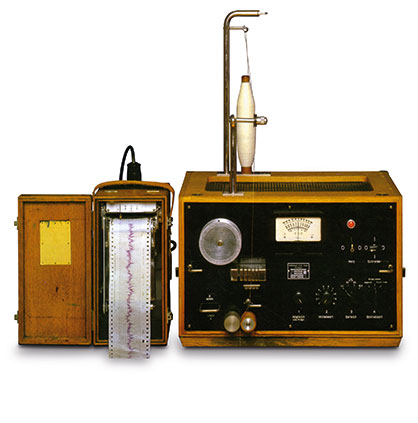
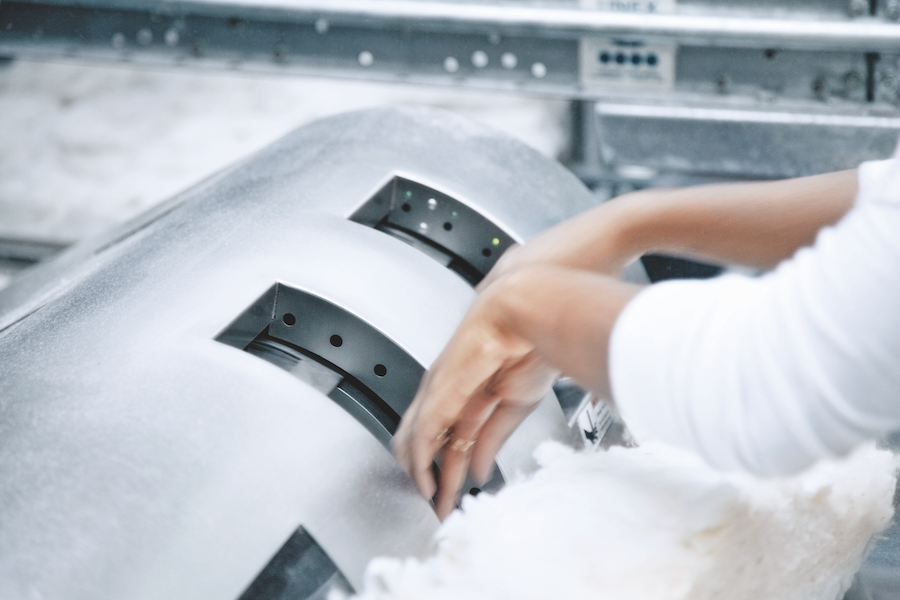
Uster Tester © 2023 Uster


Through the Uster Quality Expert, and the unique ‘Assistant Q’ guidance facility, mills now have the benefit of ‘Total Testing’. This delivers effective and preventive process optimization, with smart alerts pointing instantly to potential trouble spots in the entire process. Integration between 100% in-process monitoring and precise lab measurement ensures quality is secured at the right level every time.

Spinners today have the power to analyze every element of their processes and select the best options for their own profitability and their customers’ complete satisfaction. In one system, fiber, yarn and fabric quality are optimized and secured. Thanks to the Uster Tester and Uster Quality Expert, mills can rely on a world-class Quality Management Platform that takes their business planning from imperfect approximation to guaranteed certainty…ready for the next 75 years.

More News from Uster Technologies AG

#ITMA Asia + CITME Singapore 2025

Uster presents novelties at ITMA Asia + CITME 2025

There’s news from Uster Technologies to be announced for the industry’s upcoming event in Singapore. The Uster 360Q universe is growing with new products, solutions and services. Innovation developments can also be recorded in the fields of man-made fiber testing and fabric inspection. Uster innovations address the industry’s trending topics as mill management and process control, optimization of delivered fabric quality and yield.

#Spinning

Uster Technologies marks 150 years of empowering quality excellence

Uster Technologies marks 150 years of excellence – a milestone that reflects continuous adaptation to customer needs and industry change. Over the decades, Uster has evolved from manufacturing quality testing instruments into a trusted partner shaping the future of textile production.

#Recycling / Circular Economy

Challenges of making yarn from recycled fibers

What does it take to spin quality yarn from recycled fibers? Uster Technologies brought textile industry leaders together to discuss the role of technology, data and automation – as well as the current challenges in using recycled raw material. Experts from Rieter, Säntis Textiles, Otto Yarns, and TVU commented on the current situation and looked into the future of spinning in a panel discussion organized at Uster headquarters.

#Spinning

Uster Technologies wins another infringement lawsuit

In a ‘victory for innovation in China’ Uster Technologies has secured a decisive judgment in a patent infringement lawsuit against a competitor. The final ruling by the Supreme People’s Court of PR China confirms that the competitor’s actions in copying the patented yarn feeder of the Uster Tester 6 constitute unlawful infringement.

More News on Spinning

#Spinning

First PA66 spinning plant with EvoQuench successfully commissioned

With the successful commissioning of a multi-digit PA66 spinning line for microfiber yarns, Chinese textile company Shandong Nanshan Fashion Technology Co., Ltd. has added yarn production to its textile value chain.

#Spinning

Saurer Technologies Twisting Solutions at ICFE 2026

Saurer Technologies Twisting Solutions, a global leader in textile machinery innovation, will be present at the International Carpet and Flooring Expo ICFE 2026. Join us January 6–9 at the Istanbul Expo Center, Türkiye, as industry leaders, manufacturers, and innovators gather to explore the latest breakthroughs in carpet and flooring technology. Let’s meet at the new established global Center of the Carpet Sector in hall 3, booth 300!

#Spinning

Details matter: How Trützschler cylinder wires boost efficiency in Pakistan’s spinning sector

Pakistan’s textile industry, especially its spinning sector, is the backbone of the national economy and a vibrant hub of innovation. Today’s spinning mills face growing demands for efficiency, quality, and sustainability. From the serene northern valleys to the vibrant port city of Karachi in the south, mills like Suraj Cotton Mills, Liberty, and Nishat Chunian are turning to advanced solutions.

#Exhibitions & Events

Groz-Beckert showcases textile innovation at ShanghaiTex 2025

From December 16 to 19, 2025, the global textile industry will gather at ShanghaiTex at the Shanghai New International Expo Center (SNIEC), where Groz-Beckert will present its latest highlights and innovations across its five product areas – Knitting, Weaving, Nonwovens, Sewing, and Spinning – at Hall N3, Booth A05.

Latest News

#Natural Fibers

38th International Cotton Conference Bremen: Let´s Talk about Cotton!

The 38th International Cotton Conference Bremen, to be held on 25-27 March 2026 in Bremen’s parliament building on market square, once again sends a powerful signal for professional excellence and international dialogue. The focus is on the latest market trends and technical innovations throughout the entire value chain – from agriculture and quality assurance to processing and the circular economy. With its high-calibre speakers, the conference remains an indispensable forum for anyone involved in shaping the cotton industry scientifically, technically, or economically.

#Recycled_Fibers

Leading fashion brands step up to unlock the next chapter of Circulose

Since 2024, under new ownership and leadership, Circulose has set a renewed strategic direction focused on securing long-term commitments with partner brands to bring CIRCULOSE® back to market at scale. This strategy has proven successful.

#Research & Development

More safety and comfort for protective clothing thanks to auxetic fabrics

When everyday materials are pulled, they stretch or elongate in the direction of the pull and become narrower in cross-section. We can also observe this property in two-dimensional textiles. Auxetic structures behave differently here. They have the striking property of not changing under tensile stress or even increasing their width or thickness. These properties are advantageous, for example, in protective textiles or textile filter media. The DITF are researching auxetic fabrics for various applications.

#Recycled_Fibers

Recycling mixed-fibre garments becomes a reality: RadiciGroup, The LYCRA Company and Triumph take circular fashion a step forward

The process, which is both economically and environmentally sustainable, has enabled the production of an underwear set made from 100% recycled nylon and LYCRA® fibre in a closed-loop system.

TOP