[pageLogInLogOut]

#Spinning

Minimizing conversion costs through employee training
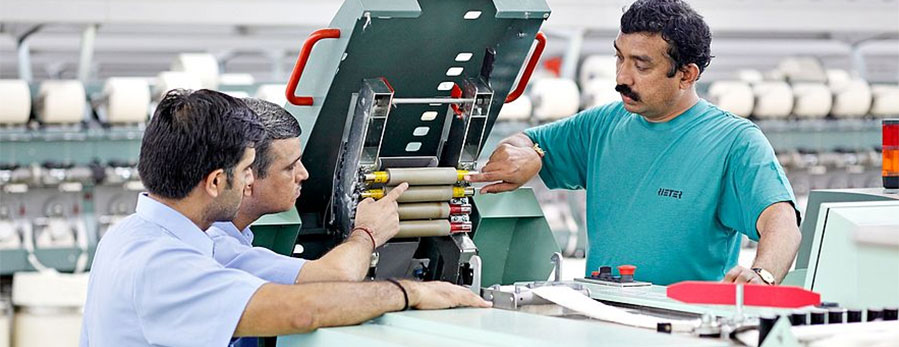
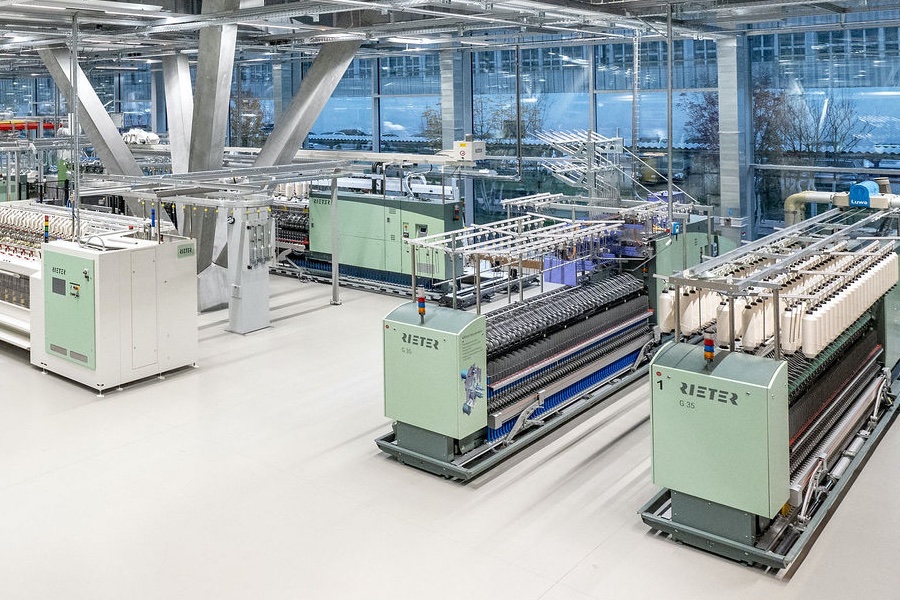
Rieter INmill training program provides know-how to the technical team of a spinning mill © 2023 Rieter
Labor expenses in different countries account for anywhere between 6 and 13% of total yarn production costs. The right training can make a world of difference. Rieter’s INmill customer trainings teach mill staff how to minimize conversion costs, so they can have a positive impact on the spinning mill’s bottom line.

Controlling and optimizing conversion costs is key for any mill manager in order to produce yarn profitably.

When investing in new machines and systems, mill managers need to be sure their machines run trouble-free from day one to avoid costly losses. It is therefore crucial to invest in the workforce’s know-how so they can utilize machines most effectively.

Know-how is the key to success

Industrial yarn manufacturing is highly competitive. Know-how hence represents an important part of a mill’s investment. State-of-the-art technology, advancing automation technologies, and fast-changing market requirements increasingly call for expertly trained staff in spinning mills.

When a highly productive spinning machine stands still because of a batch change, trouble or faulty running, this may result in considerable production loss. It is necessary to detect and solve problems fast. This can only happen with profound machine know-how.

The Rieter INmill customer training helps instruct the technical team to make sure that all qualitative and quantitative resources of the machines are used to their fullest potential. Mechanical and electronic issues are professionally located and quickly sorted out.

Today, spinning machines are easier to operate. Even so, high utilization and efficiency can only be ensured if maintenance settings and professional troubleshooting are optimized. With an INmill training program, the required know-how can be taught to the spinning mill’s technical team.

Apart from the technical know-how, it is of utmost importance that the technical team can detect hidden economic inefficiencies in the spinning process and take measures to control them.

Designed around the specific challenges spinning mills face regarding cost and quality requirements, Rieter developed a training module called the Mill Economics training course. It covers the key success factors of spinning mills: Productivity, quality and conversion costs. The Mill Economics training course aims to connect theory with practice and provides insights into how to increase profit margins while producing consistent yarn quality.

Any technical and management measure in a spinning mill also impacts its overall commercial performance. However, success in the spinning industry requires the right preparation. This includes timely training of the technical team.

Tailored training programs

Rieter provides training to ensure sustainable production and top mill performance. Thanks to a modular concept, customers can design their own training according to their needs, focusing on a specific machine type, a certain in-house audience, or both.

Rieter also offers INclass trainings at its training centers in Switzerland, India and China, where participants benefit from hands-on experience on installed machines in well-equipped classrooms. The trainings are conducted by Rieter customer education specialists and provide ideal and real-life training environments.


Customer Testimonials

Mahbubul Alam, COO, Pahartali Textile, Bangladesh

“The Rieter INmill training was a wonderful practical course. This course was done with real life examples which made it enjoyable and helped us to optimize machine output with respect to productivity and quality. The training has enriched technical knowledge as well as confidence of our employees to face daily challenges and troubleshooting.”

Eric Noe, President, Buhler Quality Yarns Corp, USA

“We manage to run the machine at its maximum utilization thanks to the know-how acquired during the Rieter INmill training program. Trained by Rieter experts, our staff benefits from practical learning on machines and receives support and advice on daily challenges.”

Sheikh Md. Shamim, General Manager, Purbani Synthetic Spinning Ltd, Bangladesh

“The Rieter INmill training program taught by Rieter experts, enables our workforce to perform their roles with greater success. This also enriches their jobs, giving them greater satisfaction. We can see a huge improvement in productivity and quality as the approach to maintaining and troubleshooting machines has professionalized.”

Md. Rafiqul Islam, General Manager, Mozzaffar Hossain Spinning Mills Ltd, Bangladesh

“The INmill machine training course with know-how on planned and proper maintenance of the machines helped us achieve maximum machine utilization. It further enabled our employees to cope with their daily challenges and strengthened team spirit. The economics training inspired us to implement a potential cost reduction idea and it keeps our conversion costs under control.”
More News from Rieter Textile Systems

#Spinning

Rieter responds to higher raw material prices

Global political and economic developments have been leading to rising raw material and energy costs for some time. The textile machinery industry is also affected by this trend. Rieter machines and components consist to a large extent of steel, copper, aluminum and electronics. These materials in particular have seen higher demand and higher prices in recent months.

#Spinning

Rieter completes acquisition of Barmag

Rieter has successfully completed the acquisition of Barmag as of February 2, 2026. This strategically important acquisition makes Rieter the world’s leading system provider for natural and synthetic fibers.

#Spinning

Rieter adjusts group structure in preparation for Barmag integration

The planned acquisition of the “Barmag” Division of OC Oerlikon will create the leading system provider worldwide for natural and man-made fibers. Rieter is confident it will receive all regulatory approvals to complete the acquisition in the fourth quarter of 2025. The Rieter Group is therefore adjusting its Group structure as of January 1, 2026, to take this acquisition into account and to be able to provide an even more agile response to market challenges.

#Spinning

Rieter reports stable order backlog and strategic progress – outlook for 2025 adjusted

In its Investor Update 2025, Rieter announced an order intake of CHF 203.9 million in the third quarter and CHF 559.3 million after nine months, reflecting a continued cautious investment climate in the textile machinery sector. Sales totaled CHF 121.5 million in the third quarter and CHF 457.7 million for the first nine months of the year, while the order backlog stood at around CHF 590 million as of September 30, 2025.

More News on Spinning

#ITM 2026

The hub of smart and sustainable transformation in yarn technologies: ITM 2026

With global fiber production projected to reach 169 million tons by 2030, yarn manufacturing is becoming one of the most strategic fields within the textile machinery industry. Located in Halls 6, 7, and 10, the Yarn Hall at ITM 2026 is set to bring together industry professionals with innovative solutions developed around automation, energy efficiency, digitalization, and circular production.

#Spinning

Barmag: DTY efficiency for the future of fancy yarns

Fancy yarns continue to gain importance in the textile market: Whether in fashion, home textiles or the automotive industry - the trend towards individuality is fueling the demand for textured, haptically differentiated and at the same time comfortable yarns.”

#Spinning

Perfect quality through collaboration: Machinery from Trützschler, Toyota and Murata at Zirve Tekstil

In today’s textile industry, excellence is not achieved by chance – it’s the result of deliberate decisions, technical expertise, and the courage to go beyond conventional paths. The Turkish company Zirve Tekstil has done just that: by combining the best technologies from Trützschler, Toyota and Murata, they’ve created a production setup that delivers outstanding yarn quality – recognized worldwide.

#Spinning

Monitor, adjust, perfect

FiberGuard BCF is the name of the new system for real-time monitoring of yarn tension in all Neumag BCF production processes. Barmag, the innovation and technology leader for filament spinning systems, presented this innovation of its Neumag product line at ITMA Asia + CITME in Singapore last November. The new BCF yarn tension sensor is compatible with all current Neumag BCF machines and can be easily retrofitted to existing Neumag BCF S8 machines.

Latest News

#Digital Printing

Erreà upgrades sportswear printing operations with seven high-performance Mimaki digital textile printers

Mimaki Europe, a leading manufacturer of industrial inkjet printers and cutting systems, has supported renowned Italian sportswear brand, Erreà in upgrading its digital textile printing operations with the installation of seven high-performance Mimaki systems. The new installation includes three Tiger600-1800TS industrial dye-sublimation printers and four TS330-1600 solutions, replacing a previous fleet of 28 digital printers. This major upgrade marks a significant step forward in Erreà’s production strategy, enabling the company to streamline its printing infrastructure while improving efficiency, colour consistency and overall production control.

#HIGHTEX 2024

The future of Technical Textiles takes shape at HIGHTEX 2026

HIGHTEX 2026 International Technical Textiles and Nonwoven Exhibition is preparing to open its doors at Tüyap Fair and Congress Center between 9–13 June 2026. Bringing together the world’s leading manufacturers and technology providers in the field of technical textiles and nonwoven technologies in Istanbul, the exhibition will go beyond being merely a trade platform where new products are displayed and will assume the character of an international hub where the strategic future of the industry is discussed.

#Textile chemistry

Jeanologia urges industry to accelerate PP Spray phase-out following ZDHC Watchlist update

Potassium permanganate has officially entered the Chemical Watchlist of the ZDHC Foundation, signaling increased scrutiny and potential phase-out of one of the most hazardous chemicals still used in denim finishing. The inclusion confirms an industry shift that Jeanologia anticipated more than a decade ago.

#Recycling / Circular Economy

Circulose restarts commercial-scale production at Ortviken plant in Sundsvall

Circulose today announced the restart of its commercial-scale production plant at Ortviken in Sundsvall, Sweden, marking a significant step in scaling next-generation materials for the global fashion industry. The company plans to resume production of CIRCULOSE®, a recycled pulp made entirely from discarded cotton textiles, in the fourth quarter of 2026.

TOP