[pageLogInLogOut]

#Spinning

A country with a long textile tradition: Trützschler Card Clothing in Peru

© 2021 Truetzschler
Since the implementation of a full-service concept back in 2014, Trützschler Card Clothing (TCC) has been able to establish itself as a leading provider of card clothing and mounting services in the Peruvian textile industry. TCC products like Novotop 58, Magnotop 58 and Precisetop 58 that are dedicated to combed cotton applications and used in the intelligent card TC 19i have achieved big steps toward success. As the following examples show, TCC is continuously striving for improvement together with its customers.

The Peruvian textile history

?Going back almost 10,000 years, Peru has one of the longest histories of textile production in the world. When humans first started using agriculture, Peruvian fiber manipulation began with spun fibers that were used to make cords and nets. This was followed by using looms to spin animal-based fibers like alpaca and llama wool, as well as cotton fibers. The Peruvian civilization has been producing cotton for more than 4,500 years. In this context, the pre-Incan process of spinning and fabric production can still be considered valid today.

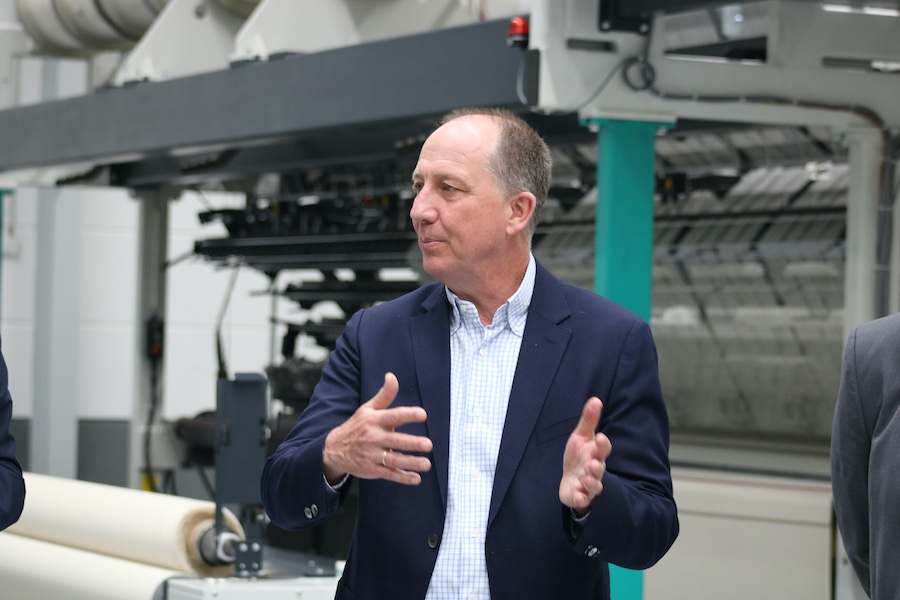
Javier Piqueras, CEO, Algodonera Peruana © 2021 Truetzschler


Processing cotton in the Peruvian textile industry?

Peru uses traditional hand-picking methods for cotton, which allows a more brilliant white and softness in the fiber because machine-picked cotton tends to get scratched and yellowed during mechanical treatment processes. The primary varieties found in Peru are Pima, an extra-long staple fiber (ELS) and Tanguis, a long stable cotton (LS). Pima is harvested in the northern region of Piura, while Tanguis is primarily grown in the central coastal region of Peru. Overall, Peruvian cotton blends are widely recognized as high-quality, fine, soft and durable fibers.

The Peruvian apparel industry is specialized in knitted cotton garments, and its main competitive advantage is its level of integration. The production chain is fully integrated, from the fiber through to yarn production, fabric manufacturing and production of the final garment. This integration is strengthened by the constant technological modernization of factories and the high level of specialization achieved by entrepreneurs and workers.


About 4,000 tons of yarn – out of the total of 7,000 tons of yarn that is produced each month – goes into the spinning of locally grown cotton like Pima or Tanguis. The following Trützschler customers have dedicated themselves to this.

Trützschler customers in Peru – Algodonera Peruana?Algodonera Peruana is specialized in the export of high-quality, 100-percent cotton yarn. A total of 22,224 ring spindles and 20 Trützschler cards produce an average of 240 tons per month. The production focus lies on Pima combed-cotton yarn in the range of 20 to 50 Ne (Number English: The number of times the length of one pound of yarn can be divided by 840). This approach has achieved success, with well-known ready-to-wear companies like Polo and Lacoste trusting Algodonera Peruana’s yarn quality. According to CEO Javier Piqueras, the company’s strategy focuses on maintaining and improving quality levels within its operations to constantly increase productivity. In this context, the company has steadily invested in its entire production chain, including two new Trützschler intelligent TC 19i cards that it recently added to its facility.

Trützschler customers in Peru – Empresa Algodonera S.A.?

Empresa Algodonera S.A. is a company committed to spinning 100-percent cotton yarn. About 150 employees, 17 cards and 16,320 ring spindles produce an average of 200 tons of yarn per month. Its product range includes Pima combed-cotton yarn from Ne 20 to Ne 60, and Tanguis cotton-carded and combed from Ne 16 to Ne 40. It also spins imported US upland cotton from Ne 16 to Ne 40. Empresa Algodonera S.A. exports to the US and Europe, so its top priority is to achieve the best possible quality for its customers. The company has made continuous investments into quality control, fiber analysis, and automatic humidity and temperature control in recent times. Furthermore, it places a sharp focus on the maintenance and quality of the wires used in carding to ensure the quality of its yarn.

“We have been using Trützschler card clothings for many years,” says Ernesto Rodriguez, Plant Manager at Empresa Algodonera S.A. “They have helped us to improve our overall quality standards, as monitored by our AFIS equipment, and we are truly very satisfied.”
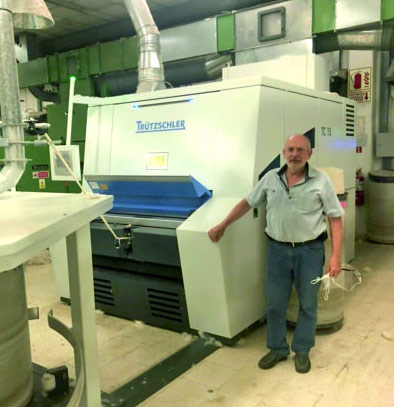

Ernesto Rodrigues, Plant Manager, Empresa Algodonera, S.A. © 2021 Truetzschler


More News from TEXDATA International

#People

Happy Holidays!

Dear reader, the year 2025 is drawing to a close. We are entering what we hope will be a peaceful holiday season, spending time with our families and taking a moment to pause and reflect. We hope we have been able to support you once again this year with relevant news and articles, and we look forward to surprising you with many innovations in the coming year. Enjoy the festive season, stay healthy, and we wish you a happy and joyful holiday season.

#Recycling / Circular Economy

textile.4U publishes special edition “Top 100 Textile Recycling Companies 2025”

With a comprehensive 176-page special edition, textile.4U is dedicating its latest issue entirely to one of the most dynamic and influential topics in today’s textile industry: textile recycling. The new issue, published exclusively in high-quality print, presents the Top 100 textile recycling companies researched and selected by TexData – organizations that already play a key role in the transition to circular textiles or are expected to have a significant impact in the near future.

#Recycling / Circular Economy

Responsible Textile Recovery Act of 2024 signed by Governor

Senator Josh Newman (D-Fullerton) is proud to announce that Senate Bill 707 (SB 707), the Responsible Textile Recovery Act of 2024, has been signed into law by the Governor of California, Gavin Newsom. This groundbreaking legislation establishes the country’s first Extended Producer Responsibility (EPR) textile recycling program, marking a significant step forward in the state’s efforts to combat waste and promote sustainability.

#Textiles & Apparel / Garment

Modtissimo promotes sustainability with 28 coordinates in the Green Circle

Modtissimo is proving more and more to be a textile and clothing show that delivers the latest innovations in the area of sustainability, with the iTechStyle Green Circle being the main showcase for companies' creations. In this 60+4 edition, taking place on 12 and 13 September, 28 coordinates will be exhibited in a section organised by CITEVE and curated by Paulo Gomes.

More News on Spinning

#Spinning

First PA66 spinning plant with EvoQuench successfully commissioned

With the successful commissioning of a multi-digit PA66 spinning line for microfiber yarns, Chinese textile company Shandong Nanshan Fashion Technology Co., Ltd. has added yarn production to its textile value chain.

#Spinning

Saurer Technologies Twisting Solutions at ICFE 2026

Saurer Technologies Twisting Solutions, a global leader in textile machinery innovation, will be present at the International Carpet and Flooring Expo ICFE 2026. Join us January 6–9 at the Istanbul Expo Center, Türkiye, as industry leaders, manufacturers, and innovators gather to explore the latest breakthroughs in carpet and flooring technology. Let’s meet at the new established global Center of the Carpet Sector in hall 3, booth 300!

#Spinning

Details matter: How Trützschler cylinder wires boost efficiency in Pakistan’s spinning sector

Pakistan’s textile industry, especially its spinning sector, is the backbone of the national economy and a vibrant hub of innovation. Today’s spinning mills face growing demands for efficiency, quality, and sustainability. From the serene northern valleys to the vibrant port city of Karachi in the south, mills like Suraj Cotton Mills, Liberty, and Nishat Chunian are turning to advanced solutions.

#Exhibitions & Events

Groz-Beckert showcases textile innovation at ShanghaiTex 2025

From December 16 to 19, 2025, the global textile industry will gather at ShanghaiTex at the Shanghai New International Expo Center (SNIEC), where Groz-Beckert will present its latest highlights and innovations across its five product areas – Knitting, Weaving, Nonwovens, Sewing, and Spinning – at Hall N3, Booth A05.

Latest News

#Weaving

Lindauer Dornier announces leadership transition in weaving machine business

After more than ten successful years at Lindauer DORNIER GmbH, Mr Wolfgang Schöffl will leave the family-owned company at the end of the year to enter well-deserved retirement.

#Heimtextil 2026

Texpertise Focus AI: Messe Frankfurt puts Artificial Intelligence centre stage at its international textile and apparel trade fairs

Under the banner 'Texpertise Focus AI, Messe Frankfurt will place a strong emphasis on Artificial Intelligence (AI) across its international textile and apparel trade fairs from 2026 onwards, setting a future-shaping signal for the industry. The initiative highlights the responsible use of AI along the entire textile value chain, from fibre production to the point of sale. The programme will launch at Heimtextil in Frankfurt in January 2026.

#Technical Textiles

Autoneum and Polestar set new benchmarks for passenger experience and sustainability

As the global market leader in sustainable acoustic and thermal management, Autoneum is a key supplier of interior and exterior components for the highly anticipated Polestar 5 model. The successful collaboration between Autoneum and Polestar marks a significant milestone in sustainable automotive engineering: the electric grand tourer sports car features several innovations in lightweight, fully recyclable polyester-based components that ensure a superior driving experience. Polestar 5 was revealed at the IAA Mobility 2025 in Munich and is available in 24 markets.

#Natural Fibers

Cashmere producers stress the importance of The Good Cashmere Standard®

At the invitation of the Aid by Trade Foundation (AbTF), over 70 experts from the cashmere production and supply chain, as well as other specialists, met at the GCS Unit Meeting in Shanghai, China to discuss the progress and new objectives of The Good Cashmere Standard (GCS). The meeting focused on implementation and verification of the standard, important aspects of animal welfare and the importance of the standard in the global textile market.

TOP