[pageLogInLogOut]

#Spinning

Interview with Dr. K.V.Srinivasan - CEO Premier Group India

Interview with Dr. K.V.Srinivasan, CEO Premier Group India © 2021 Loepfe
Over the last 60 years, the Premier Group has built an international reputation for quality and innovation in the textile industry. Premier Mills, part of Premier Group, was first established in 1949 and from its headquarters in Coimbatore, India, manufactures and exports fine combed cotton yarn, producing over 18 million kilograms each year.

With a workforce of around 5,000 people, the company is focused on providing excellent customer service using latest technology, investing in eco-friendly processes and drawing on their own deep technical experience.

Interview

Loepfe: How important is the Testmode feature to Premier and how do you use it?

Dr. KVS: The Testmode feature is very useful because it’s really important to optimize the cuts-to-faults ratio in order to maintain optimum productivity. In fact, we constantly monitor the number of cuts in the yarn. While we know the type of fault we need to remove, depending on whether we are working on yarn for knitted fabrics or woven fabrics, Testmode enables us to fine-tune our approach.

Loepfe: Which problems can be solved with the help of Testmode?

Dr. KVS: There are two issues here. Firstly, you want to remove the faults - but secondly the more cuts you make mean that more splicing is necessary. The splices need to be perfect – and today this is a critical factor when producing high quality single compact yarns with finer counts. So, there’s a balance to be achieved and Testmode supports our decision-making process. Then, there’s also the issue of waste – Testmode has a role to play in reducing waste. We are also looking at still further optimization with the help of Testmode.


Loepfe: What is your opinion on Loepfe yarn clearers?

Dr. KVS: We have been happy with Loepfe yarn clearers and also the service and support received. Four or five years ago, we also invested in the Loepfe MillMaster product and this has particularly impressed us. From a management perspective, the various MillMaster reports help us to evaluate the performance of the spinning mill. It shows the maintenance and efficiency of the clearers, which is crucial in ensuring productivity.

Loepfe: What do you rate most positively?

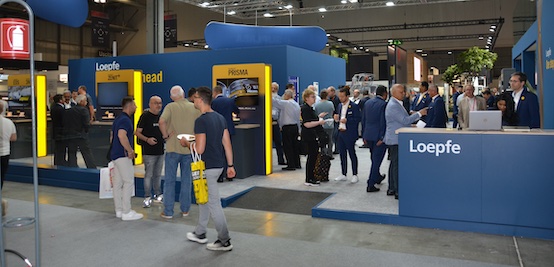
Dr. KVS: Currently, we are very excited about Loepfe’s YarnMaster Prisma. We are in the process of buying a new wet-splicing winding machine and after seeing Prisma at the ITMA exhibition, we have taken the clear view that while we are buying new machinery, we should invest in the very latest sensing technology as well.

More News from LOEPFE BROTHERS LTD.

More News on Spinning

#Recycling / Circular Economy

Efficient recycling of textile PET

At the upcoming Plastics Recycling Show Europe in Amsterdam on May 5–6, BB Engineering will present its portfolio of PET recycling technologies. The German machinery manufacturer will once again focus on textile recycling and melt filtration.

#Spinning

Barmag Huitong Engineering technology makes PA6 direct spinning economically viable

Barmag’s subsidiary Barmag Huitong (Yangzhou) Engineering Co., Ltd. commissioned the first continuous polymerization (CP) plant for polyamide 6 in the Chinese province of Zhejiang.

#Spinning

Rieter Annual General Meeting 2026: Shareholders approve all board proposals

At the Annual General Meeting of Rieter Holding Ltd. held on April 16, 2026, 342 shareholders representing 64.0% of the share capital approved all motions proposed by the Board of Directors. The shareholders adopted the Annual Report as well as the Financial Statements and Consolidated Financial Statements for 2025. They also granted discharge to the members of the Board of Directors and the Group Executive Committee for their activities in the reporting year. In an advisory vote, the 2025 Report on Non-Financial Matters was also approved.

#Techtextil 2026

SAHM Winding Solutions and Vandewiele Automation present integrated automation solution for winding processes

For the first time at the Techtextil trade fair in Frankfurt am Main, Germany (21 - 26 April), SAHM Winding Solutions (Hallo 12.0. / Booth 95) and Vandewiele Automation will be showcasing their combined automation expertise for industrial winding processes. Under the motto “Combining Automation. Maximizing Flow”, the two companies will demonstrate how automated package handling and robot-assisted yarn knotting can be integrated into a continuous production flow.

Latest News

#Associations

BTMA backs global growth while investing in future UK leaders

As one of a number of new initiatives launched this year, the British Textile Machinery Association (BTMA) is launching the UK-India Textile Machinery Coalition. The UK-India Free Trade Agreement, signed in July 2025, has implications that extend across sourcing, competitiveness and long-term trade dynamics, believes BTMA CEO Jason Kent.

#Raw Materials

China projected to increase cotton production, yields, and imports in 2026/27

World cotton production in the 2026/27 season is projected at 25.9 million tonnes, exceeding global consumption of 25.2 million tonnes, according to the May 2026 issue of Cotton This Month. That means both production and consumption are expected to remain close to current season levels, while global cotton trade is projected to decline by 2.7% to approximately 9.6-9.7 million tonnes.

#Raw Materials

ICAC launches Carbon Credits Initiative to deliver new income streams to cotton farmers

The International Cotton Advisory Committee (ICAC) has announced a new initiative designed to unlock additional income streams for cotton farmers through participation in carbon credit markets, linking sustainable production practices directly to financial returns.

#Sustainability

Number of GOTS-certified facilities grow 15% globally as demand for credible sustainability standards continues to strengthen

Global Organic Textile Standard (GOTS) certification continued to grow in 2025, with nearly 18,000 certified facilities worldwide, despite ongoing geopolitical uncertainty and rapidly evolving regulatory requirements across global textile supply chains.

TOP