[pageLogInLogOut]

#Spinning

Ring spinning… as good as it can be

(c) 2019 Uster
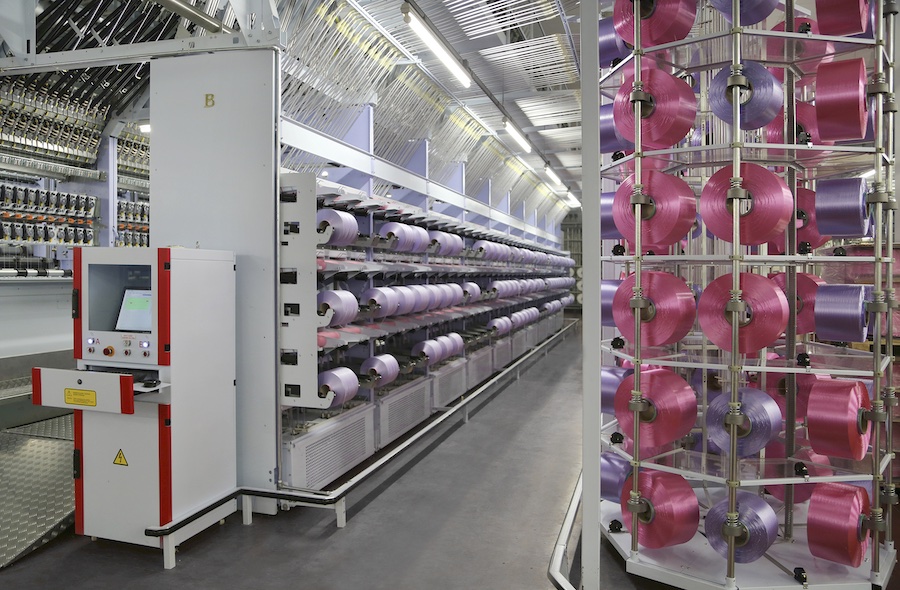
Even in the best ring spinning mills, there is always room for improvements, among a complex range of options management and operatives need to consider for optimized productivity and profit. USTER® SENTINEL provides a fact-based overview of spinning machine performance, pinpointing real opportunities for excellence in the use of technology, components and manpower.

USTER® SENTINEL enables practical optimization for managers and shop floor personnel

“The biggest challenge in my job is to source skilled shop floor operatives and retain them in the long run,” says M. Kannan, General Manager responsible for technical and factory administration at Kikani Exports. The mill – obviously a well-run unit – is located at Dholka in the Indian state of Gujarat. Its installed capacity includes 29,376 ring spinning spindles and 4,320 twisting machine spindles. To improve the manpower situation, the mill prioritizes progressive HR policies and a decent working environment, as well as investing in sophisticated production machinery.

Wide-ranging benefits in ring spinning

“We invested in USTER® SENTINEL ring spinning optimization system with the goal to improve profits but we are delighted that staff also likes the installations,” says Vrajesh Kikani, Managing Director, Kikani Exports. The mill reports a positive impact on profitability resulting from successful optimization of a number of factors, such as waste, ring traveler lifetime, machine speed and energy consumption etc.

Production focuses on 100% cotton combed compact yarns, in the count range Ne 20 to Ne 40, for weaving and knitting end-uses. The mill has been able to reduce waste by half since installing USTER® SENTINEL. Enhanced overall productivity is a consequence of reducing pneumafil waste. USTER® SENTINEL also monitors the productivity of all spindles, feeding back all the required links and information to help yarn producers make optimization decisions at ring spinning based on reliable data.

Among potential problems for all spinners is inconsistent yarn quality characterized by low twist, caused by loose fibers blocking travelers – especially excessively worn ones. Only USTER® SENTINEL can identify spindles malfunctioning in this way, since the issue does not cause end-breaks but still produces yarns which are too weak for high-speed warping and weaving machines. Then unique Off-Standard feature of USTER® SENTINEL safeguards against ‘hidden’ quality risks such as this.

Bobbin build-up report gives practical support

End-break levels are a key indicator of ring spinning performance, and USTER® SENTINEL recognizes this by providing an intuitive bobbin build-up report for every parameter influencing end-breaks. Spinners can then initiate improvements relative to their own mill, taking account of ambient conditions and energy consumption, as well as machine speed, wear of mechanical parts and personnel.

The bobbin build-up report also provides for higher performance, along with optimized cops. Comprehensive analysis of the speed curve – and its impact on quality throughout cop build-up – is a key element of the enhanced way of optimizing ring spinning performance. Cop build-up quality is the new dimension of optimization, enabling managers to select the correct machine settings for higher production yields, while keeping quality at the desired levels. Furthermore, it is now possible to compare ring spinning performance between different machines.
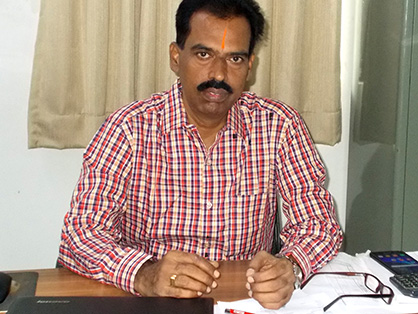
M. Kannan, General Manager Kikani Exports (c) 2019 Uster


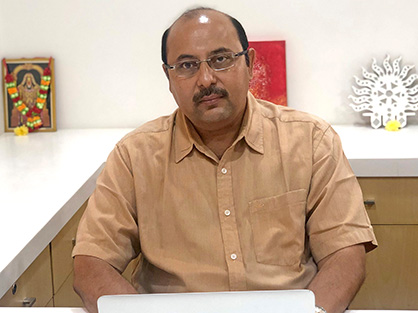
Vrajesh Kikani, Managing Director, Kikani Exports (c) 2019 Uster


“The bobbin-build up report offers us potential savings on travelers, optimizing their lifetime,” says Kannan. He makes use of this facility for ring traveler performance comparisons by using the end-break information to indicate the end of traveler life cycles. The bobbin built-up report allows the mill to monitor traveler wear related to age, checking stable end-break rates through the entire doff duration. This report shows the current state in intervals of five minutes, and an overview provides information about end-breaks per 1,000 spindle-hours.

Fact-based feel-good advantages

Reports give status information at five-minute intervals, including end-breaks and piecings during that period. “Information about piecing speeds helps me to identify each operator’s skill level so that I can optimize the operation schedules and processes. Only by assigning manpower carefully it is possible to maintain ideal working conditions,” says Kannan. USTER® SENTINEL handles complete personnel management, including shift planning and staff assignment for all machines in the system – integrated with monitoring of critical ring spinning parameters. This makes personnel management in ring spinning fact-based and less time-consuming.

Reliable detection of slip, rogue and idle spindles is what makes USTER® SENTINEL popular among shop floor staff. LEDs indicate spindles showing an issue or positions where an end-break occurs, directing personnel quickly to fix the problem. Incidents are also shown on the machine display, providing an overview of spindles where attention is needed. “Operators really enjoy working thanks to USTER® SENTINEL, as it makes it easy to spot an end-break, even when patrolling far away. They enjoy the experience of handling their job efficiently and are under less stress – both of which increase the feel-good factor at work,” says Kannan.

The long view

Optimizing the potential of ring spinning covers many aspects, taking advantage of USTER® SENTINEL and the data it provides: waste saving, compressed air saving, energy saving, cuts saved at winders and increased productivity and quality. Says Kikani: “USTER® SENTINEL works as a ring spinning optimization system, increasing profitability where it matters most…every day.”

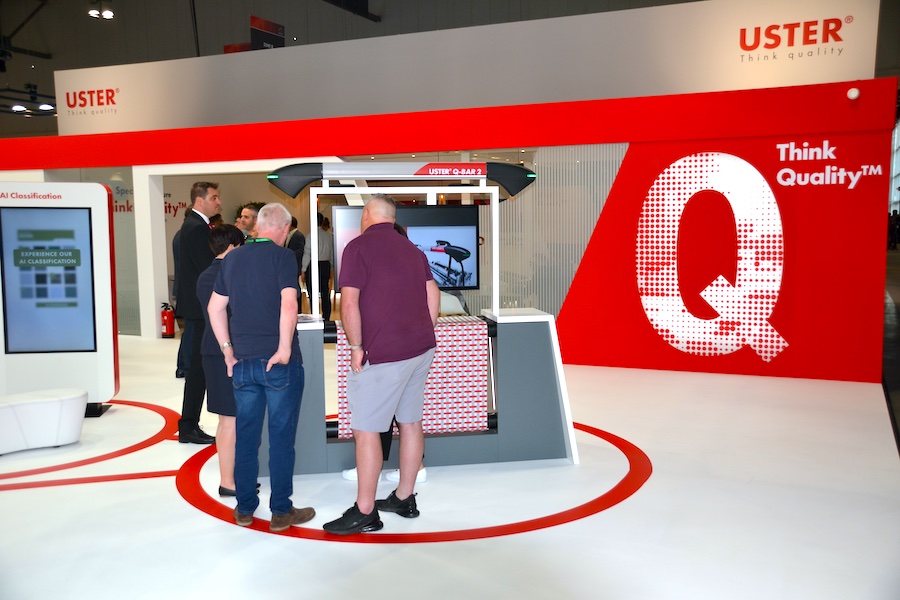
Kikani visited the USTER booth at ITMA 2019 in Barcelona. He was interested to learn about further technologies and how a mill will be managed in future. “I’m amazed about the advantages for ring spinning through connectivity. I can see more profit optimization potential. With USTER® SENTINEL and USTER® QUANTUM already installed, only USTER® QUALITY EXPERT is needed to correlate ring quality data and winding quality data in a single system.”

There is one key performance indicator still not integrated the system but no less important to the company: “Enjoyment. A happy staff supports great performance and is a positive cost factor for the mill in the long run,” says Kannan.
More News from Uster Technologies AG

#Spinning

Measure and control the fiber – optimize yarn quality

Producing consistent yarn quality is an everyday challenge – and a very difficult one. Detailed knowledge and understanding of the fiber raw material is absolutely critical to achieving the best possible quality in the yarn. To help spinners, Uster experts have put together guidelines for avoiding yarn irregularity claims, in a special edition of the Uster News Bulletin.

#ITMA Asia + CITME Singapore 2025

Uster presents novelties at ITMA Asia + CITME 2025

There’s news from Uster Technologies to be announced for the industry’s upcoming event in Singapore. The Uster 360Q universe is growing with new products, solutions and services. Innovation developments can also be recorded in the fields of man-made fiber testing and fabric inspection. Uster innovations address the industry’s trending topics as mill management and process control, optimization of delivered fabric quality and yield.

#Spinning

Uster Technologies marks 150 years of empowering quality excellence

Uster Technologies marks 150 years of excellence – a milestone that reflects continuous adaptation to customer needs and industry change. Over the decades, Uster has evolved from manufacturing quality testing instruments into a trusted partner shaping the future of textile production.

#Recycling / Circular Economy

Challenges of making yarn from recycled fibers

What does it take to spin quality yarn from recycled fibers? Uster Technologies brought textile industry leaders together to discuss the role of technology, data and automation – as well as the current challenges in using recycled raw material. Experts from Rieter, Säntis Textiles, Otto Yarns, and TVU commented on the current situation and looked into the future of spinning in a panel discussion organized at Uster headquarters.

More News on Spinning

#Techtextil 2026

RETECH showcases high-precision godets for high-performance fiber processing at Techtextil 2026

RETECH designs and manufactures godets and draw frames for heated, ambient and cooled processes, enabling precise heat treatment and consistently high yarn quality for a wide range of polymers and applications, with process temperatures of up to 400 °C for high-performance fibers. The company’s key competence lies in exact and stable temperature and speed control, individually adapted to the specific material and process requirements.

#Spinning

Barmag presents the next generation of POY production – energy-efficient and partial-automated

With POY 2.0, Barmag is introducing a completely redesigned spinning concept that takes the production of partially oriented yarn (POY) to a new level in terms of technology and economy. The solution, which was presented to a selected audience of experts for the first time at ITMA Asia + CITME 2025, was met with great enthusiasm: several yarn producers worldwide immediately expressed their interest in a pilot plant.

#Spinning

Development of bio-based polyethylene fibers for textile applications – BB Engineering partici-pates in the bioPEtex research project

In the German research project bioPEtex, BB Engineering (BBE) is working with other partners to develop textiles made from 100% bio-based polyethylene (PE). The aim is to make use of this poly-mer, which has hardly been used in the chemical fiber industry to date. BBE is contributing its spinning and texturizing expertise and developing the texturing process on an industrial scale. The first promising results are already available – opening up new opportu-nities for sustainable and economically attractive applications in the textile industry.

#Techtextil 2026

Saurer sets new standards at Techtextil 2026

When the international textile industry gathers at Techtextil in Frankfurt from April 21 to 24, Saurer is going to present a powerful solution for the growing demands in the field of technical yarns with the TechnoCorder TC2plus.

Latest News

#Raw Materials

Lenzing Group positions bio‑based materials as a strategic asset for Europe’s economic security

The Lenzing Group, a leading supplier of regenerated cellulose fibers for the textile and nonwovens industries, hosted a high‑level roundtable in Brussels to discuss how bio‑based materials can strengthen Europe’s economic security and support the shift toward a fossil‑free future. Organized in cooperation with Euractiv, the event brought together representatives of the European Commission, the UK Mission to the EU, academia, civil society, and industry.

#Natural Fibers

Beyond Cotton: Natural Fibres in the Spotlight at the Bremen Cotton Conference - Branded by DNFI

Climate targets, fragile supply chains, and rising regulatory requirements are fundamentally changing the perspective of the textile industry - the focus is increasingly shifting toward the base material. Not only cotton, but natural fibres are gaining significant importance: they stand out not only because of their outstanding functional properties, but also because they make a valuable contribution to the bioeconomy and responsible product development.

#Textiles & Apparel / Garment

Coats to showcase innovative reinforcement and filler materials for leather goods and accessories at APLF 2026

Coats, a world-class Tier 2 manufacturer and trusted partner for the apparel and footwear industries, will be promoting four advanced materials from its ‘Lifestyle Solutions’ portfolio at APLF 2026 in Hong Kong in March. Each innovation has been specifically engineered to help luxury and premium brands elevate the craft, durability, sustainability and creative expression required in the manufacturing of handbags, purses, and other high-end designer accessories.

#Textiles & Apparel / Garment

Design, innovation and sustainability propel VIATT 2026’s expanding role in ASEAN textile sourcing

At its third edition, the Vietnam International Trade Fair for Apparel, Textiles, and Textile Technologies (VIATT) further reinforced its role as a key sourcing and business platform for ASEAN’s textile industry. The three-day fair welcomed over 17,000 visits from 54 countries and regions, and featured over 460 exhibitors from 21 countries and regions across 18,000 sqm. The 2026 edition was marked by the introduction of new international pavilions and zones, broadening the fair’s sourcing scope across new geographies and product categories. The fringe programme, headlined by the debut Trend Forum, further distinguished VIATT as the region’s most integrated textile trade platform – uniquely spanning the entire value chain.

TOP