[pageLogInLogOut]

#ITMA 2019

USTER® TESTER 6: New features shown at ITMA
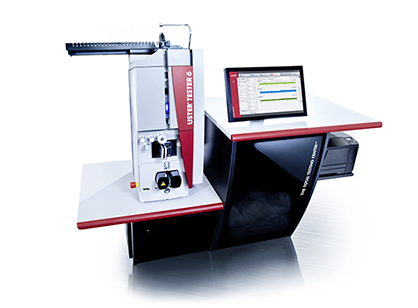
Two examples illustrate this progress ahead of ITMA 2019: the facility for measuring conductive yarn through the Frequent Occurrences (FO) feature of USTER® TESTER 6. And the high-speed assessment of twist and twist variation as part of a single yarn testing routine.
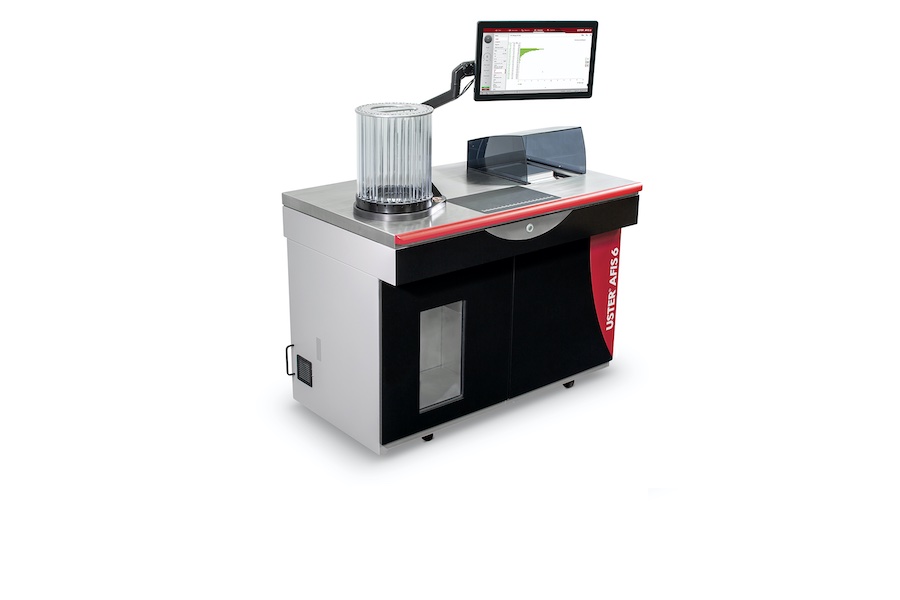
(c) 2019 - USTER® TESTER 6  - the latest edition of the legendary Uster Technologies instrument - still keeps on improving, with innovative solutions to keep pace with latest industry trends
(c) 2019 - USTER® TESTER 6 - the latest edition of the legendary Uster Technologies instrument - still keeps on improving, with innovative solutions to keep pace with latest industry trends


Two examples illustrate this progress ahead of ITMA 2019:

the facility for measuring conductive yarn through the Frequent Occurrences (FO) feature of USTER® TESTER 6. And the high-speed assessment of twist and twist variation as part of a single yarn testing routine.

USTER® TESTER 6 hosts USTER® QUALITY EXPERT, the ultimate digital solution for integrated data-based improvements throughout the spinning mill, connecting and interpreting information from a range of different instruments in the unique Quality Management Platform. For the first time, spinners have access to all the possibilities for total mill optimization.

Sivakumar Narayanan, Executive Vice President Marketing & Business Development says: “We are committed to innovating products, solutions and services which strengthen business sustainability for customers. The new features demonstrate this well. Working with USTER gives customers the peace of mind that can only come from strong partnerships, as well as adding extra impetus to our technological development efforts."

“USTER® TESTER 6 was launched in 2015 and has already been sold in 37 countries. As part of USTER’s continuous improvement strategy, we have collected personal feedback from every USTER® TESTER 6 customer around the world.

This, combined with field reports from our service engineers, led to the latest developments of USTER® TESTER 6.”

Frequent Occurrences:

Quality evaluation for conductive yarns Conductive yarns have become more important in the past decade in fast-growing markets such as protective wear, fitness clothing, and healthcare. Manufacturers of protective clothing in particular need to deal with public institutions and tenders. In this competitive environment, the supplier’s reputation is crucial – and it depends largely on consistent quality to avoid costly claims. Until now, it has not been possible to measure the quality of conductive yarns – a real issue for spinners in this field. USTER stepped up efforts to include measurement of conductive yarn in USTER® TESTER 6. Sensor OM is now used to measure Frequent Occurrences (FO) in these yarns. It analyses neps, thin and thick places, yarn evenness, diameter, density and shape – all vital quality parameters for conductive yarns.


Twist and twist variation – in a single test routine

The manual and often subjective measurement of twist has been regarded by spinners as a task to be avoided if possible. But the twist level in a yarn is a critical quality parameter that affects both the look and performance of the finished product, as well as the productivity level, so spinners would benefit from integrating twist in their normal testing routine. Now, this important parameter can be measured as a simple by-product of yarn testing for 100% cotton ring and compact yarn – giving producers information about all relevant parameters as part of one laboratory procedure. USTER® TESTER 6 is the only yarn testing instrument on the market with the option to obtain Twist and Twist variation (Tu) data during yarn testing, at a speed of 800 m/min. This information enables spinning mills to react quickly to identify performance gaps such as low-speed spindles. Developed by experts in the technology department of USTER, these innovations extend the capabilities of USTER® TESTER 6 still further. 

Correlation with USTER® STATISTICS

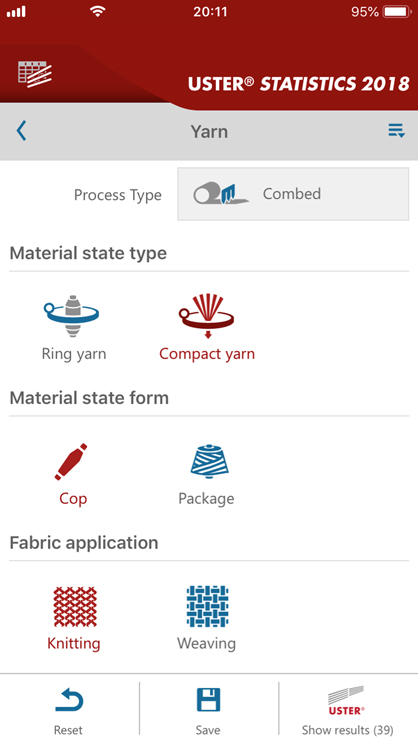
Measurement data from USTER® TESTER 6 correlates perfectly with USTER® STATISTICS global benchmarks, essential for every yarn producer or trader. Available in an app for iOS, Android and Windows 10 since October 2018 – it is already one of the most successful apps in textiles. Now the new app version 1.4 is in app stores – with an enlarged database of the most popular yarn styles, 100% cotton, compact yarns for knitting applications, extended FAQs and enhanced readability.
(c) 2019 Uster Technologies


More News from Uster Technologies AG

#Spinning

Measure and control the fiber – optimize yarn quality

Producing consistent yarn quality is an everyday challenge – and a very difficult one. Detailed knowledge and understanding of the fiber raw material is absolutely critical to achieving the best possible quality in the yarn. To help spinners, Uster experts have put together guidelines for avoiding yarn irregularity claims, in a special edition of the Uster News Bulletin.

#ITMA Asia + CITME Singapore 2025

Uster presents novelties at ITMA Asia + CITME 2025

There’s news from Uster Technologies to be announced for the industry’s upcoming event in Singapore. The Uster 360Q universe is growing with new products, solutions and services. Innovation developments can also be recorded in the fields of man-made fiber testing and fabric inspection. Uster innovations address the industry’s trending topics as mill management and process control, optimization of delivered fabric quality and yield.

#Spinning

Uster Technologies marks 150 years of empowering quality excellence

Uster Technologies marks 150 years of excellence – a milestone that reflects continuous adaptation to customer needs and industry change. Over the decades, Uster has evolved from manufacturing quality testing instruments into a trusted partner shaping the future of textile production.

#Recycling / Circular Economy

Challenges of making yarn from recycled fibers

What does it take to spin quality yarn from recycled fibers? Uster Technologies brought textile industry leaders together to discuss the role of technology, data and automation – as well as the current challenges in using recycled raw material. Experts from Rieter, Säntis Textiles, Otto Yarns, and TVU commented on the current situation and looked into the future of spinning in a panel discussion organized at Uster headquarters.

More News on ITMA 2019

Latest News

#Techtextil 2026

Techtextil 2026: KARL MAYER impresses as an innovative sector partner

KARL MAYER looks back with satisfaction on its participation in Techtextil 2026. From April 21 to 24, the international industry leader used the trade show in Frankfurt to meet with numerous key customers at its booth and, at the same time, establish many new contacts. Most visitors came from Germany, followed by major markets such as Poland, the United Kingdom, Turkey, France, and Portugal.

#Associations

BTMA backs global growth while investing in future UK leaders

As one of a number of new initiatives launched this year, the British Textile Machinery Association (BTMA) is launching the UK-India Textile Machinery Coalition. The UK-India Free Trade Agreement, signed in July 2025, has implications that extend across sourcing, competitiveness and long-term trade dynamics, believes BTMA CEO Jason Kent.

#Raw Materials

China projected to increase cotton production, yields, and imports in 2026/27

World cotton production in the 2026/27 season is projected at 25.9 million tonnes, exceeding global consumption of 25.2 million tonnes, according to the May 2026 issue of Cotton This Month. That means both production and consumption are expected to remain close to current season levels, while global cotton trade is projected to decline by 2.7% to approximately 9.6-9.7 million tonnes.

#Raw Materials

ICAC launches Carbon Credits Initiative to deliver new income streams to cotton farmers

The International Cotton Advisory Committee (ICAC) has announced a new initiative designed to unlock additional income streams for cotton farmers through participation in carbon credit markets, linking sustainable production practices directly to financial returns.

TOP