[pageLogInLogOut]

#Software

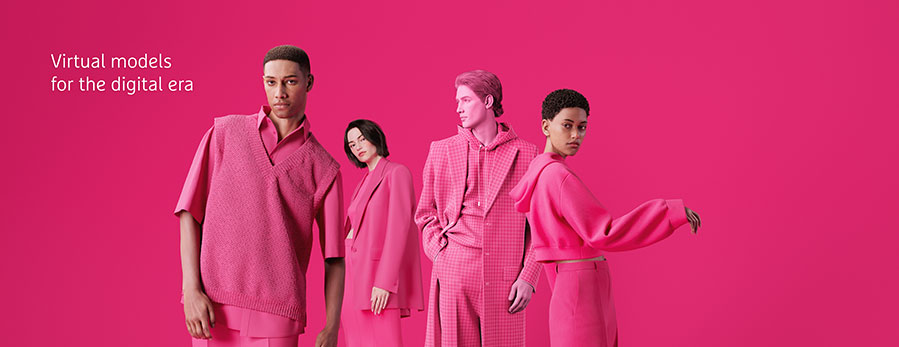
New photo-realistic virtual models enable end-to-end digital workflow on DMIx
© 2023 DMIx®
There has never been more momentum behind the call for sustainability in the fashion industry, and digitalization is one of the key facilitators in this transformation.

ColorDigital GmbH, with its digital platform DMIx®, is leading this change with the launch of the DMIx StudioAvatars and DMIx 3D-Studio in partnership with verce®, bringing together a high-quality end-to-end virtual model workflow for fashion brands including a virtual 3D photo studio.

The state-of-the-art digital humans within the new DMIx StudioAvatars have a photorealistic quality never seen before and can be customized and individualized to a brand’s preference, enabling brands to build up their own completely unique digital model team and take their digital workflow right up to sales and marketing. The DMIx StudioAvatars is part of Color Digital’s commitment to improving diversity and representation in the fashion industry.

"The development of virtual humans is our passion, but it is only one building block of a new virtual parallel world we are creating with end-to-end digitalization.” emphasizes Arndt Johannes, Founder and Owner of verce GmbH, “The virtual models are created with high attention to detail and high standards of design and aesthetics."

These avatars can be created either fully digitally or even based on the scan of a human model, unlocking an empowering new way for talent to market and license their digital avatar.

But it does not stop here, with the new 3D-Studio in the DMIx ecosystem, brands can now exchange photo-realistic materials, real colors and avatars in real-time without going back to CAD. Here you can combine objects, materials, and avatars in realistic studio environments where all parameters are controlled. Chose the perfect focal length, angle, lights, and background and let the DMIx render pipeline do the work for you.


This groundbreaking combination of digital twin technology and master data provides an end-product that can hardly be distinguished from real humans or real garments and is fully transparent: the final image is connected to all material and product data that can be accessed via DMIx for PLM, production, sales and customer information.

“Until now, an end-to-end 3D workflow with virtual models has not been able to meet marketing demands and substitute human models photographs on e-commerce systems,” says Gerd Willschütz, CEO and Co-Founder of ColorDigital GmbH. “With the DMIx 3D-Studio, we are not only making a complex workflow easy – we are also laying the groundwork for an automated pipeline to create e-commerce ready images for various online retailers. In combination with our hyper-realistic virtual humans, we provide the first end-to-end solution bringing together digital product development and consumer driven marketing demands.”

This end-to-end digitalization of workflows will have a major impact on the fashion industry. By reducing the need for prototypes, physical samples, factoring in travelling and the production of shoots, brands can save costs and time as well as reducing environmental impact.

http://www.dmix.info/models

VIDEO - DMIx Virtual Models Workflow

https://vimeo.com/791699835/2a08e7fb94

More News from TEXDATA International

#Digital Printing

From a bedroom startup to 3,000 designs: How Lonely Kids Club built its business with DTG printing

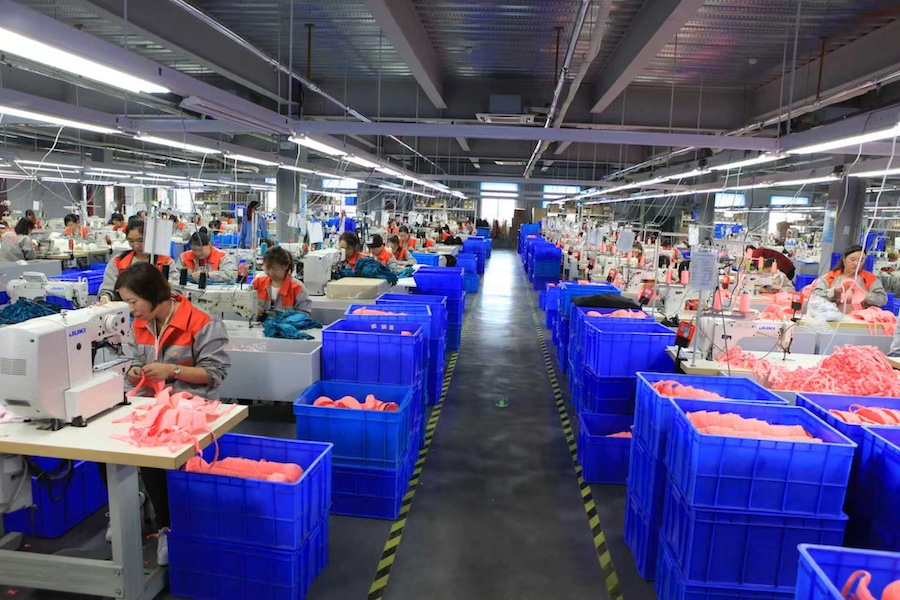
Founded in Sydney in 2011, independent clothing label Lonely Kids Club has grown from a bedroom startup into a business offering around 3,000 graphic T-shirt designs. With its own production studio, direct-to-garment printing and a demand-driven manufacturing model, the company demonstrates how smaller apparel brands can combine creative independence with flexible production – while navigating the everyday challenges of quality control, workflow efficiency and sustainability.

#India ITME 2026

India’s textile industry: Current position, growth targets and industrial development

With ambitious export targets, major investments in manufacturing infrastructure and new international trade agreements, India is pursuing a comprehensive development strategy for its textile and apparel industry. An overview of the industry’s current position, government initiatives, progress achieved and challenges ahead.

#Weaving

“A complex design is only useful if the machine can reproduce it consistently”

Andreas Schnabel, Head of R&D for Technical Weaving Systems at Stäubli, discusses how 3D weaving can create textile reinforcements tailored to the loads within a composite component, where near-net-shape weaving can reduce processing steps and material waste, and what it takes to produce complex structures reliably and economically. He also explains how manufacturers can adapt Stäubli’s modular TF weaving platforms to new applications and how the company’s centre of excellence in Bayreuth supports the transition from research to industrial production.

#India ITME 2026

India ITME 2026: Textile technology meets India's investment ambitions

With ambitious growth targets, government incentive programmes and industrial development initiatives already underway, India is preparing for the next stage of its textile transformation. Against this backdrop, the 12th India ITME, taking place in Greater Noida from 4 to 9 December 2026, arrives at a particularly important moment for machinery manufacturers and textile producers alike.

More News on Software

#Industry 4.0 / Digitalization

Coats Digital wins SaaS award for AI in apparel manufacturing

Coats Digital has been named Best Company in AI-Powered Fashion Technology at the 2026 Best in SaaS Awards. The company’s AI applications cover garment costing, the analysis of operational data and the use of computer vision to study how tasks are performed on the factory floor.

#Industry 4.0 / Digitalization

White House reduces production planning time by up to 80% with Coats Digital’s FastReactPlan

Indian garment manufacturer White House has reduced its production planning cycle by 60–80% following the implementation of Coats Digital’s FastReactPlan software. The integrated planning solution provides greater visibility across production, capacity and material requirements while supporting faster decision-making and improved delivery performance.

#Software

UNIFEQ Europe adopts Coats Digital’s GSDCost and AI-powered GSDQuest to support rapid growth

Coats Digital is pleased to announce that rapidly growing Polish defence and uniform manufacturer UNIFEQ Europe Sp. z o.o. has invested in its award-winning GSDCost solution together with its AI-powered GSDQuest platform to establish a consistent approach to garment costing, improve sewing-floor productivity and accelerate labour costing for tenders and new products.

#Industry 4.0 / Digitalization

Orient Rongheng connects production planning across China and Bangladesh with FastReactPlan

Chinese apparel manufacturer Orient Rongheng is implementing Coats Digital’s FastReactPlan to digitalize production planning across its manufacturing operations in China and Bangladesh. The project aims to connect capacity, materials and order planning across multiple factories while integrating these processes with the company’s existing ERP and Manufacturing Execution System (MES).

Latest News

#Associations

Christoph René Holler to succeed Uwe Mazura as managing director of textil+mode

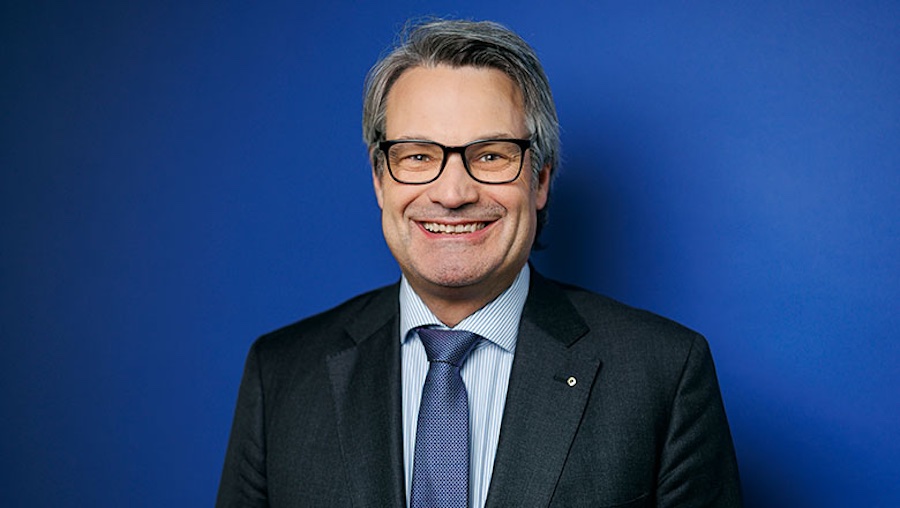
Christoph René Holler will take over as managing director of textil+mode, the German textile and fashion industry confederation, on 1 January 2027. He succeeds Uwe Mazura, who has led the association for 13 years and will remain in charge of collective bargaining policy through the next round of negotiations before retiring.

#Heimtextil 2027

Heimtextil and The Florentin showcase the role of textiles in hotel design

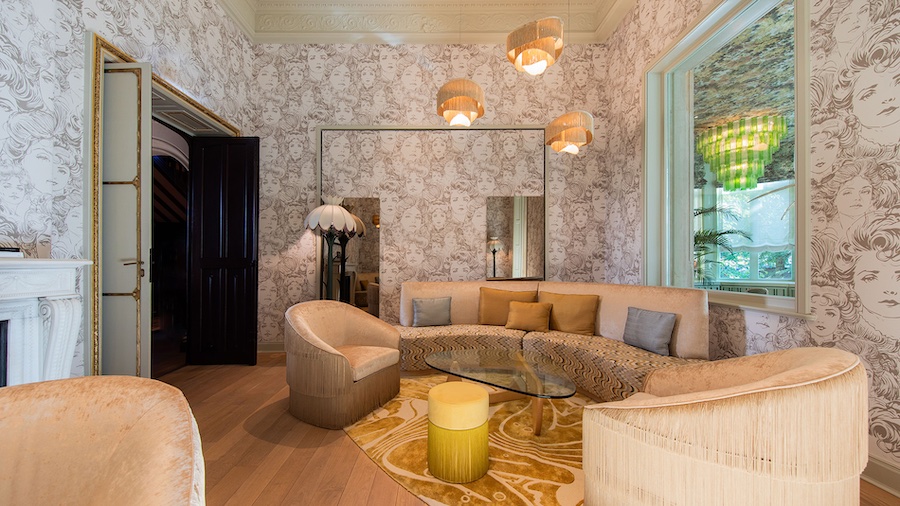
Heimtextil has partnered with Frankfurt hotel The Florentin by Althoff Collection for its new Interior.Architecture.Hospitality campaign. The collaboration will give architects, interior designers and other contract-sector professionals a closer look at how textiles were used in the hotel. The two studios behind the project will discuss their work at Heimtextil on 14 January 2027 in Hall 4.1.

#EU Textile Strategy

EU Commission proposes advanced materials agenda with targets for 2035

The European Commission has proposed an Advanced Materials for Europe agenda to accelerate the development, production and adoption of safer and more sustainable advanced materials. The proposal sets three benchmarks for 2035 and calls for closer coordination among EU member states to help move new materials from the laboratory into industrial production.

#Research & Development

Empa develops liquid-core fibre for insecticide-treated mosquito nets

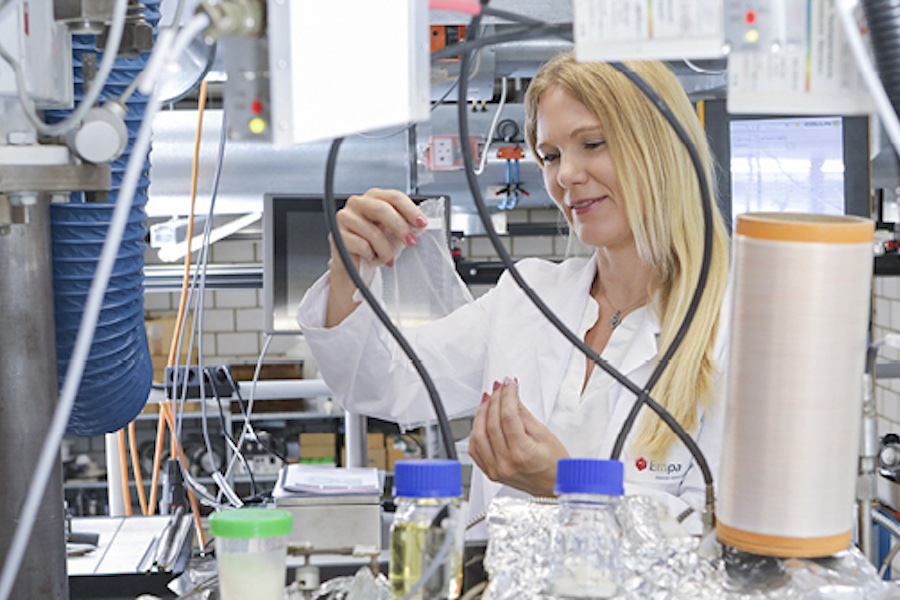
Empa researchers have developed a liquid-core fibre for mosquito nets that can incorporate insecticides unsuitable for conventional melt spinning. The fibre gradually releases the active ingredient through a polymer sheath. The team developed and tested the yarn over three years in the Innosuisse project MalCoFil with Swiss industry partners Vestergaard and Monosuisse.

TOP