[pageLogInLogOut]

#Research & Development

Carbon-ceramic hybrid fibre proves its worth – NRW Minister for Science Mona Neubaur congratulates ITA start-up TERNAfil
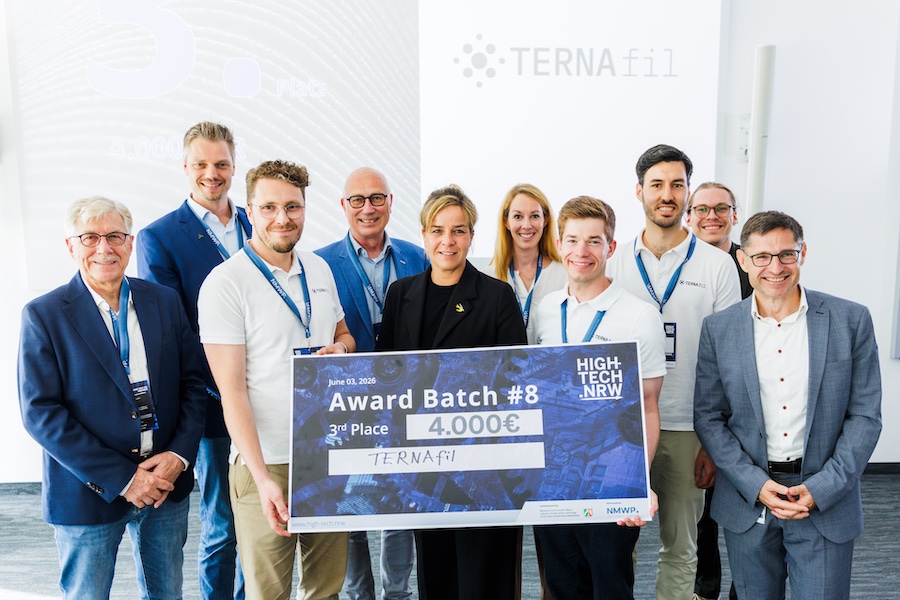
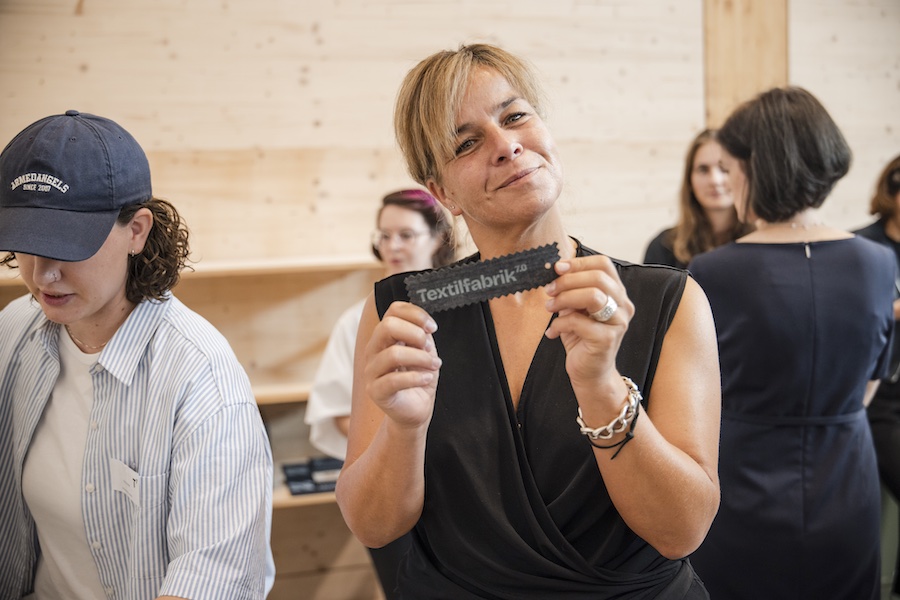
Mona Neubaur, Minister for Science in North Rhine-Westphalia, TÜV NORD and the judging panel congratulated the TERNAfil team© www.Eventfotograf.in
MAXCarbon technology, a novel carbon-ceramic hybrid fibre developed by ITA spin-off TERNAfil, secured third place at the HIGH-TECH.NRW Demo Day on the TÜV NORD campus in Essen. The technology combines the strength of carbon fibres with the temperature and corrosion resistance of ceramic materials. Mona Neubaur, Minister for Science in North Rhine-Westphalia, congratulated the team on their success and on winning prize money of 4,000 euros.

MaxCarbon technology stems from several years of research carried out by the founding team at RWTH Aachen University and is currently being further developed as part of an EXIST research transfer programme to achieve market readiness for applications in aerospace, energy and security technology.

With this award, TERNAfil continues its successful journey from research to spin-off and underlines the potential of MAXCarbon technology.

Background:

The HIGH-TECH.NRW Demo Day 2026 – Event Details took place on 3 June 2026 at the TÜV NORD campus in Essen, Germany, and brought together ten deep tech start-ups with representatives from industry, investors, academia and politics.


More News from Institut für Textiltechnik of RWTH Aachen University (ITA)

#Research & Development

2026 general meeting of the Friends and Supporters of RWTH Aachen at ITA

The Friends and Supporters of RWTH Aachen e. V. (proRWTH) looked back on a successful year of support at their 2026 general meeting. The meeting took place at Institut für Textiltechnik (ITA) of RWTH Aachen and was combined with a joint session of the Executive Board and the Administrative Board. Before the general meeting began, participants were given a guided tour of ITA, providing them with fascinating insights into current research and development topics in textile engineering.

#Research & Development

TERNAfil wins first place at PitchMiUp Night 2026 in Minden

The RWTH spin-off TERNAfil has developed MAXCarbon, a new high-performance hybrid fibre that combines the mechanical performance of carbon with the temperature and corrosion resistance of ceramic materials. For this development, TERNAfil was awarded first prize at the PitchMiUp Night in Minden on 21 May 2026.

#Research & Development

TCLF: Resilient value chains in times of crises

The textiles, clothing, leather and footwear (TCLF) industry was at the centre of the webinar “Resilient value chains in times of crises”, which took place on 28 April 2026. Global supply chains continue to face increasing pressure, raw material dependencies are growing and economic uncertainties are affecting the entire sector.

#Research & Development

Elastic yarns to become more recyclable and environmentally friendly in future

On 29 April 2026, ITA student Tobias Dickmeiß was awarded a sponsorship prize by the Wilhelm Lorch-Stiftung for his innovative approach, to replacing conventional elastane with elastic yarns made from thermoplastic copolyester elastomers (TPC). Thanks to their thermoplastic nature and compatibility with typical polyesters used in the textile industry, elastic TPC yarns offer improved recyclability. Furthermore, the use of the melt-spinning process in yarn production eliminates the need for solvents that are harmful to the environment and human health.

More News on Research & Development

#Research & Development

Geotextiles made from recycled materials: GREEN leads the way into the industry

For the industry, recycled materials are creating new opportunities in geotextile production. In the GREEN project, the Fraunhofer Cluster of Excellence Circular Plastics Economy CCPE demonstrates that recycled polypro-pylene (PP), polyethylene terephthalate (PET), and high-density polyeth-ylene (HDPE) can be processed into nonwovens, fibers, and membranes that meet industrial requirements. This creates opportunities for use in existing production lines and new value chains in the geotextile market.

#Research & Development

GenuTrace client advisory: Is your cotton supply chain UFLPA ready?

U.S. Customs and Border Protection has released updated operational guidance (CBP Publication No. 5560-0526) expanding its forced labor enforcement framework. The guidance supersedes the original 2022 UFLPA Operational Guidance and now covers all forced labor enforcement authorities — UFLPA, CAATSA, and WROs/Findings — in a single unified document. For cotton importers, the enforcement posture has not softened. It has become more structured, more documented, and more demanding. Learn more about UFLPA.

#Research & Development

“Production is a product”

From technical textiles and AI-driven robotics to the limitations of textile circularity: Professor Dr Thomas Gries looks back on more than two decades of development at ITA Aachen. In the interview, he explains why production technology remains a decisive success factor, discusses international collaborations and innovation ecosystems, and shares his views on the transformation of production landscapes and the challenges facing an increasingly regulated industry.

#Research & Development

Textile climate control system in workwear – exhibition at the 2026 SME Innovation Day!

Conventional protective workwear often reaches its limits during strenuous physical activity. In particular, the transport of sweat and excess body heat poses a problem. The German Institutes of Textile and Fiber Research (DITF) conducted research on flow-optimized, air-conducting textile structures that enable targeted climate control directly on the body. These structures can be integrated straight into protective work garments. The textile climate control system supports the body’s natural thermoregulation. This contributes to improved workplace safety and comfort.

Latest News

#Spinning

Ibrahim Fibres and Trützschler: A strong partnership enters its next phase with the TC 30Si

For more than two decades, Ibrahim Fibres and Trützschler have grown side by side, driven by a shared ambition to continuously improve spinning performance, strengthen technology leadership and set new benchmarks in the textile industry. Today, Ibrahim Fibres is a leading yarn and polyester staple fiber manufacturer in Pakistan. The company operates the largest number of Trützschler cards in the country, with more than 200 machines running across its mills in Faisalabad, and plays an important role in one of Asia’s largest textile industries.

#Digital Printing

USColorworks expands digital platform with Kornit Atlas MATRIX and Atlas MAX PLUS solutions

Kornit Digital Ltd. (NASDAQ: KRNT), a global pioneer in sustainable, on-demand digital fashion and textile production, today announced that USColorworks, a North Carolina-based apparel decoration and fulfillment company specializing in custom and on-demand printing for retail and promotional markets, has expanded its Kornit digital production platform with the addition of Atlas MATRIX and Atlas MAX PLUS systems to deliver high-quality, on-demand apparel across cotton, blended fabrics and polyester.

#Functional Fabrics

CovationBio introduces two new bio-based innovations at Functional Fabric Fair New York

Covation Biomaterials LLC (“CovationBio®”) is showcasing its two new bio-based innovations, Xatryx® and Sorona® elasterell-p fiber, at this year’s Functional Fabric Fair in New York City, July 7–9, 2026. Attendees can visit CovationBio at Booth #404 to explore this next generation of bio-based performance materials.

#Nonwoven machines

A Penteadora starts up ANDRITZ textile recycling and needlepunch nonwoven lines in Portugal

A Penteadora SA has successfully started up a complete mechanical textile recycling line and a needlepunch nonwoven line supplied by ANDRITZ at its production site in Unhais da Serra, Portugal. This investment enables A Penteadora to expand its industrial capabilities and develop a new generation of solutions based on pre- and post-consumer recycled textiles. The input materials originate from its own production waste and other textile waste streams. Both lines are fully operational, and the first products are expected to reach the market in July.

TOP