[pageLogInLogOut]

#Research & Development

An eco-friendly alternative to fluorocarbon treatments

New dispersions are kinder to the environment
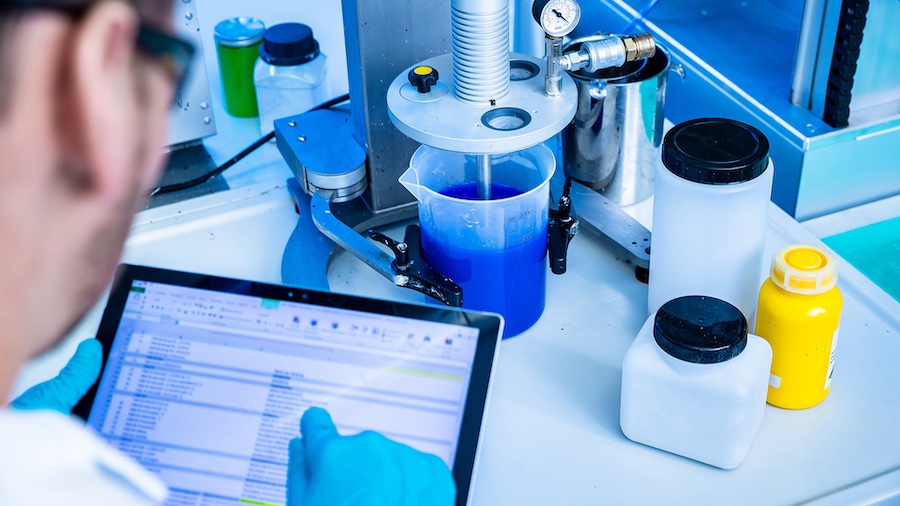
Formulation (Copyright: STFI/Dirk Hanus) © 2026
Protective and outdoor clothing derives its durable water-, dirt- and oil- repellent properties from the application of fluorinated polymers or per- and polyfluorinated low-molecular- weight chemicals (PFCs). The beneficial properties thus achieved on textiles are offset by environmental and human health risks. For manufacturers of sports, medical, protective and automotive textiles, researchers at the Sächsisches Textilforschungsinstitut e.V. and the Leibniz Institute for Polymer Research have developed liquid-applied dispersions and solutions to functionalise textiles without the use of fluorine.

The outdoor textiles tested exhibited water-repellent and, in particular, highly oil-repellent properties. The new dispersions and solutions can help reduce the burden on ecosystems.

Fluorocarbons impart an exceptional property to textiles such as fire-fighter’s clothing, weatherproof jackets or surgical gowns: they repel water, oil and dirt, meaning they are both hydrophobic and oleophobic. Due to their extreme persistence and toxicity to humans and the environment, their continued use must be called into question. Per- and polyfluoroalkyl substances (PFAS), also known as ‘forever chemicals’, are virtually non-biodegradable and are increasingly accumulating in the environment. For this reason, their use is regulated by the European REACH Regulation, and the aim is to impose severe restrictions on their use. The textile industry is also significantly affected by this. Until now, it has not been possible to develop high- performance fluorine-free products, particularly those with oil-repellent properties. In the IGF project ‘C6C8 turn green’, textile researchers from the STFI in Chemnitz and chemists at the Leibniz Institute for Polymer Research in Dresden have now developed an environmentally friendly alternative to fluorocarbon finishing.

The project focused on the use of POSS (polyhedral oligomeric silsesquioxanes) and TRIS compounds ([Tris(trimethylsiloxy)silyl]) to achieve water and oil-repellent effect. Copolymer systems consisting of tert- butyl methacrylate (TBMA) and methacrylate-functionalised POSS (POS-SMA) and TRIS (TRISMA) were specifically synthesised. For the textile finishing, aqueous dispersions of the copolymer systems were produced using mini-emulsion polymerisation. Functionalisation of the textiles began with the application of an adhesion-promoting polyamine finish comprising cross-linking agent-containing aqueous polyvinylamine or chitosan formulations. In a second process step, the textiles were functionalised with the copolymer dispersion. Application was carried out in each case using foulards, followed by thermal drying and cross-linking.

To assess the effectiveness, the functionalised cotton fabrics were examined before and after defined washing cycles at a washing temperature of 60 °C, followed by tumble drying at 70 °C. The samples achieved a contact angle against water of up to 129° before and 112° after five wash and dry cycles. With contact angles against ethylene glycol of up to 123° (before washing) and 106° (after washing), an oleophobic effect was demonstrated.

The fundamental benefit of a PFC-free finish lies in reducing the burden on ecosystems. By creating an environmentally friendly alternative, the release of pollutants into the air, water and soil can be reduced. This provides textile manufacturers with a high-performance alternative.
More News from Sächsisches Textilforschungsinstitut e.V. (STFI)

#INDEX 2026

STFI highlights textile circular economy and alternative fibres at INDEX™ 2026

From 19 to 22 May 2026, INDEX will invite visitors to Lake Geneva for the world's leading nonwovens trade fair. The Centre of Excellence in Nonwovens at the Sächsisches Textilforschung- sinstitut e.V. (STFI) will be in attendance to present the latest developments in nonwovens research. In the field of the textile circular economy, the STFI will present acoustically effective nonwovens made from chemical recycling residues. The range also includes innovations aimed at replacing conventional raw materials, such as the biobased and biodegradable polymer polybutylene succinate (PBS) and Kendyr as an alternative to cotton.

#Research & Development

Regional hemp bast for lightweight construction profiles

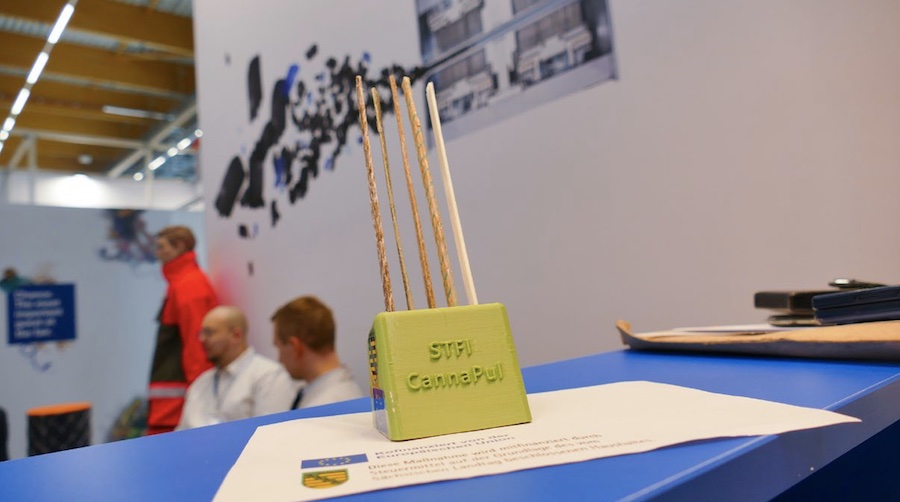
The cultivation of fibre hemp for the production of ropes and clothing has a long tradition in Saxony. Due to its excellent fibre properties, it is also suitable as a renewable raw material for reinforcement in fibre composites. At the STFI and IWU in Chemnitz, the CannaPul project is cur- rently investigating how a regional value chain for hemp-based lightweight construction profiles can be established. To this end, the technical processing of hemp fibres into continuous fibre strands and their embedding in a suitable bio-based matrix are being investigated.

#Techtextil 2026

STFI presents concepts for the textile circular economy and solutions for a healthy and safe life at Techtextil

Sächsisches Textilforschungsinstitut e.V. (STFI) has been supporting companies in developing marketable innovations for over 30 years. With a clear focus on sustainability, the environment, health and protection, the STFI offers future-oriented research, textile testing for tailor-made solutions and certification of per- sonal protective equipment. At Techtextil 2026, the institute will present ideas for the textile circular econ- omy and showcase solutions for healthy and safe living.

#Composites

STFI at JEC

The Sächsisches Textilforschungsinstitut e.V. (STFI) will present composites for aviation made from recycled carbon fibres and natural fibres, as well as printed lightweight elements for surface heating in electric vehicles at JEC World in Paris.

More News on Research & Development

#Research & Development

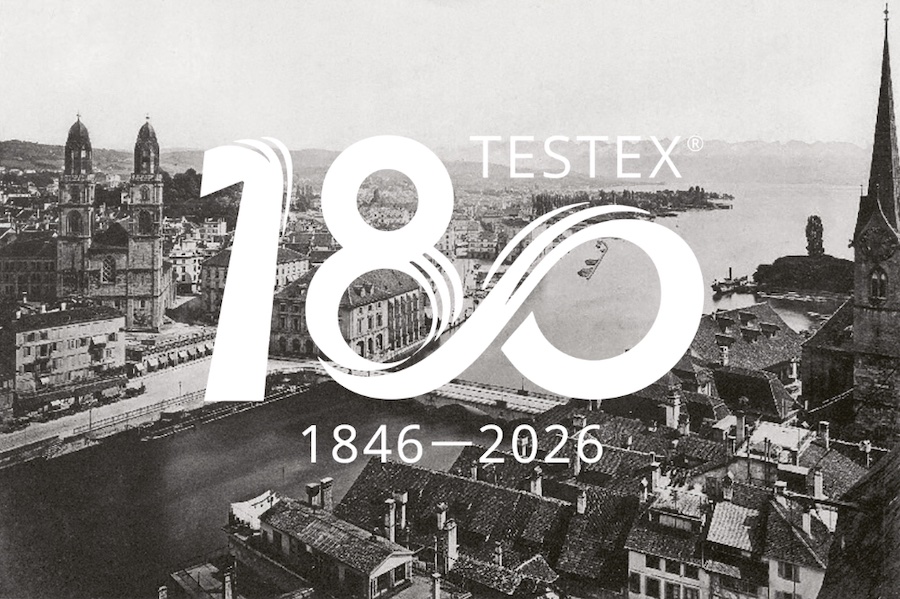
180 years of TESTEX: From Zurich silk testing to global certification

For 180 years, TESTEX has developed alongside the textile industry while maintaining the same underlying purpose: creating trust through independent and reliable measurement. Founded in Zurich in 1846 as the Zurich Silk Conditioning Institute, TESTEX has grown from a local institution serving the silk trade into an international Swiss testing and certification institute for textiles and leather.

#Recycling / Circular Economy

Moving Advanced Recycling from Innovation to Implementation

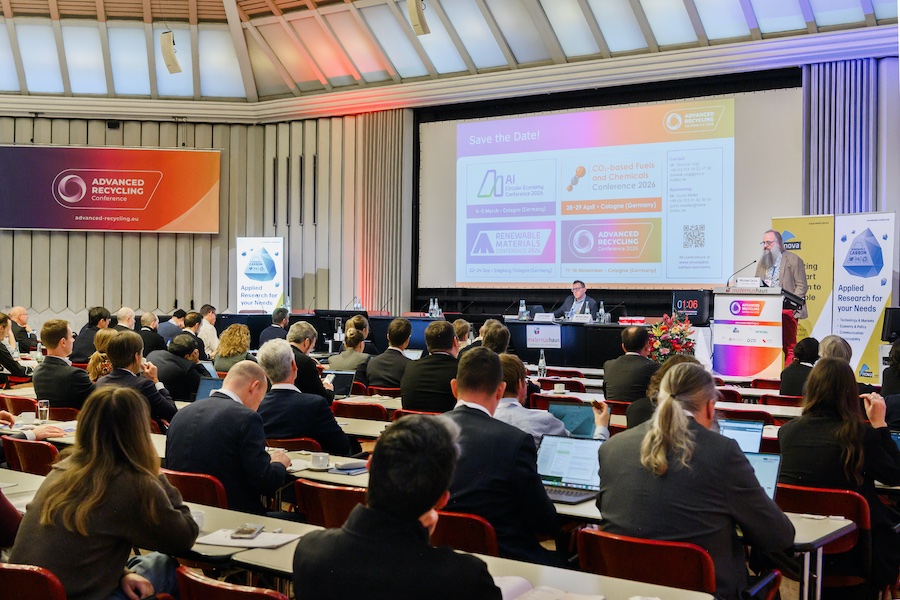
The Advanced Recycling Conference 2026 explores technologies, markets, financing and scale-up of innovative recycling solutions for waste streams including mixed plastic waste, textiles and PVC. Europe’s chemical and materials sector faces growing pressure to close carbon loops, strengthen raw-material safety and resilience and meet increasingly ambitious EU recycling targets. Against this backdrop, the Advanced Recycling Conference (ARC) will bring together industry leaders, technology providers, researchers, innovators and policy-makers on 17–18 November 2026 in Cologne, Germany.

#Research & Development

Reducing development times for technical textiles by accelerated thermo-oxidative aging in a high-pressure autoclave

Synthetic polymers used in technical textiles can be effectively protected against degradation caused by heat, oxygen, and water through the use of stabilizer systems. This enables service lives of several decades, extending to more than 50 years. As the use of durable technical textiles continues to grow, so does the demand for reliable methods to predict their service life within economically feasible testing periods. For the first time the German Institutes of Textile and Fiber Research Denkendorf (DITF) developed methods for robust service life prediction for textiles in an IGF research project.

Latest News

#ITMA Asia + CITME 2026

TMAS members drive textile technology innovation ahead of ITMA Asia

As the global textile machinery industry prepares to meet at ITMA ASIA in Shanghai this November, Swedish textile technology companies are responding to a rapidly changing market with investment, innovation and new solutions.

#Associations

VDMA Textile Machinery with new Executive Board

At the general meeting of VDMA Textile Machinery held in Hanover at the end of September, Dr Janpeter Horn, Managing Director of A. Herzog Maschinenfabrik, was re-elected as Chairman of the trade association. Regina Brückner, managing partner of Brückner Trockentechnik, and Verena Thies, managing partner of Thies Textilmaschinen, will once again serve as vice-chairs for the next four years.

#Spinning

Rieter appoints Daniel Lippuner as new CEO as Thomas Oetterli steps down

Thomas Oetterli has decided to step down from his function as CEO, effective October 31, 2026, and hand over the Chairmanship of the Board of Directors. “After the successful implementation of the Next Level performance program, the structural measures initiated to consolidate the sites and the acquisition of Barmag, the time has come to hand over responsibility to new hands,” explains Thomas Oetterli.

#Raw Materials

Kraig Labs ships first commercial spider silk yarn

Kraig Biocraft Laboratories, Inc. (OTCQB: KBLB) (“the Company”, “Kraig Labs”, or “Kraig’s”), a world leader in spider silk technology*, today announced the shipment of its first commercial order of recombinant spider silk yarn. The custom-engineered yarn was produced to fulfill a purchase commitment from a globally recognized performance sports brand and is slated for development into a first-of-its-kind performance textile.

TOP