[pageLogInLogOut]

#Research & Development

The region of renewable raw materials: Central German Alliance for Bioplastics
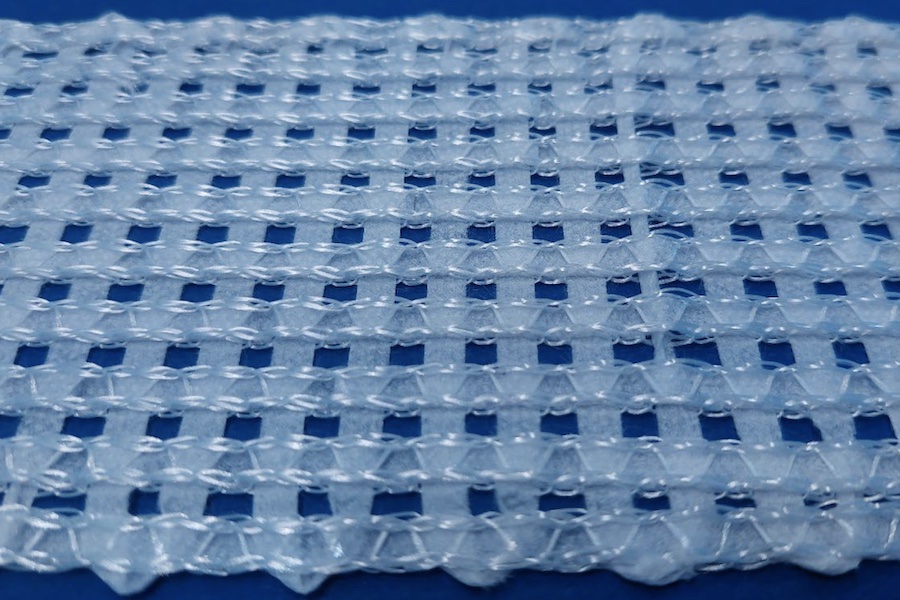
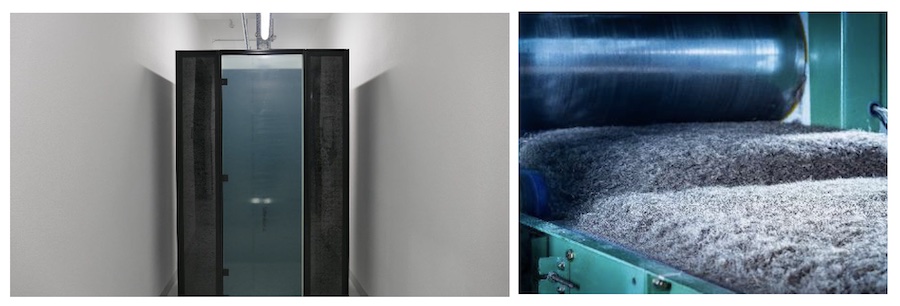
Polybutylene succinate (PBS) film tape © 2025 STFI
The development of sustainable plastic solutions is rapidly gaining importance in light of global environ- mental pollution, dwindling fossil resources and ambitious climate protection targets. As part of the re- gional alliance RUBIO, which brings together 18 partners from central Germany and the Berlin-Branden- burg area, the bio-based and biodegradable plastic polybutylene succinate (PBS) was comprehensively investigated, starting with the raw material, through the manufacturing process, to industrial application.

The aim was to evaluate the potential of PBS as an environmentally friendly alternative to polyethylene and to create the technological basis for new sustainable value chains. As a partner in the alliance, STFI was able to demonstrate that the bioplastic PBS is suitable for textile processing using the example of a net for straw bales.

The starting point: bioplastics sought as a substitute for PE

Increasing reports of macro and microplastics everywhere on earth, the finite nature of fossil re-sources, EU climate protection targets, and the call for CO2 reduction compel all stakeholders, especially the plas- tics industry, to act promptly. Bio-based and simultaneously biodegradable plastics ap-pear to be valua- ble raw materials for many applications, ranging from the packaging industry to the textile sector and agriculture. The aim of this project was comprehensive investigation of polybutylene succinate (PBS) from raw material to its industrial applicability. In order to qualify the biopolymer as a substitute for polyethylene (PE), its material properties were tested and evaluated with regard to their suitability for a wide range of applications.

The textile processing of the bioplastic PBS

During project work, STFI main task was to explore opportunities and limits of technological pro-cessing of PBS materials (resins, film, nonwoven fabric, ribbons) into textile end products. Investiga-tions were carried out on processing behavior of resins to nonwoven fabrics, followed by cutting processes into narrow ribbons, as well as studies on cutting and stretching PBS films and resins into ribbons. Subse- quently, these ribbons were used to produce surfaces on knitting and weaving ma-chines. As a result, nonwoven fabrics, ribbons, and textile structures are available, which will be fur-ther optimized in subse- quent projects. It has been possible to develop a knitted straw bale net that meets the requirements regarding mechanical properties of DLG (German Agricultural Society) for novel bio-based plastics.
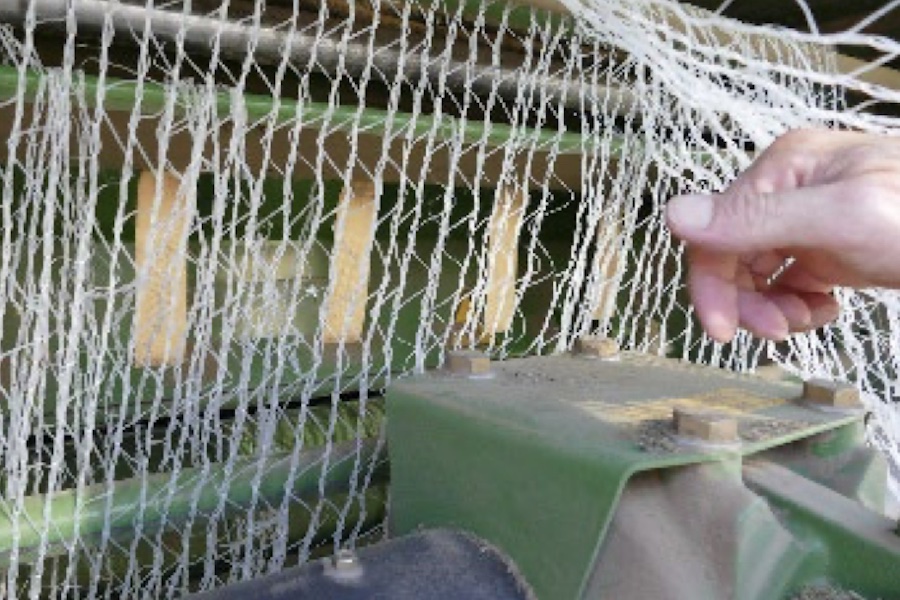
Processing of PBS nets on site © 2025 STFI


Success and outlook

The results include spunbonded fabrics, ribbons and textile structures. A knitted straw bale net has been successfully developed that meets the requirements of the DLG (German Agricultural Society) for inno- vative bio-based plastics in terms of mechanical properties.

The focus for the future is on optimising textile production processes for the bioplastic PBS. The RU- BIO2Value project was launched in December and will focus on applications such as injection-moulded reusable packaging, textiles and geotextiles, but also disposable packaging in upcoming studies by the consortium. At STFI, established textile processes are being converted to sustainable and renewable raw materials in order to use recycled or biodegradable materials for sustainable production.
More News from Sächsisches Textilforschungsinstitut e.V. (STFI)

#Recycling / Circular Economy

17th Colloquium on Recycling for Textiles with accompanying trade exhibition in Chemnitz

On 3 and 4 December 2025, the 17th colloquium on recycling for textiles will take place at the Hotel Chemnitzer Hof. The event brings together experts from industry, science and research to present and discuss current developments, technologies and business models for a sustainable circular economy in the textile industry.

#Research & Development

Kendyr as a climate-friendly cotton alternative: STFI explores new value chains for salinised land in Central Asia

In large parts of Central Asia, decades of cotton irrigation have led to severe soil salinisation, with serious consequences for soil fertility and the future of cotton cultivation. An international research consortium, including the Saxon Textile Research Institute (STFI), has therefore investigated the potential of alternative fibre plants. The focus was on Apocynum spp. (kendyr), a bast fibre plant that can thrive on saline soils. The aim: to restore the agricultural use of former cotton fields and establish new textile value chains in the region.

#Research & Development

Tour de LOOP Exclusive specialist trip to Chemnitz – textile art and design in the European Capital of Culture 2025

The European Capital of Culture 2025, Chemnitz, opened its doors to textile designers, textile artists and experts from the fields of fashion, art and textiles: the Tour de LOOP on 26 and 27 May 2025 took participants on an exclusive professional tour of one of Europe's most traditional and innovative textile regions. 19 visitors from Europe explored Chemnitz and its textile region. They came from the Nether- lands, Austria, the Czech Republic, Great Britain and Germany.

#Research & Development

STFI is investigating textile applications for PU casting compounds

Polyurethane (PU) casting compounds are classically used as protective and insulating material in electronics and electrical engineering, e.g. in battery modules or on circuits or for embedding LEDs. In addition to their electrical insulating properties, they are heat resistant and mechanically flexible . In addition, the transition from liquid to solid aggregate state is so favorable that these PU masses can be applied with a precise fit.

More News on Research & Development

#Research & Development

Innovation center for textile circular economy inaugurated

Just over eight months after the foundation stone was laid, the new Innovation Center for Textile Circular Economy was officially inaugurated today at TITK Rudolstadt. Thuringia's Minister President Mario Voigt, TITK Director Benjamin Redlingshöfer, and other guests of honor cut the ribbon to the modern building complex and viewed the premises, which are now ready for occupancy. The “DICE – Demonstration and Innovation Center for Textile Circular Economy” is TITK's largest single investment to date. The Free State of Thuringia supported the total cost of €11.5 million with €8 million in GRW and FTI funding.

#Research & Development

Sustainable design of Geosynthetics and roof underlayments made from recyclates

Is it possible to recover plastic recyclates from previously unused waste streams in order to produce high-quality fibers and films? How can bio-based polymer fibers be manufactured so as to allow adjustable biodegradability? These are the questions being addressed by researchers from the Fraunhofer Cluster of Excellence Circular Plastics Economy CCPE in the Zirk-Tex project.

#Research & Development

India, ITA and innovation – enhanced cooperation in research, implementation and bilateral projects such as hydrogen mobility

The Indian Consul General, Dr Shuchita Kishore, visited the Institut für Textiltechnik (ITA) of RWTH Aachen University on 15 December to inspect the joint project between the ITA, the Indian Institute of Technology (IIT) Bombay and industrial partners from India and Germany and to tour the ITA.

#Research & Development

More safety and comfort for protective clothing thanks to auxetic fabrics

When everyday materials are pulled, they stretch or elongate in the direction of the pull and become narrower in cross-section. We can also observe this property in two-dimensional textiles. Auxetic structures behave differently here. They have the striking property of not changing under tensile stress or even increasing their width or thickness. These properties are advantageous, for example, in protective textiles or textile filter media. The DITF are researching auxetic fabrics for various applications.

Latest News

#ITM 2026

ITM 2026: The meeting point of green transformation and the digital future in the textile industry

Shaping the transformation of the textile industry, the ITM 2026 International Textile Machinery Exhibition is set to lead the sector into the future with a strong focus on sustainable production and digital technologies. From environmentally friendly machinery to smart manufacturing systems, from energy-efficient solutions to artificial intelligence–supported applications, ITM 2026 will present a broad vision that defines the roadmap of textile technologies for the industry.

#Techtextil 2026

Techtextil and Texprocess 2026: Innovation as a Key Driver of the Textile Future

Innovations are the textile industry’s response to economic uncertainty, geopolitical tensions and continued restraint in investment. Today, this became clear at the press conference of the leading international trade fairs Techtextil and Texprocess. In a panel discussion, industry representatives explored how innovation is accelerating the transformation of the textile sector – from artificial intelligence to sustainable materials and new production models. This innovative strength is concentrated in the Techtextil and Texprocess Innovation Awards, which showcase pioneering solutions driving the textile transformation.

#Spinning

Efficiency reimagined: economical, precise, compact

At this year's PaintExpo in Karlsruhe (April 14–17), Barmag will present an optimized design of its paint metering pump (Hall 3, Booth 3344). It impresses with its low weight, increased productivity, and extended service life. Specially developed for compact robot arms, the pump enables high-precision and economical paint application – ideal for industries such as automotive, aerospace, and renewable energies.

#Dyeing, Drying, Finishing

Monforts announces leadership transition in 2026

Effective from January 1, 2026, Volker Gingter, has been appointed the new Managing Director of A. Monforts Textilmaschinen GmbH & Co. KG, headquartered in Mönchengladbach, Germany, and will steer the fortunes of the leading dyeing and finishing technology company going forward.

TOP