#Composites
STFI at JEC
Chemnitz developers pave the way for natural and recycled fibres in aviation
STFI will exhibit at the joint stand of Saxony Trade & Invest Corp. in Hall 5, Stand D97, where its team of lightweight construction and recycling experts will be available for discussions.
Aviation – Natural fibres and recycled carbon fibres as the basis for semi-finished textile products
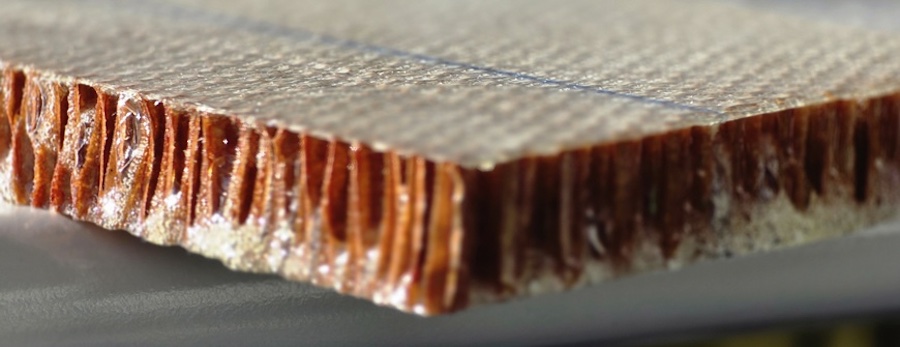
In aviation, stringent fire safety requirements continue to limit the use of natural fibre composites (NFC). The LUFTIFLEX research project is therefore developing flexible NFC solutions suitable for aviation applications. Flexibility is achieved through knitted textile structures. Research results show that compatibility between natural fibres and matrix systems is crucial, particularly with regard to fire protection. Only precise coordination of all system components enables composite structures that meet the required project specifications.
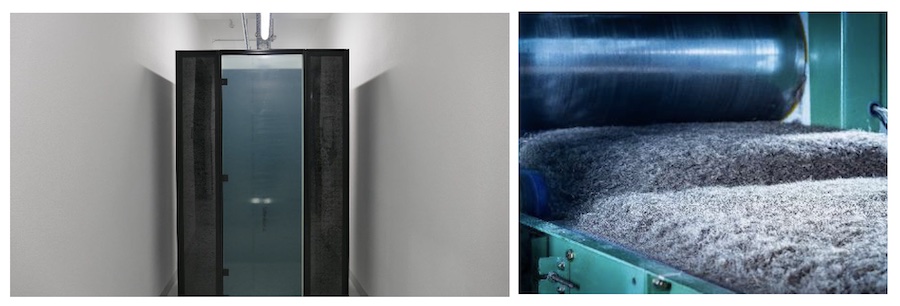
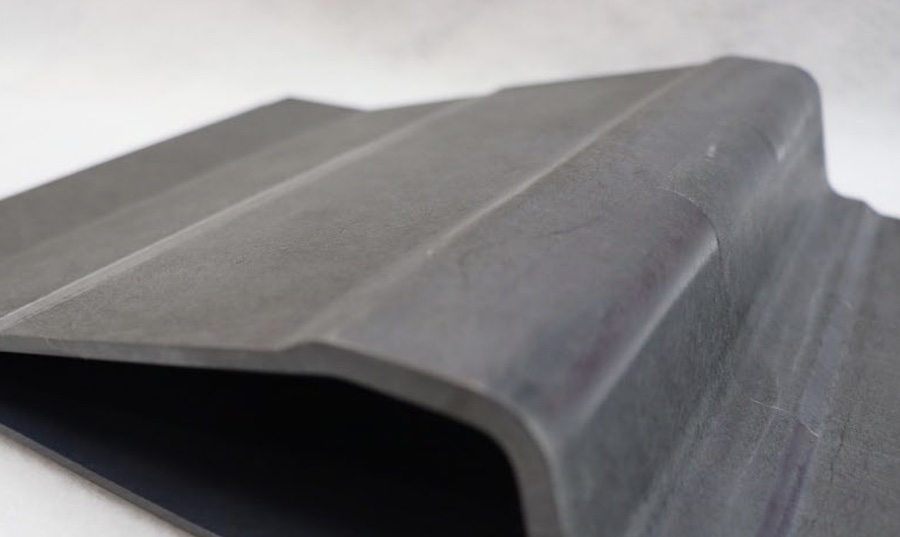
The HIOS project has laid the foundation for the continuous production of component-specific organic sheets for secondary structures and cabin components in aviation. Hybrid nonwovens made from recycled carbon fibres (rCF) and aviation-certified PPS staple fibres form the basis for these organic sheets.
In the demonstrator component, local reinforcement using directional fibres, functionalisation via AFP and TFP technologies, as well as thickness transitions and local fibre volume adjustments were integrated into the consolidation process. The final component was manufactured using a two-stage thermoforming and joining process and demonstrated on a spoiler flap box structure with an integrated Z-spar. This exhibit will be presented at JEC World.
E-mobility – Printed heating systems to increase vehicle range
Within the INSIDE project, STFI is developing a new technological approach to seat and interior heating for electric vehicles. The concept enables direct interior heating using printed heating elements.
Individually controllable printed surface and dot heating conductors offer significant potential for energy savings and increased efficiency. These heating structures are applied to textile substrates and lightweight components using inkjet and laser technologies.
Hemp as a renewable raw material
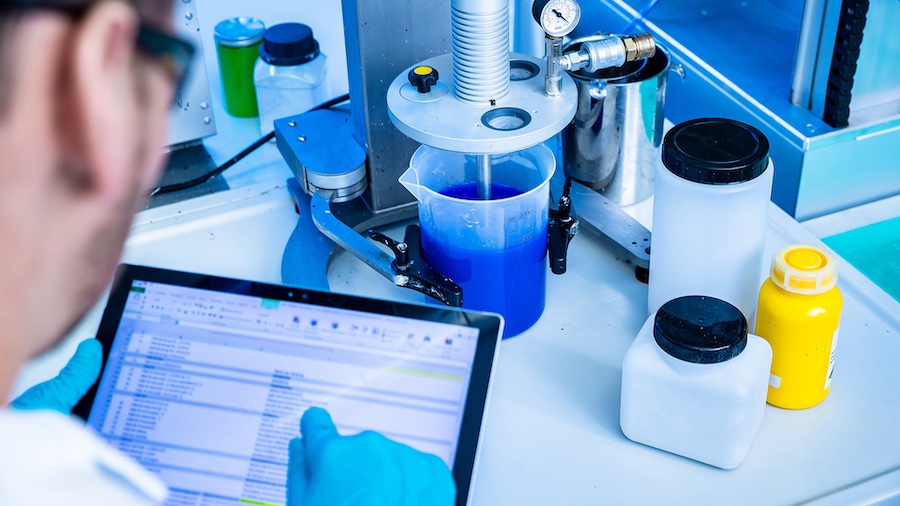
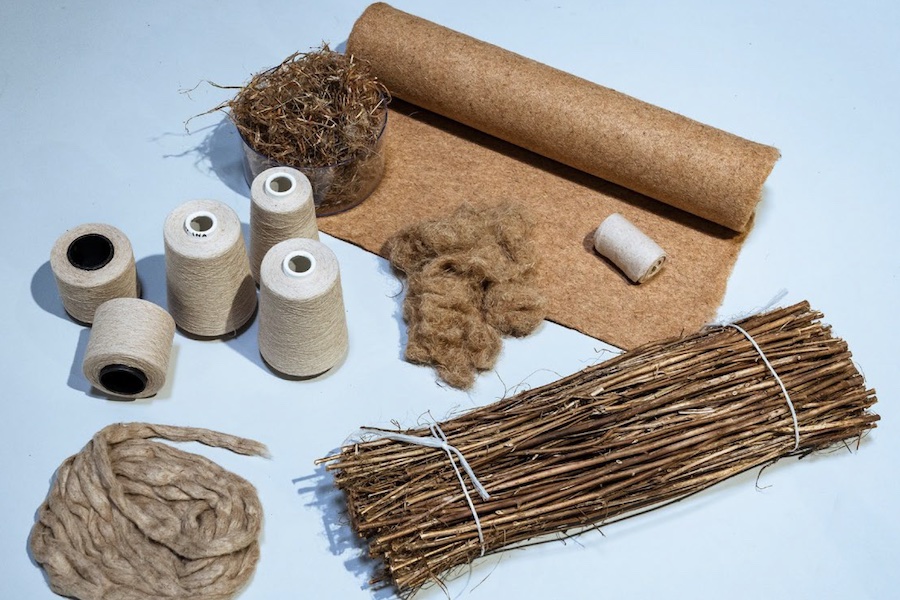
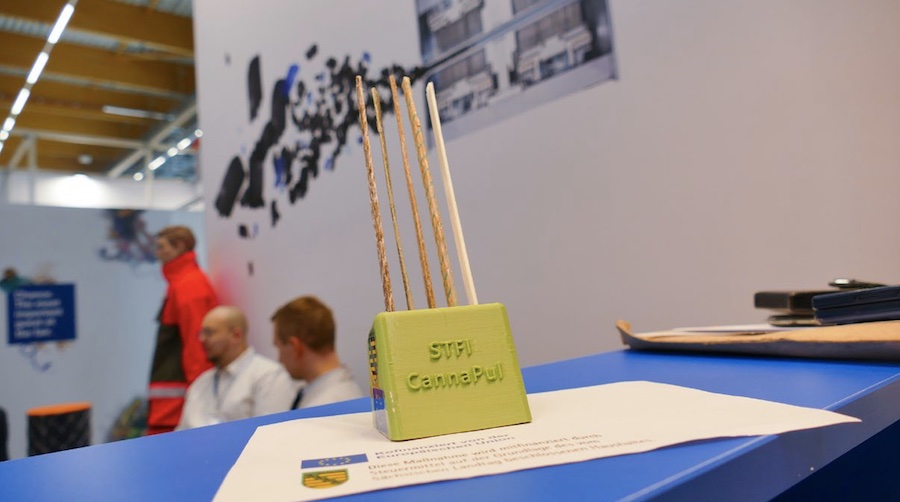
In the field of natural fibre processing, STFI is conducting research within the HOTHEMP project to improve the mechanical properties of hemp bast laminates. This is achieved through chemical-thermal reduction of the biological matrix content.
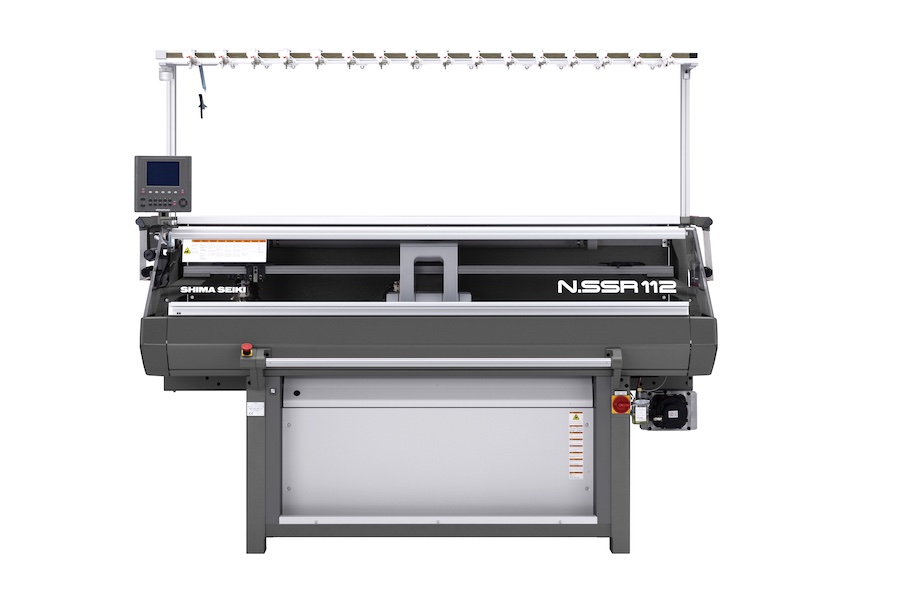
By reducing the lignin content in hemp bast fibres, the performance potential of the fibres can be optimally exploited. The fibres, which can reach lengths of up to three metres, are further processed at the institute using warp knitting machines to produce warp-knitted structures. This enables mechanical properties comparable to conventional GRP laminates.
Visitors can meet the STFI team at the joint stand of Saxony Trade & Invest Corp. in Hall 5, Stand D97.
Further information on Chemnitz’s lightweight engineering expertise is available from CETEX, LSE – Lightweight Structures Engineering GmbH, Schmietex Engineering GmbH, silbaerg GmbH, and Chemnitz University of Technology (Professorships in Lightweight Structures and Plastics Processing and Textile Technologies).