[pageLogInLogOut]

#Research & Development

Next-generation sustainable carbon fibers: versatile, high-performance and economical
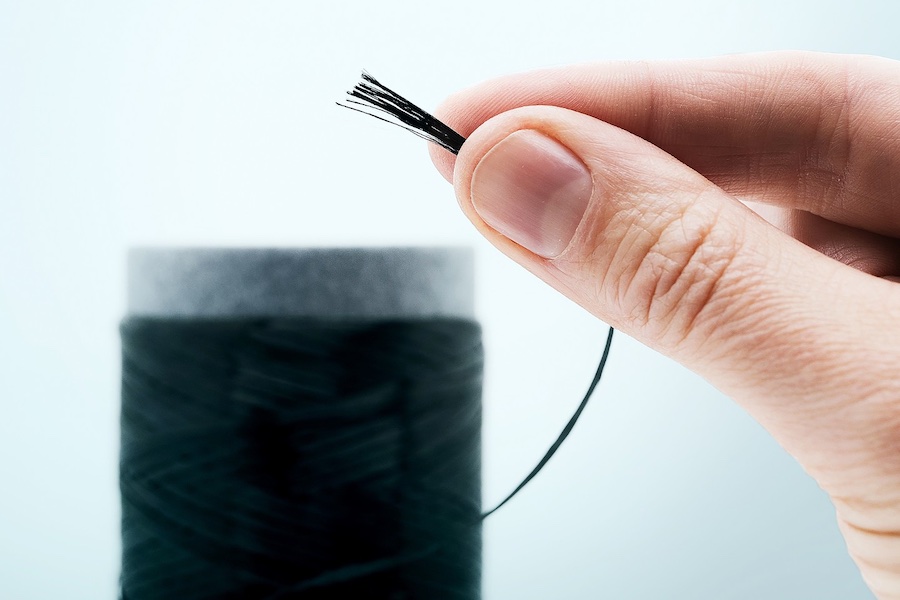
Whether in hydrogen tanks, batteries, fuel cells or for shielding sensitive electronics – carbon fibers are used in a wide range of advanced applications. At the Potsdam Science Park, the Fraunhofer Institute for Applied Polymer Research IAP, in collaboration with Brandenburg University of Technology Cottbus-Senftenberg, is developing novel carbon fibers based on cellulose.
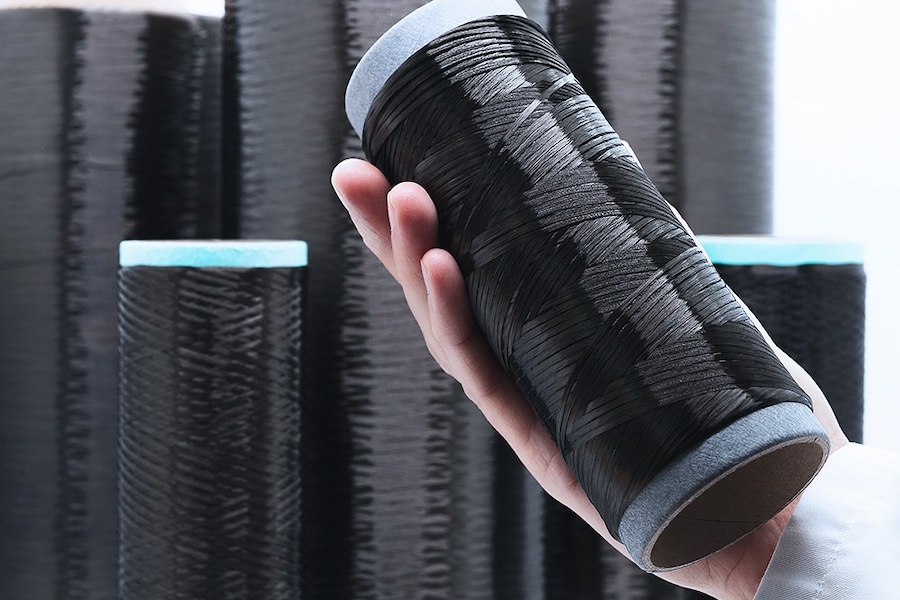
Ultra-thin and high-performance: The bio-based carbon fibers developed at the Fraunhofer IAP can reach diameters well below four micrometers. Their mechanical, electrical and thermal performance matches that of conventional petroleum-based carbon fibers. © 2025 Fraunhofer IAP / Kristin Stein

These fibers combine structural diversity, high electrical, thermal and mechanical performance with sustainability. The project is part of the Carbon Lab Factory Lausitz and is funded by the German Federal Ministry for Economic Affairs and Energy. It is intensively supported by the Wirtschaftsregion Lausitz GmbH.

More than lightweight construction: carbon fibers for alternative high-tech applications

Traditional carbon fibers, such as those used in lightweight construction, are usually made from the petroleum-based polymer polyacrylonitrile (PAN). Their production is complex, energy- and resource-intensive, and generates large quantities of toxic by-products. Pitch-based carbon fibers, another petroleum-derived type with excellent electrical and thermal properties, are highly technically demanding and costly to produce.

The Fraunhofer IAP is addressing these challenges with a new generation of high-performance carbon fibers – bio-based and sustainable. They combine structural variability with customizable properties and an attractive environmental and economic profile. Their applications go far beyond lightweight construction for aerospace, defense, wind energy or medicine: as a component in batteries and fuel cells, they can serve as electrical and thermal conductive, chemically stable fabrics. They are also ideally suited for shielding sensitive electronics.

High variability through spinning processes and additives

The innovative approach of the Fraunhofer IAP uses cellulose as a renewable raw material for precursors – the starting material for carbon fibers. Precursor fibers can be spun into continuous filaments using established industrial spinning technologies such as the viscose or Lyocell processes, as well as alternative shaping methods. Additives such as lignin, which like cellulose is derived from wood, can be incorporated directly into the spinning solution, significantly boosting the carbon yield during subsequent conversion to carbon fibers.

A key advantage of cellulose is that the structure of the precursor fibers – and thus the resulting carbon fibers – can be precisely controlled through the selected spinning process and parameters. This results in various degrees of orientation and crystallinity, as well as fiber cross-sections – for example, round, oval or lobulated. The latter one offers a particularly high specific surface area and is therefore suitable for use in conductive, porous structures for permeable electrodes in redox flow batteries or gas diffusion layers in fuel cells.
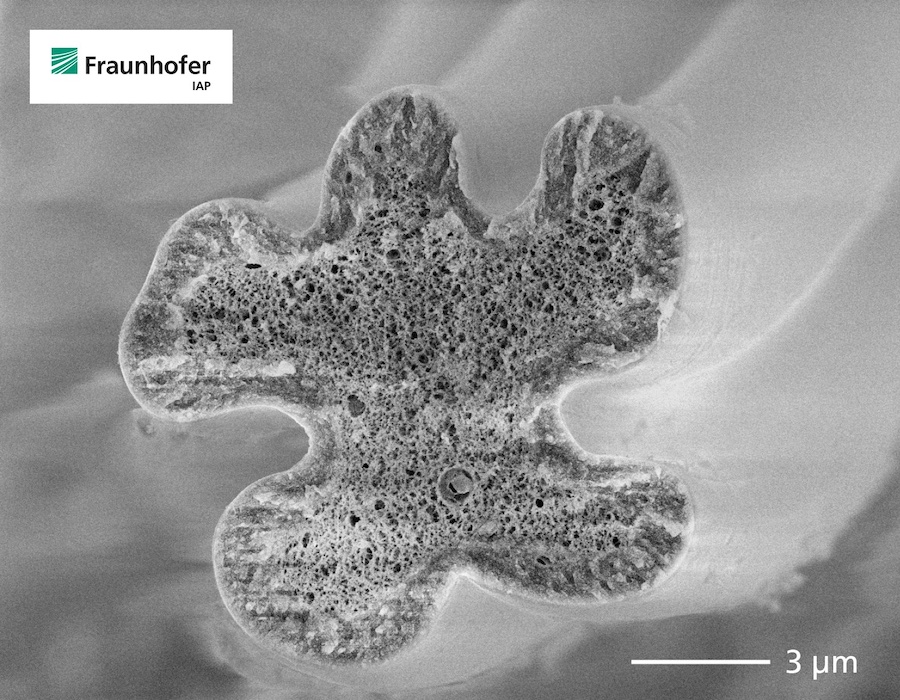
Freshly spun cellulose fiber with a lobulated cross-section under the scanning electron microscope (cryo-transfer SEM). The porous structure becomes denser during drying, the shape is retained during carbonization. © 2025 Fraunhofer IAP


Catalysis makes bio-based carbon fibers competitive

The endless spun cellulose fibers then pass through an aqueous bath containing functional additives or catalysts. This step activates the material for the subsequent thermal conversion into carbon fibers. Here, the cellulose fiber has a special advantage: it behaves like a sponge, efficiently absorbing the additives from the bath. The system of catalysts and additives developed by Fraunhofer IAP lowers the carbonization temperature by more than 1,000 °C, accelerates the process, and increases the yield from 15 to 45 percent by weight.

By specifically optimizing process parameters – such as temperature, residence time or mechanical stretching – during carbonization, fiber diameters well below four micrometers can be achieved. This is particularly relevant for fuel cells. By comparison: commercial fibers typically measure around seven micrometers in diameter.

Customized high performance – mechanical, electrical, thermal

The combination of spinning, activation and carbonization technologies allows the development of customized fiber types for a wide range of applications. Dr. Jens Erdmann, expert for bio-based carbon fibers at the Fraunhofer IAP, emphasizes: "Our carbon fibers combine high technical performance with sustainability: their mechanical properties are comparable to those of petroleum-based high-modulus PAN carbon fibers – in other words, to those of high-performance carbon fibers. They also show electrical and thermal properties similar to pitch-based fibers."

Carbon Lab Factory Lausitz: a bridge to industrial scaling

Pilot-scale trials at the Fraunhofer IAP demonstrate the great potential of this technology – which is now to be scaled up as part of the "Carbon Lab Factory Lausitz" initiative. The new infrastructure will cover the entire value chain – from raw material via carbon fiber to technical components – in Germany. The initiative was launched jointly with TU Chemnitz and Institute of Lightweight Design and Value-added Management of the BTU Cottbus-Senftenberg and is a cross-federal state project between Saxony and Brandenburg. It supports the development of a globally unique research infrastructure for carbon fibers and thus the structural transformation of the Lausitz region.

Sustainability meets high performance – a growing demand

"We clearly see that interest in sustainable materials is steadily increasing," says Erdmann. "But ecological advantages alone are not enough to succeed on the market – economic performance is also crucial. That’s exactly where we come in: we’ve succeeded in combining ecological responsibility with technical performance and cost-efficiency. The ability to tailor and flexibly adapt the properties of our fibers opens up new fields of application and clear competitive advantages – a decisive step toward economic viability."

More News from Fraunhofer Institute for Applied Polymer Research (IAP)

#Research & Development

Feasibility study shows potential to convert textile waste into PHB bioplastic

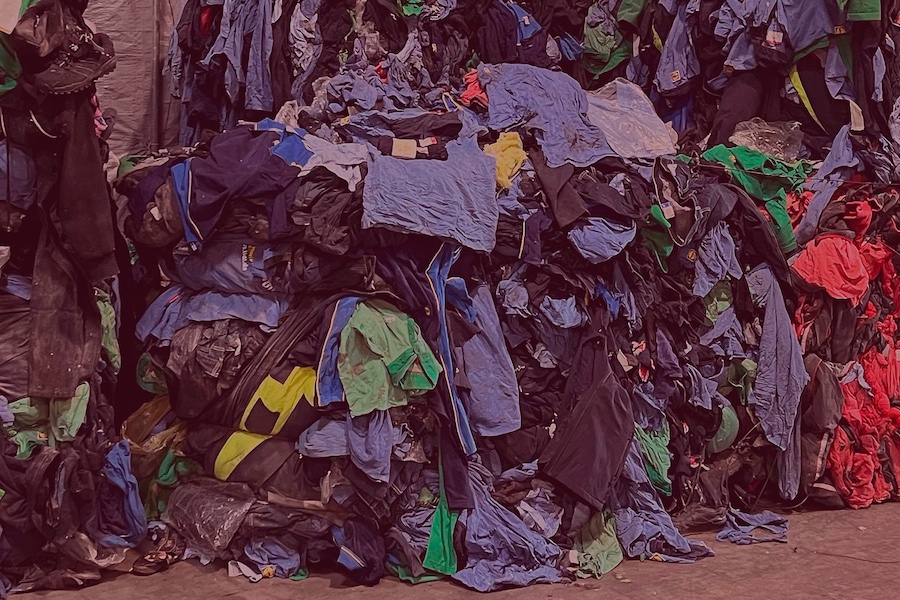
Textile waste could serve as a valuable source of raw materials for sustainable plastics in the future, according to the joint TexPHB feasibility study conducted by the Fraunhofer Institute for Applied Polymer Research IAP, Beneficial Design Institute GmbH and matterr GmbH. The study will be presented to the public for the first time at a network meeting on 25 November 2025 at the State Chancellery in Potsdam.

#Recycling / Circular Economy

Closing the Loop in the Textile Industry: Value Creation in the State of Brandenburg

How can the state of Brandenburg benefit from a circular textile industry? This question is addressed in the new policy paper "Closing the loop in the textile industry: Value creation in the state of Brandenburg." Based on the „TexPHB“ feasibility study funded by the Brandenburg Ministry of Climate Protection, it shows how textile waste can be integrated into new value chains.

#Research & Development

Better, faster, bio-based: Functional new Plastic alternatives

How can new bio-based and biohybrid materials with improved features be developed faster? Six Fraunhofer institutes are jointly exploring this question in the SUBI²MA flagship project, using an innovative bio-based polyamide developed by Fraunhofer researchers as a model. Its specific properties make it a promising alternative to fossil-based plastics.

#Research & Development

Fungal mycelium as the basis for sustainable products

Fungi have more to offer than meets the eye. Their thread-like cells, which grow extensively and out of sight underground like a network of roots, offer huge potential for producing sustainable, biodegradable materials. Researchers at the Fraunhofer Institute for Applied Polymer Research IAP in Potsdam Science Park are using this mycelium to develop a wide range of recyclable products, from wallets and insulation to packaging.

More News on Research & Development

#Associations

Young researchers recognised for cutting-edge work in recycling, fibre technology and textile mechanics

At the Aachen-Dresden-Denkendorf International Textile Conference held in Aachen at the end of November, Peter D. Dornier, Chairman of the Walter Reiners Foundation of the VDMA, honoured five successful young engineers. Promotion and sustainability prizes were awarded in the categories bachelor/project theses and diploma/master theses. Academic theses that develop solutions for resource-saving products and technologies, for example, are eligible for the sustainability awards.

#Research & Development

The region of renewable raw materials: Central German Alliance for Bioplastics

The development of sustainable plastic solutions is rapidly gaining importance in light of global environ- mental pollution, dwindling fossil resources and ambitious climate protection targets. As part of the re- gional alliance RUBIO, which brings together 18 partners from central Germany and the Berlin-Branden- burg area, the bio-based and biodegradable plastic polybutylene succinate (PBS) was comprehensively investigated, starting with the raw material, through the manufacturing process, to industrial application.

#Nonwoven machines

Cooperation in the field of meltblown laboratory technology

The Nonwoven Institute (NWI) at North Carolina State University and Oerlikon Nonwoven will be collaborating in the field of meltblown laboratory technology in the future. This was announced by Professor Raoul Farer, Executive Deputy Director of the NWI and Professor at the Wilson College of Textiles at North Carolina State University, and Dr. Ingo Mählmann, Sales Director Nonwoven at Oerlikon Neumag, during this year's ITMA Asia and CITME in Singapore.

#Recycling / Circular Economy

European research project addresses textile waste through integrated recycling technologies

A major European research initiative coordinated by Fraunhofer UMSICHT has been launched to develop integrated solutions for textile waste recycling. The AUTOLOOP project aims to create a comprehensive system that could process 1.24 million tonnes of textile waste annually by 2050, whilst potentially creating over 130,000 green jobs across the EU. This project aims to develop, test and integrate automated sorting, tracing, and closed-loop recycling technologies for polyester-based textiles (NRT), addressing the pressing challenge of textile waste management.

Latest News

#Exhibitions & Events

Groz-Beckert showcases textile innovation at ShanghaiTex 2025

From December 16 to 19, 2025, the global textile industry will gather at ShanghaiTex at the Shanghai New International Expo Center (SNIEC), where Groz-Beckert will present its latest highlights and innovations across its five product areas – Knitting, Weaving, Nonwovens, Sewing, and Spinning – at Hall N3, Booth A05.

#Man-Made Fibers

Teijin Carbon Europe receives EcoVadis Silver status – ranked among the top 15% of evaluated companies

Teijin Carbon Europe (TCE) has been recognized for its sustainability performance and has been awarded the EcoVadis Silver Medal in the latest assessment. In its first-ever EcoVadis evaluation, the company achieved a notable 72 out of 100 points, ranking among the top 15% of all companies evaluated worldwide, within the “Manufacture of Man-Made Fibres” category.

#Weaving

Vandewiele Group: Innovation across the textile value chain at ICFE Istanbul 2026

At the 2026 Istanbul Carpet & Flooring Expo (ICFE), Vandewiele Group presents its latest advancements spanning the entire textile value chain. From spinning and weaving to tufting, carpet manufacturing and digital finishing, the Group demonstrates how integrated innovation can boost performance, efficiency and sustainability across all stages of production. As a global technology leader, Vandewiele continues to develop solutions that strengthen processes, enhance product quality and enable smarter, greener manufacturing.

#Recycling / Circular Economy

Advanced Recycling Conference 2025 fuels innovation across key waste streams

The Advanced Recycling Conference (ARC) 2025 brought together nearly 220 experts from 28 countries to spotlight pioneering advancements and foster industry collaboration in recycling across diverse waste streams including plastics, textiles, automotive and other materials.

TOP