[pageLogInLogOut]

#Composites

STFI presents lightweight construction innovations at JEC World in Paris

At this year's JEC World, STFI will be presenting highlights from carbon fibre recycling as well as a new approach to hemp-based bast fibres, which have promising properties as reinforcement in lightweight construction. Visit us at the joint stand of the Saxony Economic Development Corporation and talk to our team of lightweight construction experts.

Green Snowboard

At JEC World in Paris from 5 to 7 March 2024, STFI will be showcasing a snowboard from silbaerg GmbH with a patented anisotropic coupling effect made from hemp and recycled carbon fibres with bio-based epoxy resin. In addition to silbaerg and STFI, the partners Circular Saxony - the innovation cluster for the circular economy, FUSE Composite and bto-epoxy GmbH were also involved in the development of the board. The green snowboard was honoured with the JEC Innovation Award 2024 in the “Sport, Leisure and Recreation” category.
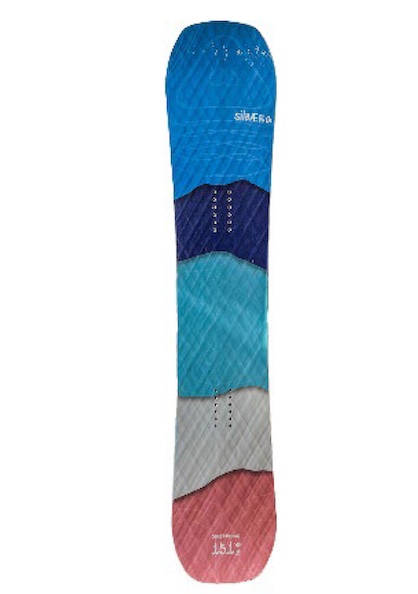
Green Snow-board © 2024 silbaerg GmbH


VliesComp

The aim of the industrial partners Tenowo GmbH (Hof), Siemens AG (Erlangen), Invent GmbH (Braun-schweig) and STFI united in the VliesComp project is to bring recycled materials back onto the market in various lightweight construction solutions. The application fields "Innovative e-machine concepts for the energy transition" and "Innovative e-machine concepts for e-mobility" were considered as examples. On display at JEC World in Paris will be a lightweight end shield for electric motors made from hybrid nonwovens - a mixture of thermoplastic fibre components and recycled reinforcing fibres - as well as nonwovens with 100% recycled reinforcing fibres. The end shield was ultimately manufactured with a 100% recycled fibre content. The tests showed that, compared to the variant made from primary carbon fibres using the RTM process, a 14% reduction in CO2 equivalent is possible with the same performance. The calculation for the use of the prepreg process using a bio-resin system shows a potential for reducing the CO2 equivalent by almost 70 %.
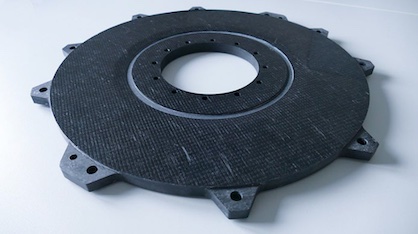
Shield for drive motor in the rail vehicle sector © 2024 STFI


Bast fibre reinforcement

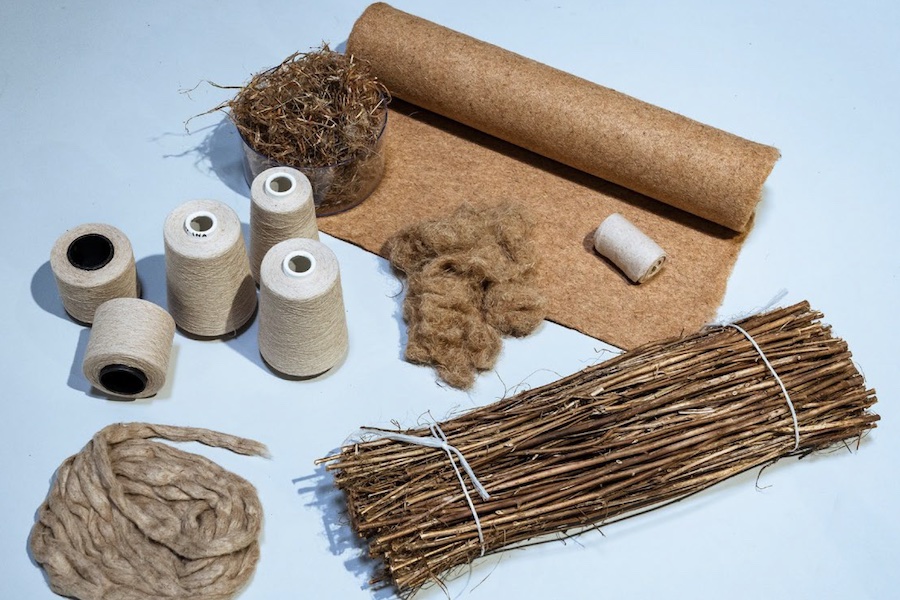
To increase stability in the plant stem, bast fibres form in the bark area, which support the stem but, in contrast to the rigid wood, are very flexible and allow slender, tall plants to move in the wind without breaking.A new process extracts the bast bark from hemp by peeling.The resulting characteristic values, such as tensile modulus of elasticity, breaking strength and elongation, are very promising in comparison with the continuous rovings made of flax available on the market.The material could be used as rein-forcement in lightweight construction.At JEC World, STFI will be exhibiting reinforcing bars that have been processed into a knitted fabric using a pultrusion process based on bio-based reinforcing fibres made from hemp bast for mineral matrices.
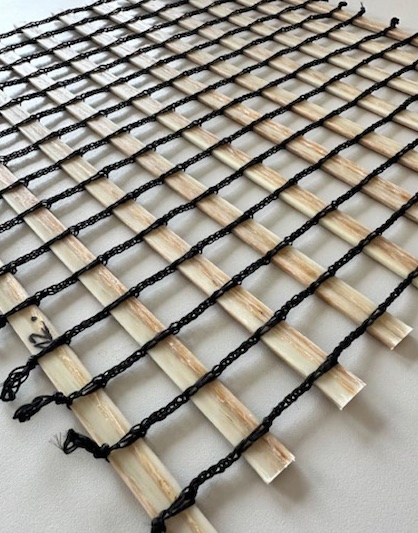
Knitted bast fibre reinforce-ment © 2024 STFI


Meet STFI in Paris

The green snowboard from silbaerg, the bearing shield for the electric motor and the bast fibre reinforce-ment can be seen together with other STFI research highlights from 5 to 7 March 2024 at the JEC Group in Paris in Hall 5 at Stand D107 of the Saxon Textile Research Institute e.V. (STFI).Together with its partners Cetex Institut gGmbH, Chemnitz University of Technology - Institute of Lightweight Structures (IST), LSE-Lightweight Structures Engineering GmbH, it will be at the joint stand of Wirtschaftsförderung Sachsen GmbH and looks forward to seeing you there!
More News from Sächsisches Textilforschungsinstitut e.V. (STFI)

#INDEX 2026

STFI highlights textile circular economy and alternative fibres at INDEX™ 2026

From 19 to 22 May 2026, INDEX will invite visitors to Lake Geneva for the world's leading nonwovens trade fair. The Centre of Excellence in Nonwovens at the Sächsisches Textilforschung- sinstitut e.V. (STFI) will be in attendance to present the latest developments in nonwovens research. In the field of the textile circular economy, the STFI will present acoustically effective nonwovens made from chemical recycling residues. The range also includes innovations aimed at replacing conventional raw materials, such as the biobased and biodegradable polymer polybutylene succinate (PBS) and Kendyr as an alternative to cotton.

#Research & Development

Regional hemp bast for lightweight construction profiles

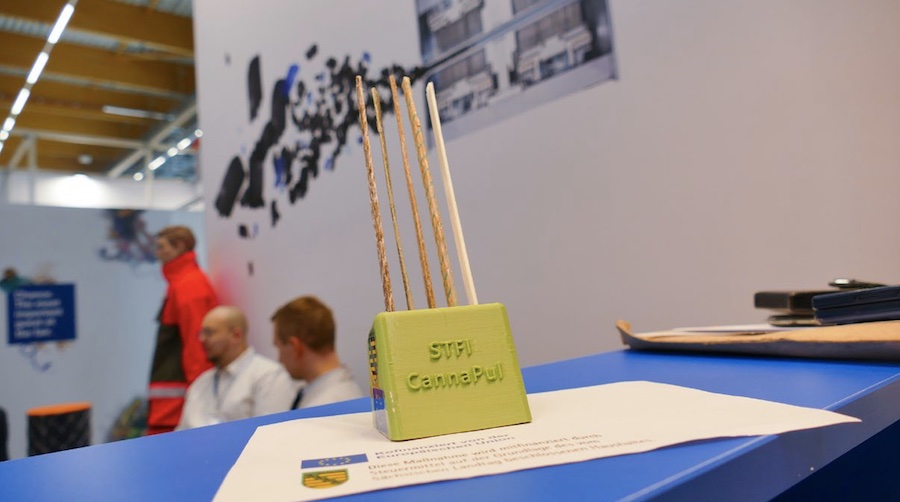
The cultivation of fibre hemp for the production of ropes and clothing has a long tradition in Saxony. Due to its excellent fibre properties, it is also suitable as a renewable raw material for reinforcement in fibre composites. At the STFI and IWU in Chemnitz, the CannaPul project is cur- rently investigating how a regional value chain for hemp-based lightweight construction profiles can be established. To this end, the technical processing of hemp fibres into continuous fibre strands and their embedding in a suitable bio-based matrix are being investigated.

#Techtextil 2026

STFI presents concepts for the textile circular economy and solutions for a healthy and safe life at Techtextil

Sächsisches Textilforschungsinstitut e.V. (STFI) has been supporting companies in developing marketable innovations for over 30 years. With a clear focus on sustainability, the environment, health and protection, the STFI offers future-oriented research, textile testing for tailor-made solutions and certification of per- sonal protective equipment. At Techtextil 2026, the institute will present ideas for the textile circular econ- omy and showcase solutions for healthy and safe living.

#Composites

STFI at JEC

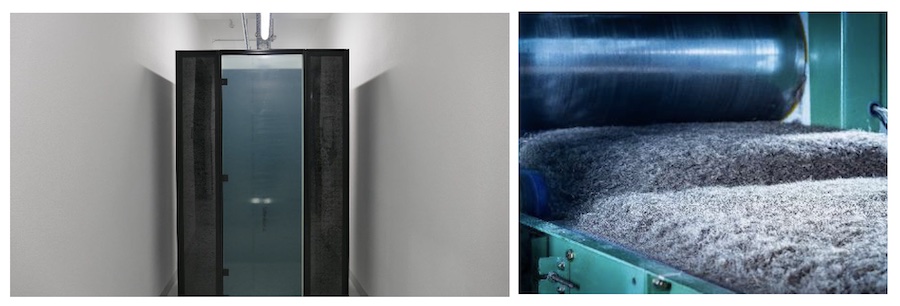
The Sächsisches Textilforschungsinstitut e.V. (STFI) will present composites for aviation made from recycled carbon fibres and natural fibres, as well as printed lightweight elements for surface heating in electric vehicles at JEC World in Paris.

More News on Composites

#Research & Development

Novel flame-retardant and recyclable fiber-reinforced composite

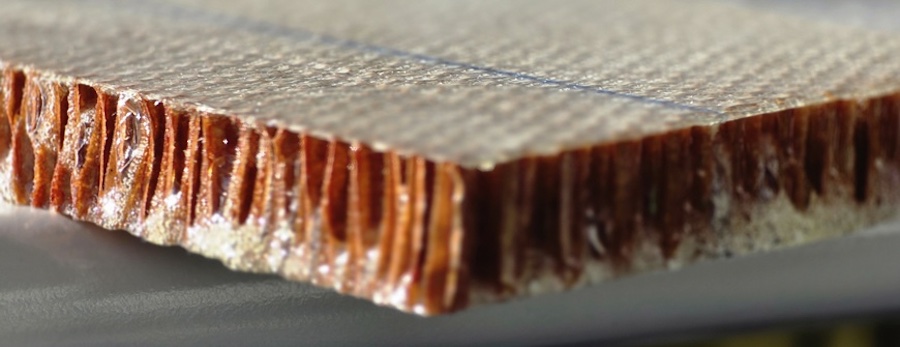
Airplanes and passenger trains must meet strict safety requirements, including fire safety standards. This calls for materials that are flame-retardant, lightweight, robust, and scalable. Empa researchers, in collaboration with their industry partner Elantas, have now succeeded for the first time in making such a material – a composite – fully recyclable.

#Composites

WHILL selects Teijin’s tough, lightweight Carbon Fiber Composite for new last-mile mobility

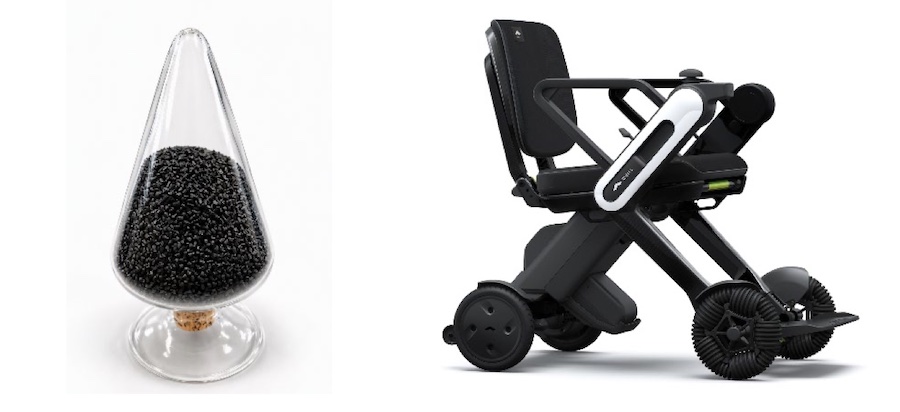
Teijin Limited announced today that WHILL Inc., a global leader in inclusive mobility technology, has selected Sereebo® P CFP series, a carbon fiber-reinforced thermoplastic (CFRTP) material, for key structural components of the upcoming WHILL Model C Lite. Sereebo® P CFP series provides high strength, light weight, design flexibility and system cost advantages to the Model C Lite, which is a battery powered, single-seat, last-mile device. This new model combines maneuverability with light weight and one-handed folding to ensure ease of handling and operation.

#Composites

Fewer pores, greater impact tolerance: Peter Dornier Foundation Prize 2026 honours material research on fibre-reinforced composite components for aerospace industry

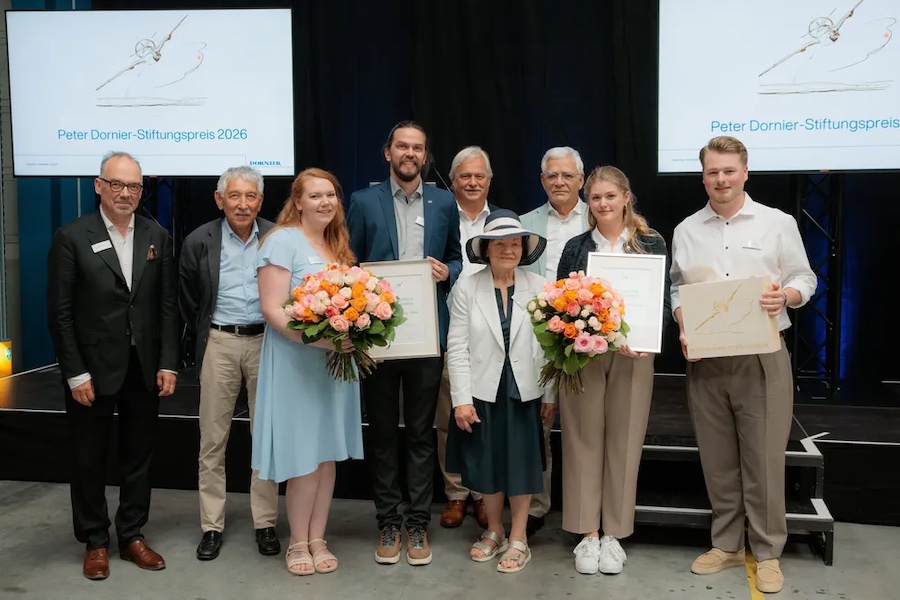
Microscopically small pores that form during manufacture, or barely visible impact damage, can severely impair the load-bearing capacity and service life of fibre-reinforced composite components. Two young researchers have presented groundbreaking work in this field and will both be awarded the 2026 Peter Dornier Foundation Prize: Dr.-Ing. Benedikt Neitzel from the Technical University of Ilmenau for his doctoral thesis on pore minimisation in the RTM process, and Johanna Buschmann, M.Sc., for her master’s thesis, completed at the German Aerospace Centre, on the improved impact tolerance of 3D fabrics compared to 2D laminates.

#Composites

Carbon Revolution wins Composites Australia Engineering Team Excellence Award

Carbon Revolution has won the Engineering Team Excellence Award at the 2026 Composites Australia Annual Industry Awards.

Latest News

#Weaving

Lindauer DORNIER GmbH welcomes new apprentices and dual-study students

For 22 new “DORNIER Talents”, these days mark the beginning of a new chapter at Lindauer DORNIER. For the family-owned company, in-house training is a key pillar in developing skilled professionals and retaining them within the company for the long term.

#Raw Materials

Cotton Brazil Dialogues 2026 concludes with 50 international participants immersed in Brazilian cotton production

The Cotton Brazil Dialogues concludes its 2026 edition after a series of technical visits to farms, cotton gins and reference centers, as well as workshops focused on Brazilian cotton production. A total of 50 participants from 14 countries took part in the field trips. The initiative is led by the Brazilian Association of Cotton Growers (Abrapa) and the National Association of Cotton Exporters (Anea), with support from the Brazilian Trade and Investment Promotion Agency (ApexBrasil).

#Textile chemistry

ZymoChem secures $4 million in renewed federal funding to advance U.S. biomanufacturing of critical materials and their supply chains

ZymoChem, the specialty chemicals company dedicated to bringing decarbonization, sustainability, and supply chain resiliency to the chemical industry through innovative biological manufacturing, today announced the resumption and expansion of its federal research portfolio. The company has been notified that previously paused work under a $5 million U.S. Department of Energy (DOE) program is officially back on, to be joined by continuing collaborations with three of the nation's premier national laboratories.

#Technical Textiles

RDJ 6/2 in E 32: Finesse in Motion

The appearance of sports and casual shoes is as diverse as their applications, ranging from sporty to stylish and from functional to fashionably practical. In particular, spacer fabrics produced on highly flexible KARL MAYER double needle bar raschel machines with Jacquard technology are in high demand for manufacturing these trendy shoes. These efficient production machines enable attractive designs with integrated multifunctional zones on one or both fabric surfaces, such as breathable mesh structures. Flexible in size and positioning, these features enhance both aesthetics and wearing comfort.

TOP