[pageLogInLogOut]

#Research & Development

No sustainable future without carbon capture and utilisation (CCU) – Why we need much more political recognition and support for CCU

Poster CO2 based Products / Source: nova-Institut GmbH
CCU enables the substitution of fossil carbon in sectors where carbon is necessary, supports the full defossilisation of the chemical and derived material industries, creates a circular economy, reduces the emission gap, promotes sustainable carbon cycles, fosters innovation, generates local value and stimulates job growth

The Renewable Carbon Initiative (RCI), an alliance of more than 60 well-known companies, SMEs and start-ups, commissioned the German nova-Institute to write the unique background report entitled “Making a Case for Carbon Capture and Utilisation (CCU) – it is much more than just a carbon removal technology”. The report is a science-based appeal for CO2 utilisation.

The central goal of the RCI is to facilitate the transition from fossil to renewable carbon in all chemicals and materials. Besides biomass and recycling, carbon capture and utilisation (CCU) is one of the three available options to provide renewable carbon, but its potential is not yet fully recognised by policy makers. One main cause is the widespread misconception that CCU only delays emissions and therefore does not contribute to climate change mitigation or net-zero targets – two critical goals that are at the heart of global climate policy. When policy accepts CCU, it is often in the context of long-term storage of carbon or atmospheric/biogenic carbon dioxide removal.

CCU is much more than a carbon removal technology 

The latest paper of the RCI makes a clear case in favour of CCU: the technology offers multiple solutions to pressing problems of our modern world and can support several Sustainable Development Goals if implemented properly. In total, 14 different benefits and advantages of  CCU are described and discussed in the paper. A key advantage is that CCU supplies renewable carbon to – and thereby substitutes fossil carbon in – sectors that will require carbon in the long run. This includes the chemical sectors and products like polymers, plastics, solvents, paints, detergents, cosmetics or pharmaceuticals. Several CO2-based plastics, detergents, textiles, or fuels are already in production and on the market (figure 1).  But CCU is also essential to a long-term net-zero strategy, crucial for creating a sustainable circular economy, providing solutions for scaling up the renewable energy system, and bringing multiple benefits for innovation and business. The relevance of the technology is not yet accepted in Europe, but the RCI wants to make a very clear statement:

CCU is a central pillar for the biggest transformation of the chemical and material industry since the industrial revolution 

– to decouple the petrochemical industry from fossil carbon, by using renewable carbon. CCU is a crucial technology for the future, as it enables the substitution of fossil carbon in sectors where carbon will be needed long-term and supports the full defossilisation of the chemical and derived material industries. CO2 can be captured from various sources and converted into a wide range of fuels, chemicals and materials (figure 2). Without CCU, only recycling and biomass remain to supply the entire non-fossil carbon demand of a sustainable, defossilised future. But all three options combined maximise the technological potential to find best solutions for any given situation and allow the creation of a circular carbon economy. By creating sustainable carbon cycles, CCU reduces the emission gap and promotes the circular economy. Moreover, CCU fosters innovation, generates local value, and stimulates job growth. The consequence of not embracing CCU will be prolonged dependence on fossil feedstock.

Christopher vom Berg, one of the main authors of the paper: “Every gram of carbon that can be kept in the cycle through CCU does not have to be extracted (from fossil resources) or injected into the ground through CCS1. CCU is the epitome of a circular (carbon) economy!”

Why is there only limited adoption of CCU as of yet?

CCU is a young and energy-intensive industry with only a few clear advocates. The technology competes with well-established, upscaled industries that have powerful lobbies (e.g. fossil industries, biofuels sector), across multiple products and sectors. And the strong net-zero focus in policy leads some stakeholders to disregard the remaining future demand for carbon as a feedstock – and therefore to push only for zero-carbon energy and carbon storage of remaining emissions.

Harmonised regulatory support is lacking when it comes to CCU. Instead, a patchwork of regulatory incentives and barriers are in place. This patchwork currently encourages CCU for fuels and for long-term storage, but not for the only sector that has a clear long-term need for carbon supply – chemicals and materials. At the same time, CCU as a recent technology lacks clear advocacy and struggles to gain a foothold under competition to strong, long-established sectors. In order to support the development of the entire carbon capture sector and to enable the development of CCU into a central pillar of comprehensive carbon management, proper endorsement and support by policy will be necessary.

It is RCI’s belief that Europe’s first priority should be to minimise the emission gap (and thus the problem of overshooting carbon emissions) as much as possible, while developing carbon dioxide removals as the technological back-up plan to achieve our climate targets. Failing on these targets is simply not an option and therefore well-established carbon capture technologies need to be developed and scaled. But with strong investment in renewable energies and CCU, the remaining emission gap can be significantly reduced to only the truly unavoidable emissions.


Michael Carus, one of the main authors of the paper: “It is simply absurd that power stations and industry should store their CO2 emissions in the ground at great expense via long pipelines (CCS), while at the same time continuing to use fossil carbon from the ground – instead of driving the carbon around in circles via CCU. It is a political scandal not to create a policy framework in Europe that stimulates the capture and use of ongoing fossil CO2 emissions.”
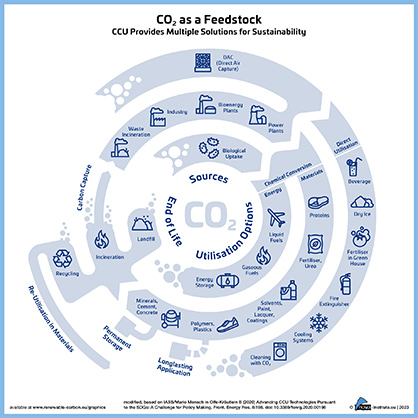
Figure 1 – Graphic CO2 as Feedstock / Source: nova-Institut GmbH


The background report identifies and discusses 14 significant benefits and advantages that CCU can deliver and promotes twelve policies measures to fully realise these benefits.

Cover
Cover "Making a Case for Carbon Capture and Utilisation" / Source: nova-Institut GmbH


The entire report is available at:

https://renewable-carbon.eu/publications/product/making-a-case-for-carbon-capture-and-utilisation-ccu-it-is-much-more-than-just-a-carbon-removal-technology/


1) CCS means Carbon Capture and Storage


More News from TEXDATA International

#Recycling / Circular Economy

textile.4U publishes special edition “Top 100 Textile Recycling Companies 2025”

With a comprehensive 176-page special edition, textile.4U is dedicating its latest issue entirely to one of the most dynamic and influential topics in today’s textile industry: textile recycling. The new issue, published exclusively in high-quality print, presents the Top 100 textile recycling companies researched and selected by TexData – organizations that already play a key role in the transition to circular textiles or are expected to have a significant impact in the near future.

#Recycling / Circular Economy

Responsible Textile Recovery Act of 2024 signed by Governor

Senator Josh Newman (D-Fullerton) is proud to announce that Senate Bill 707 (SB 707), the Responsible Textile Recovery Act of 2024, has been signed into law by the Governor of California, Gavin Newsom. This groundbreaking legislation establishes the country’s first Extended Producer Responsibility (EPR) textile recycling program, marking a significant step forward in the state’s efforts to combat waste and promote sustainability.

#Textiles & Apparel / Garment

Modtissimo promotes sustainability with 28 coordinates in the Green Circle

Modtissimo is proving more and more to be a textile and clothing show that delivers the latest innovations in the area of sustainability, with the iTechStyle Green Circle being the main showcase for companies' creations. In this 60+4 edition, taking place on 12 and 13 September, 28 coordinates will be exhibited in a section organised by CITEVE and curated by Paulo Gomes.

#Europe

The EU and Egypt team up to mobilise private sector investments at Investment Conference and sign a Memorandum of Understanding underpinning €1 billion in macro-financial assistance for Egypt

At the EU-Egypt Investment Conference, co-organised by the EU and the Government of Egypt on 29-30 June, the EU and Egypt are teaming up to intensify private sector investments in Egypt. They are also signing a Memorandum of Understanding (MoU) for the disbursement to Egypt of up to €1 billion in Macro-Financial Assistance.

More News on Research & Development

#Research & Development

Fraunhofer CCPE presents the “Monomaterial Design Set” – Innovative solutions for circular product design

Composite materials made from different types of plastic often extend the lifetime of products but make recycling more difficult in the circular economy. That is why Fraunhofer CCPE has developed the “Monomaterial Design Set”. This new approach helps to reduce the variety of plastics used in durable products and offers circular solutions for designers and product developers.

#Research & Development

How innovations drive BASF’s success

“Innovation has always been part of BASF’s DNA. Especially in these volatile times, it is crucial to leverage our innovative strength to develop competitive solutions that differentiate us as a company in our markets and give us a competitive edge,” said Dr. Stephan Kothrade, Member of the Board of Executive Directors of BASF and Chief Technology Officer, at the company’s Research Press Briefing held today. To achieve this, BASF implemented its “Winning Ways” strategy about a year ago with the clear goal of becoming the preferred chemical company to enable its customers’ green transformation.

#Research & Development

Small tolerances, big impact and a recyclable alternative to elastane

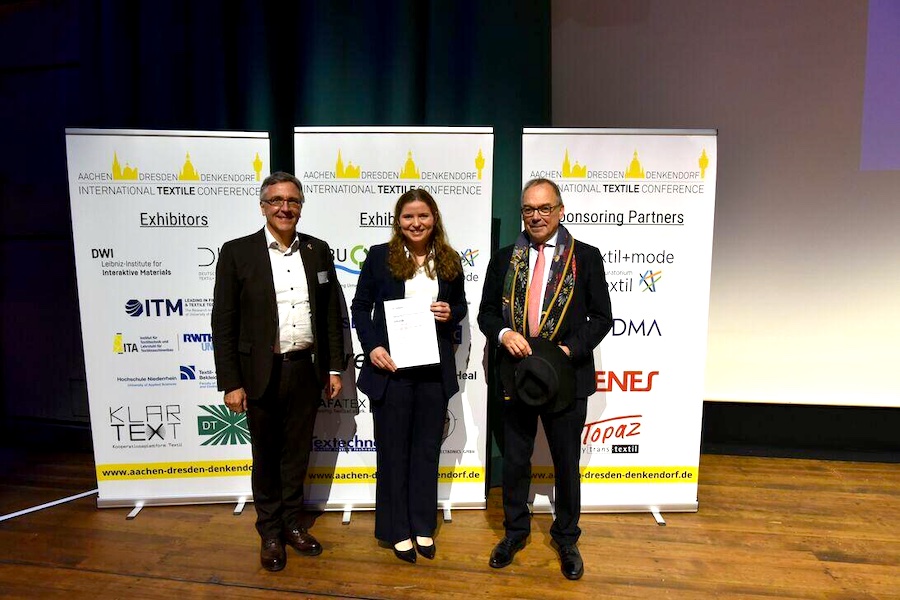
ITA Master's student Janne Warnecke investigated tension differences over the fabric width in the weaving process and thereby contributed to quality assurance; ITA Bachelor's student Jasmin Roos found a basis for the development of recyclable yarns and textiles. For these developments, they were awarded the Walter Reiners Foundation's Promotion and Sustainability Prizes on 27 November. Peter D. Dornier, Chairman of the Walter Reiners Foundation, presented the awards at the Aachen-Dresden-Denkendorf International Textile Conference (ADD-ITC) in Aachen, Germany.

#Associations

Young researchers recognised for cutting-edge work in recycling, fibre technology and textile mechanics

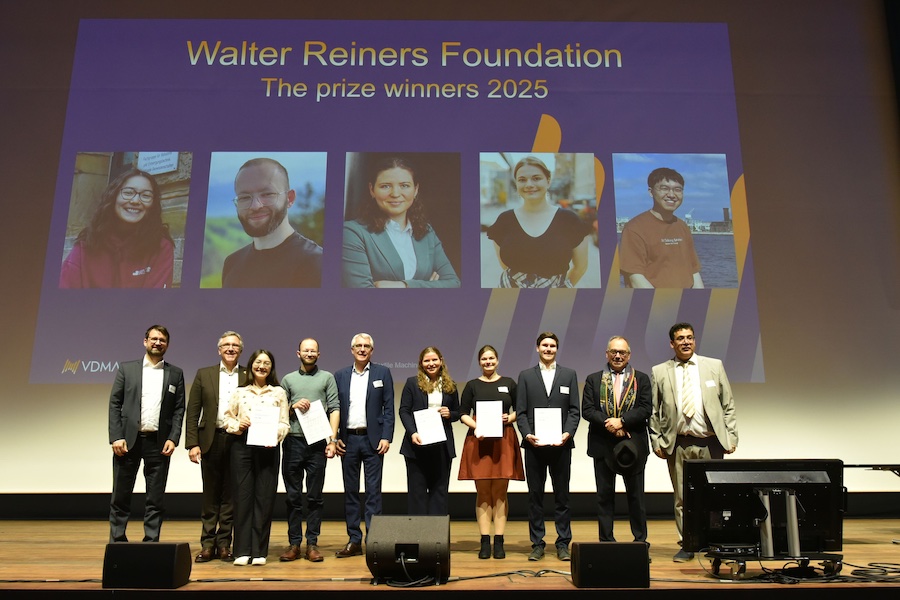
At the Aachen-Dresden-Denkendorf International Textile Conference held in Aachen at the end of November, Peter D. Dornier, Chairman of the Walter Reiners Foundation of the VDMA, honoured five successful young engineers. Promotion and sustainability prizes were awarded in the categories bachelor/project theses and diploma/master theses. Academic theses that develop solutions for resource-saving products and technologies, for example, are eligible for the sustainability awards.

Latest News

#Spinning

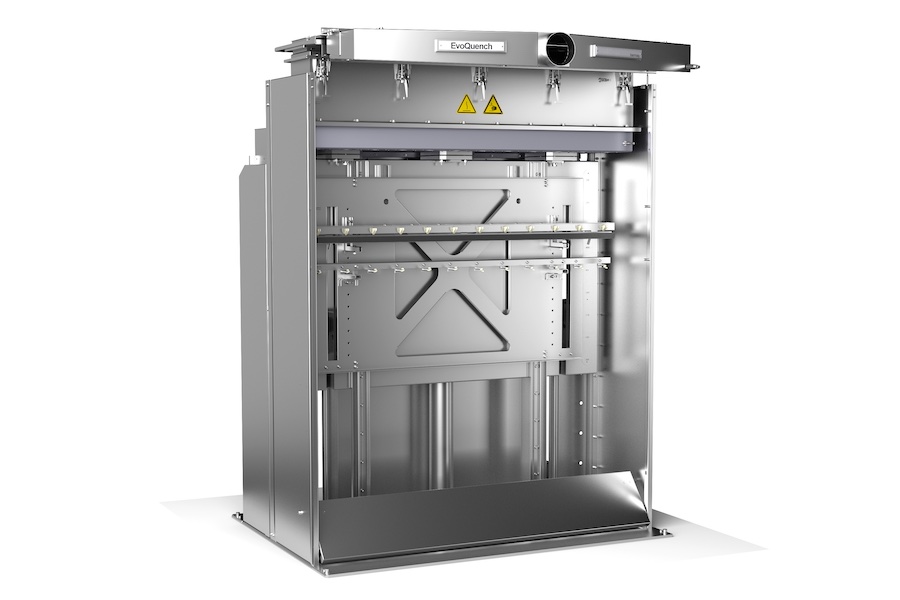
First PA66 spinning plant with EvoQuench successfully commissioned

With the successful commissioning of a multi-digit PA66 spinning line for microfiber yarns, Chinese textile company Shandong Nanshan Fashion Technology Co., Ltd. has added yarn production to its textile value chain.

#Knitting & Hosiery

SHIMA SEIKI returns to ShanghaiTex

Leading flat knitting solutions provider SHIMA SEIKI MFG., LTD. of Wakayama, Japan, together with its Hong Kong and Chinese market subsidiary SHIMA SEIKI (HONG KONG) LTD., will exhibit at the ShanghaiTex 2025 exhibition (Booth No.: Hall N3, Booth A20) held in Shanghai, China this month. This marks the return of SHIMA SEIKI to ShanghaiTex after a 14-year hiatus, its last exhibit at the show having been in 2011.

#Man-Made Fibers

arena introduces renewable LYCRA® EcoMade fiber in its latest swimwear collection

Italian swimwear specialist arena has unveiled a new collection that brings sustainability and performance even closer together. Launched on December 4, the line features swimsuits made from recycled nylon and renewable LYCRA® EcoMade fiber — the first time the bio-based spandex has been used commercially in swimwear.

#Spinning

Saurer Technologies Twisting Solutions at ICFE 2026

Saurer Technologies Twisting Solutions, a global leader in textile machinery innovation, will be present at the International Carpet and Flooring Expo ICFE 2026. Join us January 6–9 at the Istanbul Expo Center, Türkiye, as industry leaders, manufacturers, and innovators gather to explore the latest breakthroughs in carpet and flooring technology. Let’s meet at the new established global Center of the Carpet Sector in hall 3, booth 300!

TOP