[pageLogInLogOut]

#Research & Development

Toray develops Hollow Fiber Membrane Module that can slash CO2 emissions in food and beverage and biotechnology processes

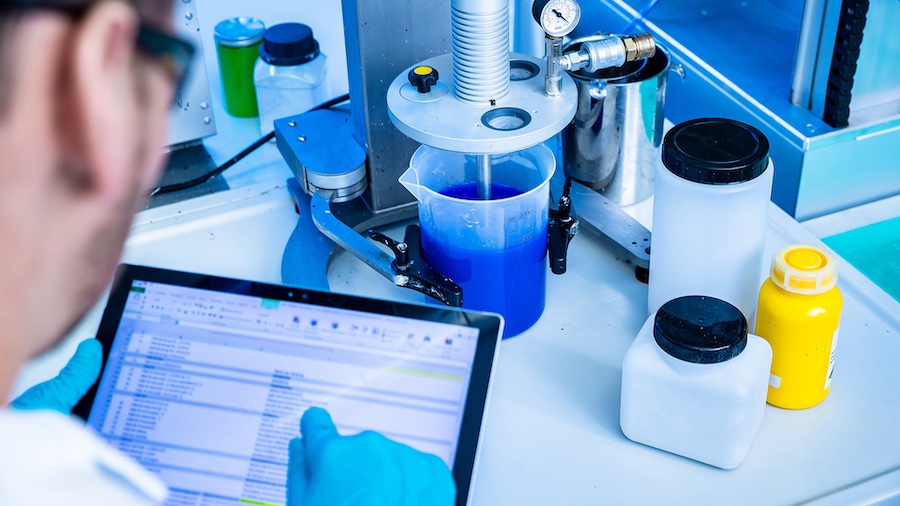
Toray Industries, Inc., announced today that it has developed and begun supplying samples to customers of an exceptionally robust hollow fiber ultrafiltration membrane module for food and beverage manufacturing and biotechnology purification and concentration processes.

This module can save energy and contribute to carbon neutrality by attaining CO2 emissions that are more than 80% lower than those from the food production sector’s conventional thermal concentration processes. The company will accelerate development, with a view to full-fledged mass production, and will cultivate an array of applications.

Hollow fiber membranes have become one of the mainstream in liquid filtration due to their excellent separation, high membrane integration, reduced footprint, and superb area utilization efficiency. Toray’s exiting hollow fiber membranes are used widely in water treatment. This is because its polyvinylidene fluoride ultrafiltration hollow fiber membrane technology delivers exceptional durability and separability.

Toray leveraged the high-strength hollow fiber membrane technology cultivated in water treatment to develop the new module, which employs an outside-in type crossflow filtration design. Crossflow filtration is a common technique, through which feed passes parallel to membrane surface and prevents turbidity from accumulating. Pressure losses from this design are just one-third those of inside-out type that food companies normally use. It is thus possible to filter and concentrate highly turbid or viscous liquids, which is challenging with regular membranes.

Other benefits of Toray’s new module are that it features large membrane area technology which reduces the number of modules needed, halving space requirements and potentially lowering cleaning and equipment costs by more than 20%.

The module performs well in steam (125°C) and hot water (90°C) environments to enable thermal sterilization and high temperature filtration. Filtration testing of a high turbidity microbial culture solution with the new module demonstrated stable, long-term filtration, with steam sterilization preventing bacterial contamination for more than 20 days.


Toray will build collaborative ties with engineering companies in Japan and abroad to develop an array of uses. They include high-viscosity, and high-turbidity raw water applications that have to date employed solid-liquid separation technologies such as diatomaceous earth filtration or centrifugation. They also encompass food manufacturing and bio production processes in which production lines require thermal sterilization.

Based on the corporate philosophy, Toray will contribute to the development of society and technology by continuing to produce high-performance, cutting-edge materials.
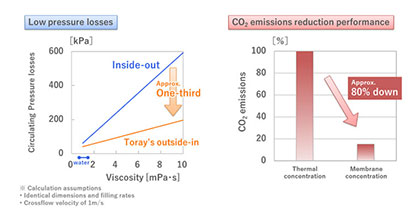
Figure 1: Low pressure loss characteristics and CO2 emissions reduction performance


Figure 2: Benefits of large membrane area


https://go.mktg.toray/t012-WC-20211119-1965-01-DownloadPage.html


More News from Toray Engineering Co. Ltd.

#Recycling / Circular Economy

Toray develops recycling technology that retains carbon fiber strength and surface quality

Toray Industries, Inc., announced today that it has developed a recycling technology that can decompose diverse carbon fiber reinforced plastics (CFRP) made from thermosetting resins while retaining the strength and surface quality of those fibers. The company drew on this technology to create a nonwoven fabric employing recycled carbon fibers.

#Composites

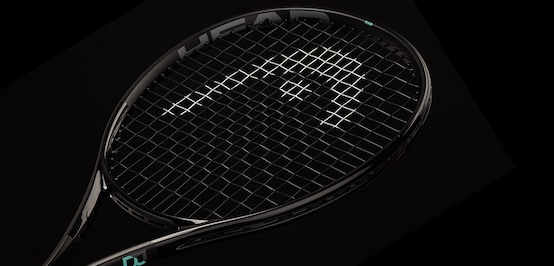
HEAD launches more sustainable(1) BOOM RAW racquet on Earth Day by using Toray’s bio-circular carbon fibers

HEAD continues to innovate with the launch of the BOOM RAW tennis racquet, an encouraging development in the search for a more sustainable future for racquet sports. All of the carbon fibers are bio-circular carbon fibers in the limited-edition and highly innovative BOOM RAW racquet, which offers the same explosive power - along with the same fun, feel and easy playability - as the regular, in-line BOOM racquet. The bio-circular carbon fibers are manufactured by Toray and its subsidiary Toray Carbon Fibers Europe.

#Recycling / Circular Economy

Companies in Japan initiate demonstration to expand the automotive recycling process

DENSO CORPORATION and other partners have been chosen by an industry-government-academia collaborative project aiming to expand the recycle content for automobile in the fiscal year 2023 supported by Ministry of the Environment, Japan.

#Yarn & Fiber

Toray develops durable reverse osmosis membrane

Toray Industries, Inc., announced today that it has developed a highly durable reverse osmosis (RO) membrane (see glossary note 1). This innovative offering guarantees the long-term provision of high-quality water. It also maintains the superior removal performance of Toray’s existing membranes vital for reusing industrial wastewater and treating sewage.

More News on Research & Development

#Research & Development

Pellet press enables thermomechanical textile recycling on a pilot scale at ITA

Since the end of 2025, the technical centre of the Institut für Textiltechnik (ITA) of RWTH Aachen University has been equipped with a pellet press from the manufacturer Amandus Kahl GmbH & Co. KG, Reinbek, Germany. This press can efficiently compact shredded synthetic textiles at a throughput of up to 25 kg/h and process them into pellets with a diameter of 4 mm.

#Composites

STFI at JEC

The Sächsisches Textilforschungsinstitut e.V. (STFI) will present composites for aviation made from recycled carbon fibres and natural fibres, as well as printed lightweight elements for surface heating in electric vehicles at JEC World in Paris.

#Research & Development

Fabolose: Fabricating vegan and circular leather alternatives from bio-tech-derived cellulose

Fabulose is an EU funded project coordinated by the German Institutes of Textile and Fiber Research (DITF). Its consortium consists of leading research institutes, biotech innovators, and industry stakeholders who aim to create high-performance, biobased and recyclable leather-like fabrics, using efficient biotech production routes for bacterial cellulose, cyanophycin and bacterial pigments

#Research & Development

New DIN SPEC assesses environmental impact of textile fragments in soil

Textile products made from synthetic fibres, finished fabrics or dyed materials release fibre fragments into the environment at every stage of their life cycle. With the new DIN SPEC 19296, Hohenstein has developed a standardised testing method to analyse how these fragments behave in soil under natural conditions. Until now, little was known about their environmental behaviour or potential ecological effects once released.

Latest News

#Composites

JEC World 2026 returns with an unprecedented content program

Recognized worldwide as the leading trade exhibition for composite materials and their applications, JEC World returns on March 10-12, 2026, at Paris Nord Villepinte as the most ambitious edition to date, in line with its motto “Pushing the limits”. As the must-attend event for the composites industry, JEC World will offer an unprecedented program, blending conferences, markets insights, technical sessions, awards, and above all, a unique experience and invaluable connections.

#Raw Materials

Beyond the wardrobe – innovative cotton takes the spotlight

Cotton can do more – a lot more. Cutting-edge textiles and high-tech products made from 100% cotton prove just how powerfully performance and sustainability can come together. That very surge of innovation is front and centre at the 38th Bremen Cotton Conference, taking place March 25–27, 2026, at Bremen’s Parliament on the historic market square – culminating in a bold and dedicated closing session on Friday. In the spotlight: performance upgrades for pure cotton, smart strategies for circular textile waste solutions, and pioneering concepts for demanding technical applications. From natural fibre–reinforced composites to highly effective flame-retardant solutions, cotton steps out of the closet and shows the future potential woven into every fibre.

#Digital Printing

Keeping print inclusive: Empowering women in the print industry

Across all industries, cultivating a diverse and inclusive workplace is increasingly recognised as valuable and essential to long-term success. However, despite the print industry’s significant advancements in technology and innovation, visible representation of women remains limited. As the sector grapples with low recruitment, it’s important to challenge outdated perceptions. Creating real change, however, requires collective effort - no single company can do it alone.

#Texprocess 2026

Texprocess 2026: market overview for strategic future investments

At Texprocess 2026, 200 exhibitors from 28 countries will be represented. In a challenging market environment, the leading trade fair is a constant and reflects progress in textile processing – driven by automation, digitalisation and AI. In addition, international start-ups present their ideas and meet partners from industry and research. Techtextil takes place in parallel with an optimised hall layout.

TOP