[pageLogInLogOut]

#Research & Development

ITA Group becomes ITA Group International Centre for Sustainable Textiles

Biobased fibres (flax, hemp, PLA) on a lab carding machine and biodegradable automotive door panel © 2021 ITA
The current assessment report of the Intergovernmental Panel on Climate Change (IPCC) has highlighted the urgency by which we must transform value creation processes in order to secure the future of the earth as a healthy biosphere. Approximately 8 – 10 % (about 4 to 5 billion tonnes) of global CO2 emissions are generated during the production of textiles.

The textile industry is responsible for about 92 million tons of textile waste per year, most of which is landfilled or incinerated. Less than 1% of the 100 billion textiles manufactured annually worldwide are recycled and regenerated into high-quality products. Thus, the textile industry is still far away from a circular economy. Technologies for recycling and reprocessing for textile products, which are characterised by a complex mix of materials, are scarce. The logistics for collecting, sorting and separating textile waste leave many questions unanswered.

Textile-based lightweight construction is a basis for a resource-efficient transport sector. But how do we recycle the expensive and complex material mixes, once cars, planes and other vehicles have reached the end of their service life? Incineration is not a solution for the future!

The necessary transformation process to a circular economy must incorporate all stakeholders of the textile industry: From the raw material along the textile production chain to the users of the products - including reprocessing and recycling, also in the sense of upcycling. Both, regulatory intervention in the market and changes in the attitudes and behaviour of market participants are required. Research must develop innovative and sustainable solutions, which have to be validated and scaled for market use. Classic linear business models will be supplemented or even replaced by new, digitally based value added networks. The textile sector must open up to neighbouring sectors in order to exploit synergy effects - e.g. the use of agricultural waste as raw material for textile fibres. When it comes to raw materials, the textile industry must not be in competition with global food production. In this respect, there are no simple solutions; the research questions are complex and can only be solved with a holistic approach and in a transdisciplinary manner.

Against this background, the ITA Group is presenting itself as the International Centre for Sustainable Textiles. The ITA Group is formed around the Institut für Textiltechnik of RWTH Aachen University (ITA) as a core with several spin-offs and branches to address specific market needs and topics.

ITA's goal is the holistic biotransformation of textile technology and thus the use of biological principles for cycle-oriented value creation processes. This includes, for example, the closing of raw material cycles, the reduction of energy and water consumption for production processes and the principle of "design for recycling" as a fundamental paradigm of product development. An existing flagship is the innovation space BIOTEXFUTURE. The aim is to develop a biobased and sustainable raw material base for plastics, its application in the textile industry and to address an overall societal change towards a bioeconomy. Another flagship project with major contribution from ITA is Bio4MatPro, the competence centre for the biological transformation of materials science and production technology.


The transformation process of the textile world must also integrate economic and social issues. The UN's Sustainable Development Goals (SDGs) set out a complex framework of requirements which must be met. This involves the economic design of process chains, the realignment of business models and sustainable innovation management. - taking into account the impact on the people who produce, use and recycle textiles. Thus, the future of work is another important focus of ITS's research. Jobs, both in production and in all other functional areas of companies, are changing massively. The associated transformation and qualification processes means are a great challenge to them.

The digitalisation of all areas of life should also be seen as an opportunity in the context of a biotransformation. The highly fragmented value chain with many individual processes is increasingly networked and digitally mapped. Based on the paradigms of Industry 4.0, the implementation of AI use cases, digital business models and data-based networking along the value stream is now the new challenge. Textile products are also becoming digital (smart textronics). A corresponding production technology for serial production of customised smart textiles must be developed, including the corresponding recycling concepts.

Textile Innovations: Sustainable. Digital. Individual.

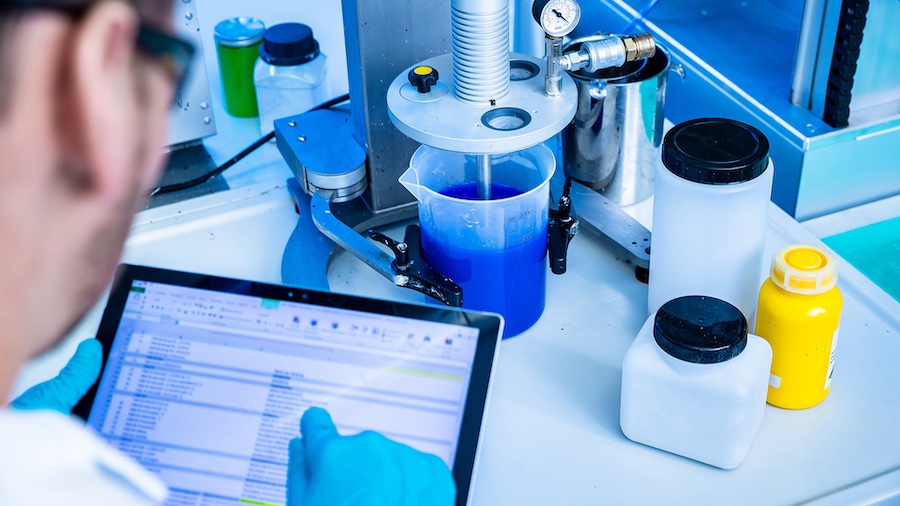
As an internationally active research and qualification service provider with about 400 employees, ITA Group develops fibre-based high-performance materials, textile semi-finished products and their production processes.

• The Institut für Textiltechnik of RWTH Aachen University (ITA) focusses on academic teaching and research in the entire range of applications for the global megatrends. ITA is embedded in the excellent research location of Aachen, with numerous globally renowned cooperation partners, especially from RWTH Aachen University and the Forschungszentrum Jülich. The director of ITA and ITA Group is Prof. Thomas Gries.

https://www.ita.rwth-aachen.de/cms/~jezh/ITA/?lidx=1

• ITA GmbH is the technology transfer institution for bi- or multilateral cooperation with companies worldwide.

http://www.ita-gmbh-ac.de/language/en/home-en/

• ITA Academy with the Digital Capability Center is the training and development partner for the digitalisation of production processes.

https://dcc-aachen.de/de/english/

• ITA Augsburg develops innovative processes for textile recycling and cost-efficient composite materials.

https://ita-augsburg.com/

• APS - European Centre for Mechatronics stands for collaborative robotics and smart systems.

https://aps-aachen.de/en/

• The Smart Textronics Center (STC) brings together the expertise of SMEs in South Korea and Germany to design and series production of smart textiles.

https://www.d2l2f.com/eng/

• ITA Medical develops, produces and distributes semi-finished textile products for medical applications.


More News from Institut für Textiltechnik of RWTH Aachen University (ITA)

#Research & Development

Exchange data between textile companies openly, securely and cost-effectively without a central platform – ITA makes it possible

The Institut für Textiltechnik (ITA) of RWTH Aachen University has launched a new demonstrator for an open and secure data space in the textile industry at the Digital Innovation Centre Europe (DICE). For the first time, the demonstrator shows directly and clearly how companies can share their data securely with each other without the need for a central platform. Data exchange is based on shared, freely usable technical foundations.

#Research & Development

Sustainable athletic wear made from bio-based Polyethylene

Conventional sports textiles made from petroleum-based synthetic fibres are to be replaced in the future by sustainable, bio-based, cooling textiles. Polyethylene, previously used mainly in the packaging industry, is thus qualified for use in textiles and, as a bio-based drop-in solution, offers a cost-effective, sustainable alternative for the future.

#Research & Development

India, ITA and innovation – enhanced cooperation in research, implementation and bilateral projects such as hydrogen mobility

The Indian Consul General, Dr Shuchita Kishore, visited the Institut für Textiltechnik (ITA) of RWTH Aachen University on 15 December to inspect the joint project between the ITA, the Indian Institute of Technology (IIT) Bombay and industrial partners from India and Germany and to tour the ITA.

#Research & Development

Small tolerances, big impact and a recyclable alternative to elastane

ITA Master's student Janne Warnecke investigated tension differences over the fabric width in the weaving process and thereby contributed to quality assurance; ITA Bachelor's student Jasmin Roos found a basis for the development of recyclable yarns and textiles. For these developments, they were awarded the Walter Reiners Foundation's Promotion and Sustainability Prizes on 27 November. Peter D. Dornier, Chairman of the Walter Reiners Foundation, presented the awards at the Aachen-Dresden-Denkendorf International Textile Conference (ADD-ITC) in Aachen, Germany.

More News on Research & Development

#Research & Development

Innovation center for textile circular economy inaugurated

Just over eight months after the foundation stone was laid, the new Innovation Center for Textile Circular Economy was officially inaugurated today at TITK Rudolstadt. Thuringia's Minister President Mario Voigt, TITK Director Benjamin Redlingshöfer, and other guests of honor cut the ribbon to the modern building complex and viewed the premises, which are now ready for occupancy. The “DICE – Demonstration and Innovation Center for Textile Circular Economy” is TITK's largest single investment to date. The Free State of Thuringia supported the total cost of €11.5 million with €8 million in GRW and FTI funding.

#Research & Development

Sustainable design of Geosynthetics and roof underlayments made from recyclates

Is it possible to recover plastic recyclates from previously unused waste streams in order to produce high-quality fibers and films? How can bio-based polymer fibers be manufactured so as to allow adjustable biodegradability? These are the questions being addressed by researchers from the Fraunhofer Cluster of Excellence Circular Plastics Economy CCPE in the Zirk-Tex project.

#Research & Development

More safety and comfort for protective clothing thanks to auxetic fabrics

When everyday materials are pulled, they stretch or elongate in the direction of the pull and become narrower in cross-section. We can also observe this property in two-dimensional textiles. Auxetic structures behave differently here. They have the striking property of not changing under tensile stress or even increasing their width or thickness. These properties are advantageous, for example, in protective textiles or textile filter media. The DITF are researching auxetic fabrics for various applications.

#Research & Development

Fraunhofer CCPE presents the “Monomaterial Design Set” – Innovative solutions for circular product design

Composite materials made from different types of plastic often extend the lifetime of products but make recycling more difficult in the circular economy. That is why Fraunhofer CCPE has developed the “Monomaterial Design Set”. This new approach helps to reduce the variety of plastics used in durable products and offers circular solutions for designers and product developers.

Latest News

#Denim

ISKO’s denim language at Bluezone

ISKO returns to Bluezone to showcase its latest advancements in denim innovation, presenting a comprehensive overview of its SS27 collection alongside key creative and technological collaborations. At booth C02, ISKO offers visitors an immersive look into how performance, design, and circular thinking are shaping the future of denim.

#Natural Fibers

Modern testing methods for raw cotton

The 38th International Cotton Conference Bremen will take place from 25 to 27 March 2026 at the Bremen Parliament. This conference has traditionally stood for in-depth expertise and international exchange. The program will focus on technical innovations, market trends, and regulatory frameworks across the entire value chain – from agriculture to the circular economy. With high-profile speakers, the conference is regarded as the key meeting point for the global cotton industry. Today’s focus: Cotton quality and testing methods.

#Man-Made Fibers

Kelheim Fibres GmbH informs about the closure of operations

The management of Kelheim Fibres GmbH informs that business operations will be terminated as of 31 March 2026. A continuation of the company beyond this date is not possible. The investor and sales process conducted within the framework of the self-administration did not lead to a positive outcome. The potential strategic investor who most recently entered the process has withdrawn from a potential investment at short notice.

#Europe

EU and India conclude landmark Free Trade Agreement

The EU and India concluded negotiations today for a historic, ambitious and commercially significant free trade agreement (FTA), the largest such deal ever concluded by either side. It will strengthen economic and political ties between the world's second and fourth largest economies, at a time of rising geopolitical tensions and global economic challenges, highlighting their joint commitment to economic openness and rules-based trade.

TOP