[pageLogInLogOut]

#Recycling / Circular Economy

ANDRITZ tearing line producing recycled fibers for mattresses starts up at Sealy Australia
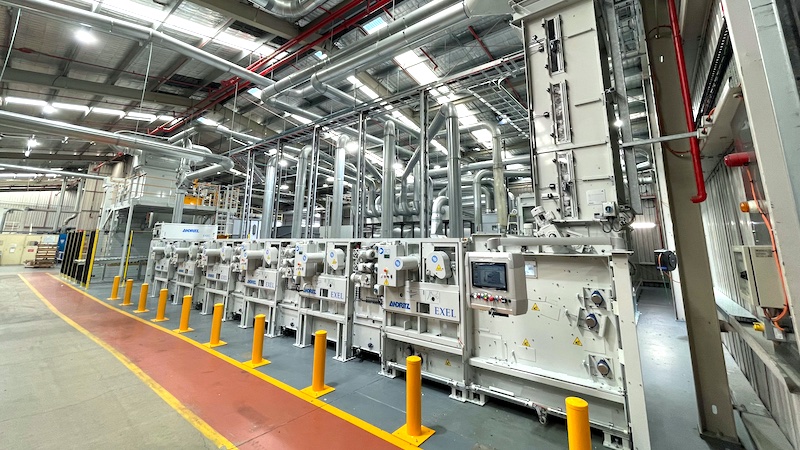
International technology group ANDRITZ supplied and recently commissioned a tearing line at Sealy Australia’s mattress manufacturing plant in Brisbane.
ANDRITZ reXline tearing for textile recycling at Sealy Australia’s mattress plant in Brisbane<br />
© 2024 Andritz
ANDRITZ reXline tearing for textile recycling at Sealy Australia’s mattress plant in Brisbane © 2024 Andritz


Versatile technology enables Sealy to recycle post-consumer and post-industrial textile waste in one line.

Sealy is a leading Australian manufacturer of high-quality mattresses, producing 1,000 mattresses per day at its Brisbane plant. To replace some of the virgin fiber feedstock with more sustainable recycled fibers, the company installed an ANDRITZ tearing line at the plant.

The ANDRITZ reXline tearing can process up to 1,200 kg/h of cotton denim waste and up to 800 kg/h of quilt waste. The 6-cylinder Exel module allows flexible switching between the two types of material. The combination of the reXline and the ANDRITZ airfelt line, which has been in operation at the Brisbane plant since 2008, enables Sealy to process large amounts of waste into new mattresses ready for sale around the world.

“With our new line, we are taking a significant step towards circularity by making new mattresses from textile waste that would otherwise be burnt or landfilled,” says Shaun Guest, Fiber Plant Factory Manager of Sealy Australia, adding, “It has been a pleasure to collaborate with the ANDRITZ textile recycling experts again. They are the right partner to support us in our ambitious projects.”
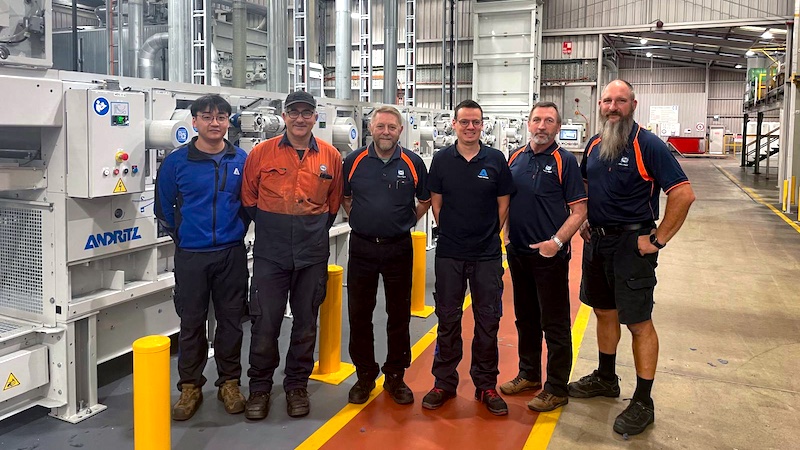
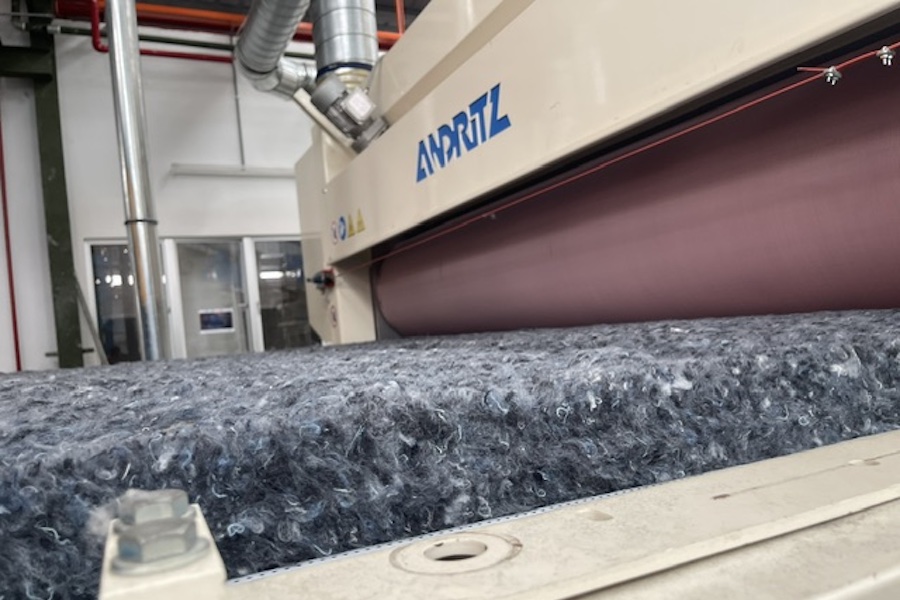
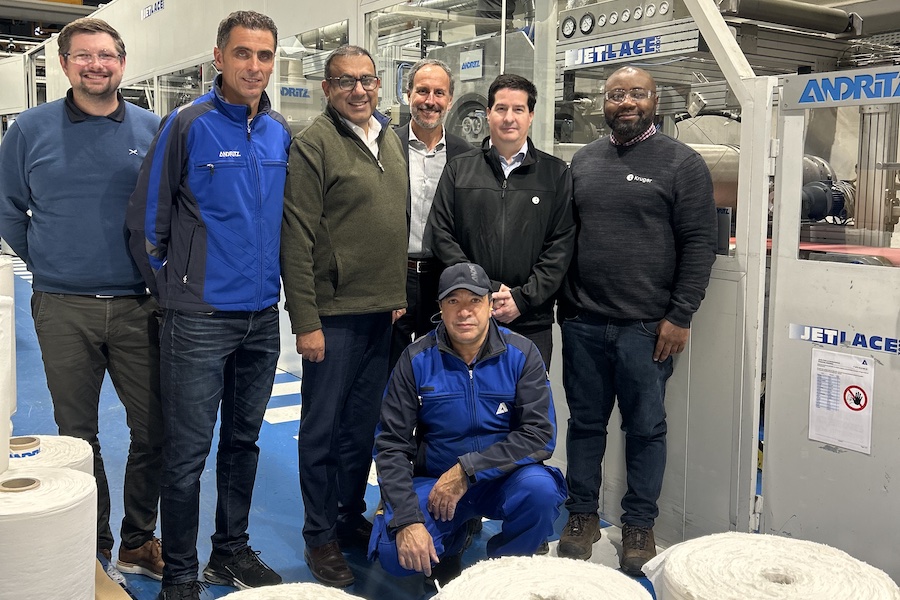
Sealy Australia and ANDRITZ teams in front of the 6-cylinder EXEL module © 2024 Andritz


More News from ANDRITZ Nonwoven

#Nonwoven machines

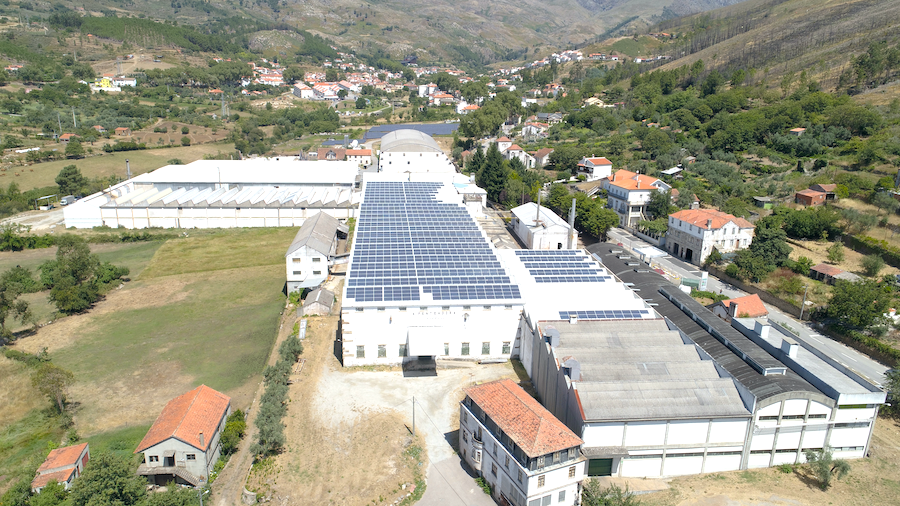
A Penteadora starts up ANDRITZ textile recycling and needlepunch nonwoven lines in Portugal

A Penteadora SA has successfully started up a complete mechanical textile recycling line and a needlepunch nonwoven line supplied by ANDRITZ at its production site in Unhais da Serra, Portugal. This investment enables A Penteadora to expand its industrial capabilities and develop a new generation of solutions based on pre- and post-consumer recycled textiles. The input materials originate from its own production waste and other textile waste streams. Both lines are fully operational, and the first products are expected to reach the market in July.

#Nonwoven machines

ATCO Hygienics, Uzbekistan, orders baby diaper production line from ANDRITZ

International technology group ANDRITZ has received an order from ATCO Hygienics to supply a new baby diaper production line for its plant in Tashkent, Uzbekistan. The order is included in ANDRITZ’s order intake for the first quarter of 2026. Commissioning of the production line is scheduled for the end of 2026.

#Nonwoven machines

Kruger, Canada, orders first nonwovens line for sustainable wipes from ANDRITZ

International technology group ANDRITZ has received an order from newly established Kruger Nonwovens to deliver a complete WetlaceTM hybrid line for the Wayagamack mill in Trois-Rivières, Quebec, Canada. With this investment, pulp and paper producer Kruger is preparing to enter the nonwovens market with a new generation of plastic-free, chemical-free materials for sustainable wipes. The line is the first of its kind in Canada and is scheduled to start production in 2028.

#INDEX 2026

ANDRITZ at INDEX ’26: Driving sustainability with next-generation nonwoven technologies

From May 19-22, ANDRITZ Nonwoven & Textile is presenting its innovative solutions for the nonwoven & textile industry in Geneva, Switzerland. ANDRITZ will focus on technologies for sustainable and durable nonwovens, converting, sustainable fiber processes, textile recycling, and life-cycle services on booth 2114 in hall 02.

More News on Recycling / Circular Economy

#Recycling / Circular Economy

Industrial scale meets verified governance: RE&UP is now B Corp™ certified

RE&UP, the circular-tech transforming global textile waste into high-volume Next-Gen materials, has officially become a Certified B Corporation™. The milestone establishes the industrial recycler among a select group of manufacturing infrastructure providers verified as meeting B Lab Standards for social and environmental performance, transparency, and accountability.

#Recycled Fibers

Recover™ and Ünteks Group partner to scale recycled cotton in knitwear

Recover(TM), a global producer of low‐impact, high‐quality recycled cotton fiber, announces a new partnership with Ünteks Group, a vertically integrated textile manufacturer based in Turkey. The collaboration focuses on the development of circular knit fabrics and garments, combining Recover’s recycled cotton fiber with Ünteks Group’s integrated capabilities across knitting, dyeing, printing, and garment production.

#Research & Development

ALADIN paves the way for circular and demand-driven textile production in Europe

Textile production can be organized sustainably by utilizing short supply chains and preventing overproduction. This can already be achieved today by intelligently connecting and efficiently utilizing existing infrastructure. At the same time, production becomes circular when innovative technologies and materials are used that enable high-quality recycling. The ALADIN research project, launched in May 2026 and co-funded with five million euros under the EU Horizon Europe program, is creating the conditions for this.

#Recycling / Circular Economy

Ence and ShareTex begin initial testing of the ATENEA innovation project to promote textile recycling in Spain

Ence and ShareTex are making progress on the Atenea R&D project, which aims to develop a complete value chain for textile recycling in Spain. Specifically, the goal of the ATENEA project—which is funded by the Center for Technological Development and Innovation (CDTI)—is to connect all the necessary stages for the recovery of textile waste, from collection and management, through recycling and transformation into new raw materials, to their incorporation into new textile products.

Latest News

TOP