[pageLogInLogOut]

#Recycling / Circular Economy

Companies in Japan initiate demonstration to expand the automotive recycling process

DENSO CORPORATION and other partners have been chosen by an industry-government-academia collaborative project aiming to expand the recycle content for automobile in the fiscal year 2023 supported by Ministry of the Environment, Japan.

The project, titled "Demonstration of Manufacturing-and-Recycling Integrated Process for Horizontal Cycle* Enabled by Automated Sophisticated Dismantling of ELVs, (end-of-life vehicles)" has begun in early March and is scheduled to conclude by the end of January 2025.

Project participants include REVER CORPORATION, DIC Corporation, UACJ Corporation, Kaneshiro Sangyou, KYUSHU METAL INDUSTRY CO., LTD., SUMITOMO CHEMICAL COMPANY, Daido Steel Co., Ltd., Toray Industries, Inc., Toyoda Gosei Co., Ltd., TOYOTA BOSHOKU CORPORATION, Nomura Research Institute, Ltd., Furukawa Electric Co., Ltd., MATEC Inc., Mitsui Chemicals, Inc., Waseda University and others.

In recent years, the automotive industry has sought to transition to a circular economy to achieve a more sustainable society. In the effort, it is necessary to significantly expand the use of recycled materials in automotive products, helping reduce the need for freshly cultivated natural resources.

Even so, current global processes often involve shredding ELVs and separating the remaining materials for use in recycled products, a process that can make acquiring high-purity material a challenge. Further compounding the issue is a lack of shared standards between the manufacturing and recycling industries. Moreover, the recycling industry responsible for ELV processing faces business challenges such as severe labor shortages and the need to optimize work environments. Addressing these challenges requires a shift towards new processing methods for ELVs that not only solve these issues but also ensure the quality and quantity of recycled materials.

In this project, participating companies such as ELV dismantling and shredding operators, dismantling system providers, material manufacturers, automotive parts manufacturers, and research institutions are collaborating to realize a new ELV processing method based on automated sophisticated dismantling and conduct a technology demonstration of an integrated process.

Through this demonstration, the group will identify the challenges involved in implementing this integrated ecosystem that combines manufacturing and recycling industries within society. Specifically, the project will include the technology demonstration of the automated sophisticated dismantling process, the high-purity and re-resource processes for various materials extracted through advanced dismantling, and the prototyping and evaluation of parts made from these recycled materials. Additionally, the project will verify the sustainability of the whole process, evaluating how much carbon output it can reduce compared to current processes.



More News from Toray Engineering Co. Ltd.

#Man-Made Fibers

Toray develops AURLIST™ polyester filament fiber with luxurious luster and ultra-fine structure

Toray Industries has developed AURLIST™, a new polyester filament fiber designed to combine luxurious luster, soft loft and a subtle fibrillated surface texture. The company primarily targets applications in women’s apparel such as tops, bottoms and dresses.

#Recycling / Circular Economy

Toray develops recycling technology that retains carbon fiber strength and surface quality

Toray Industries, Inc., announced today that it has developed a recycling technology that can decompose diverse carbon fiber reinforced plastics (CFRP) made from thermosetting resins while retaining the strength and surface quality of those fibers. The company drew on this technology to create a nonwoven fabric employing recycled carbon fibers.

#Composites

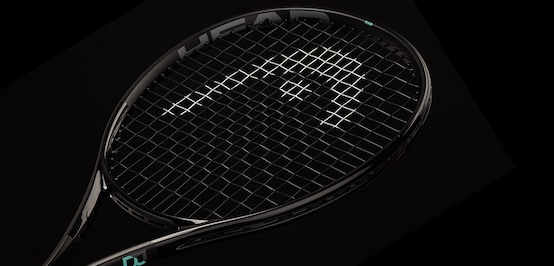
HEAD launches more sustainable(1) BOOM RAW racquet on Earth Day by using Toray’s bio-circular carbon fibers

HEAD continues to innovate with the launch of the BOOM RAW tennis racquet, an encouraging development in the search for a more sustainable future for racquet sports. All of the carbon fibers are bio-circular carbon fibers in the limited-edition and highly innovative BOOM RAW racquet, which offers the same explosive power - along with the same fun, feel and easy playability - as the regular, in-line BOOM racquet. The bio-circular carbon fibers are manufactured by Toray and its subsidiary Toray Carbon Fibers Europe.

#Yarn & Fiber

Toray develops durable reverse osmosis membrane

Toray Industries, Inc., announced today that it has developed a highly durable reverse osmosis (RO) membrane (see glossary note 1). This innovative offering guarantees the long-term provision of high-quality water. It also maintains the superior removal performance of Toray’s existing membranes vital for reusing industrial wastewater and treating sewage.

More News on Recycling / Circular Economy

#Recycling / Circular Economy

Industrial scale meets verified governance: RE&UP is now B Corp™ certified

RE&UP, the circular-tech transforming global textile waste into high-volume Next-Gen materials, has officially become a Certified B Corporation™. The milestone establishes the industrial recycler among a select group of manufacturing infrastructure providers verified as meeting B Lab Standards for social and environmental performance, transparency, and accountability.

#Recycled Fibers

Recover™ and Ünteks Group partner to scale recycled cotton in knitwear

Recover(TM), a global producer of low‐impact, high‐quality recycled cotton fiber, announces a new partnership with Ünteks Group, a vertically integrated textile manufacturer based in Turkey. The collaboration focuses on the development of circular knit fabrics and garments, combining Recover’s recycled cotton fiber with Ünteks Group’s integrated capabilities across knitting, dyeing, printing, and garment production.

#Research & Development

ALADIN paves the way for circular and demand-driven textile production in Europe

Textile production can be organized sustainably by utilizing short supply chains and preventing overproduction. This can already be achieved today by intelligently connecting and efficiently utilizing existing infrastructure. At the same time, production becomes circular when innovative technologies and materials are used that enable high-quality recycling. The ALADIN research project, launched in May 2026 and co-funded with five million euros under the EU Horizon Europe program, is creating the conditions for this.

#Recycling / Circular Economy

Ence and ShareTex begin initial testing of the ATENEA innovation project to promote textile recycling in Spain

Ence and ShareTex are making progress on the Atenea R&D project, which aims to develop a complete value chain for textile recycling in Spain. Specifically, the goal of the ATENEA project—which is funded by the Center for Technological Development and Innovation (CDTI)—is to connect all the necessary stages for the recovery of textile waste, from collection and management, through recycling and transformation into new raw materials, to their incorporation into new textile products.

Latest News

TOP