[pageLogInLogOut]

#Recycling / Circular Economy

Recycled yarn – the future reality now
© 2023 Uster
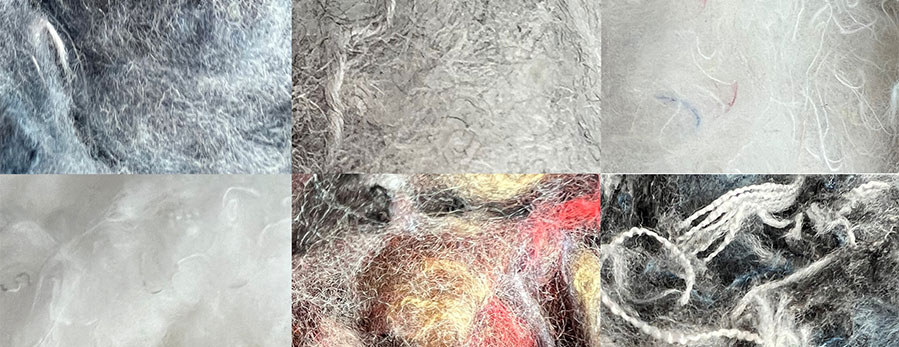
Spinning yarn blends of virgin and recycled fibers is a much bigger challenge than any other commonly used blend. But the results can still be acceptable with comprehensive quality testing, know-how and experience – as well as the new Uster Statistics 2023 edition as a vital benchmarking tool.

The European Union has defined a strategy for sustainable and circular textile production, to make the sector greener and more competitive. Part of this 2030 Vision for Textiles calls for all textile products on the EU market to be durable, repairable and recyclable – and largely made of recycled fibers. Many leading retailers are also championing the use of recycled materials from 2030 onwards.

The use of mechanically recycled fibers in spinning has specific quality considerations: such fibers have a higher short fiber and nep content and may often be colored, particularly if post-consumer material is used. It’s also true that recycled yarns have limitations in terms of fineness. Officially, a yarn can only be branded `recycled´ when spun with more than 20% recycled fibers. This is set by the Global Recycled Standard (GRS), a voluntary product specification for tracking and verifying the recycled content of materials in a final product.

Spinning recycled yarns

Blending virgin and recycled cotton together is well known as a challenge for spinners. The smartest spinners and world-class processes simply can’t overcome the fact that some important quality parameters will be adversely affected. It’s clear that the use of recycled cotton in a blend with new fiber will impact on both the overall yarn strength and its CV%. Even the most sophisticated spinning machinery won’t fix the problem.

Awareness of the risk of yarn quality deterioration with recycled fiber blends means that quality control is the only way to assure customer satisfaction. Even then, the task is far from simple. When spinning new materials, Uster strongly recommends taking both numeric test results and graphic evaluations into account, to eliminate the risk of problems in further processing.

Avoiding fabric defects

Spinners face major difficulties because of the high proportion of short fibers in recycled cotton (CO-R) and the fact that, when mixing with virgin cotton (CO), the fiber length distribution is sometimes suboptimal. This results, for example, in incorrect guidance of short fibers in the drafting system and potential draft errors. In tests, a Ne 20 rotor yarn of 75% CO and 25% CO-R was compared with a 100% cotton yarn. The values for evenness, imperfections and hairiness were measured and produced a CVm% of 22% in Uster Statistics, which might appear to indicate excellent quality for the recycled yarn if relying on numeric values alone. In fact, closer analysis with Uster Tester spectrograms showed a draft error at the draw frame. In this case, the problem was detected before causing an uneven structure in the subsequent fabric made from the yarn.


Common language for better communication

It is an unavoidable fact that blending virgin and recycled cotton will make some quality parameters worse. Using recycled fiber is often desirable, but it creates a new reality for the industry. To cope with the risks, better communication and a common understanding are needed throughout the textile value chain.

Uster’s common language of quality will be – once more – vital in improving communication throughout the textile industry. For 66 years, Uster Statistics have been the only globally-accepted quality benchmark and the foundation for industry-wide quality improvement. The new edition, to be launched at ITMA 2023, includes for the first time a section for recycled yarn.

The Uster Statistics 2023 edition features an extended range of fiber data, supporting sustainability goals. An ideal fiber mix – with or without recycled content – also ensures meeting quality requirements for least waste. Fiber graphs will be newly available for every process step.

The new reality

Spinners need to find a way to transform their mills to a more sustainable future. The challenge of spinning recycled yarns must be acknowledged, and the big goal here is to succeed with it. Spinners already have the tools they need, allowing them to benefit from both laboratory instruments and quality monitoring systems to optimize quality and productivity. Their experience, combined with Uster knowledge and latest technology in quality control and analysis systems, are a promising basis for a sustainable future for the textile industry.

The new reality of the need for closer communication and cooperation will include all players from fiber to fabric. It’s an essential debate for everyone – and Uster is ready to take the lead.

More News from Uster Technologies AG

#ITMA Asia + CITME Singapore 2025

Uster presents novelties at ITMA Asia + CITME 2025

There’s news from Uster Technologies to be announced for the industry’s upcoming event in Singapore. The Uster 360Q universe is growing with new products, solutions and services. Innovation developments can also be recorded in the fields of man-made fiber testing and fabric inspection. Uster innovations address the industry’s trending topics as mill management and process control, optimization of delivered fabric quality and yield.

#Spinning

Uster Technologies marks 150 years of empowering quality excellence

Uster Technologies marks 150 years of excellence – a milestone that reflects continuous adaptation to customer needs and industry change. Over the decades, Uster has evolved from manufacturing quality testing instruments into a trusted partner shaping the future of textile production.

#Recycling / Circular Economy

Challenges of making yarn from recycled fibers

What does it take to spin quality yarn from recycled fibers? Uster Technologies brought textile industry leaders together to discuss the role of technology, data and automation – as well as the current challenges in using recycled raw material. Experts from Rieter, Säntis Textiles, Otto Yarns, and TVU commented on the current situation and looked into the future of spinning in a panel discussion organized at Uster headquarters.

#Spinning

Uster Technologies wins another infringement lawsuit

In a ‘victory for innovation in China’ Uster Technologies has secured a decisive judgment in a patent infringement lawsuit against a competitor. The final ruling by the Supreme People’s Court of PR China confirms that the competitor’s actions in copying the patented yarn feeder of the Uster Tester 6 constitute unlawful infringement.

More News on Recycling / Circular Economy

#Research & Development

How innovations drive BASF’s success

“Innovation has always been part of BASF’s DNA. Especially in these volatile times, it is crucial to leverage our innovative strength to develop competitive solutions that differentiate us as a company in our markets and give us a competitive edge,” said Dr. Stephan Kothrade, Member of the Board of Executive Directors of BASF and Chief Technology Officer, at the company’s Research Press Briefing held today. To achieve this, BASF implemented its “Winning Ways” strategy about a year ago with the clear goal of becoming the preferred chemical company to enable its customers’ green transformation.

#Recycling / Circular Economy

Textiles Recycling Expo announces collaboration with Future Fabrics Expo for 2026

The Textiles Recycling Expo has entered a major new collaboration with the Future Fabrics Expo which means that both events will run alongside each other at the Brussels Expo, Belgium on 24–25 June 2026. This co-location marks a significant step forward for the textile and fashion industries, bringing together two influential and complementary events under one roof.

#Recycling / Circular Economy

Between 121 and 142 million people are employed in the circular economy globally, new study finds

Between 121 and 142 million people worldwide are employed in sectors that contribute to the circular economy, such as repair, recycling, second-hand trade and waste management. This represents roughly between 5 and 5.8 percent of total global employment (excluding agriculture), according to a new joint report by Circle Economy, the International Labour Organization (ILO) and the World Bank Group, in partnership with the UN Partnership for Action on Green Economy (UN-PAGE).

Latest News

#Spinning

First PA66 spinning plant with EvoQuench successfully commissioned

With the successful commissioning of a multi-digit PA66 spinning line for microfiber yarns, Chinese textile company Shandong Nanshan Fashion Technology Co., Ltd. has added yarn production to its textile value chain.

#Knitting & Hosiery

SHIMA SEIKI returns to ShanghaiTex

Leading flat knitting solutions provider SHIMA SEIKI MFG., LTD. of Wakayama, Japan, together with its Hong Kong and Chinese market subsidiary SHIMA SEIKI (HONG KONG) LTD., will exhibit at the ShanghaiTex 2025 exhibition (Booth No.: Hall N3, Booth A20) held in Shanghai, China this month. This marks the return of SHIMA SEIKI to ShanghaiTex after a 14-year hiatus, its last exhibit at the show having been in 2011.

#Research & Development

Fraunhofer CCPE presents the “Monomaterial Design Set” – Innovative solutions for circular product design

Composite materials made from different types of plastic often extend the lifetime of products but make recycling more difficult in the circular economy. That is why Fraunhofer CCPE has developed the “Monomaterial Design Set”. This new approach helps to reduce the variety of plastics used in durable products and offers circular solutions for designers and product developers.

#Man-Made Fibers

arena introduces renewable LYCRA® EcoMade fiber in its latest swimwear collection

Italian swimwear specialist arena has unveiled a new collection that brings sustainability and performance even closer together. Launched on December 4, the line features swimsuits made from recycled nylon and renewable LYCRA® EcoMade fiber — the first time the bio-based spandex has been used commercially in swimwear.

TOP